 Semiahmoo Exterior
 Why Laurel Siding Takes a Different Kind of Beating
Homes in Laurel sit close enough to the water that salt air is part of daily life, not an occasional visitor. Add driving rain that comes in sideways during winter storms and a long, shaded moss season that stretches across most of the year, and you have a climate that is genuinely hard on exterior siding. Whatcom County weather doesn't just get siding wet — it keeps it wet, cycles it through freeze-thaw stretches, and coats north-facing walls with organic growth that traps moisture against the wall assembly long after the rain has stopped.
Siding that isn't engineered for this combination tends to fail in predictable ways: swelling and delamination where water gets behind or into the material, chalky or faded finishes from constant salt exposure, and soft, spongy panels where moss and algae have held moisture against the surface for months at a time. None of that is a reflection on the homeowner — it's what happens when a product built for a drier, milder climate gets installed on a home near Semiahmoo Bay.
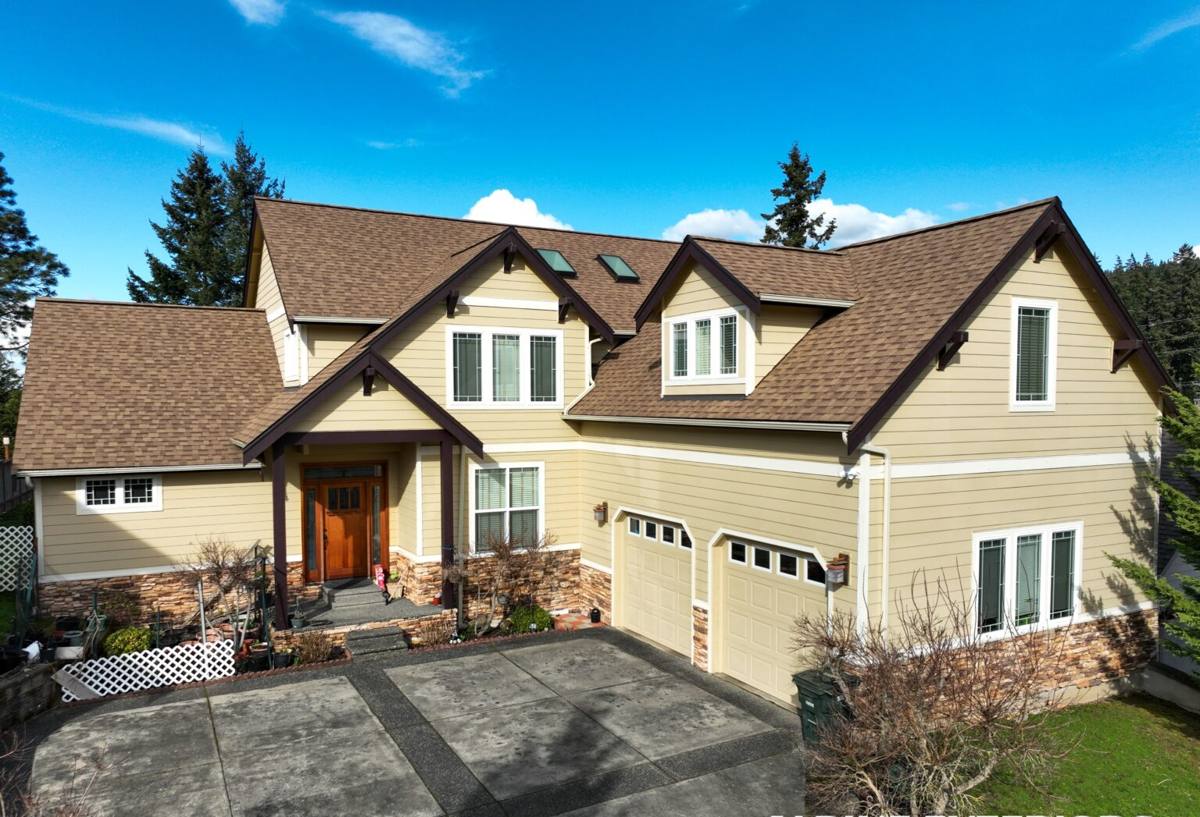
Signs Your Siding Has Reached the End of Its Line
Some siding problems are cosmetic. Others mean water is already inside the wall assembly. Knowing the difference matters before you decide between a repair, a partial recover, or a full replacement.
- Boards or panels that feel soft, spongy, or crumble slightly when pressed
- Persistent moss or algae staining on shaded or north-facing walls that returns within weeks of cleaning
- Paint that's peeling, bubbling, or won't hold a new coat no matter how it's prepped
- Visible gaps, warping, or cupping at board seams and corners
- Cracking or splitting, especially near the ground or around windows and doors
- A musty smell inside near exterior walls, or interior drywall that feels damp to the touch
- Siding that's original to a home built more than 20-25 years ago and has never been fully replaced
If you're seeing more than one of these, it's worth having the siding and the sheathing behind it inspected before choosing a fix. Surface repairs on failing siding often just delay a bigger job.
What a Correct Siding Replacement Actually Involves
Tear-Off and a Real Look at What's Underneath
A proper replacement starts with removing the old siding entirely, not just siding over it. That's the only way to actually see the sheathing, framing, and any water damage that's been hiding behind the old cladding. In a climate like Laurel's, it's common to find soft sheathing or rot around windows, doors, and low corners where water has been getting in slowly for years. Any of that needs to be cut out and replaced before new siding goes up — covering it over just locks the problem in.
Weather-Resistive Barrier and Flashing
The siding itself is the visible layer, but the weather-resistive barrier and flashing details underneath are what actually keep driving rain out of the wall. Every window, door, and penetration needs proper flashing that sheds water down and out, not into the wall cavity. This is the part of the job that doesn't show up in a finished photo but determines whether the siding lasts 10 years or 40.
Installation to Manufacturer Spec
Fiber cement siding is only as good as its installation. Correct fastener spacing, proper clearance from grade and roof lines, sealed joints where required, and correct panel gapping all affect how the material handles our wet-dry cycles and coastal humidity. Installing it like a lighter material, or rushing the flashing details to save time, is how a good product ends up with a short lifespan.
Why We Install Only James Hardie Fiber Cement
We don't install vinyl, LP SmartSide, or unfinished wood siding, and that's a deliberate standard, not a limitation on what we're capable of doing. James Hardie fiber cement is non-combustible, dimensionally stable in the kind of moisture swings Whatcom County sees year-round, and finished at the factory with ColorPlus technology — a baked-on finish that holds color and resists the fading that salt air and UV exposure cause in field-painted products. It's also backed by a strong, transferable limited warranty when installed to spec, which matters on a coastline where siding failures are common enough that warranty terms are worth reading closely.
That doesn't mean every other product is a bad product everywhere. It means that after years of doing this work in coastal Whatcom County conditions, we standardized on the one material that consistently holds up to salt air, driving rain, and a long moss season without the maintenance burden or moisture risk we've seen in the alternatives.
Matching the Right Hardie Product to a Laurel Home
James Hardie makes several product lines, and the right one depends on your home's style, exposure, and how much of the wall faces prevailing wind and rain.
| Product | Profile | Best Fit |
|---|---|---|
| HardiePlank | Horizontal lap siding | Traditional and craftsman-style homes; the most common choice in this area |
| HardiePanel | Vertical panel siding | Modern designs or accent walls, often paired with lap siding elsewhere on the home |
| HardieShingle | Staggered or straight-edge shingle | Cape Cod and cottage-style homes wanting a shingled look without cedar's maintenance |
| HardieTrim | Fascia, corner boards, trim | Used alongside any of the above for a finished, consistent look |
All of these are available in HardieZone HZ5 formulations, which are engineered specifically for the Pacific Northwest's freeze-thaw and moisture conditions rather than a generic national spec.
Our Siding Replacement Process, Start to Finish
- On-site inspection and estimate — we look at the current siding, sheathing condition where visible, and your home's exposure to wind and rain
- Written scope and product selection — choosing the right Hardie profile and color for your home
- Tear-off and sheathing assessment — removing old siding and repairing or replacing any damaged sheathing found underneath
- Weather-resistive barrier and flashing installation — the layer that actually stops water intrusion
- Hardie siding installation to manufacturer spec, including trim and detail work around windows, doors, and corners
- Final walkthrough — checking fastener lines, seams, caulking, and overall finish before we call the job done
What Drives the Cost of a Siding Replacement
Every home is different, so we give exact numbers after seeing the house, but a few factors consistently move the price up or down.
| Factor | Impact on Cost |
|---|---|
| Home size and wall square footage | Primary driver — more surface area means more material and labor |
| Sheathing or framing repair needed | Can add meaningfully if water damage is found during tear-off |
| Number of stories and access difficulty | Steep, tall, or hard-to-access walls take more time and equipment |
| Product profile (lap, panel, shingle) and trim detail | More detailed trim and shingle-style work adds labor time |
| Number of windows, doors, and penetrations | Each one needs individual flashing and cutting, which adds up |
Because sheathing condition is often unknown until tear-off begins, we build room into the process for what we actually find rather than guessing from the outside.
Why It Matters to Hire a Crew That Already Works This Area
Siding installation isn't identical everywhere. A crew that mostly works inland, drier regions may not think twice about flashing details that are non-negotiable on a home exposed to Semiahmoo's salt air and driving rain. Knowing which walls in this area take the worst weather, how moss establishes itself on shaded siding, and which HardieZone formulation is actually specified for Whatcom County conditions comes from doing this work here repeatedly — not from a general contracting background applied to any climate.
Local experience also means fewer surprises with permitting and inspection expectations specific to the county, and a crew that's already seen how these homes age in this exact climate rather than guessing from a manual.
Caring for Hardie Siding After It's Installed
Fiber cement is low-maintenance compared to wood or vinyl, but "low-maintenance" isn't "no-maintenance" in a climate with a moss season this long. A yearly rinse to clear off accumulated grime and organic buildup, prompt attention to any caulking that starts to crack at trim joints, and keeping vegetation trimmed back from walls to maintain airflow will go a long way toward getting the full lifespan out of the installation. Correctly installed Hardie siding with proper flashing and clearance from grade shouldn't develop the moisture problems that shorten the life of lesser products in this environment.
If your Laurel home's siding is showing wear, or you're just not sure whether it's time for a repair or a full replacement, we're happy to take a look. We offer free, no-pressure estimates — use the form below to get one scheduled.