 Semiahmoo Exterior
 Birch Bay's Shoreline Climate and What It Does to Siding
Birch Bay sits directly on the water in northern Whatcom County, close enough to the Canadian border that its weather comes off the Salish Sea with almost nothing to slow it down first. Homes here — whether they're older beach cottages near the shoreline or newer year-round residences set back a bit from the water — take a heavier weather hit than a comparable house ten or fifteen miles inland. Three things in particular wear down siding faster in Birch Bay than in most of the county: salt-laden air blowing off the bay, driving rain pushed sideways by open wind, and a moss and mildew season that runs most of the year.
None of that is unique to Birch Bay in the abstract — coastal Washington deals with all three to some degree. What's different here is how much of the year Birch Bay homes see all three at once, and how little natural windbreak the shoreline offers on the bay-facing side of a property. That combination is exactly why James Hardie siding for a Birch Bay home isn't a cosmetic upgrade — it's a functional decision about what actually holds up out here.
Salt Air
Airborne salt off the bay settles on every exterior surface, not just the ones facing the water directly. It accelerates corrosion in fasteners, trim, and flashing, and it breaks down lower-grade paints and finishes well before their rated lifespan. A siding product's finish is only as good as its ability to resist that ongoing exposure — this isn't a one-time storm event, it's a constant, low-grade load on the exterior every day of the year.
Driving Rain
With open water on one side and little to break the wind, rain in Birch Bay often arrives sideways rather than straight down. That pushes moisture into joints, laps, and fastener penetrations that a calmer inland site would rarely test. Siding systems and installation details that hold up fine a few miles inland can still fail here specifically because the water pressure behind wind-driven rain is higher than what they were ever really built to handle.
A Long Moss Season
Mild temperatures, near-constant humidity, and plenty of shaded, north-facing wall space add up to a moss and mildew season that runs most of the year in this part of Whatcom County. Porous or moisture-retentive siding materials are usually where it shows up first and worst — greenish-black staining and fine moss root structure that holds dampness against the wall long after the rain has stopped.
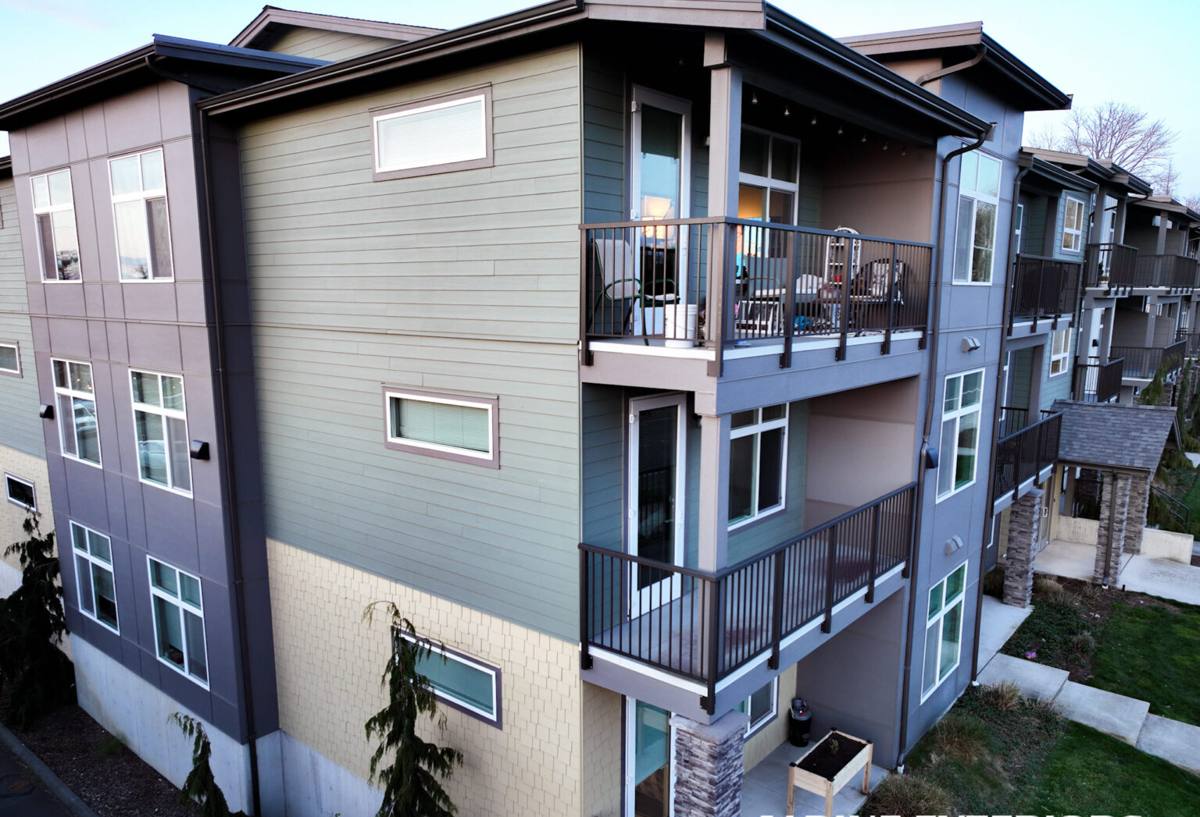
Why James Hardie Fiber Cement Is What We Install Here
We install James Hardie fiber cement siding exclusively — not vinyl, not LP SmartSide, not Cemplank, not Allura, not primed spruce or cedar. That's a professional standard we hold on every property we work, and it's especially deliberate somewhere like Birch Bay, where the climate finds the weak point in a lesser material faster than almost anywhere else in the county.
- Non-combustible core: Fiber cement doesn't feed a fire the way wood-based siding products can, which matters for both safety and, in many cases, insurance underwriting.
- Factory-applied ColorPlus finish: The color is baked on under controlled factory conditions rather than brushed on in the field, and it resists fading, chalking, and moisture intrusion far longer than site-applied paint.
- Climate-engineered HZ formulations: Hardie builds its HZ5 product line specifically for regions with heavy moisture exposure and freeze-thaw cycling — a fit for shoreline Whatcom County.
- Dimensional stability: Fiber cement doesn't swell, cup, or warp the way engineered wood products can after repeated wetting through a long wet season.
- A real, transferable warranty: Hardie backs its product with a substantial warranty structure, as long as installation follows their published specifications.
Every product we don't install has a legitimate place in the broader market, and plenty of homeowners elsewhere are satisfied with them. Our decision isn't a claim that they're worthless — it's a professional judgment, built on what we've actually found tearing old siding off exposed shoreline homes, that we'd rather stand fully behind one system than offer a lower-cost option that quietly shifts maintenance risk onto the homeowner a few years down the road.
Choosing the Right Hardie Line for a Bay-Facing Home
Not all Hardie siding is engineered the same way for every climate. Hardie manufactures its HZ5 formulation for regions that see significant moisture exposure and freeze-thaw cycling, which describes Birch Bay's winters reasonably well, while its HZ10 formulation is built for hot, humid climates further south and isn't the right match here. Specifying the correct HZ line, along with the right panel profile — lap siding, shingle-style panels, or vertical board-and-batten, depending on the home's design — is part of what makes a Hardie installation perform the way it's engineered to, not just look the part on install day.
What a Correct Installation Involves
Fiber cement only delivers on its durability when it's installed to spec. On a property with this much wind and moisture exposure, the installation details matter as much as the material itself:
- Proper clearance between the bottom of the siding and grade, decks, and roof lines to keep splash-back and standing water away from panel edges
- A weather-resistive barrier installed and lapped correctly behind the siding, with drainage or rain-screen detailing where the wall assembly calls for it
- Correct fastener type, length, and spacing — undriven or over-driven fasteners are one of the more common causes of early siding failure
- Factory-mitered corners or properly sealed field joints, since open or poorly caulked joints are a direct path for wind-driven rain
- Careful flashing integration at windows, doors, and roof-to-wall transitions, which is where the majority of real-world leaks originate
A Hardie product installed loosely will still develop moisture problems in a climate like this one. The material is only as good as the crew installing it, which is why installation quality gets as much attention on our end as the product decision itself.
Factory Finish vs. Field-Painted Siding
ColorPlus, Hardie's factory-applied finish, is baked on in a controlled environment and backed by its own finish warranty. In a shoreline environment where salt and UV exposure are both working against a painted surface year-round, that matters more than it would on a sheltered inland lot. Field-painted siding — whether it's Hardie primed for paint or another material entirely — depends entirely on paint quality, surface prep, and repainting schedule, and salt air tends to shorten the interval between repaints. For most Birch Bay homes, a factory finish removes one of the bigger recurring maintenance items from the list.
Signs Your Current Siding Is Losing the Fight
Some warning signs are easy to spot from the ground; others take a closer look. On a bay-facing or otherwise exposed Birch Bay property, it's worth checking for:
- Moss or dark staining that keeps returning on shaded or north-facing walls shortly after cleaning
- Cupping, warping, or visible swelling at panel edges and seams
- Paint that's chalking, peeling, or fading noticeably faster on the water-facing side of the house
- Soft spots or spongy areas, especially in the lower courses close to grade or decks
- Caulk that's cracked, shrunk, or pulled away from joints and trim
- Rust streaking below fasteners or trim, a sign the hardware underneath is corroding
Any one of these on its own might just mean a cleaning or touch-up. Several at once, especially on an older home that's never had its siding replaced, usually means the material itself is reaching the end of what it can do in this environment.
How Common Siding Materials Hold Up in Birch Bay's Climate
| Material | Behavior in Salt Air & Wind-Driven Rain | Moss Resistance | Typical Maintenance |
|---|---|---|---|
| James Hardie fiber cement | Dimensionally stable; resists swelling and warping | Non-porous surface resists moss root-hold better than wood-based products | Low; factory finish resists fading and chalking |
| Vinyl siding | Can distort or crack under temperature swings and heavy wind loads | Seams and laps can trap moisture and debris | Low upfront, but seams are exposure points over time |
| LP SmartSide / engineered wood | Wood-based core is sensitive to moisture at cut edges and joints | Moderate risk if edge sealing isn't maintained | Requires ongoing edge sealing and caulk upkeep |
| Cedar / primed wood | Absorbs and releases moisture readily; prone to cupping | Higher risk without frequent cleaning and refinishing | High; regular refinishing needed in salt air |
Our Process for a Birch Bay Siding Project
We start with an on-site walk of the existing siding, looking specifically at how it's held up against salt exposure, wind-driven rain, and moss over its life — not just its general condition. That tells us whether repair, partial replacement, or a full re-side makes sense, and it tells us what the wall assembly underneath actually needs in the way of moisture barrier and drainage detailing. From there we put together a clear, written scope covering product line, color, and the specific installation details this property needs before any work begins.
During the install itself, flashing integration, fastener spacing, and joint treatment get the same attention regardless of whether a wall faces the bay directly or sits on the sheltered side of the house, because water finds the weak point wherever it is, not just where the wind hits hardest.
Why Local Experience in Birch Bay Matters
A crew that regularly works Birch Bay and the surrounding Whatcom County shoreline already knows how differently salt air, open wind, and a long moss season behave here compared to properties even a few miles inland. That shows up in the details that never make it into a sales pitch — which fastener grade to use, how much drainage detailing a given wall needs, where extra flashing attention pays off years later. Those are exactly the decisions that determine whether a siding job holds up for one wet season or for decades.
If you're weighing a siding replacement for a Birch Bay home, we're happy to walk the exterior with you and give an honest read on what it actually needs — no pressure, no upsell. Reach out below for a free estimate.