 Semiahmoo Exterior
 Why Windows Wear Out Faster in Drayton Harbor
Homes along Drayton Harbor sit right at the edge of where fresh air meets salt water, and that location is hard on windows in ways that homes even a few miles inland don't deal with. Salt-laden air corrodes metal hardware, pits aluminum frames, and breaks down the seals that keep double-pane glass from fogging. Add in the wind-driven rain that comes off Semiahmoo Bay during fall and winter storms, and you've got water finding its way into any gap that wasn't sealed correctly the first time.
Then there's moss and mildew season, which in Whatcom County can stretch from October well into spring. Constant damp shade around north-facing windows and under eaves gives moss and algae a foothold on sills, trim, and frame joints. Left alone, that growth holds moisture against wood and composite materials long after the rain has stopped, which is exactly the kind of slow, quiet damage that leads to soft sills and rotted framing years before it should.
None of this means Drayton Harbor is a bad place to have windows — it just means the standards for materials, sealing, and flashing have to be higher than what a general contractor might use on a typical inland job.
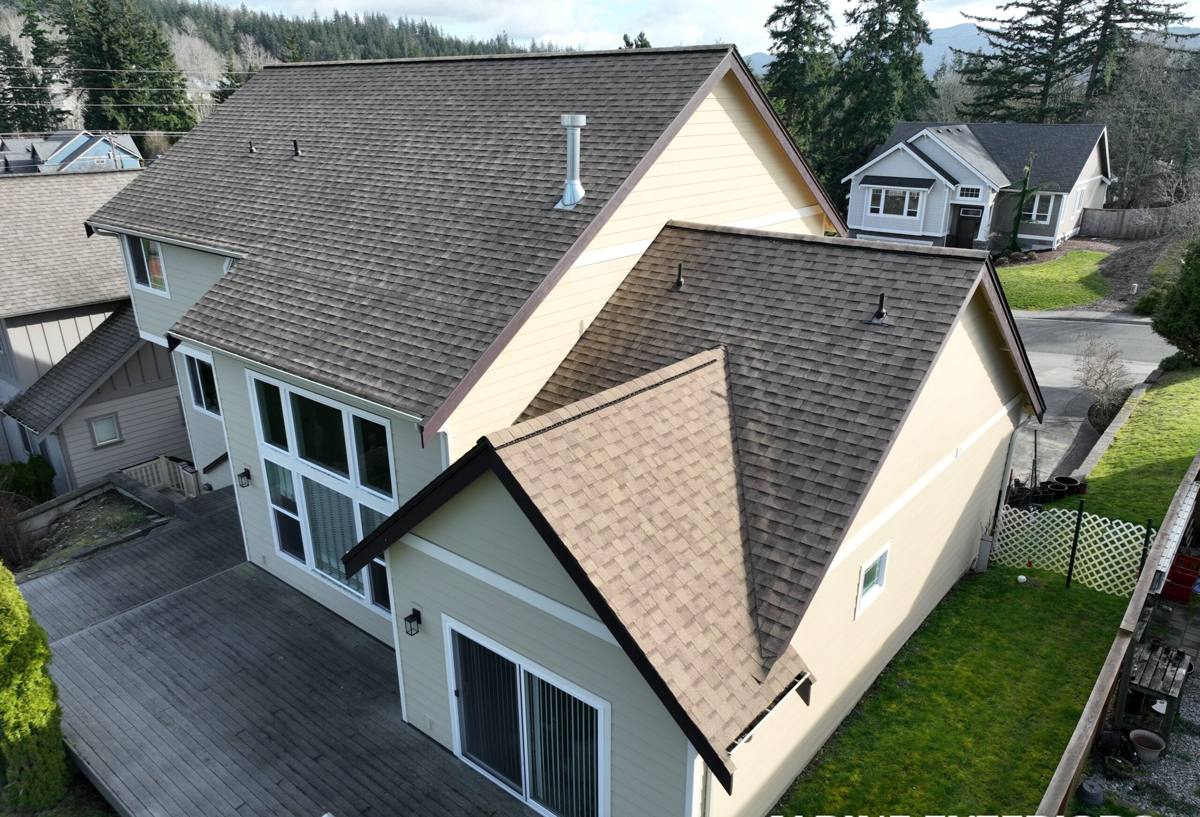
What "Correct" Actually Means for a Waterfront Window Job
A window replacement can look fine on installation day and still fail within a few years if the details underneath the trim weren't done right. For homes this close to the water, we treat a few things as non-negotiable, not optional upgrades.
Flashing and Water Management
Every window opening needs a drainage path so any water that gets past the exterior finish has somewhere to go besides your wall framing. That means properly lapped flashing tape at the sill, jambs, and head, installed in the right order so water sheds downward and outward rather than pooling. On a house taking direct wind-driven rain off the bay, this step matters more than the window itself.
Sealants Rated for Marine Exposure
Standard caulk breaks down faster under UV and salt exposure than most homeowners expect. We use sealants rated for coastal and marine conditions around frames and trim, because a bead of the wrong caulk failing in year three undoes everything else done correctly.
Hardware and Fasteners
Cheap or mismatched fasteners are one of the first things to corrode in salt air, and a rusting screw at the frame can eventually stain the exterior finish and weaken the seal around it. We use corrosion-resistant fasteners and hardware suited to coastal exposure, not just whatever came in the standard install kit.
Choosing the Right Frame Material for Salt Air
Frame material matters more here than in most parts of Whatcom County. Some materials that perform fine inland show their weaknesses quickly this close to the water.
| Frame Material | Salt Air Performance | Maintenance | Our Take |
|---|---|---|---|
| Vinyl | Good — won't rust or corrode | Low; occasional cleaning | Solid, cost-effective default for most Drayton Harbor homes |
| Fiberglass | Excellent — very stable, resists pitting | Low | Best long-term option for direct waterfront exposure, higher upfront cost |
| Wood-clad | Fair — cladding protects wood, but any breach lets moisture in | Higher; requires monitoring seams and finish | We recommend this only where the look is a priority and the homeowner understands the upkeep |
| Bare aluminum | Poor — prone to pitting and corrosion in salt air | High | We generally steer clients away from uncoated aluminum this close to the bay |
We're not against wood-clad or aluminum outright — they have real uses in the right setting. But when a client asks us to install something we know won't hold up against this specific microclimate, we say so plainly and explain the trade-off rather than just installing what's asked and letting the homeowner find out the hard way.
How the Replacement Process Works
1. On-Site Assessment
We walk the exterior and interior of each window opening, checking for existing water damage, soft framing, failed seals, and how much wind and rain exposure each side of the house actually gets. Drayton Harbor homes often need different specs on the water-facing side than on the sheltered side, so we don't treat every window on the house identically.
2. Removal Without Hidden Damage
Old windows come out carefully so we can see the condition of the framing underneath before anything new goes in. This is where hidden moisture damage from years of small leaks usually shows up — better to find and fix it now than to seal a new window over a problem.
3. Flashing, Sealing, and Insulation
New flashing goes in per the water-management approach above, gaps are properly insulated (not just stuffed with excess foam, which can bow frames), and sealants are applied in the right sequence.
4. Window Installation and Adjustment
Windows are set plumb, level, and square, then fastened and adjusted so sashes operate smoothly and lock tightly — a loose-fitting lock is a direct path for wind-driven rain.
5. Exterior Trim and Finish
Trim is finished and sealed to match the home, with attention to any areas prone to moss or algae growth so the finish holds up through the wet season.
6. Final Walkthrough
We check operation, seals, and finish on every window before we consider the job done, and walk the homeowner through basic care for the specific materials installed.
Signs Your Drayton Harbor Windows Need Replacing
- Fogging or moisture between panes — the seal has failed and the insulating gas has escaped
- Soft or spongy wood at the sill or lower frame corners
- Visible corrosion or pitting on metal hardware, tracks, or frames
- Drafts or a cold spot near the window even when it's fully closed
- Moss or dark staining building up on the sill or lower trim that keeps coming back
- Windows that are hard to open, close, or lock — often a sign the frame has shifted or swollen
- Rising energy bills with no other explanation
- Visible daylight or gaps around the frame from outside
Any one of these on its own might just need a repair. Several at once, especially on the water-facing side of the house, usually means it's time to talk about replacement before the damage spreads into the surrounding wall.
What Drives Cost on a Job Like This
| Factor | Why It Matters |
|---|---|
| Frame material | Fiberglass and quality vinyl cost more upfront than bare aluminum but last longer in salt air |
| Number and size of openings | Larger and more numerous windows increase material and labor time |
| Extent of hidden damage | Rotted framing found during removal adds repair work before the new window can go in |
| Exposure side of the house | Water-facing openings often warrant upgraded flashing and sealant details |
| Glass package | Higher-performance glass (better insulating value, tinting, impact resistance) adds cost but pays off in comfort and durability here |
| Access and site conditions | Second-story or hard-to-reach openings take more time and equipment |
We don't publish a flat per-window price because these factors genuinely change the job. What we do is give a clear, itemized estimate after we've actually looked at your windows and your home's exposure, so there are no surprises once work starts.
Why It Matters That We Already Work This Area
A crew that mostly works inland jobs can install a window correctly on paper and still miss what a Drayton Harbor home specifically needs — the extra flashing detail on the bay-facing wall, the sealant that won't chalk out in a couple of salt-heavy seasons, the frame material that won't pit within a few winters. We work this stretch of Whatcom County regularly, which means we've seen how these specific conditions play out on real homes over time, not just in a spec sheet.
That local familiarity also means we know which details tend to get skipped on a rushed job — and why skipping them costs homeowners more down the road in the form of repeat repairs, stained trim, or windows that need replacing again well ahead of schedule.
Caring for New Windows Through Moss Season
Even a correctly installed window benefits from a little seasonal attention here. Keep sills and tracks clear of debris where moss and algae can take hold, rinse off salt residue near the coast periodically, and check that weep holes and drainage paths stay clear so water doesn't sit against the frame. None of this is heavy maintenance — it's a few minutes a couple times a year — but it extends the life of the investment considerably in this climate.
If your windows are showing any of the signs above, or you'd just like a straight opinion on whether they're worth replacing yet, we're happy to take a look. Reach out below for a free, no-pressure estimate — we'll walk your home, tell you what we actually see, and give you options that make sense for your budget and your exposure to the harbor.