 Semiahmoo Exterior
 Drayton Harbor's Climate Is Harder on Siding Than Most Homeowners Realize
Homes around Drayton Harbor sit in one of the more demanding exterior environments in Whatcom County. The water is close enough that salt-laden air reaches exterior walls year-round, wind-driven rain comes off the harbor at angles that push moisture into laps and seams most siding isn't built to handle, and the long stretch of overcast, damp months keeps north- and water-facing walls wet enough, long enough, for moss and algae to take hold and stay. None of this is unusual for a Pacific Northwest waterfront community — but it means siding decisions that work fine forty miles inland don't always hold up here.
This page is about one thing specifically: fiber cement siding installed correctly on homes in the Drayton Harbor area, and what that actually requires given the conditions this stretch of Whatcom County deals with every year.
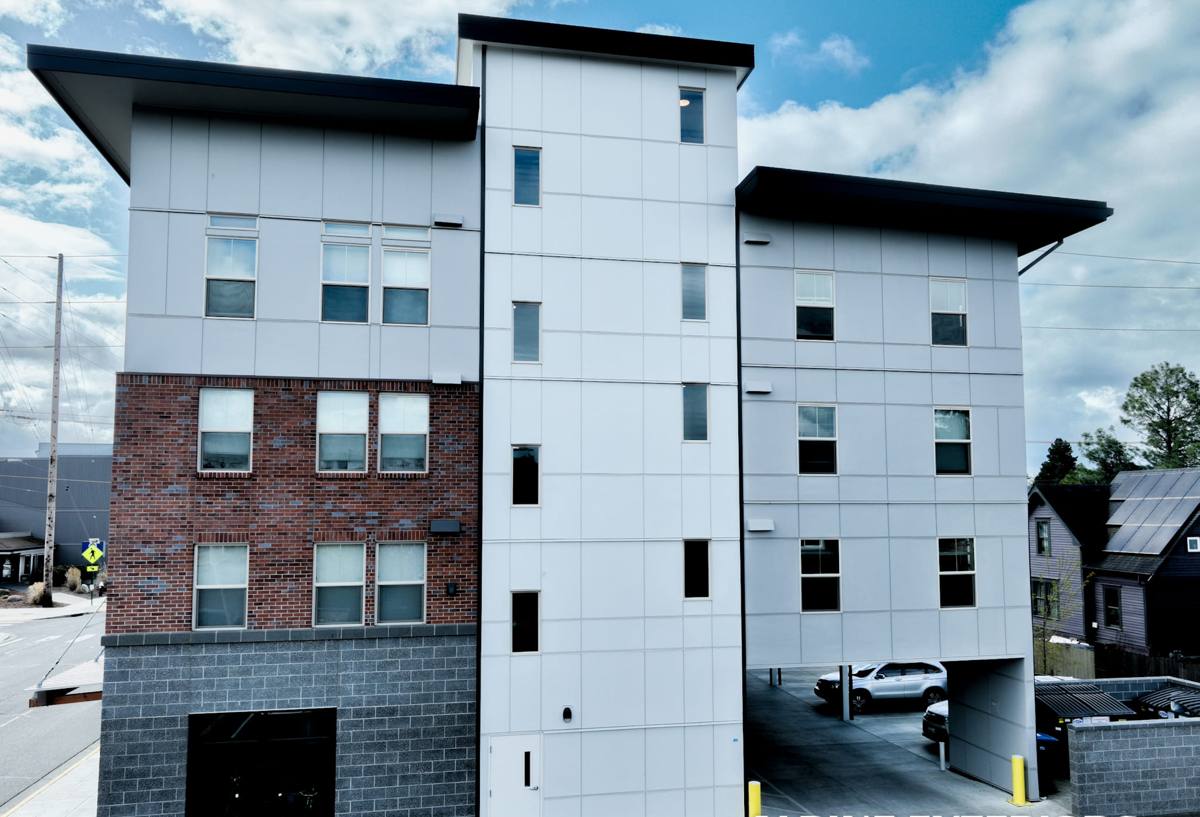
What Salt Air, Rain, and Moss Actually Do to a Wall System
Salt Air
Airborne salt doesn't just sit on the surface — over years it works into paint films, caulk joints, and any exposed fastener. On siding with a weaker factory finish, or field-applied paint, that means chalking, fading, and eventually finish failure well ahead of schedule. Uncoated or poorly coated fasteners are especially vulnerable; corrosion at the fastener head is one of the most common early failure points we see on homes closer to the water.
Driving Rain
Wind off Drayton Harbor and the Strait doesn't just fall straight down — it drives rain sideways into wall assemblies, which means laps, butt joints, and penetrations (hose bibs, vents, light fixtures) take on water pressure that a calm-climate installation detail was never designed for. Siding that's face-nailed too tight, lacks proper lap clearance, or has caulked joints where a flashing detail should exist will eventually let water behind the cladding.
Moss and Algae
Shaded, north-facing, and water-facing walls in this area can stay damp for weeks at a time in fall and winter. Moss and algae don't just look bad — they hold moisture against the siding surface, which accelerates finish breakdown and, on materials that aren't dimensionally stable, can contribute to swelling or delamination at the edges over time.
Why We Install Only James Hardie Fiber Cement on Homes Here
We don't install LP SmartSide, vinyl, Cemplank, Allura, or raw wood siding — not because those products can't be installed, but because we've standardized on one system we can stand behind fully in this specific climate, and we'd rather do one thing exceptionally well than offer five options and hedge on all of them.
James Hardie fiber cement is cement, sand, and cellulose fiber — it doesn't have the organic wood content that gives moisture and insects something to feed on, and it's non-combustible, which matters on a peninsula where wildfire smoke and ember exposure have become a more regular summer concern across the Pacific Northwest. Hardie's ColorPlus factory finish is baked on in a controlled environment rather than sprayed or brushed on site, which gives it materially better resistance to fading, chalking, and salt-air degradation than field-applied paint — and it carries its own finish warranty separate from the product warranty.
Hardie also engineers specific product lines for different climate zones (their HZ5 line is built for regions with more moisture exposure, which fits this area well). That's an advantage we don't get with generic fiber cement alternatives that aren't engineered to the same regional specification.
What We're Not Claiming
Fiber cement is heavier and more labor-intensive to install correctly than vinyl, and it costs more up front than LP SmartSide. It's not the cheapest option on the market and we're not going to pretend otherwise. What it offers in exchange is a non-combustible, dimensionally stable product with a factory finish built to hold up against exactly the salt air, rain, and moss pressure that homes around Drayton Harbor deal with — and a warranty structure backed by a large, established manufacturer.
What a Correct Fiber Cement Installation Actually Involves
Fiber cement siding is only as good as the installation behind it. Most of the failures we get called out to inspect on other contractors' work trace back to a handful of detail mistakes — not the product itself.
- Proper lap and gap clearances — Hardie specifies minimum clearances at the bottom of the siding above grade, decks, and roof lines. Skipping this traps moisture against the board.
- Correct fastening — nails or screws driven to the manufacturer's spec, not overdriven (which cracks the board's edge and creates a moisture entry point) and not underdriven (which lets the board move and eventually work loose).
- Flashing at every penetration — windows, doors, hose bibs, vents, and electrical penetrations all need proper flashing details, not just a bead of caulk. Caulk is a backup, not a primary water management strategy.
- Rain screen or weather-resistant barrier detailing — especially important on water-facing and north walls where moisture sits longer.
- Field-cut edge sealing — any cut edge on Hardie board should be sealed per manufacturer instructions before installation; an unsealed cut edge is a weak point for moisture intrusion.
- Corrosion-resistant fasteners — non-galvanized or under-spec fasteners are one of the first things to fail in a salt-air environment, and they're hidden until the finish around them starts to stain or streak.
Every one of these is a detail you can't see from the street once the job is finished — which is exactly why the installer's discipline matters more than the brochure the product came from.
How Fiber Cement Compares for a Home Near Drayton Harbor
| Factor | James Hardie Fiber Cement | Vinyl Siding | LP SmartSide / Engineered Wood |
|---|---|---|---|
| Salt air / coastal exposure | Factory finish engineered for climate resistance | Can warp or fade faster with prolonged UV and salt exposure | Wood-based core is more vulnerable to moisture intrusion at cuts and edges |
| Driving rain performance | Dimensionally stable; performs well with correct flashing details | Prone to water intrusion behind panels if installed loosely | Edge swelling risk if moisture reaches the engineered wood core |
| Moss / algae resistance | Factory finish resists organic growth better than field-applied paint | Growth sits on the surface; doesn't feed the material itself | Wood-based substrate can be more susceptible to organic breakdown over time |
| Fire resistance | Non-combustible | Combustible; can melt or deform near heat sources | Combustible |
| Upfront cost | Higher | Lowest | Moderate |
This isn't a claim that vinyl or engineered wood "fail" — plenty of homes carry them without major issues. It's a statement of trade-offs, and why our crew made the call to standardize on one system for this climate rather than install several.
What Drives the Cost of a Fiber Cement Project Here
| Cost Factor | Why It Matters in This Area |
|---|---|
| Existing siding removal and substrate condition | Homes with long-term moisture exposure near the water sometimes need sheathing repair before new siding goes on |
| Home size and wall complexity | Dormers, multiple gables, and cut-up wall lines add labor time regardless of material |
| Product line and profile | Lap width, texture (smooth vs. cedar-grain), and color selection affect material cost |
| Flashing and detail work at penetrations | More windows, vents, and fixtures mean more flashing details to install correctly |
| Site access | Waterfront lots and sloped sites can affect staging and scaffolding needs |
We give real, project-specific numbers during an in-person estimate — not a flat per-square-foot figure that ignores what your particular home actually needs.
Our Process, Start to Finish
- On-site assessment — we walk the home, check for existing moisture damage, and evaluate wall exposure to prevailing wind and water.
- Written scope and product selection — we recommend the Hardie product line and profile suited to the home's exposure, not a one-size-fits-all pick.
- Substrate prep — any water-damaged sheathing or framing is addressed before new siding goes on; covering up a problem is not an option we'll offer.
- Installation to manufacturer spec — correct clearances, fastening, flashing, and edge sealing at every step, not just the visible ones.
- Final walkthrough — we go over the finished work with you before calling the job complete.
Signs Your Current Siding Is Already Struggling
- Streaking or staining near fastener heads (often a sign of corroding fasteners)
- Soft spots or visible swelling at board edges or seams
- Persistent moss or algae that returns within weeks of cleaning
- Paint or finish that's chalking, peeling, or fading unevenly, especially on water-facing walls
- Visible gaps or separation at butt joints and corners
- Musty smell or discoloration on interior walls that back up to exterior siding
Any of these on a home near the harbor is worth a professional look before it turns into a sheathing or framing repair.
Why Local Experience in This Area Matters
A crew that only occasionally works near open water tends to under-detail the flashing, clearance, and fastening work that matters most in a marine climate — because most of their jobs don't demand it. Working homes around Drayton Harbor regularly means we're used to accounting for wind-driven rain angles, salt exposure on water-facing elevations, and the extended damp season that gives moss time to establish. That's not a marketing line — it's the difference between a siding job that looks right at handoff and one that still looks right in year eight.
If you're weighing a siding replacement or repair on a home in the Drayton Harbor area, we're happy to take a look and give you a straightforward, no-pressure estimate — including an honest read on whether your current siding has real issues or just needs cleaning and minor repair. Use the form below to get started.