 Semiahmoo Exterior
 Why Decks in Sumas Take More Punishment Than You'd Expect
Homes in the Sumas area, tucked in the northwest corner of Whatcom County near Semiahmoo, deal with a combination of weather stresses that most inland decks never see. Salt-laden air drifting off the bay accelerates corrosion on anything metal — nails, screws, joist hangers, railing brackets. Driving rain off the Strait pushes moisture sideways into places a deck was never designed to shed water from, like the underside of ledger boards and the gaps between deck boards. And the long, gray moss season that stretches from fall through spring keeps every horizontal wood surface damp for months at a time, which is exactly the environment wood-decay fungus needs to get established.
None of this means a deck in Sumas is doomed. It means a deck here needs to be built and repaired with those specific stresses in mind, not patched the way you'd patch a deck in a dry climate. A lot of the deck problems we get called out for started as something small — a soft board, a wobbly rail — that had years to get worse because the underlying moisture and corrosion issues were never addressed.
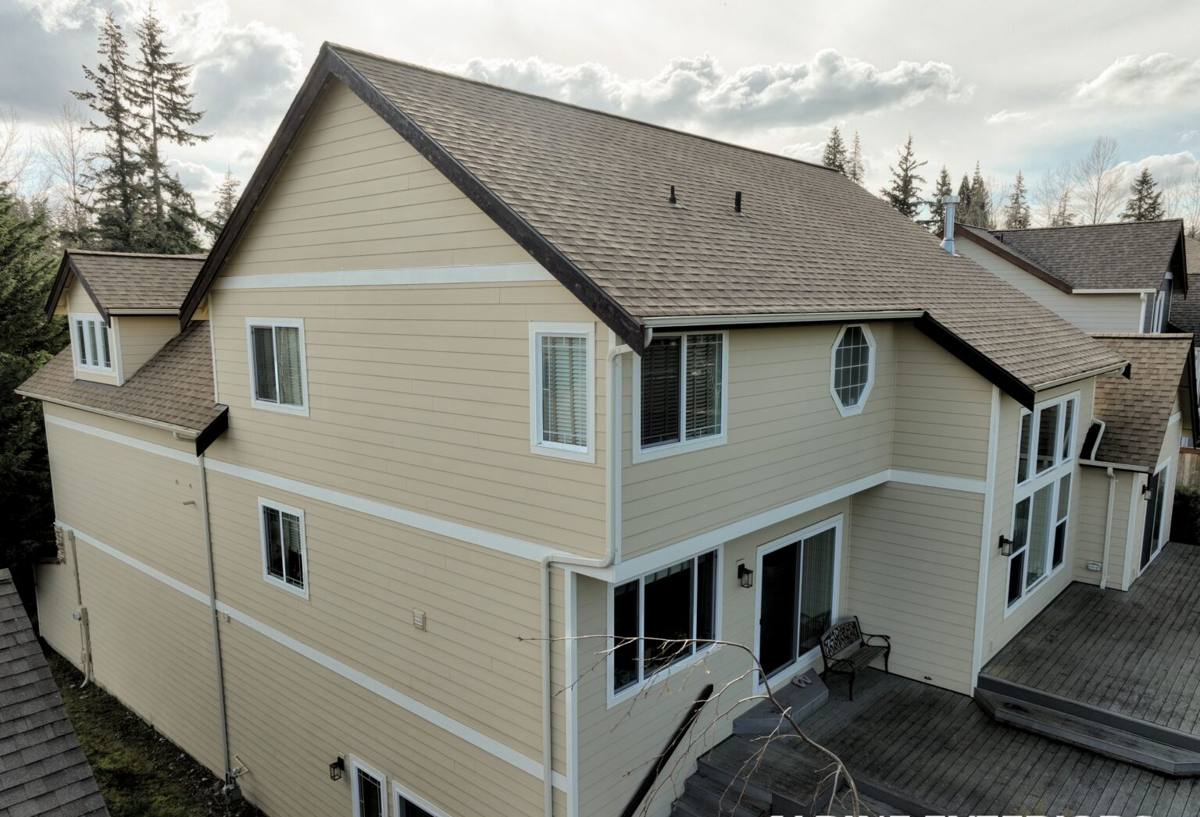
Signs a Sumas Deck Needs Repair
Some warning signs are obvious. Others hide in plain sight until someone gets hurt. Here's what we tell homeowners to check for, or to have us check for, before the wet season sets in:
- Soft, spongy, or spring-back decking when you walk across it, especially near the house or in shaded corners
- Rust streaking below screw heads or joist hangers — an early sign that fasteners are corroding from the inside
- Gaps or separation where the deck ledger meets the house wall, which can signal water intrusion behind the siding
- Wobble or give in the railing when you lean on it — a structural issue, not a cosmetic one
- Green or black film that keeps coming back within weeks of cleaning, meaning moisture is staying trapped longer than it should
- Visible daylight or dark staining between deck boards where water is pooling instead of draining
- Stairs that feel uneven, bouncy, or have visibly sagging stringers
If any of these sound familiar, it's worth getting a real inspection rather than guessing. Some of these are a weekend fix. Others point to framing damage that a surface-level look won't catch.
What a Correct Deck Repair Actually Involves
A repair that only addresses what you can see from the top is a repair that comes back. In our climate, most deck failures start underneath — in the framing, the connections, or the fasteners — and show up on the surface only after the damage has been happening for a while.
Structural Framing Comes First
Before we touch a single deck board, we check the ledger board attachment, the joists, the beam, and the posts. A deck can have brand-new decking on top and still be unsafe if the ledger is pulling away from the house or a joist has rotted where it sits in a hanger. Any repair plan that skips this step and jumps straight to replacing boards is addressing the symptom, not the problem.
Decking Surface and Spacing
Board spacing matters more here than in a dry climate. Boards installed too tight don't have room to drain or dry between rain events, which is exactly what keeps moss and rot cycling. When we replace decking, we set spacing to actually shed water, not just to look tight when it's new.
Fasteners and Hardware
This is where a lot of past repairs quietly failed. Standard hardware corrodes faster near the coast, and once a fastener starts rusting, it weakens the connection long before it looks obviously bad. We use fasteners and structural hardware rated for coastal and treated-lumber exposure — it costs a little more up front and it's the difference between a repair that lasts and one you're paying for again in three years.
Repair or Replace? What Actually Drives the Decision
Homeowners often assume any deck with a problem needs to be torn out and rebuilt. That's rarely true, but it's not always false either. The honest answer depends on where the damage is and how far it's spread.
| Factor | Usually Repairable | Usually Needs Replacement |
|---|---|---|
| Framing condition | Solid, dry joists and beam with isolated soft spots | Widespread rot in joists, beam, or ledger connection |
| Age of structure | Under 15-20 years, built to a reasonable standard | Older deck built to outdated span or fastening standards |
| Extent of damage | Localized to a few boards or one section | Damage spread across most of the deck surface |
| Railing and stairs | Secure posts, cosmetic wear only | Loose or rotted posts, code-noncompliant railing height/spacing |
| Cost over time | Targeted repair, lower upfront cost | Higher upfront cost, but resets the clock on the whole structure |
We'll never push a full replacement when a repair genuinely solves the problem, and we won't recommend patching a deck whose framing is compromised just to save money now. We'll walk you through what we find and why, so the decision is yours to make with real information.
Our Deck Repair Process
On-Site Inspection
We start under the deck, not on top of it. That means checking the ledger attachment, joist condition, post bases, and any spots where past water intrusion has left visible staining or soft wood. We also check railings and stairs for code-relevant issues, since those carry the most safety risk.
A Written Repair Plan
You get a clear breakdown of what needs to be fixed, what's optional, and what we'd recommend prioritizing if budget is a factor. No vague line items — you should be able to see exactly what you're paying for and why.
The Repair Work
We address structural issues first, then move to surface repairs, hardware upgrades, and railing or stair work. Where we're replacing boards or framing, we match spacing and drainage to what actually works in this climate, not just to what was there before.
Cleanup and Walkthrough
We clear debris and old material, and we walk the finished repair with you so you know what was done and what to watch for going forward — including basic maintenance that'll extend the life of the work.
Material Choices Worth Understanding
Wood Decking
Pressure-treated and cedar decking are common in this area and can perform well for years, but they need consistent maintenance — cleaning, sealing, and prompt attention to any soft spots — because untreated exposed wood in a wet, moss-prone climate degrades faster than it would somewhere dry. If your existing deck is wood and structurally sound, repairing and properly maintaining it is often the most cost-effective path.
Composite Decking
Composite boards resist rot and don't need staining, which appeals to homeowners tired of the maintenance cycle. The trade-off is that composite is less forgiving of poor installation — improper spacing or fastening shows up as buckling or fastener pull-through over time, and repairs to composite framing still require the same attention to structural wood underneath, since the framing itself is almost always still lumber. We're upfront about that installation sensitivity rather than treating composite as a maintenance-free fix, because it isn't one if the framing beneath it isn't handled correctly.
Keeping Moss and Moisture From Coming Back
A good repair buys you time, but ongoing moss growth in Whatcom County's damp months will undo it if the deck isn't maintained. A few habits go a long way:
- Sweep leaves and debris off the deck regularly through fall so they don't trap moisture against the boards
- Clean moss and algae buildup before it gets thick enough to hold water against the surface
- Keep gutters and downspouts clear so runoff isn't draining directly onto or under the deck
- Reseal or restain wood decking on the schedule appropriate to the product, not just when it starts looking worn
- Check fastener heads and hardware once a year for early rust, before it becomes a structural issue
Why It Matters to Hire a Crew That Already Works in Sumas
Deck repair advice that works for a dry climate can actively hurt a deck near Semiahmoo. Tight board spacing, standard fasteners, sealing schedules built for less rain — all of that shows up as premature failure here specifically because of the salt air, driving rain, and moss season that define this corner of Whatcom County. A crew that already works in this area isn't guessing at what holds up; we're applying what we've seen actually fail and actually last on decks exposed to the same weather yours is.
If your deck in the Sumas area is showing any of the signs above, or you just want an honest look at what shape it's really in, we're glad to come take a look. The estimate is free, there's no pressure, and you'll get a clear, written picture of what's going on — just fill out the form below to get started.