 Semiahmoo Exterior
 Blaine Harbor Decks Face a Specific Kind of Wear
A deck in Blaine Harbor doesn't age the way one does twenty miles inland. Sitting this close to the water, homes here take on salt-laden air almost year-round, and that air is relentless on fasteners, flashing, and any bare wood that isn't properly sealed. Add Whatcom County's long wet season — months of driving rain followed by a shoulder season where everything stays damp and shaded — and you get a deck environment that punishes shortcuts. Framing lumber that would last two decades in a dry inland yard can show rot in half that time here if the original build skipped proper flashing or used the wrong fasteners.
We're not describing a hypothetical. It's the baseline condition every deck in this part of Semiahmoo has to deal with, and it's why deck repair here isn't just "fix what's broken" — it's fixing what's broken in a way that survives the next ten winters of salt air and rain, not just the next inspection.
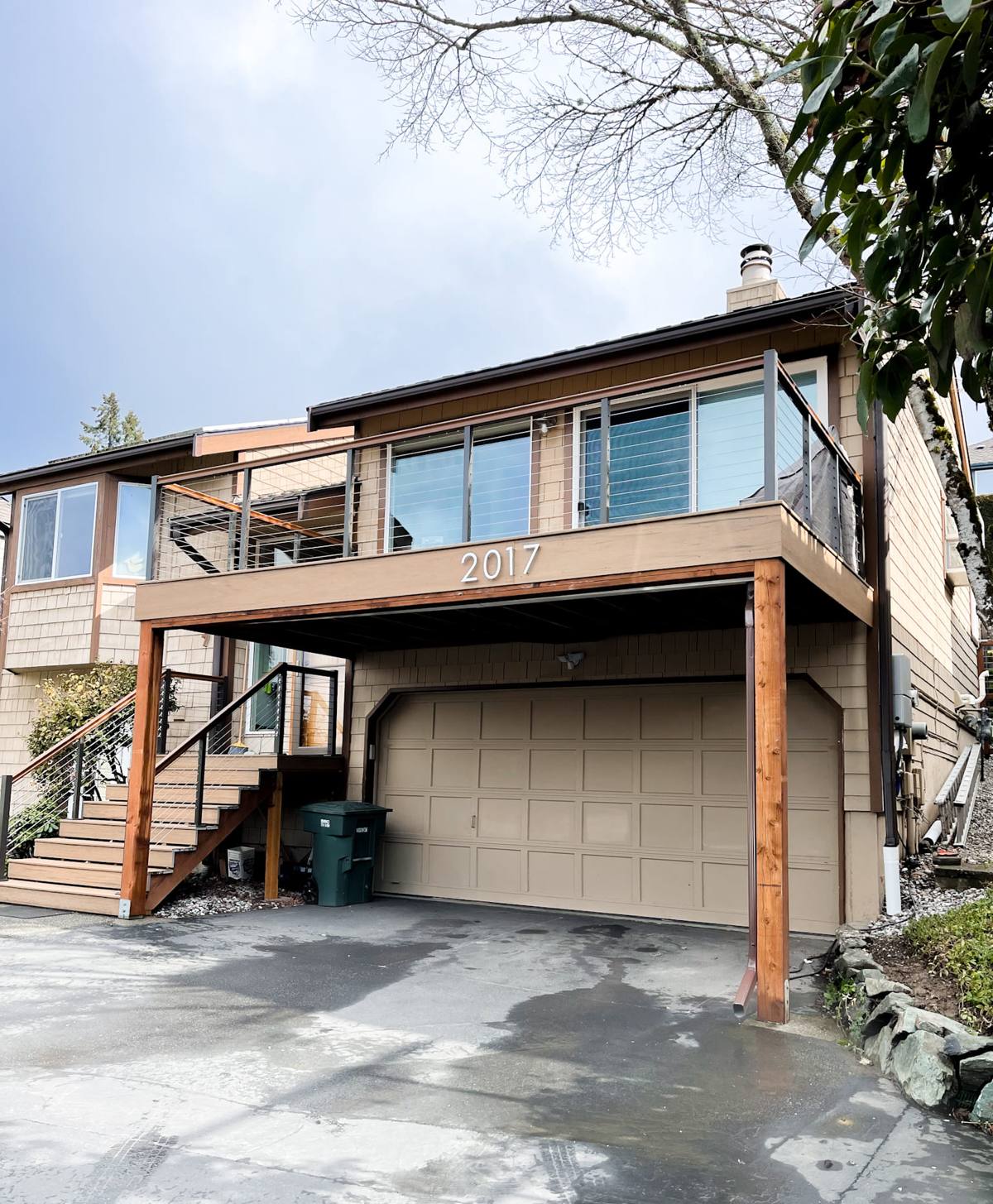
Why Repair Instead of Full Replacement
Most decks don't fail all at once. They fail in specific spots — usually where water sits, where two materials meet, or where a fastener was never rated for the exposure. A full tear-out is sometimes the right call, but far more often the structure is sound and the problem is localized: a rotted ledger board, failing joist hangers, a handful of soft boards near a downspout, or a railing post that's gone soft at the base. Targeted, correctly executed repair costs a fraction of replacement and, done right, buys the deck many more years.
The judgment call is knowing which is which. That's the first thing we sort out before any work starts.
Signs You're Looking at Repair, Not Replacement
- Soft or spongy spots in a few boards, while the rest of the decking feels solid underfoot
- Surface graying, mildew staining, or moss growth without soft wood underneath
- A single problem area — near a downspout, planter, or hot tub — while the rest of the deck is dry
- Loose railings or wobbly stairs that trace back to a few failed connections, not the whole frame
- Popped or corroding fasteners on an otherwise structurally sound deck
Signs the Deck Is Past Repair
- Rot in the ledger board where the deck attaches to the house — this is a structural safety issue, not cosmetic
- Multiple joists soft or crumbling when probed with a screwdriver
- Widespread rot across most of the decking surface, not isolated spots
- A frame that visibly sags, bounces, or has shifted off its footings
What a Correct Deck Repair Actually Involves
A repair that just swaps out the obviously bad boards and stops there tends to fail again within a season or two, because it doesn't address why that spot failed in the first place. In a climate like Blaine Harbor's, that "why" is almost always moisture management — water getting somewhere it shouldn't and staying there.
Structural Repairs
This covers the framing: ledger boards, joists, beams, posts, and footings. Any repair touching structure needs to check that the ledger flashing is intact (this is the single most common failure point on older decks here), that joist hangers are rated for exterior use and not just rusting through, and that posts bearing weight aren't rotted at the base where they meet concrete or soil. We also check that the original build met basic attachment standards — a lot of older Whatcom County decks were bolted or nailed in ways that wouldn't pass inspection today, and a repair is a natural point to correct that.
Surface Repairs
Board replacement, sanding, and refinishing fall here. The key detail most homeowners don't think about: matching moisture content and species between old and new boards matters more near the water than it does inland, because mismatched wood expands and contracts at different rates and opens gaps that trap water and moss. We also re-check board spacing during any resurfacing — gaps that were adequate when the deck was built often need to be opened slightly if the wood has swollen over the years, to keep drainage working.
Railings, Stairs, and Guards
Railing posts are a common failure point because they're often notched or bolted in ways that trap water right at the connection. We rebuild these connections to shed water instead of holding it, and we check that guard height and baluster spacing meet current code — a repair is a reasonable time to bring an older railing up to a safer standard, even if it wasn't required when it was first built.
Materials: What We Use and Why
Material choice in a salt-air, high-rain environment isn't just about looks or cost — it's about how the material behaves wet, and how forgiving it is if maintenance slips for a season.
| Material | Behavior Near Salt Air | Maintenance Burden | Best Use in a Repair |
|---|---|---|---|
| Pressure-treated fir/hem-fir framing | Handles moisture well if properly sealed at cuts; fasteners are the weak point | Low if flashing is correct | Structural repairs — joists, beams, posts |
| Cedar decking | Naturally rot-resistant, but surface grays and can cup if not refinished | Moderate — periodic cleaning and sealing | Matching an existing cedar deck's appearance |
| Composite decking | Doesn't rot, but can trap moisture underneath if airflow is blocked | Low — occasional cleaning, no sealing | Full board replacement where long-term low maintenance matters most |
| Stainless or hot-dip galvanized fasteners | Resists corrosion from salt air far better than standard coated fasteners | Very low | Any fastener within reach of the marine layer — our standard for this area |
Our default for fasteners on any deck this close to the water is stainless or true hot-dip galvanized, not the lighter coated fasteners that are fine inland but corrode faster here. It costs a little more upfront and it's the difference between a repair that holds and one you're paying to redo in a few years.
Our Repair Process
We keep the process straightforward because deck repair doesn't need to be mysterious — it needs to be thorough where it counts.
- Inspection. We probe framing at the ledger, joists, and posts, not just look at the surface. Soft wood tells us more than a visual scan ever will.
- Written scope. You get a clear list of what's structural, what's cosmetic, and what we recommend versus what's optional — no vague "while we're in there" surprises.
- Repair. Structural work first, then surface and railings. Flashing and drainage get corrected as part of the repair, not treated as an afterthought.
- Finish and protect. Any exposed cuts or new wood get sealed before the deck goes back into service, since a fresh cut is the fastest way for rot to start over.
Living With Moss, Mildew, and Salt Air Between Repairs
No repair eliminates the need for some upkeep in this climate — but the right repair makes that upkeep manageable instead of constant. A few habits go a long way toward stretching the life of the work:
- Sweep debris and standing organic matter off the deck through fall and winter, when moss growth is worst
- Keep gutters and downspouts clear so runoff isn't dumping directly onto the deck surface
- Rinse salt residue off railings and hardware a few times a year, especially after storms with onshore wind
- Check fastener heads periodically for rust bleed, which usually means a coated fastener is starting to fail
- Re-seal wood decking on the manufacturer's recommended schedule — skipping a cycle in this climate shows up faster than it would inland
Why Local Experience Matters for This Work
A deck repair crew that mostly works inland can still do competent framing, but they may not think to check ledger flashing first, or default to marine-grade fasteners, or recognize how fast moss takes hold on a north-facing deck section near the water. Working regularly in Blaine Harbor and the surrounding Semiahmoo area means we've seen where decks in this specific environment tend to fail first, and we build the repair to address that — not just replace what's visibly broken.
What Repairs Typically Cost
Every deck is different, but the factors that move the price are consistent. We give exact numbers only after inspecting the deck in person — anyone quoting a firm price sight unseen is guessing.
| Factor | Why It Matters |
|---|---|
| Scope: cosmetic vs. structural | Board swaps are quick; ledger and joist repair take longer and matter more for safety |
| Deck size and height | Larger decks and elevated decks take more material and access time |
| Material match | Matching existing wood species or a discontinued composite line can add cost and lead time |
| Extent of water damage | Hidden rot found once boards come up can expand the scope — we flag this before proceeding, never after |
| Railing and code updates | Bringing older railings up to current guard and baluster spacing adds labor but improves safety |
If your deck in Blaine Harbor has soft spots, a wobbly railing, or just hasn't been looked at in a few years, it's worth getting an honest read on what's actually going on underneath before winter rain makes a small problem bigger. We offer free, no-pressure estimates — use the form below to get one scheduled.