 Semiahmoo Exterior
 Deck Building Built for Laurel's Marine Climate
Laurel sits close enough to the water that homes here deal with a different set of conditions than decks built further inland. Salt-laden air off the Sound, long stretches of driving rain through fall and winter, and a moss season that can run six months or more all put extra stress on outdoor structures. A deck that would hold up fine in a drier part of the state can start showing problems within a few years out here if it wasn't built with this specific climate in mind.
We build and repair decks throughout the Semiahmoo area, and Laurel is one of the neighborhoods we work in regularly. That means we already know what tends to fail first in this exposure, which materials are worth the extra cost, and where corners get cut on decks that don't hold up. This page is about deck building specifically for Laurel homes — not a generic overview.
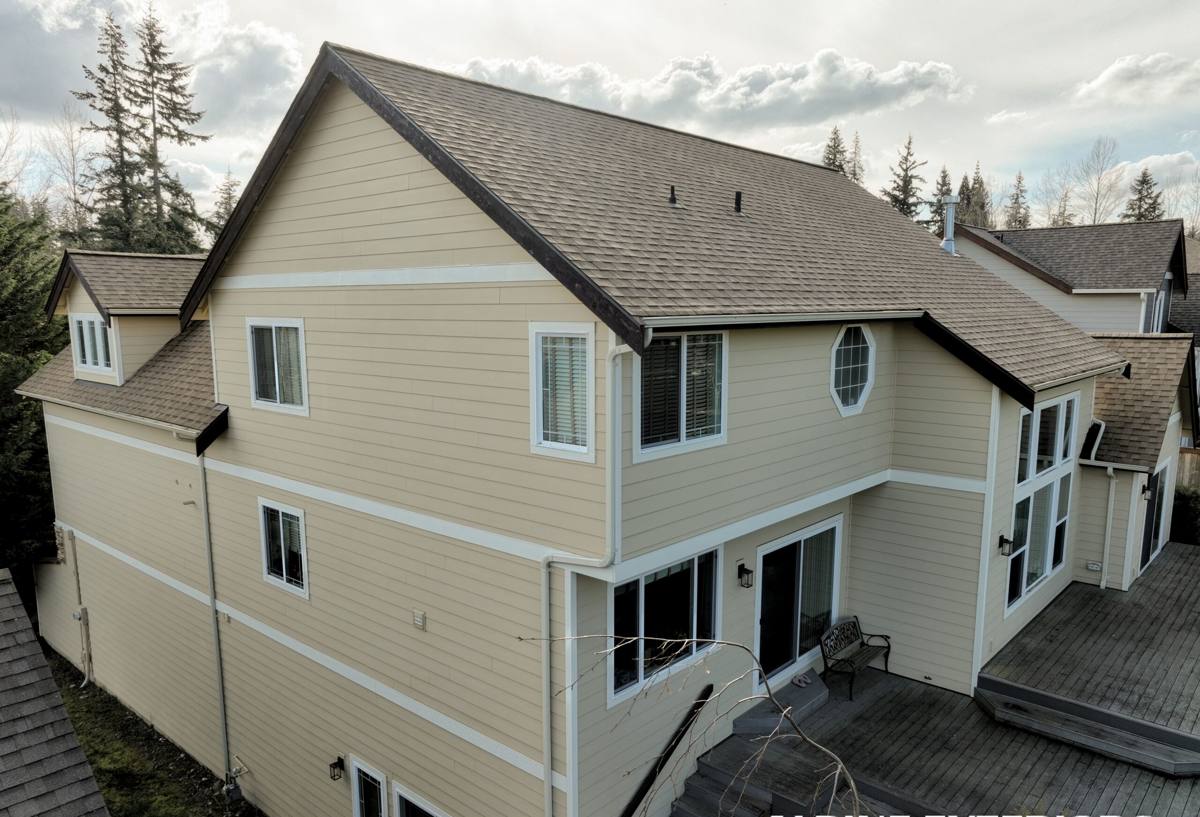
What Whatcom County's Climate Does to an Outdoor Deck
Three things drive almost every deck problem we see in this part of Whatcom County:
Salt Air and Corrosion
Homes near the water get a steady, low-level dose of salt in the air, even on days without a direct sea breeze. Salt accelerates corrosion in any metal it touches — fasteners, joist hangers, railing brackets, hinges. A deck built with standard hardware can develop rust streaks and weakened connections well before the wood itself shows any wear.
Driving Rain and Moisture Intrusion
Rain here doesn't just fall straight down — wind-driven rain gets pushed sideways into ledger connections, under railing posts, and into any gap where two pieces of wood meet. Over time, that moisture works its way into end grain and fastener holes, which is where rot actually starts. It's rarely the flat, exposed decking boards that fail first — it's the hidden joints.
Moss and Prolonged Dampness
A long moss season means decking surfaces, especially on the north or shaded side of a house, stay damp for extended stretches. Moss holds moisture against the wood surface, and it makes deck boards slick and dangerous underfoot when wet. Left unchecked, it also slowly degrades the wood fibers on the board's surface.
Choosing Decking Material for a Laurel Home
There's no single "best" decking material — it depends on your budget, how much maintenance you want to do, and how much sun versus shade your deck gets. Here's how the common options actually perform in this climate:
| Material | Moisture & Moss Resistance | Maintenance | Typical Lifespan Here |
|---|---|---|---|
| Pressure-treated fir/pine | Good if properly sealed and maintained; needs attention at cut ends | Re-seal or stain every 2-3 years | 15-20 years with upkeep |
| Cedar | Naturally rot-resistant, but surface still needs care in constant damp | Oil or seal annually to prevent graying and moss buildup | 20-25 years with upkeep |
| Composite decking | Doesn't absorb water or rot, but can still grow surface moss/mildew if never cleaned | Periodic washing, no sealing or staining needed | 25-30+ years, backed by manufacturer warranty |
| Untreated softwood | Poor — this climate is not forgiving of unsealed, untreated wood | High, and often too late once rot starts | We don't recommend it here |
Composite has become a popular choice for homes in this area specifically because it removes the sealing and staining cycle that salt air and rain make harder to keep up with. That said, plenty of homeowners still prefer the look and feel of real wood, and a well-built cedar or treated deck will last for decades if it's maintained on schedule. We'll walk through the honest trade-offs for your specific deck rather than pushing one material across the board.
Framing and Structure: Where Decks Actually Fail
The decking boards are the part everyone sees, but the framing underneath is what determines whether a deck is actually safe and long-lasting. In our experience working on decks around Laurel and the surrounding Semiahmoo area, the structural failures we get called out for almost always trace back to one of these:
- A ledger board attached to the house without proper flashing, letting wind-driven rain track behind it and rot the rim joist
- Joist hangers and structural screws that were never rated for exterior or coastal exposure
- Post bases sitting directly on or in contact with soil or concrete without a moisture break
- Undersized footings that were adequate on paper but never accounted for our wet ground conditions
- Missing or inadequate blocking, leading to bounce and movement over time
None of this is visible once the decking is installed, which is exactly why it gets skipped by crews trying to move fast. It's also exactly why a deck can look fine for a couple of years and then develop soft spots or movement that traces back to a framing decision made on day one.
Hardware and Fasteners Matter More Here Than Almost Anywhere
This is the detail that separates a deck built for this climate from one that just happens to sit in it. In a salt-air environment, standard galvanized fasteners and connectors corrode faster than the wood around them fails. We use fasteners and structural hardware rated for coastal and marine-grade exposure — stainless steel or heavy-duty coated products designed to resist the kind of corrosion that's routine for homes near Semiahmoo. It costs more up front than standard hardware, but replacing corroded fasteners on a finished deck is far more disruptive and expensive than specifying the right ones the first time.
How We Approach a Deck Building Project in Laurel
Every deck we build follows the same process, adjusted for the specific site conditions of your property:
- On-site assessment. We look at sun and shade exposure, drainage patterns, soil conditions, and how the deck will attach to your home, since that connection point is often the most vulnerable to moisture over time.
- Design and material selection. We talk through decking material, railing style, and layout based on your budget and how much ongoing maintenance you want to take on.
- Permitting. We handle the paperwork and coordinate any required inspections through Whatcom County so the project is built to code, not just to what's convenient.
- Footings and framing. This is where we invest in coastal-rated hardware, proper flashing at the ledger, and footings sized for our wet, often clay-heavy ground.
- Decking, railing, and finish work. Boards are installed with proper spacing for drainage and airflow, which matters a great deal for moss and moisture control down the line.
- Walkthrough. We go over maintenance expectations specific to your material choice so there are no surprises a year or two in.
Permits and Code Requirements for Decks in This Area
Most new decks and many significant deck rebuilds in Whatcom County require a building permit, particularly once the deck is attached to the house or exceeds a certain height or size. Requirements can shift depending on your specific property and whether you're in an area with additional shoreline or environmental review. Rather than guess, we confirm what applies to your address before work starts and manage the permit process as part of the job — it's not an added-on service, it's part of building the deck correctly.
Keeping a Laurel Deck in Good Shape Year-Round
The maintenance a deck needs in this part of Washington is different from what's recommended in drier regions. Regardless of material, a few habits go a long way toward getting the full lifespan out of your deck:
- Sweep debris and standing leaves off the deck surface regularly, especially in fall, so damp organic matter isn't sitting on the boards
- Treat moss growth early with an appropriate deck-safe cleaner rather than letting it establish and darken the wood
- Check railing posts and stair connections annually for movement, which can signal corroding hardware underneath
- Reseal or restain wood decking on the schedule appropriate to the material — don't wait until it's visibly gray and dry
- Keep gutters and downspouts near the deck clear so runoff isn't dumping extra water onto or under the structure
- Confirm gaps between boards stay clear so water and moss-feeding debris can drain through rather than collect
A few hours of attention each year is far cheaper than replacing rotted framing or corroded railings down the road.
Why It Matters to Hire a Crew That Already Works in Laurel
A deck design that works well in a dry inland climate can be the wrong call a few miles from the water. Ledger flashing details, hardware ratings, decking spacing, and even footing depth all need to account for the salt air, driving rain, and moss exposure that come with being this close to Semiahmoo. A crew that hasn't built decks in this specific environment is learning on your project — often at the framing and hardware level, where mistakes are hardest to see until years later.
We've built and repaired decks throughout this stretch of Whatcom County long enough to know which details actually matter here versus which ones are just upsells. That's the difference we bring to a Laurel deck project: not a generic build, but one specified for the conditions your home actually faces.
If you're planning a new deck or need to replace one that's showing its age, we're glad to take a look and put together a straightforward, no-pressure estimate — just fill out the form below.