 Semiahmoo Exterior
 Custer's Coastal Exposure Puts Real Stress on Exterior Siding
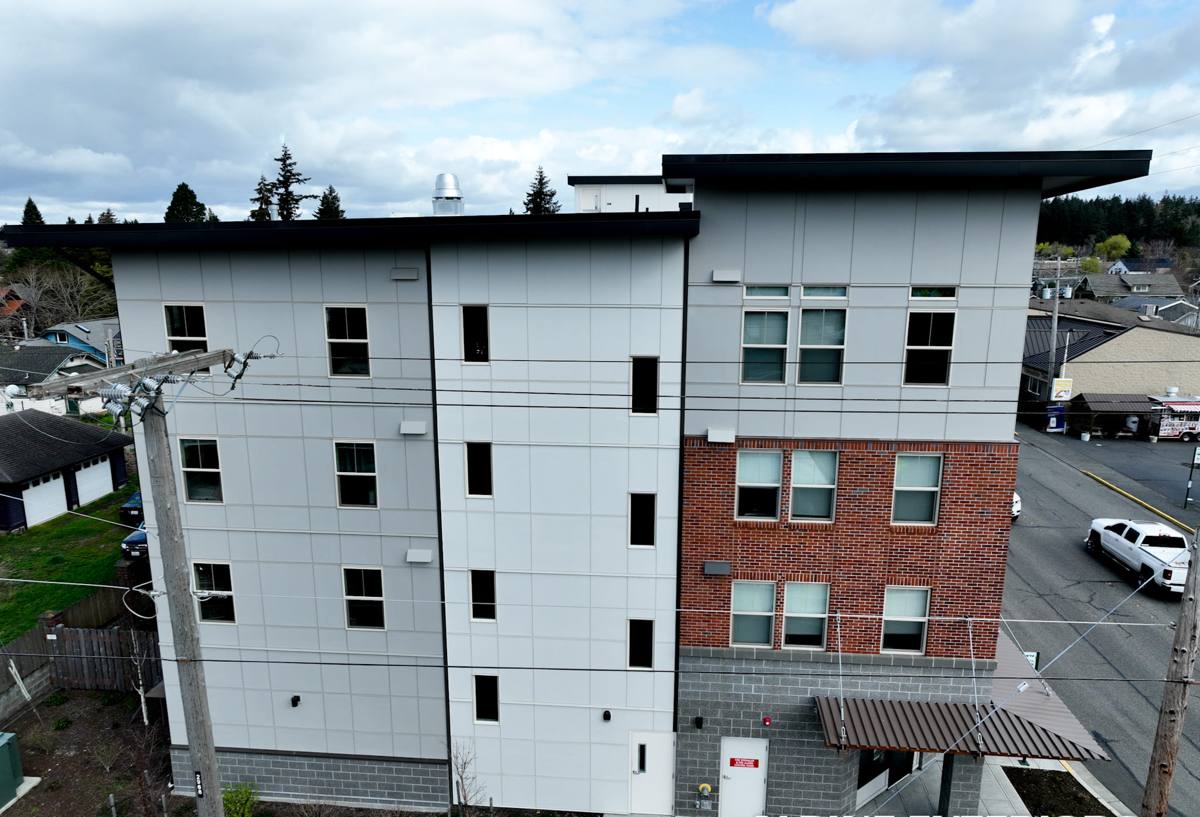
Custer sits close to the water along the Semiahmoo shoreline in Whatcom County, and that proximity changes what a home's exterior has to withstand. Salt-laden air moves inland on a regular basis, driving rain comes off the water in long soaking systems rather than quick showers, and the mix of moisture, shade, and mild year-round temperatures keeps moss and algae active on north- and west-facing walls for much of the year. Siding here isn't just a cosmetic layer — it's the first line of defense against a climate that rarely lets a wall fully dry out between weather events.
Homes with the wrong siding for this environment tend to show it early: chalking and fading from salt exposure, swelling or delaminating at butt joints and corners, and a persistent green-black film on shaded elevations. That's not bad luck. It's what happens when a siding product engineered for a drier or more moderate climate gets installed in a marine one and asked to perform anyway.
What Custer Homes Actually Need From Their Siding
A siding system that holds up in Custer needs to do three things well: shed water fast without trapping it behind the cladding, resist the slow chemical wear that salt air causes to paint and surface coatings, and stay dimensionally stable through repeated wet-dry cycles instead of swelling, cupping, or opening gaps at the joints. Products that rely on a raw wood substrate or an engineered wood core are the most vulnerable on that last point — any breach in the factory coating gives moisture a path into the material, and once that starts, it doesn't reverse itself.
Ventilation and drainage behind the siding matter just as much as the siding material itself. A correctly built wall assembly — weather-resistant barrier, properly lapped flashing, a drainage gap where called for, and siding that's fastened and gapped to spec — is what actually keeps a home dry in this climate. The siding is only as good as the assembly it's part of.
Why We Install Only James Hardie Fiber Cement
We standardized on James Hardie fiber cement siding and don't install vinyl, LP SmartSide, Cemplank, Allura, primed spruce, or cedar. That's a deliberate professional call, not a sales position. Fiber cement is cement, sand, and cellulose fiber — there's no wood substrate to absorb water and swell, and it's non-combustible, which matters to insurers and to homeowners thinking about wildfire smoke and ember exposure even on the wet side of the state.
James Hardie also builds region-specific product lines. The HZ5 formulation is engineered for climates with freeze-thaw cycling and sustained moisture exposure — a reasonable match for Whatcom County's marine weather pattern. Combined with the factory-applied ColorPlus finish, which is baked on under controlled conditions rather than field-applied, the result is a coating that resists the fading and chalking that salt air and UV exposure otherwise cause over time. James Hardie backs the product with a long transferable limited warranty, which only holds up if the installation itself is done to their specification — a point worth remembering when comparing bids.
What We Won't Install, and Why
Vinyl siding is inexpensive and low-maintenance in the sense that it doesn't need painting, but it's a thin material that expands and contracts significantly with temperature swings, can crack in impact-prone areas, and doesn't hold up structurally the way a cement-based product does over decades. LP SmartSide and other engineered wood products perform reasonably well when every seam and cut edge is perfectly sealed and maintained, but they rely on that seal holding for the life of the product — in a climate this wet, that's a maintenance burden we're not willing to install a home to depend on. Primed spruce and cedar are traditional and can look excellent, but raw or minimally-treated wood siding requires ongoing refinishing, and Custer's moss and moisture pressure shortens the interval between recoats considerably. None of these are "bad" products in every setting. They're just not the right match for this specific climate, and we'd rather turn down the install than put something on a Custer home that we know will cause callbacks in five years.
What Correct Fiber Cement Installation Involves
Fiber cement siding is only as good as the crew installing it. The material is forgiving in some ways — it doesn't rot — but it's unforgiving of installation shortcuts in others, and a rushed job shows up as problems within a few wet seasons rather than immediately.
- Weather-resistant barrier installed and lapped correctly, with all penetrations flashed before siding goes on
- Rainscreen or drainage gap behind the siding where the assembly calls for it, so water that gets behind the cladding has somewhere to go
- Proper starter strip at the base course so the first row sits at the correct angle and height
- Butt joints staggered and either caulked and painted per Hardie spec or protected with H-flashing, never left as bare cut edges
- Fasteners set to the correct depth and spacing — overdriven nails crack the board's edge and create a moisture entry point
- Minimum clearance maintained from grade, roofing, and decking so siding never sits in standing water or constant splash-back
- Cut edges field-primed before installation, since factory ColorPlus coating doesn't extend to a fresh cut
- Caulking limited to the joints Hardie specifies — over-caulking traps moisture instead of letting the assembly breathe and drain as designed
Every one of those steps is easy to skip and hard to spot after the fact. A siding job that looks fine from the driveway can still have moisture problems building behind it if the flashing and gapping weren't done right.
Comparing Siding Options for a Custer Home
| Material | Moisture / Salt Air Behavior | Maintenance | Typical Lifespan |
|---|---|---|---|
| James Hardie fiber cement | Cement-based, no wood substrate to swell; HZ5 line engineered for wet, marine climates | Occasional wash; repaint interval is long due to factory ColorPlus finish | 30+ years with correct install |
| Vinyl | Won't rot but expands/contracts with temperature; can crack on impact | Low, but limited repair options if damaged or faded | 20-30 years, shorter in high-UV or impact-prone areas |
| LP SmartSide / engineered wood | Wood-strand core; performs well only if every seam and cut stays sealed | Requires diligent caulk and paint upkeep, especially in wet climates | Highly dependent on maintenance follow-through |
| Cedar / primed spruce | Natural wood; absorbs moisture without disciplined refinishing | Frequent recoating, more often in moss-prone, shaded exposures | Variable, shortened by moisture and moss pressure |
Our Process, Start to Finish
We start with an in-person walk-around of the home, looking at existing siding condition, trim and flashing details, moisture staining, and any moss or algae buildup that points to drainage issues. From there we put together a written scope covering the Hardie product line, profile, and color, along with what the underlying wall assembly needs — sometimes that's a straightforward re-side, and sometimes there's sheathing or flashing repair to handle first.
During installation we follow Hardie's published fastening, clearance, and joint-treatment specifications exactly, because that's what keeps the manufacturer's warranty intact and what actually performs in this climate. We flash and seal penetrations — vents, hose bibs, light fixtures — as we go rather than caulking around them afterward. At the end of the job we walk the property with the homeowner, point out anything they should watch for seasonally, and leave them with the warranty documentation.
Living With Fiber Cement Siding in a Salt Air, Moss-Prone Climate
Correctly installed Hardie siding needs very little upkeep, but "very little" isn't "none." A short seasonal routine keeps it looking right and catches small issues before they become expensive ones:
- Rinse the siding down once or twice a year, focusing on shaded north- and west-facing walls where moss and algae take hold first
- Walk the exterior after major storms and check caulked joints, corners, and trim for cracking or gaps
- Keep gutters clear so overflow doesn't run down and constantly wet one section of wall
- Trim back vegetation and landscaping that shades siding and keeps it from drying out between rain events
- Repaint on the schedule appropriate for the finish, though ColorPlus-coated Hardie extends that interval well beyond typical field-applied paint
Why Hiring a Crew That Already Works in Custer Matters
Siding crews that mostly work drier inland areas don't always account for how much more aggressive marine exposure is on fastener choice, flashing details, and drainage planning. A contractor who works this stretch of Whatcom County regularly already knows which elevations on a typical Custer home take the worst weather, where moss tends to establish first, and how much clearance and drainage margin to build in rather than the bare code minimum. That local pattern recognition is the difference between a siding job that looks good at handoff and one that still looks good after a decade of Semiahmoo winters.
If you're weighing a re-side or new siding on a Custer home, we're glad to walk the property, look at what's there now, and talk through what James Hardie fiber cement would involve for your specific house — no pressure, no obligation. The estimate form below is the easiest way to get that conversation started.