 Semiahmoo Exterior
 Storm Damage Roofing in Cherry Point, Near Semiahmoo
Cherry Point sits right up against the water in Whatcom County, and that location cuts both ways. The views are part of why people live out here, but the same exposure that gives you the view also gives your roof a harder life than a roof fifteen miles inland. Wind off the Strait of Georgia, salt-laden air, driving rain that comes in sideways during winter storms, and a moss season that never really ends — all of it works on shingles, flashing, and fasteners year after year. When a storm does real damage, the repair needs to account for all of that, not just patch the hole and move on.
This page is about one job: storm damage roof repair for homes in and around Cherry Point. Not a general roofing overview, not a sales pitch for a full tear-off you may not need — just what a proper storm repair looks like out here, what we check, and why the details matter more in this stretch of Whatcom County than they do in a lot of other places.
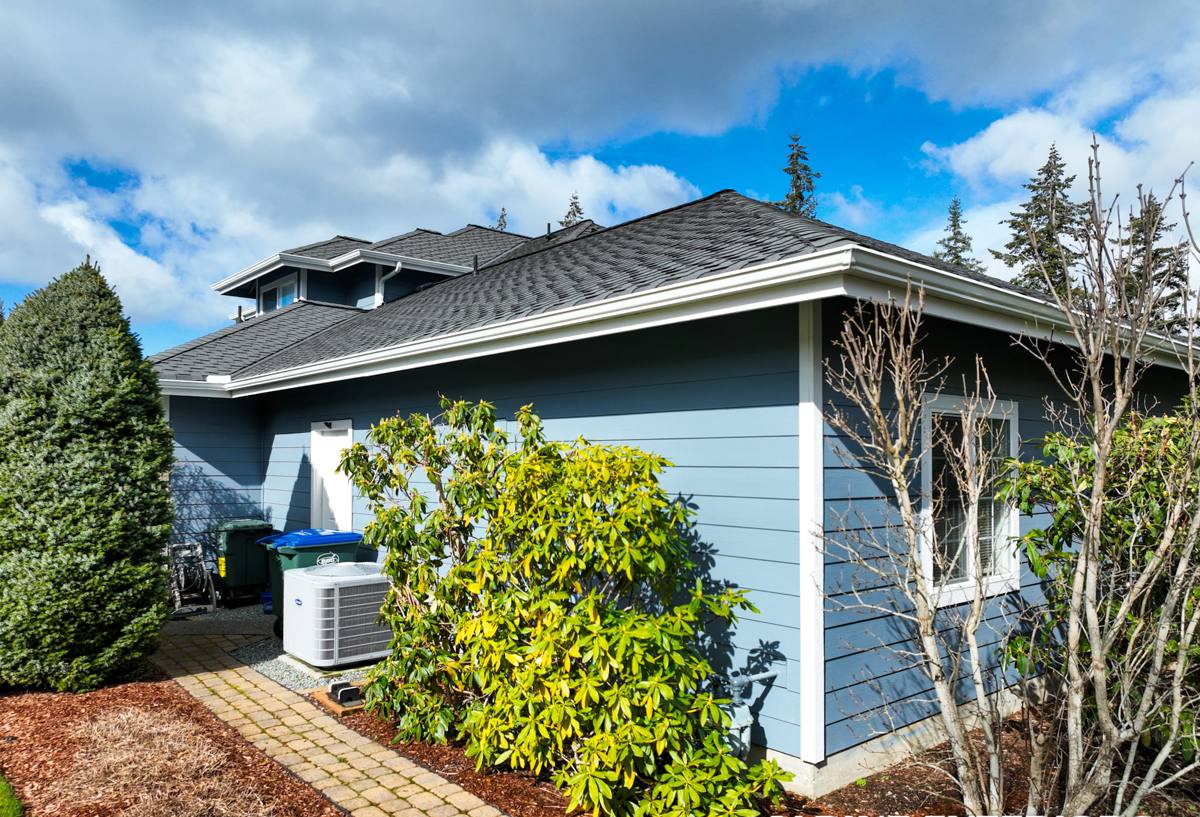
Why Cherry Point Roofs Take a Different Kind of Beating
Salt Air and Metal Fasteners
Homes close to the water deal with airborne salt that settles on the roof and works into every exposed metal surface. Roofing nails, flashing seams, gutter fasteners, and vent boots all corrode faster near Cherry Point than they do a few miles inland. A storm that pulls a few shingles loose often reveals fasteners that were already weakened by corrosion — the wind just finished the job the salt air started. When we repair storm damage here, we're not just replacing what blew off; we're checking the condition of the metal underneath it.
Driving Rain and Wind-Driven Water Intrusion
Whatcom County storms coming off the Strait don't always drop rain straight down. Wind-driven rain gets pushed sideways and can work its way under shingles, around flashing, and through gaps that would never leak in a calm rain. That means storm damage isn't always obvious from the ground — a roof can look mostly intact after a storm and still have water tracking in at a ridge, valley, or chimney flashing that took the brunt of the wind.
Moss Season and What It Does to Storm-Damaged Areas
This region's moss season runs long — mild, damp winters and shaded, north-facing roof slopes give moss plenty of time to establish itself. Moss on its own is a maintenance issue, but moss on top of storm damage is worse. It holds moisture directly against exposed decking or lifted shingles, which speeds up rot in exactly the spot that's already compromised. Part of a proper storm repair in this area is checking for moss growth around the damaged section and dealing with it as part of the repair, not leaving it to keep working on the wood underneath.
What a Correct Storm Damage Repair Actually Involves
A storm repair done right is not just "find the missing shingles, nail down new ones." It's a sequence, and skipping steps is how homeowners end up calling back six months later with a leak that traces back to the same storm.
1. Full Roof Assessment, Not Just the Obvious Spot
Wind damage rarely stays confined to one area. We check the whole roof — ridge caps, valleys, flashing around chimneys and vents, gutter attachment points, and the field of the roof itself — because wind uplift often loosens shingles that haven't blown off yet but will in the next storm if they're not resecured.
2. Checking the Decking, Not Just the Shingles
If water got under the roofing material during the storm, the plywood or OSB decking underneath may be wet or starting to soften. Nailing new shingles over compromised decking is a short-term fix that fails again. Any area with visible water intrusion gets checked for deck condition before we close it back up.
3. Flashing and Fastener Review
Given the salt air issue covered above, storm repairs near Cherry Point should always include a look at nearby flashing and fastener condition, not just the section that failed. If corrosion is advancing on adjacent flashing, it's worth addressing now rather than doing a second repair call next winter.
4. Matching Materials Correctly
Repairs should match the existing roof's shingle type, color, and exposure as closely as possible. A patch that doesn't match isn't just cosmetic — mismatched materials can shed water differently at the seams, which creates a new vulnerable spot right where the repair meets the original roof.
5. Documentation for Insurance
Storm damage repairs are frequently insurance claims. We document what we find with photos and a written scope before and after the work, which matters if you're filing a claim or if a question comes up later about what was damaged versus what was pre-existing wear.
Our Process for Cherry Point Storm Calls
- Initial contact and triage: We ask what happened, when, and whether there's active leaking — active leaks get prioritized over cosmetic damage.
- On-site inspection: We walk the roof (or use a drone where roof pitch or access makes that safer) and inspect the full surface, not just the reported damage area.
- Written scope and honest recommendation: You get a clear explanation of what's damaged, what's just worn, and what genuinely needs to be done versus what could wait.
- Repair, not upsell: If the damage is isolated and the rest of the roof is sound, we repair the damaged section. We don't push a full replacement when a repair will hold.
- Follow-up check: After significant storm events, it's worth a quick follow-up look, especially on repairs made during active weather when conditions weren't ideal for a full inspection.
Repair vs. Replacement: How We Make the Call
Not every storm-damaged roof needs to come off. The decision usually comes down to the age and condition of the roof underneath the damage, how widespread the damage actually is, and whether the repair can be made durably given the existing materials.
| Factor | Leans Toward Repair | Leans Toward Replacement |
|---|---|---|
| Roof age | Under 12-15 years, materials still sound | Nearing or past expected shingle lifespan |
| Damage extent | Isolated to one slope or section | Spread across multiple slopes or the whole roof |
| Decking condition | Dry, solid decking under damaged area | Soft or delaminated decking in multiple spots |
| Prior moss/moisture history | Well-maintained, minimal moss buildup | Long-term moss coverage with underlying rot |
| Material availability | Matching shingles still available | Discontinued product, no reasonable match |
We'll give you a straight answer on which side of that table your roof falls on. If a repair is the honest recommendation, that's what we'll propose — a storm-damaged roof doesn't automatically mean a new roof.
Why a Crew That Already Works Cherry Point Matters
Roofing crews that don't work this stretch of coastline regularly tend to treat every job the same way, regardless of location. That's a mistake here. A crew that's used to working closer to Bellingham or further inland may not think twice about fastener corrosion, may not budget extra time for moss removal around a repair, and may not know how wind tends to hit roofs on this particular shoreline versus a roof set back from the water.
A crew that already works Cherry Point and the surrounding Semiahmoo area knows what to check without being told, shows up understanding the general wind patterns and exposure levels of homes along this coastline, and isn't guessing at how salt air and long moss seasons interact with storm damage. That local familiarity translates into fewer surprises during the repair and a lower chance of a callback for something that should have been caught the first time.
Common Storm Damage We See in This Area
- Wind-lifted or missing shingles, especially along ridge lines and roof edges where uplift pressure is highest
- Flashing separation around chimneys, skylights, and roof-to-wall transitions
- Granule loss from wind-driven debris, which accelerates shingle aging even without visible holes
- Gutter and downspout damage from wind or falling branches, which can redirect water onto the roof edge or fascia
- Soft spots in decking discovered only after a leak has been active for a while
- Corroded or loosened fasteners on older roofs that were already due for maintenance before the storm hit
Some of these are obvious right after a storm. Others, particularly decking issues and slow flashing leaks, don't show up until weeks later as a stain on a ceiling or a musty smell in an attic. If you've had a significant storm come through and haven't had the roof looked at, it's worth getting ahead of it rather than waiting for a visible sign inside the house.
What to Do Right After a Storm
- Do a visual check from the ground — look for missing shingles, displaced flashing, or debris caught on the roofline. Don't get on the roof yourself, especially on wet or steep surfaces.
- Check the attic or top-floor ceilings for staining, damp spots, or a musty smell, which can indicate a leak before it shows up outside.
- Photograph any visible damage from the ground for your records, especially if you plan to file an insurance claim.
- Address active leaks with a tarp or temporary cover only if it's safe to do so — otherwise, call for a professional assessment.
- Get an inspection scheduled promptly. Delayed repairs give wind-driven rain and moss more time to turn a minor issue into a bigger one.
Cost Factors for Storm Repairs
Every storm repair is different, so we're not going to quote a number without seeing the roof. But a few things consistently drive the cost up or down, and it's worth knowing them going in.
| Factor | Effect on Cost |
|---|---|
| Number of damaged sections | One isolated area costs far less than damage spread across the roof |
| Decking replacement needed | Adds material and labor cost beyond a shingles-only repair |
| Roof pitch and access | Steep or hard-to-access roofs take longer and cost more to work safely |
| Material match availability | Discontinued shingle lines may require a larger repair area to blend properly |
| Insurance involvement | Claims add documentation time but shouldn't change the actual repair scope |
Get an Honest Look Before You Decide Anything
If a recent storm has left you with missing shingles, a new stain on the ceiling, or just a nagging feeling that something's not right up there, it's worth having it checked before the next round of Whatcom County weather rolls through. We'll give you a straightforward, no-pressure estimate — what's damaged, what it'll take to fix it correctly, and what it should cost. Reach out using the form below to get a local crew out to your Cherry Point home.