 Semiahmoo Exterior
 Why Cherry Point Siding Wears Out Faster Than Homeowners Expect
Cherry Point sits close to the water, and that proximity to Semiahmoo Bay and the Strait of Georgia shapes everything about how siding ages here. Salt-laden air moves inland on the prevailing wind, settling into seams, fastener heads, and any spot where paint or caulk has started to give way. Add Whatcom County's driving rain — often blown sideways during winter storms — and you get moisture finding its way into joints that would stay dry in a more sheltered inland location.
Then there's the shade. Many Cherry Point lots sit under mature evergreens or border wooded buffers, which means long stretches of the year where siding never fully dries out. That combination of moisture and shade is exactly what moss and algae need to take hold, and once they do, they hold water against the siding surface far longer than open sun-exposed walls ever would. Homeowners here often describe a "moss season" that runs from fall through spring — and it's not an exaggeration. It's a real, measurable factor in how fast siding fails.
None of this means Cherry Point homes are doomed to constant repairs. It means the siding system has to be chosen and installed with this specific combination of salt exposure, driving rain, and prolonged dampness in mind — not treated like a generic re-side job.
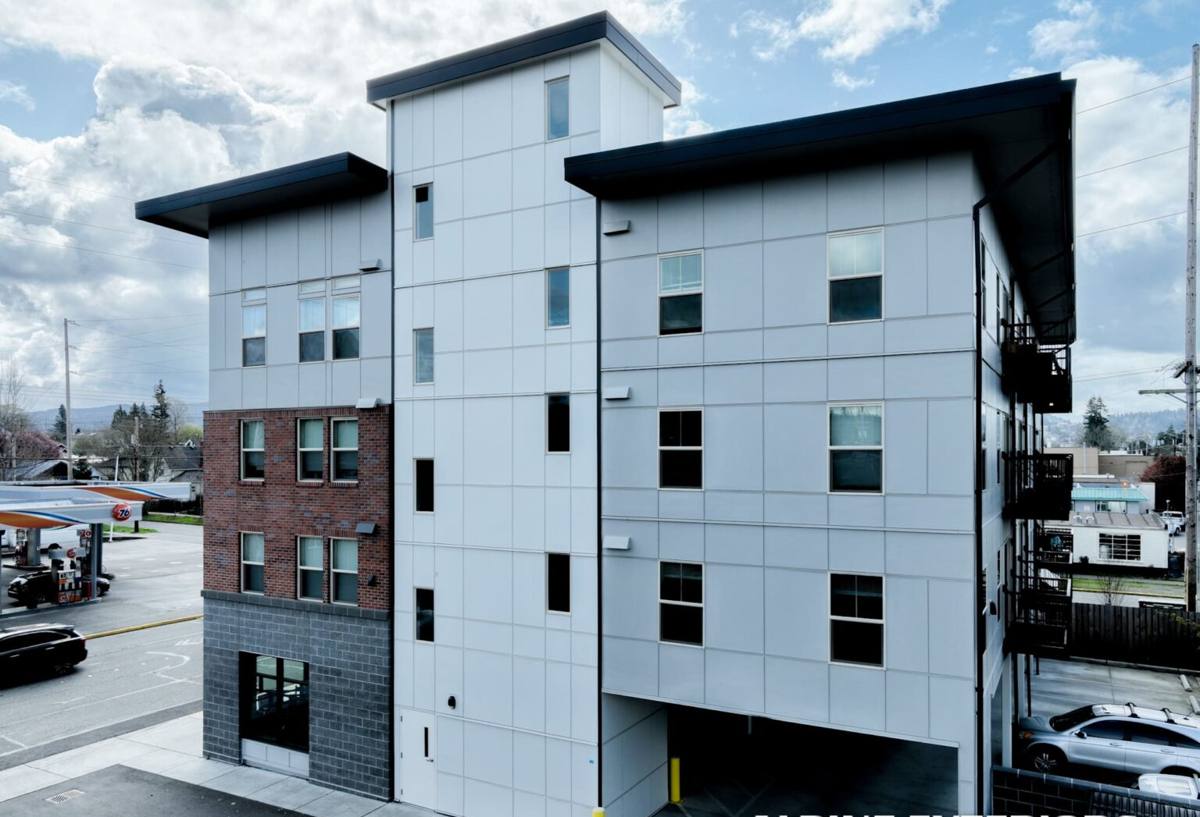
Signs Your Siding Has Reached the End of Its Service Life
Not every siding problem calls for full replacement. But there's a point where patching stops making sense and a full tear-off is the more honest recommendation. Watch for:
- Soft or spongy spots when you press on the siding, especially near the bottom courses and around window trim
- Paint that keeps failing within a year or two of repainting, even after proper prep
- Persistent moss or dark algae staining that returns within months of cleaning
- Visible buckling, warping, or cupping of individual boards or panels
- Gaps opening up at butt joints, corners, or trim intersections
- Delamination or swelling at cut edges, common on older hardboard or OSB-based siding products
- Rising utility bills or noticeably cold interior walls, which can point to a failing weather barrier behind the siding
If you're seeing two or more of these at once, that's usually a sign the water-management layer behind the siding — not just the surface material — has been compromised.
What a Correct Siding Replacement Actually Involves
Tear-Off and Sheathing Inspection
A real replacement starts with full removal of the old siding, not an overlay. That's the only way to see what's actually happening at the sheathing level — soft plywood, rot around window openings, or rusted fasteners all get missed when new siding goes over old. Any compromised sheathing gets cut out and replaced before anything new goes up.
Weather-Resistive Barrier and Flashing
This is the layer that matters most in a climate like this one. A continuous weather-resistive barrier, properly lapped and taped, combined with correctly installed flashing at every window, door, and penetration, is what actually keeps driving rain from reaching the framing. Siding itself is the visible layer — the barrier behind it is what does the real work during a wind-driven winter storm.
Fastening and Clearances
Fastener spacing, embedment depth, and material all affect how well siding holds up to salt air over time. Ground clearance and gaps at grade, decks, and roof lines also matter — those are the spots where moisture tends to wick up into the siding if clearances are cut too tight.
Trim, Caulking, and Finish
The last step is where a lot of shortcuts happen on rushed jobs: proper caulking at joints designed to be sealed, factory-finished trim where possible, and touch-up painting done to match rather than slapped on. This is also where a crew's attention to detail shows up most clearly five years down the road.
Why We Install Only James Hardie Fiber Cement
We've made a deliberate call to install James Hardie fiber cement siding exclusively — not vinyl, not LP SmartSide, not cedar, not primed spruce. That's not a marketing position, it's a response to what actually holds up in a climate like Whatcom County's. Here's how the common options compare on the factors that matter most in a salt-air, high-moisture environment:
| Material | Moisture & Salt Air Behavior | Moss/Algae Resistance | Long-Term Maintenance |
|---|---|---|---|
| James Hardie Fiber Cement | Non-combustible, dimensionally stable, doesn't swell or rot from moisture exposure | ColorPlus factory finish resists staining better than field-painted surfaces | Low — occasional rinse and caulk checks |
| Vinyl Siding | Doesn't rot, but can warp or become brittle with age and temperature swings | Seams and laps trap moisture and organic growth | Low upfront, but seams and fading are hard to fully correct |
| LP SmartSide (Engineered Wood) | Wood-based core is vulnerable if the factory seal is ever breached at cuts or joints | Moderate — depends heavily on caulking and paint maintenance | Moderate to high — repaint cycles matter more here than elsewhere |
| Cedar / Primed Spruce | Natural wood movement and moisture absorption, especially in shaded, damp conditions | Prone to moss and mildew without frequent treatment | High — regular sealing, staining, or painting required |
James Hardie's HZ5 product line is engineered specifically for climates like ours — regions with sustained moisture, freeze-thaw cycling, and humidity swings. The ColorPlus factory finish is baked on under controlled conditions, which gives it more consistent adhesion and color retention than siding painted on-site, especially against the kind of grime and staining that salt air and shade produce. It's also non-combustible, which matters for insurance conversations as much as it does for peace of mind.
We're not going to tell you vinyl or engineered wood are bad products — they have real uses and reasonable price points. But for a Cherry Point home taking on salt air, driving rain, and months of shaded dampness every year, we've seen enough to know which material earns its keep over 20-plus years, and which ones ask for more attention than most homeowners want to give.
Our Siding Replacement Process
- On-site inspection and estimate — we walk the exterior, check for moisture intrusion, and note any elevations taking extra weather exposure
- Material and color selection — choosing the right Hardie profile and ColorPlus finish for the home's exposure and style
- Full tear-off — removing existing siding down to the sheathing
- Sheathing repair — replacing any rotted or compromised panels found underneath
- Weather-resistive barrier and flashing installation — the layer that does the real waterproofing work
- Siding installation — installed to manufacturer fastening and clearance specifications, not shortcut spacing
- Trim, caulking, and finish work — sealing joints and matching factory finishes at cut edges
- Site cleanup and final walkthrough — going over the finished work with you before we call it done
What Drives the Cost of a Siding Replacement
Every home is different, and we'd rather walk your specific property than throw out a number that doesn't apply to it. What we can tell you is which factors actually move the cost:
| Cost Factor | Why It Matters |
|---|---|
| Total square footage and home shape | More corners, gables, and dormers mean more cutting, flashing, and labor time |
| Condition of existing sheathing | Rot or water damage found during tear-off adds repair scope before new siding goes up |
| Siding profile and trim detail | Lap siding, board-and-batten, and shingle-style panels each carry different labor and material costs |
| Number of windows, doors, and penetrations | Each opening needs its own flashing work, which adds time regardless of overall square footage |
| Site access | Tight lots, slopes, or limited staging space can add time for material handling and equipment setup |
| Height and story count | Second-story and steep-roof work requires more scaffolding and safety setup |
The honest answer is that the only way to get a real number is to have someone walk the property. That's what our estimate is for, and it costs you nothing to find out.
Why a Crew That Already Works Cherry Point Makes a Difference
Siding installation isn't the same job in every part of Whatcom County. A crew that regularly works homes near Semiahmoo Bay already knows which elevations tend to take the worst of the wind-driven rain, where fastener corrosion shows up first in salt-exposed areas, and how much extra attention shaded, moss-prone walls need compared to open, sun-facing ones. That's knowledge you don't get from a general contractor working a job list scattered across the whole region.
Local familiarity also matters for the less glamorous parts of the job — knowing the permitting process for Whatcom County, understanding typical lot setbacks and drainage patterns in the area, and having a realistic sense of how weather windows affect scheduling near the water. None of that shows up in a sales pitch, but it shows up in how smoothly the job actually runs.
Ongoing Maintenance Checklist for Cherry Point Homes
- Rinse siding annually with a garden hose or soft wash — avoid high-pressure washing, which can force water behind panels and joints
- Check and clean gutters twice a year so overflow doesn't run down and stain the siding face
- Inspect caulking at joints and trim every year or two, especially on wind-exposed elevations
- Treat moss and algae growth promptly on shaded walls rather than letting it build up over a full season
- Touch up any nicked or chipped ColorPlus finish promptly to prevent moisture from reaching the substrate
- Walk the exterior after major winter storms to check for loose trim, debris damage, or displaced flashing
Ready to Talk About Your Home's Siding?
If your Cherry Point home is showing signs of siding failure — or you just want an honest read on how much life is left in what's on the walls now — we're happy to take a look. The estimate is free, there's no pressure, and you'll get a straight answer about what your home actually needs, not a generic sales pitch. Use the form below to get started.