 Semiahmoo Exterior
 Cherry Point Sits Right at the Edge of the Weather
Cherry Point is exposed in a way that inland Whatcom County neighborhoods simply aren't. Homes here face the open water of the Strait of Georgia and the Salish Sea, which means wind-driven rain arrives sideways more often than straight down, salt-laden air moves through every day of the year, and the shaded, damp stretches of fall and winter turn north- and west-facing walls into moss farms if the siding and the install don't account for it. This isn't a place where "good enough" siding survives on luck. It's a place where the climate actively tests every seam, fastener, and coat of finish a siding product has.
Homeowners in this part of Semiahmoo often don't notice the toll until it's already showing: chalky or peeling paint on the weather side of the house, soft spots near trim and window sills, dark green streaking that keeps coming back no matter how many times it's pressure-washed off. None of that is cosmetic bad luck. It's what happens when a siding material or an installation detail wasn't built for constant moisture and salt exposure in the first place.
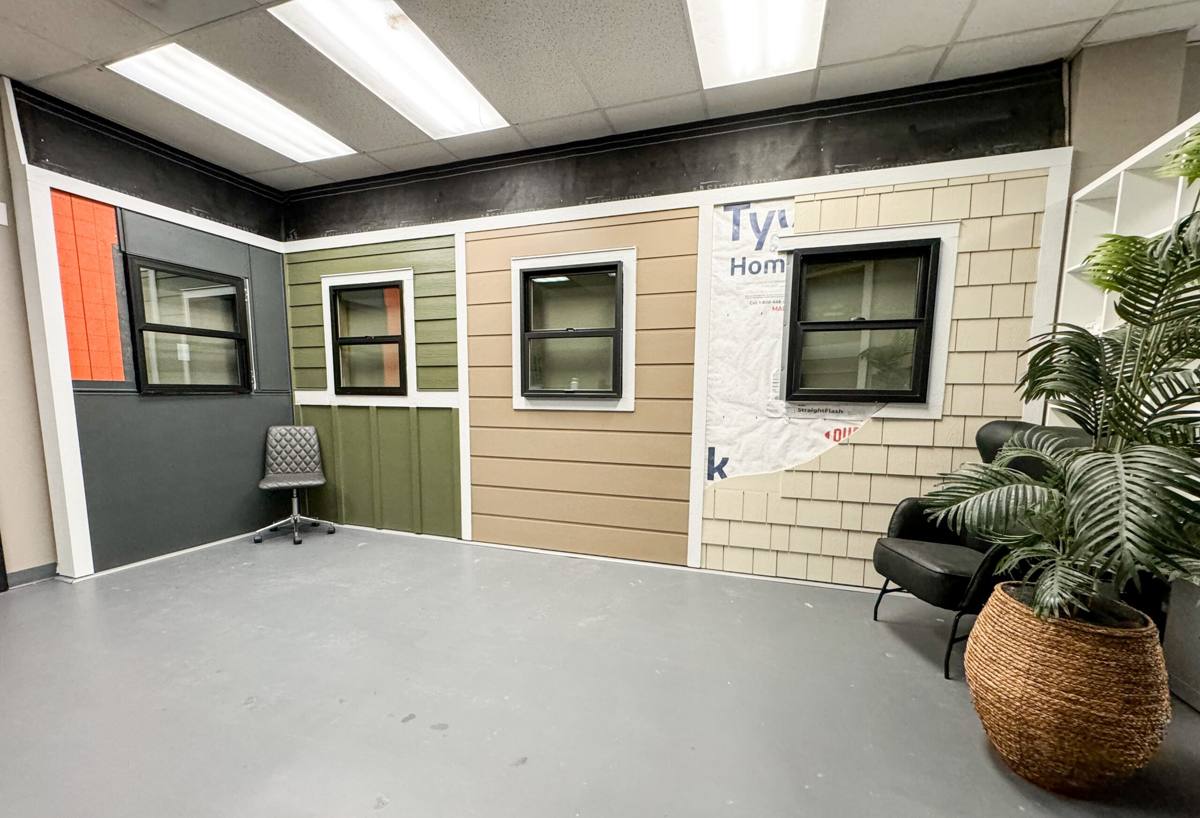
What a Cherry Point Home Actually Needs From Its Siding
Moisture That Doesn't Have Anywhere to Hide
Driving rain off the water doesn't just wet the surface of a wall — it pushes moisture into every gap, lap joint, and penetration it can find. Siding in this environment needs to shed that water fast and needs a wall assembly behind it that can dry out between storms. A product or installation that traps moisture, even a little, compounds over years of Whatcom County's wet season into rot, mold, and failed fasteners.
Salt Air That Doesn't Quit
Salt-laden air is corrosive to metal fasteners and trim, and it accelerates the breakdown of finishes that aren't engineered to resist it. A siding product that looks fine in a lab test three states inland can chalk, fade, or degrade years ahead of schedule once it's living a quarter mile from open saltwater.
Moss Season That Runs Half the Year
Whatcom County's shaded, damp winters are long, and Cherry Point's tree cover and marine humidity make moss and algae growth a near-constant pressure on north-facing and shaded walls. Siding needs a finish that resists organic growth and a wall detail that keeps standing moisture off the surface — because moss doesn't just look bad, it holds water against the siding and shortens its life.
Why We Only Install James Hardie Fiber Cement
We made a decision as a company to install James Hardie fiber cement siding exclusively — not LP SmartSide, not vinyl, not Cemplank or Allura, not primed spruce or cedar. That's not a marketing angle. It's because, wall after wall in this exact kind of coastal, wet-winter environment, Hardie's fiber cement construction holds up to the specific stresses Cherry Point homes deal with better than the alternatives, and we don't want to sell a homeowner something we don't believe will still look right in fifteen years.
Fiber cement is non-combustible and dimensionally stable — it doesn't expand and contract with moisture the way wood-based products do, and it doesn't soften or delaminate the way engineered wood siding can when water finds a way in through a damaged edge or a missed caulk joint. In a climate where wind-driven rain and long damp stretches are simply normal weather, that stability matters more than it does in a drier region.
Hardie's Climate-Engineered Product Lines
James Hardie builds its siding in different formulations for different climate zones, and coastal Pacific Northwest homes are exactly the use case those formulations exist for. The HZ5 line is engineered for regions with more moisture exposure and freeze-thaw cycling, which fits Whatcom County's marine climate far better than a one-size-fits-all product.
ColorPlus Factory Finish
Rather than relying on field-applied paint that has to cure correctly in whatever weather shows up on install day, Hardie's ColorPlus finish is baked on at the factory under controlled conditions, which gives it stronger, more consistent resistance to fading, chipping, and the salt-air chalking that shortens the life of a lot of field-painted siding. It also comes backed by its own finish warranty separate from the product warranty on the siding substrate itself.
Siding Options Compared for a Cherry Point Wall
| Factor | James Hardie Fiber Cement | Vinyl | Engineered Wood (e.g. LP SmartSide) |
|---|---|---|---|
| Salt air / coastal finish durability | Factory-baked ColorPlus finish resists fading and chalking | Can become brittle and discolored over time in coastal UV/salt exposure | Field-applied paint needs earlier repainting cycles |
| Moisture behavior | Dimensionally stable, doesn't swell or rot | Doesn't rot, but can warp and gap, letting water track behind it | Wood-based core is vulnerable to swelling and rot if edges are compromised |
| Fire resistance | Non-combustible | Combustible, can melt/deform near heat sources | Combustible |
| Installation sensitivity | Requires correct fastening, clearances, and caulking to perform to spec | Forgiving of minor gaps but limited long-term durability | Cut edges and joints must be sealed correctly or moisture gets in |
| Typical warranty structure | Long, transferable limited warranty on substrate plus separate finish warranty | Varies widely by manufacturer and grade | Shorter warranty terms, often more exclusions around moisture damage |
None of these products are without trade-offs, and we're not going to pretend vinyl or engineered wood are junk — they have a place. But given what Cherry Point's weather does to a wall over a decade, we standardized on the product that we're most confident will still be doing its job when it's fifteen years old and facing the water.
What Correct Installation Looks Like — Because the Install Matters as Much as the Product
Even the right siding fails early if it goes on wrong, and that's especially true in a wind-and-rain-exposed spot like Cherry Point. Correct James Hardie installation isn't just nailing boards to a wall — it's a water-management system.
Flashing and Water Management
Every window, door, and penetration needs flashing detailed to shed water down and out, not into the wall assembly. On a home taking direct spray off the water, a skipped or shortcut flashing detail is usually where the first rot shows up, years down the line.
Fastening to Manufacturer Spec
Hardie siding has specific fastener type, spacing, and placement requirements, and corrosion-resistant fasteners matter even more in salt air than in a typical inland install. Fasteners driven too shallow, too deep, or in the wrong location can void warranty coverage and create early failure points.
Clearances and Gaps
Hardie's installation instructions call for specific clearances from grade, roofing, decks, and other siding — clearances that keep the bottom edge of the siding from sitting in standing water or trapped moisture. This is a detail that's easy to shortcut and expensive to ignore.
Joints and Caulking
Butt joints, corners, and trim intersections need to be sealed with a caulking approach designed to move with the building and shed water, not just look clean on install day.
- Weather-resistive barrier installed and lapped correctly before siding goes on
- Flashing at every window, door, and penetration point
- Correct, corrosion-resistant fastener type and spacing per Hardie spec
- Proper clearance from grade, roofline, decks, and other trim
- Joints and seams sealed with a caulk suited to a wet, salt-air climate
- Final inspection of butt joints, corners, and trim intersections before close-out
Our Process for a Cherry Point Siding Job
- Walk-through and assessment — we look at your home's exposure (which walls take the most weather off the water), existing siding condition, and any moisture or rot already present behind the current cladding.
- Product and color plan — we walk you through Hardie's board profiles and ColorPlus colors so the finished look fits your home, not just a generic spec sheet.
- Written estimate — a clear scope of work, so you know exactly what's being replaced, flashed, and sealed, and why.
- Tear-off and inspection — once old siding comes off, we check the sheathing and framing underneath for any hidden moisture damage before anything new goes on.
- Install to Hardie spec — flashing, fastening, clearances, and joint sealing done to manufacturer requirements, not shortcuts.
- Final walkthrough — we go over the finished job with you before we call it done.
Living With Fiber Cement Siding in a Salt Air, Moss-Prone Spot
Correctly installed Hardie siding is genuinely low-maintenance compared to painted wood, but "low-maintenance" isn't "no-maintenance" — especially this close to the water.
- Rinse salt residue and grime off exterior walls periodically, especially on sides facing the water
- Keep gutters clear so overflow isn't running down the siding face during heavy rain
- Trim back vegetation and tree cover near shaded walls to cut down on the moisture and shade that feed moss growth
- Check caulking at joints and trim every year or two and have any cracked or shrunk sections resealed
- Address any impact damage (a dropped ladder, a stray branch) promptly rather than letting a chip sit exposed
Why Hiring a Crew That Already Works Cherry Point Matters
Manufacturer installation guidelines are written for a general audience. Applying them correctly to a specific wall — one that takes direct wind off the strait, one shaded most of the day by tree cover, one on a slope where drainage runs differently than the house next door — takes local judgment, not just a spec sheet. A crew that regularly works this stretch of Whatcom County already knows which walls in this kind of exposure need extra attention at flashing and clearances, and which detailing shortcuts show up as callbacks two winters later. That local pattern recognition is worth more than it sounds like on paper, because the failures this climate produces are usually slow and hidden until they're expensive.
Ready for an Estimate?
If your Cherry Point or Semiahmoo-area home needs new siding, or you're just trying to figure out whether what you have is holding up the way it should, we're happy to take a look. We'll give you a straightforward, no-pressure estimate and an honest read on your home's exposure — just fill out the form below to get started.