 Semiahmoo Exterior
 Roof Repair Built for the California Creek Climate
Homes along California Creek sit close enough to Semiahmoo Bay and the Whatcom County shoreline that the air itself works against a roof year-round. Salt-laden wind, driving winter rain, and long stretches of shade from mature evergreens combine to age roofing materials faster here than in drier, inland parts of the state. A roof repair that would hold up fine in eastern Washington can fail within a couple of seasons out here if it wasn't done with this specific climate in mind.
This page covers what roof repair actually looks like for California Creek homes — the failure patterns we see most, what a repair needs to include to actually last, and how our process works from first call to finished job.
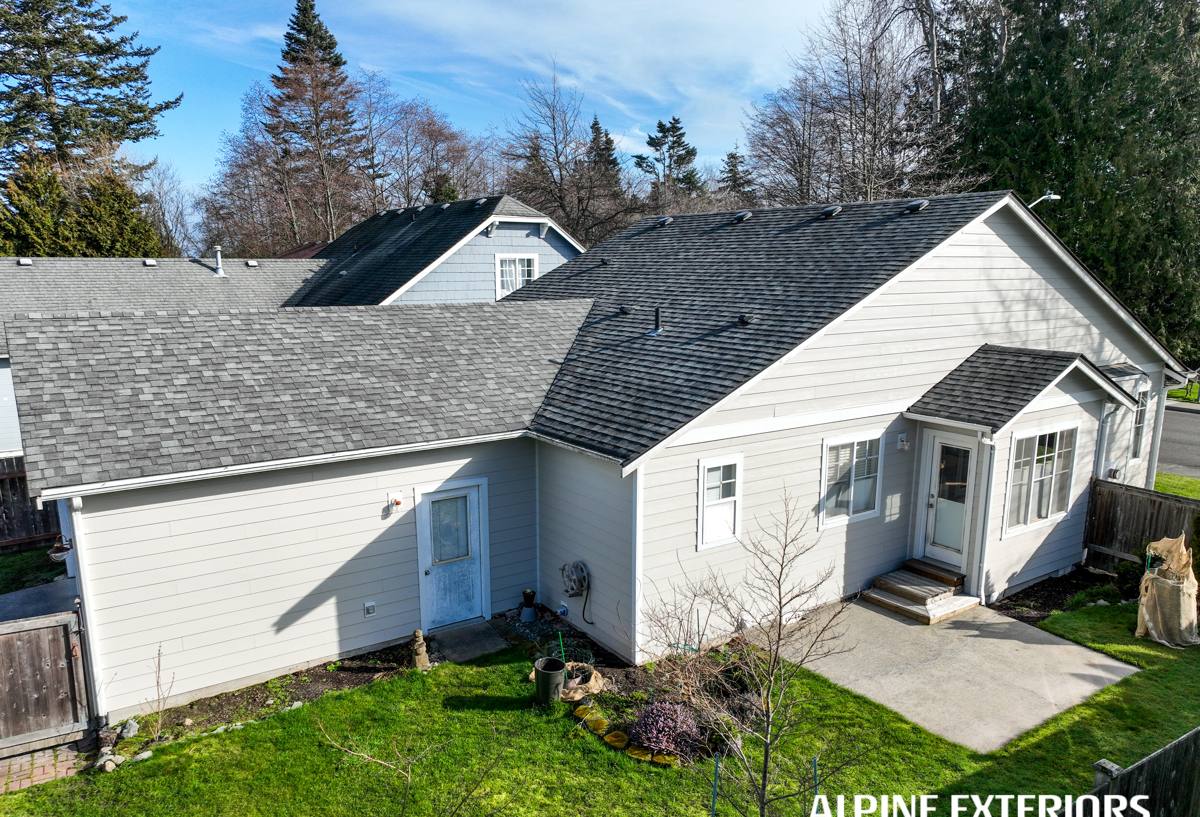
What Salt Air, Rain, and Moss Actually Do to a Roof
Salt Air and Metal Fatigue
Airborne salt from the bay accelerates corrosion on anything metal — flashing, fasteners, gutter hangers, valley metal, even the exposed heads of roofing nails. Galvanized coatings that would last decades further inland can start breaking down noticeably sooner in a marine-exposed setting like California Creek. Once corrosion starts on a fastener or flashing seam, it doesn't stay small; it opens a path for water.
Driving Rain and Wind-Driven Water
Whatcom County doesn't just get a lot of rain — a good share of it comes in sideways during winter storms off the water. Wind-driven rain finds weaknesses that a straight-down downpour never would: it pushes up under shingle tabs, through marginal flashing laps, and into any gap around penetrations like vents, skylights, and chimneys. Repairs that rely on gravity alone to shed water tend to leak during exactly the storms that matter most.
Moss, Shade, and Moisture Retention
Tree cover near the creek keeps parts of many roofs shaded for large portions of the day, which slows drying after every rain event. Add a moss season that, in this part of Whatcom County, can run from fall through spring, and you get roofs that stay damp far longer than the material was designed for. Moss doesn't just look bad — its root structure lifts shingle edges, holds water against the roof deck, and works its way into fastener holes and laps over time.
Common Roof Repair Needs We See in California Creek
The repair calls we get in this area follow a fairly consistent pattern, driven by the conditions above:
- Lifted or cracked shingle tabs along moss-affected slopes, especially on north-facing or shaded sections
- Corroded or failed flashing around chimneys, skylights, and roof-to-wall transitions
- Nail pops and fastener corrosion working their way to the surface
- Valley leaks where debris and moss have slowed drainage and backed water up under the shingles
- Soft or discolored roof decking discovered once a shingle repair area is opened up
- Gutter and edge-flashing failures that redirect water back under the roof edge instead of away from it
- Ridge cap separation from wind exposure off the bay
What a Correct Roof Repair Actually Involves
A patch is not the same thing as a repair. Slapping new shingles or a bead of sealant over a wet or corroded area buys a little time and hides the problem — it doesn't fix it. A correct repair addresses what's underneath, not just what's visible from the ground.
| Shortcut Patch | Correct Repair |
|---|---|
| Sealant applied over cracked or lifted shingles | Damaged shingles removed and replaced, deck inspected underneath |
| New flashing installed over existing corroded flashing | Old flashing removed, deck checked for water damage, new flashing properly lapped and fastened |
| Moss sprayed or scraped off the surface only | Moss removed, roof checked for lifted shingles and moisture underneath before treatment |
| Standard galvanized fasteners reused or added | Corrosion-resistant fasteners matched to the site's salt exposure |
| Repair scoped to the visible symptom | Repair scoped to the water path, even if that means opening up more of the roof |
Our Roof Repair Process
- Full roof assessment. We look at the whole roof, not just the spot you called about — a leak in one place often starts somewhere else.
- Deck and structure check. Any area with active or past water intrusion gets checked for soft or rotted decking before anything is reinstalled.
- Written scope and honest options. You get a clear explanation of what's failing, what a proper repair involves, and — if the roof is old enough or damaged enough that repair isn't the better value — a straight answer about that too.
- Repair, matched to the climate. Flashing, fasteners, and underlayment details are chosen for a marine, high-moss environment, not generic inland conditions.
- Cleanup and walk-through. We show you what was done and why, including anything we found that's worth keeping an eye on going forward.
Repair vs. Replacement: How We Help You Decide
Not every roof problem in California Creek needs a full replacement, and not every repair is worth doing on a roof that's near the end of its service life. The decision usually comes down to a few honest factors.
| Factor | Leans Toward Repair | Leans Toward Replacement |
|---|---|---|
| Age of roof | Well within expected service life | At or past typical lifespan for the material |
| Extent of damage | Localized — one slope, one flashing area | Spread across multiple slopes or recurring in new spots |
| Deck condition | Solid, dry decking under the damaged area | Soft, delaminated, or repeatedly wet decking |
| Moss/moisture history | First real issue after regular maintenance | Long-neglected moss buildup with widespread lifting |
| Cost over time | Repair cost is a small fraction of replacement cost | Repairs are becoming frequent and adding up |
We'll tell you plainly which side of that table your roof falls on. A repair recommendation isn't a sales pitch to get in the door — if your roof needs replacing, we'll say so, and if it doesn't, we won't talk you into one.
Materials and Fasteners for a Marine Environment
Because California Creek sits close enough to the bay to get real salt exposure, the small material choices in a repair matter more here than they would inland. We favor corrosion-resistant fasteners and flashing over standard-grade hardware in these repairs, since the failure mode we see most in this area isn't the shingle itself — it's the metal and fasteners holding everything together giving out first. Sealants and underlayments are also selected with the area's rain volume and moss exposure in mind, since a product rated for a dry climate won't necessarily perform the same way under near-constant Pacific Northwest moisture.
Moss and Debris Management as Part of Repair
Any roof repair in this area that skips moss and debris control is an incomplete repair. Moss that isn't properly removed will simply regrow into the new work, and debris sitting in valleys or against the roof edge undoes a lot of the benefit of a fresh repair within a season or two. We treat moss removal, gutter and valley clearing, and debris management as part of the repair scope in California Creek — not as a separate upsell — because leaving it out sets the repair up to fail early.
A Few Things Homeowners Can Watch Between Visits
- Dark streaking or green growth building up on shaded slopes
- Granules collecting in gutters or at downspout outlets
- Any ceiling staining, even faint, after a heavy wind-driven rain event
- Shingle tabs that look lifted or curled at the edges when viewed from the ground
- Standing debris in valleys or along the lower roof edge after storms
Why Local Experience in California Creek Matters
A roofing crew that mostly works drier, inland areas will size up a California Creek roof the same way they would anywhere else — and that's exactly how avoidable repairs turn into repeat calls. Knowing which slopes on this stretch of coastline hold moss the longest, how far wind-driven rain travels up under an eave, and which fastener and flashing choices actually hold up against bay-side salt air isn't something you get from a general roofing background. It comes from doing this work, on these roofs, in this specific corner of Whatcom County, season after season.
That local pattern recognition is what separates a repair that lasts from one that reopens the same leak eighteen months later.
If you're dealing with a leak, moss buildup, or storm damage on a California Creek roof, we're glad to take a look and give you a straight, no-pressure assessment of what it actually needs. Use the form below to request a free estimate.