 Semiahmoo Exterior
 Roofing Built for California Creek's Coastal Climate
California Creek sits close enough to Semiahmoo Bay and Drayton Harbor that homes here take a different kind of weather beating than a roof twenty miles inland. Salt-laden air moves in off the water, driving rain comes in sideways during winter storms, and the shaded, moisture-heavy microclimate along the creek corridor keeps roof surfaces damp long after the rest of Whatcom County has dried out. That combination shortens the useful life of a roof that wasn't built or installed with this specific exposure in mind.
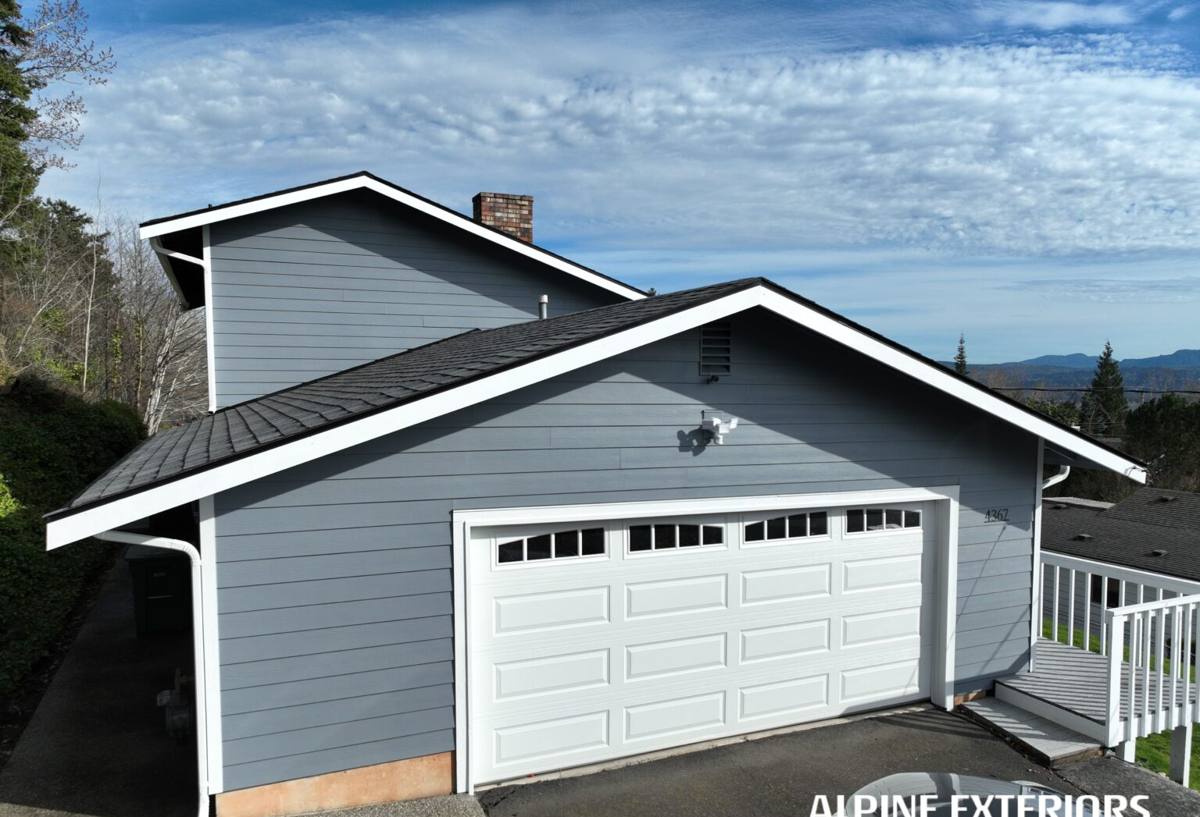
A new roof installation in this neighborhood isn't just about picking a shingle color. It's about choosing materials and installation details that hold up to salt corrosion on metal components, resist wind-driven water intrusion at every seam and penetration, and don't turn into a moss farm within a few wet seasons. We install roofs for this exact set of conditions, not a generic weather profile.
Why Roofs Fail Faster Near the Water
Salt Air and Metal Fatigue
Fasteners, flashing, vents, and any exposed metal on a roof are constantly exposed to fine salt particles carried on the wind off the bay. Over years, standard galvanized fasteners and lower-grade flashing can corrode faster here than they would on a roof a few miles inland. That corrosion is often invisible from the ground until it's already compromised a seal.
Driving Rain and Wind-Driven Water
Storms coming off the water don't just drop rain straight down — they push it sideways and upward under shingle edges, around chimneys, and into valleys. A roof system that relies only on gravity to shed water, without proper underlayment and flashing detail, will eventually let water find its way in.
Shade, Moisture, and Moss Season
The tree cover and creek-side humidity around California Creek keep roof surfaces damp for extended stretches, especially on north-facing slopes. That moisture is exactly what moss and algae need to establish themselves, and once moss takes hold it holds water against the roofing material, accelerates granule loss on shingles, and can lift edges over time.
Signs Your California Creek Home Needs a New Roof, Not a Repair
- Shingles that are cupping, curling, or missing granules across large sections rather than one isolated spot
- Moss or algae growth that keeps returning within a season or two of cleaning
- Soft or spongy decking felt underfoot in the attic, or daylight visible through the roof boards
- Staining or water marks on interior ceilings, especially after a wind-driven storm
- A roof that's approaching or past the expected lifespan for its material, with visible wear at valleys, flashing, and edges
- Multiple past repairs in the same areas that keep reopening
If you're seeing more than one or two of these, patching usually just delays a full replacement while continuing to risk water damage to the decking and framing underneath.
What a Correct New Roof Installation Actually Involves
A roof is only as good as what's underneath the visible surface. For homes in this climate, we treat the following as non-negotiable, not upgrades:
Full Tear-Off and Decking Inspection
We remove the old roofing down to the deck rather than laying over existing layers. That's the only way to actually inspect the plywood or plank decking for rot, soft spots, or delamination caused by long-term moisture — issues that are common on shaded, damp roof sections near the creek and that a layover would simply hide.
Ice and Water Shield at Vulnerable Points
Self-adhering waterproof membrane goes in at eaves, valleys, and around every penetration — chimneys, vents, skylights — where wind-driven rain is most likely to work its way underneath the primary roofing material.
Corrosion-Resistant Flashing and Fasteners
Given the salt exposure this close to the water, we use flashing and fastener grades chosen to resist corrosion rather than the minimum standard, particularly at chimneys, walls, and roof-to-wall transitions where a failed seal causes the most damage.
Balanced Attic Ventilation
Proper intake and exhaust ventilation keeps attic moisture from condensing against the underside of the deck, which both extends the life of the new roof and reduces the damp conditions that feed moss growth from below as well as above.
Choosing a Roofing Material for This Environment
There's no single "best" roofing material for every home — the right choice depends on your home's structure, your budget, and how much maintenance you're willing to keep up with. Here's how the common options compare specifically for a coastal, moss-prone property like those in California Creek.
| Material | Salt Air Durability | Moss Resistance | Maintenance | Typical Lifespan |
|---|---|---|---|---|
| Architectural asphalt shingle | Good with corrosion-resistant flashing/fasteners | Moderate — benefits from algae-resistant granules | Periodic moss/debris removal | 25–30 years |
| Standing seam metal | Very good with marine-grade coatings and fasteners | High — sheds moisture, little surface for moss to grip | Low | 40–50+ years |
| Composite/synthetic shake | Good | Moderate to high depending on product | Low to moderate | 30–50 years |
| Cedar shake | Fair — natural material is more exposure-sensitive | Lower without diligent upkeep; holds moisture | High — regular treatment and cleaning | 20–30 years with upkeep |
We don't install every product on that list on every job. For homes with heavy shade and consistent dampness, we're generally cautious about natural cedar shake specifically because it holds moisture longer than the alternatives and demands more upkeep to keep moss from establishing — that's a maintenance and moisture-behavior tradeoff we'll walk you through honestly, not a knock on the material itself.
Our Installation Process
- On-site evaluation — we walk the roof, attic, and exterior to assess current condition, ventilation, and any moisture damage before quoting anything.
- Material and scope review — we go over roofing material options, ventilation needs, and any decking repair likely based on what we found.
- Written estimate — a clear breakdown of scope, materials, and price before any work starts.
- Tear-off and decking repair — old roofing removed, decking inspected and replaced where needed.
- Underlayment, flashing, and ventilation install — the waterproofing and airflow systems that determine how the roof performs over the next few decades.
- Roofing material installation — installed to manufacturer specification and to the wind/rain exposure of your specific lot.
- Final walkthrough — we review the completed roof with you, including cleanup and any warranty paperwork.
Cost Factors for a New Roof in California Creek
Every roof is priced based on its own specifics, but the variables that most commonly move the number are consistent from job to job:
| Factor | Why It Matters Here |
|---|---|
| Roof size and pitch | Steeper pitches and larger surface areas require more material and labor time |
| Number of existing layers | Multiple tear-off layers add disposal and labor cost |
| Decking condition | Moisture-damaged decking near shaded, damp sections often needs replacement |
| Material choice | Asphalt, metal, and composite options carry different material and install costs |
| Ventilation upgrades | Correcting inadequate attic airflow adds scope but reduces future moisture problems |
| Roof complexity | Valleys, dormers, chimneys, and skylights each add flashing detail and time |
We'd rather walk your roof and give you real numbers than quote a range that doesn't reflect your home.
Why Hire a Crew That Already Works This Area
A roofing crew that regularly works Semiahmoo and the surrounding Whatcom County shoreline already knows how salt exposure, prevailing storm direction, and moss pressure behave on roofs in this specific corridor. That means fewer surprises during the job, material and flashing choices matched to real conditions instead of a generic spec sheet, and a crew that knows what local permitting and inspection expect. It also means we're not learning on your roof — we've already seen how roofs in this exact environment age, and we install accordingly from day one.
Preparing for Your New Roof Installation
- Clear vehicles and outdoor furniture away from the work area and driveway access
- Trim back tree branches overhanging the roofline if possible before the crew arrives
- Cover or move sensitive items in the attic in case of dust or debris during tear-off
- Plan for pets to be kept away from the exterior work zone during installation
- Ask about warranty coverage — both manufacturer material warranty and our workmanship coverage — before work begins
- Confirm start date flexibility, since roofing work depends on dry weather windows
Get a Free, No-Pressure Estimate
If your California Creek home's roof is showing its age, dealing with recurring moss, or you just want an honest read on how many years it has left, we're glad to take a look. Fill out the form below for a free estimate — no pressure, no upsell, just a straight assessment of what your roof actually needs.