 Semiahmoo Exterior
 Why Blaine Roofs Take a Different Kind of Beating
Blaine sits right where Semiahmoo Bay, Drayton Harbor, and the open water of the Strait of Georgia meet the Whatcom County mainland. That location is beautiful, but it's rough on roofs. Storms coming off the water don't just drop rain — they push it sideways, driving it up under shingle edges and into places a roof was never designed to shed water from. Add near-constant salt-laden air off the bay, and you've got metal fasteners, flashing, and vents that corrode faster than they would ten miles inland.
Then there's the moss. Blaine's marine layer keeps roofs damp and shaded for long stretches of the year, especially on north-facing slopes and under tree cover. Moss doesn't just look bad — it holds moisture against the roofing material, lifts shingle edges as it grows, and works its way into fastener holes. By the time a windstorm hits a roof that's already been softened by a season or two of moss growth, damage that would have been minor on a well-maintained roof becomes a real repair.
We work storm damage calls in Blaine and around Semiahmoo regularly, and the pattern is consistent: it's rarely one dramatic event that wrecks a roof. It's wind, salt, and moss working together over time, and then a storm exposes what was already weakened.
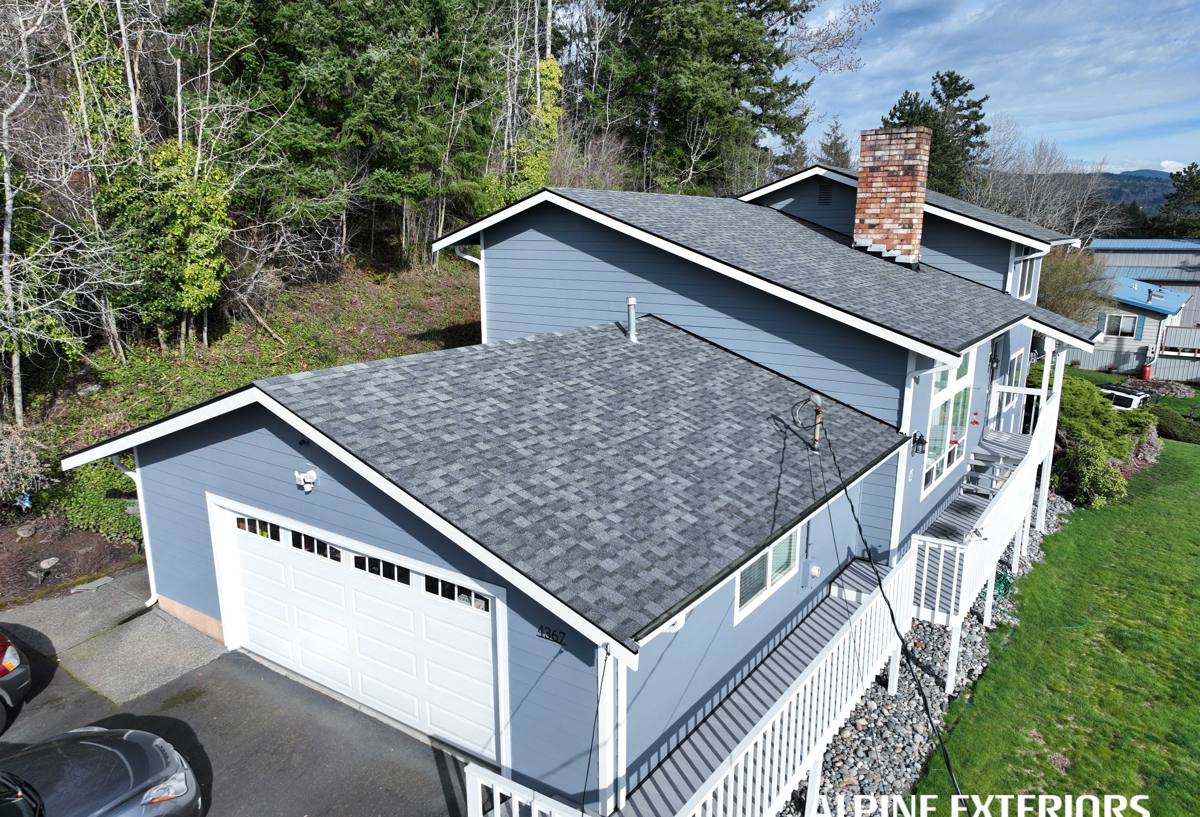
What Storm Damage Actually Looks Like on a Blaine Roof
Wind and Wind-Driven Rain
Sustained wind off the water can lift shingle tabs, break the seal strips that hold shingles flat, and peel back ridge caps. Once a shingle's seal is broken, it may look fine from the ground but will flap in the next wind event and let water underneath. Wind-driven rain also pushes water horizontally under flashing at chimneys, skylights, and wall intersections — areas that rely on lapped materials shedding water downhill, not sideways.
Moss and Trapped Moisture
Moss mats trap water against the roof surface long after a storm passes. On composition shingles, that accelerates granule loss and softens the mat underneath. On cedar or wood shake, it holds rot-causing moisture directly against the wood. After a storm, we often find that the leak isn't from wind damage at all — it's from a moss-clogged valley or gutter that backed water up under the roofing during heavy rain.
Salt Air and Corrosion
Roofing nails, drip edge, flashing, and vent boots all have a shorter service life this close to the water. Corroded fasteners back out or lose their grip, which is often why a section of shingles that "should" have held up in a storm didn't. This is one of the biggest differences between a Blaine roof and a similar roof further inland — the hardware ages faster, even when the shingles themselves look fine.
What a Correct Storm Damage Repair Involves
A proper storm repair isn't just replacing the shingles that are visibly gone. It means finding and addressing the reason the damage happened in the first place, so the same section isn't back on our schedule after the next storm. That includes:
- Checking the underlayment and decking under damaged shingles for water intrusion, not just the surface layer
- Inspecting and replacing corroded or lifted fasteners in the surrounding area, not only at the point of visible damage
- Re-sealing or replacing flashing at chimneys, valleys, and wall intersections where wind-driven rain tends to find a way in
- Clearing moss and debris from valleys and gutters so water has a clear path off the roof
- Matching repair materials to the existing roof as closely as possible, so the repaired section weathers at the same rate as the rest
Skipping any of these steps is how a "quick patch" turns into a callback a year later, or worse, a slow leak that isn't noticed until there's interior damage.
Our Process for Storm Calls in Blaine
When we get a storm damage call from a Blaine homeowner, we keep the process straightforward:
- Inspection. We get on the roof (or use a safe vantage point where access is limited) and check not just the obvious damage, but the flashing, fasteners, and moss buildup nearby that may have contributed.
- Documentation. We photograph and note what we find in a way that's usable if you decide to file an insurance claim — clear description of the damage, its likely cause, and what repair it requires.
- Honest scope. We tell you plainly whether this is a repair, or whether the damage points to a roof that's near the end of its useful life and repair would just be a short-term fix. We don't pad a small repair into a bigger job, and we don't undersell a roof that genuinely needs more than a patch.
- Repair. We complete the work with materials matched to your existing roofing where possible, and we don't leave a job half-finished waiting on parts — if something needs to be special-ordered, we tarp and secure the area properly in the meantime.
- Cleanup and check. We clear debris, old materials, and displaced moss mats, and do a final water test on repaired flashing areas before we consider the job done.
Repair vs. Replacement: How to Think About the Decision
Storm damage sometimes reveals a roof that was already close to needing full replacement. The table below covers the general factors that push a decision one way or the other — every roof is different, so this is a starting point for the conversation, not a formula.
| Factor | Repair Usually Makes Sense | Replacement Worth Considering |
|---|---|---|
| Age of roof | Under roughly two-thirds of its expected lifespan | Already near or past its expected service life |
| Extent of damage | Isolated to one section or slope | Spread across multiple slopes or repeated storm events |
| Underlying decking | Dry and structurally sound | Soft, delaminated, or showing rot |
| Granule loss / wear | Localized to the damaged area | Widespread across the whole roof, storm aside |
| Moss and moisture history | Minor, manageable with cleaning | Long-term moss cover with visible mat degradation |
| Fastener/flashing condition | Sound elsewhere on the roof | Corrosion or failure showing up in multiple spots |
We'll walk you through where your roof lands on these factors before recommending either path — the goal is the right call for your situation, not the bigger job.
Insurance and Storm Damage Claims
Many storm damage repairs in this area are covered in whole or in part by homeowners insurance, but coverage details vary by policy and by what actually caused the damage. We're not insurance adjusters and won't promise a claim outcome, but we can give you a clear, honest written assessment of what happened and what it will take to fix — the kind of documentation that supports a claim if you choose to file one. If you're not sure whether a storm event qualifies, it's worth getting an inspection before you decide either way.
Why a Crew That Already Works Blaine Matters
Roofing crews that mainly work drier, more sheltered parts of Whatcom County don't always account for how differently a roof ages this close to Semiahmoo Bay. A repair approach that's fine forty minutes inland can fall short here — the wrong fastener choice, a flashing detail that doesn't account for wind-driven rain, or a moss treatment plan that ignores how persistent regrowth is in this microclimate. Working Blaine regularly means we're familiar with the local building department's expectations, the way homes here are typically built and roofed, and which repair details actually hold up against this specific combination of salt air, wind, and moisture.
Signs You Need a Roof Inspection After a Storm
Not all storm damage is obvious from the ground. After any significant wind or rain event, it's worth checking for:
- Shingle granules collecting in gutters or at downspout outlets
- Shingles that look lifted, curled, or out of alignment with the surrounding roof plane
- Visible gaps or movement at ridge caps or hip lines
- New or worsening moss growth, especially on north-facing or shaded slopes
- Water stains on interior ceilings or in the attic, even faint ones
- Debris, branches, or granule buildup pooled in valleys instead of draining freely
- Flashing around chimneys, vents, or skylights that looks bent, lifted, or separated
If you notice any of these after a storm, it's better to have it looked at soon — small storm damage left alone tends to get worse with the next round of wind and rain, not better.
If a recent storm has you wondering about the condition of your roof, we're glad to come take a look. The estimate is free, there's no pressure to move forward, and you'll get a straight answer about what — if anything — actually needs to be done. Use the form below to get in touch.