 Semiahmoo Exterior
 New Roof Installation Built for Blaine's Coastline
Blaine sits right on the water, tucked against Semiahmoo Bay and Drayton Harbor near the Canadian border. That location is a big part of why homes here need a roof that's more than a stock replacement job. A roof that would hold up fine forty miles inland can wear out early on a house that faces open water, and a lot of Blaine homeowners find that out the hard way when a roof that "looked fine" turns out to be soaked underneath.
A correct new roof installation in this part of Whatcom County isn't complicated, but it does require paying attention to details that get skipped in other climates. This page covers what that actually looks like: what the local weather does to a roof, what a properly installed system needs to include, and how to tell a good installation from a fast one.
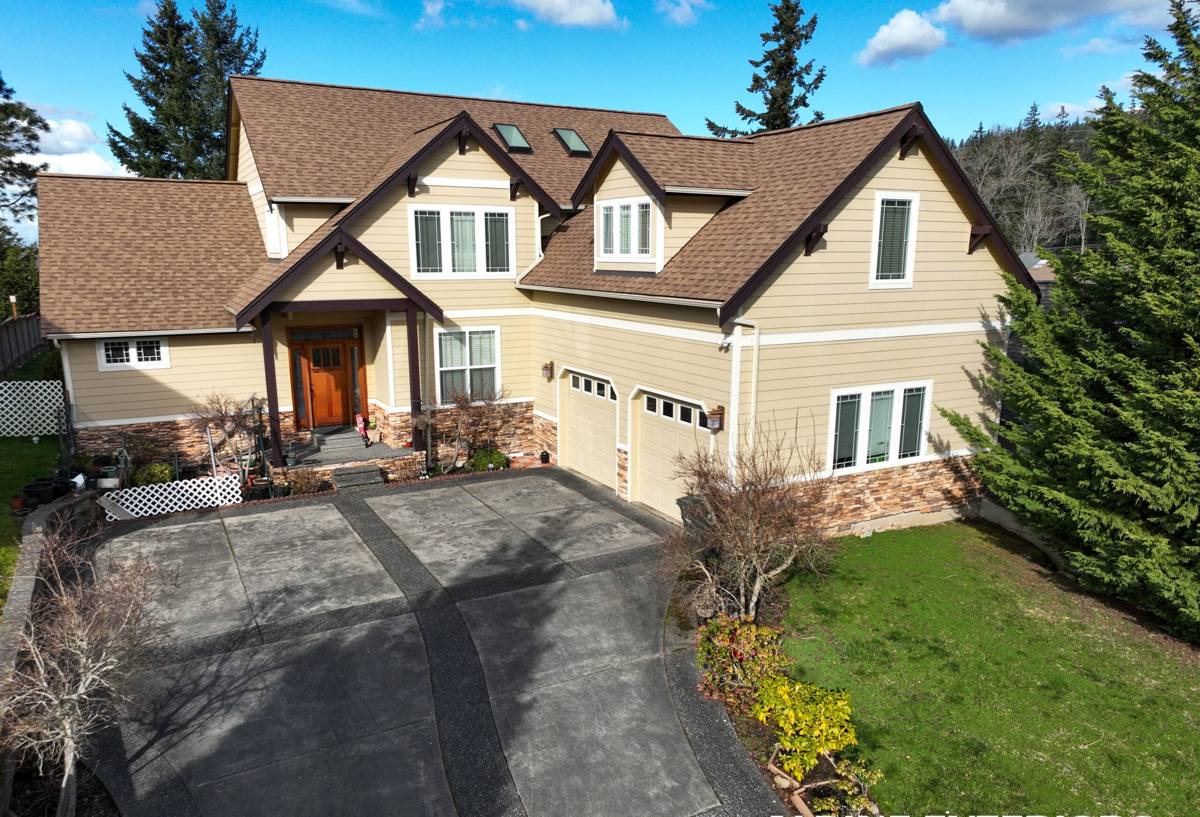
Why This Climate Wears Roofs Out Faster
Three things define roofing conditions in Blaine, and all three show up together for most of the year.
Salt Air
Living close to Semiahmoo Bay means airborne salt is a constant, low-level presence on every exposed surface of a home, roofs included. Salt-laden air accelerates corrosion on any unprotected metal — nails, flashing, vents, fasteners — and it can shorten the working life of lower-grade metal components. This doesn't mean metal roofing is off the table; it means the fasteners, flashing metal, and coatings used have to be chosen with that exposure in mind, not just picked for cost.
Driving Rain
Storms coming off the water don't just fall straight down — wind pushes rain sideways and up under edges, laps, and flashing that would stay dry in a calmer climate. That's why lap details, fastener patterns, and flashing at every penetration matter more here than in a drier, calmer region. A roof that's watertight in a light rain can still leak in a wind-driven one if those details were rushed.
Moss Season
Whatcom County's long wet season — often stretching from fall through spring — gives moss and algae plenty of time to establish on north-facing slopes and shaded roof sections. Beyond looking bad, moss holds moisture against the roofing material, works its way under shingle tabs and laps, and can lift edges over time, giving wind and rain an entry point they wouldn't otherwise have.
Signs Your Blaine Home Is Due for a New Roof, Not Another Patch
Not every roofing problem calls for full replacement. But in this climate, certain signs mean patching is just delaying a bigger, more expensive repair later.
- Granule loss heavy enough that you can see bare, shiny patches on the shingles
- Curling, cupping, or cracked shingles across multiple areas of the roof, not just one spot
- Soft spots in the decking when walked on, which usually means water has already reached the wood
- Moss or algae that comes back within a season or two of cleaning, even after treatment
- Daylight visible through the roof deck from inside the attic
- A roof already past 20-25 years old (for asphalt composition) that's never had a full tear-off
- Recurring leaks around the same penetration or valley despite repeated spot repairs
If a roof is showing two or more of these at once, a new installation is usually the more honest recommendation — and often the more affordable path once you account for repeated patch visits.
What a Correct New Roof Installation Actually Involves
A roof is a system, not a single layer. Skipping any one part below is how a roof ends up needing attention again in five years instead of twenty-five.
Tear-Off and Deck Inspection
A full tear-off removes the old roofing down to the deck so it can actually be inspected, not guessed at. Any wood that's soft, delaminated, or water-stained gets replaced before anything new goes down. Installing new roofing over a compromised deck just hides the problem under a fresh layer.
Underlayment and Ice-and-Water Barrier
Underlayment is the roof's backup layer if wind-driven rain gets past the primary roofing material — which, in this climate, it eventually will somewhere on the roof. Self-adhered ice-and-water barrier belongs at eaves, valleys, and around penetrations, where driving rain and moss buildup put the most sustained moisture pressure.
Flashing at Every Transition
Chimneys, skylights, walls, valleys, and vent pipes are where roofs actually fail — not in the open field of shingles. Properly formed and sequenced flashing (not just caulk over old flashing) is non-negotiable in a wind-driven rain climate.
Ventilation
A roof deck that can't breathe traps moisture underneath it, which leads to rot, mold, and premature failure from below — regardless of how good the shingles on top are. Balanced intake (soffit) and exhaust (ridge or roof vents) is part of a correct installation, not an optional add-on.
Choosing a Roofing Material That Holds Up Near the Water
There's no single "best" roofing material for every Blaine home — it depends on the house, the budget, and how much long-term maintenance an owner wants to take on. Here's how the common options compare for this specific climate:
| Material | Salt Air Resistance | Moss Resistance | Maintenance | Typical Lifespan |
|---|---|---|---|---|
| Architectural Asphalt Shingle | Good, with corrosion-resistant fasteners and flashing | Moderate — benefits from zinc/copper strips or periodic cleaning | Low to moderate | 25-30 years |
| Standing Seam Metal | Very good, with marine-grade coatings and fasteners | Very good — sheds moss buildup better than textured surfaces | Low | 40-50+ years |
| Synthetic/Composite Shingle | Good | Moderate to good, depending on product texture | Low | 30-40 years |
| Wood Shake | Poor to moderate without diligent upkeep | Poor — retains moisture, needs regular treatment | High | 20-30 years with upkeep |
We install architectural asphalt and metal roofing as our primary recommendations for this climate. Wood shake can look great, but the maintenance burden it carries in a wet, moss-prone environment is significant — we'll always tell a homeowner that honestly up front rather than sell a product we know needs constant attention here.
Our Installation Process, Start to Finish
- On-site inspection. We assess the existing roof, decking condition, ventilation, and any problem areas specific to the home's exposure and slope orientation.
- Written estimate. A clear scope of work and materials, so there's no ambiguity about what's included.
- Material selection. We walk through the trade-offs above based on the home's exposure, roof pitch, and the owner's budget and maintenance preference.
- Tear-off and deck repair. Old roofing removed, deck inspected, any damaged sheathing replaced.
- Underlayment and flashing installation. Ice-and-water barrier at vulnerable areas, new flashing formed and sequenced correctly at every penetration and transition.
- Roofing material installation. Installed to manufacturer specifications and fastening patterns rated for the wind exposure here.
- Ventilation check. Intake and exhaust balanced for the specific attic and roof configuration.
- Final walkthrough. We review the completed roof with the homeowner and go over warranty coverage before we consider the job done.
What Drives the Cost of a New Roof
Roofing costs vary widely by home, but the biggest factors are consistent from house to house:
| Cost Factor | Why It Matters |
|---|---|
| Roof size and pitch | Steeper roofs take longer to work safely and use more material overlap |
| Number of penetrations and valleys | Each chimney, skylight, and valley needs custom flashing labor |
| Deck condition | Rotted sheathing found during tear-off adds material and labor to replace it |
| Material choice | Asphalt, metal, and composite carry different material and install costs |
| Tear-off layers | Removing multiple old roofing layers takes more labor than a single-layer tear-off |
| Ventilation upgrades | Adding proper intake/exhaust venting where none existed adds scope but prevents future problems |
We'd rather walk a homeowner through these factors during the estimate than quote a number with no explanation behind it. A roof is a big enough investment that the "why" matters as much as the total.
Why Hiring a Crew That Already Works Blaine Matters
Roofing crews that mostly work inland or in drier parts of the state can do fine work, but they don't always default to the details this climate demands — corrosion-resistant fasteners, ice-and-water placement sized for driving rain rather than snow, or ventilation planning that accounts for near-constant humidity. A crew that already works Semiahmoo-area homes has seen what fails here and builds against it as standard practice, not an upsell.
Local also means accountability. If something needs a warranty follow-up, you're not waiting on a crew that has to drive in from out of the area or schedule around a long list of jobs elsewhere.
Before You Sign: A Quick Checklist
- Get the scope of work in writing, including underlayment type and flashing details — not just "new roof, [material]"
- Confirm the estimate includes deck inspection and a clear process for handling any rot found during tear-off
- Ask specifically how ventilation will be handled, not just the roofing material
- Check that fasteners and flashing metal are specified as corrosion-resistant for coastal exposure
- Confirm licensing, insurance, and manufacturer certification for the material being installed
- Ask what the workmanship warranty covers versus the manufacturer's material warranty
A new roof is one of the more significant investments in a home, and it's also one most owners only make once every few decades. If you're weighing a new roof installation in Blaine, we're happy to walk your roof, explain what we see, and put together a clear, no-pressure estimate — no obligation, just an honest look at what your home actually needs. The form below is the easiest way to get started.