 Semiahmoo Exterior
 Why Blaine Harbor Roofs Wear Differently
Blaine Harbor sits close enough to the water that roofing materials here face a combination most inland Whatcom County homes never deal with at the same intensity: salt-laden air, wind-driven rain that comes in sideways off the strait, and a moss season that runs longer than almost anywhere else in the state. None of these problems are dramatic on their own. What they do is compound. A roof that would last two more years in a dry inland town starts showing granule loss, fastener corrosion, or soft decking a season or two early out here, simply because it never gets a real chance to dry out between weather events.
Salt air is the one homeowners underestimate most. It accelerates corrosion on exposed metal — flashing, nail heads, vent boots, gutter hardware — well before the shingles or panels themselves show their age. Combine that with near-constant humidity and shaded north slopes, and you get the moss and moisture problems that make up the bulk of the repair calls we run in this neighborhood.
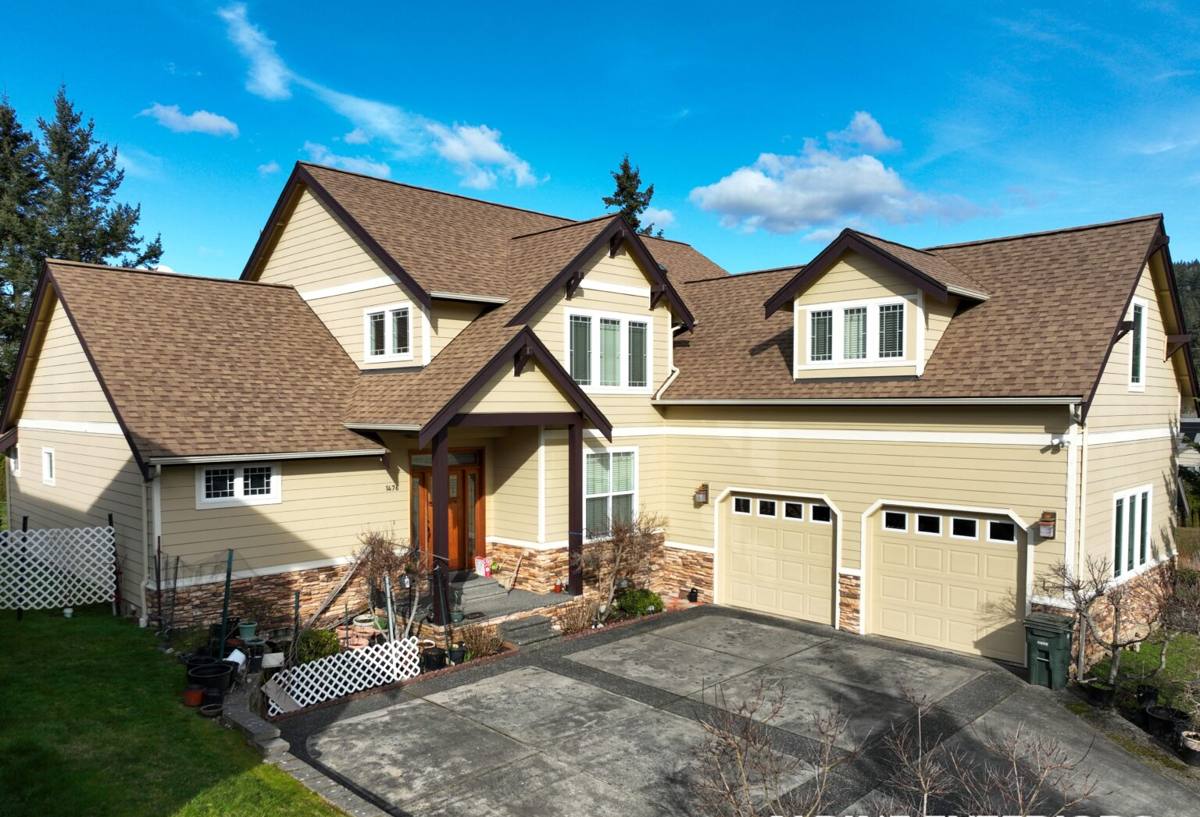
The Three Problems That Drive Most Repair Calls Here
Wind-driven rain finding the gaps
Standard rain falls straight down and sheds off a roof the way it's designed to. Wind-driven rain off the water doesn't behave that way — it gets pushed sideways and upward under shingle tabs, around poorly sealed flashing, and into any gap that a calmer climate would never test. Repairs that look fine on a dry day can still leak during a real Semiahmoo storm if the underlying flashing and underlayment weren't detailed for that kind of exposure.
Moss and organic buildup
Whatcom County's mild, damp winters give moss a long growing window, and shaded, north-facing roof planes near the harbor rarely dry out fully. Moss isn't just cosmetic — its root structure lifts shingle edges, holds moisture against the roof deck, and turns small leaks into rot given enough time. A repair that doesn't address the moss that caused it is a temporary fix at best.
Corroded fasteners and flashing
This is the one that's easy to miss during a quick visual check. Salt air corrodes exposed nail heads, metal flashing, and vent boot collars faster than it visibly ages the shingles around them. A roof that "looks fine" from the ground can still be leaking at a corroded flashing seam that's only visible up close.
What a Correct Repair Actually Involves
A proper roof repair near the water isn't just patching the spot where water showed up inside the house. Water travels along the roof deck before it drips through drywall, so the visible leak and the actual entry point are often several feet apart. A repair done right starts with tracing the real path of the water, not just covering the symptom.
- Identify the actual entry point, which may be uphill from the interior stain
- Remove and inspect the roofing material around the damaged area, not just the failed spot itself
- Check the roof deck underneath for soft spots, delamination, or rot before replacing anything
- Replace corroded flashing and fasteners in the repair zone, not just the shingles
- Re-seal and re-integrate the new material with the surrounding roof so water sheds correctly, not around the patch
- Clear moss and organic debris from the repair area and the drainage path above it
Skipping any of these steps is how a homeowner ends up paying for the same repair twice within a year or two — the patch holds, but the underlying cause never got addressed.
Our Process for Blaine Harbor Homes
- Roof inspection. We walk the roof (or use a ladder inspection where pitch or access doesn't allow safe foot traffic) and check both the interior leak point and the exterior roof surface, flashing, and fastener condition.
- Honest diagnosis. We tell you what's actually failing — a localized flashing or shingle issue versus a sign that the roof is nearing the end of its useful life. We're not going to sell a repair on a roof that needs replacement, or push replacement on a roof that just needs a targeted fix.
- Written scope and price. Before any work starts, you know exactly what's being repaired and what it costs.
- The repair itself. Matched materials where possible, corroded flashing and fasteners replaced, proper integration with the surrounding roofing — not a surface patch.
- Cleanup and a final check. We clear debris and moss from the work area and confirm the repair sheds water correctly before we call the job done.
Repair or Replace? What Actually Decides It
Homeowners near the water often ask this before we even get on the roof. The honest answer depends on a handful of specific factors, not the roof's age alone.
| Factor | Leans toward repair | Leans toward replacement |
|---|---|---|
| Extent of damage | Localized to one flashing point, vent, or section | Multiple failure points across different roof planes |
| Roof deck condition | Solid, dry decking under the damaged area | Soft, delaminated, or rotted decking found during inspection |
| Age of roofing material | Well within its expected service life | Already near or past the manufacturer's expected lifespan |
| Corrosion pattern | Isolated to the repair area | Widespread corrosion on flashing and fasteners roof-wide |
| Moss/moisture history | First occurrence, addressed early | Repeated moss and moisture damage across multiple seasons |
We'll walk you through where your roof falls on that list before recommending either path — the goal is the right call for your house, not the more expensive one.
Materials and Why We Use What We Use
For repair work, matching the existing roofing material is usually the right call — it keeps the roof's appearance consistent and avoids mixing materials with different expansion and weathering characteristics. Where a section needs more than a patch, we talk through material trade-offs honestly rather than defaulting to whatever's easiest to install.
| Material | Strengths near the water | Trade-offs to plan for |
|---|---|---|
| Architectural asphalt shingle | Cost-effective, wide color range, straightforward repairs | Shorter lifespan than metal in salt-air exposure; needs moss management |
| Metal roofing (standing seam) | Long service life, sheds wind-driven rain well, low moss buildup | Higher upfront cost; fastener and flashing detail matters even more |
| Cedar shake | Traditional look that fits many harbor-area homes | Higher maintenance burden in constant damp conditions; needs regular upkeep to resist rot |
Whichever material is already on your roof, our standard is the same: use fasteners and flashing rated for the corrosion exposure this area actually sees, not the minimum spec that works fine somewhere drier.
Why It Matters That We Already Work This Neighborhood
Roof repair isn't a one-size-fits-all trade, and Blaine Harbor isn't a generic Whatcom County roof. A crew that's worked this specific stretch of coastline knows which roof orientations hold moss longest, which flashing details fail first in this exposure, and what a wind-driven-rain leak actually looks like versus a simple shingle failure. That's the difference between a repair that lasts and one that reopens the same complaint call next winter.
Local access matters too — narrow lots, shared driveways, and homes close to the water can complicate equipment staging and material delivery. A crew that already navigates these streets regularly plans around that instead of discovering it on the day of the job.
Between-Repair Maintenance That Actually Helps
Most of what shortens a roof's life near Semiahmoo happens slowly, between repair visits. A little seasonal attention catches problems while they're still small and cheap to fix.
- Keep gutters and downspouts clear so water doesn't back up under the roof edge
- Have moss treated or removed before it spreads across a full roof plane, not after
- Trim back branches that keep roof sections shaded and slow to dry
- After any major windstorm, do a visual check from the ground for lifted shingles or displaced flashing
- Get a professional inspection if you notice a stain, even a small one, on an interior ceiling or wall
- Don't ignore a "small" roof leak over winter — wind-driven rain tends to find and widen small gaps over a season
None of this replaces a proper inspection, but it buys time and keeps small issues from becoming deck-level damage.
Get an Honest Look at Your Roof
If you're dealing with a leak, moss buildup, or storm damage on a Blaine Harbor roof, we're glad to take a look and give you a straight answer about what it needs — repair, or something more. The estimate is free, there's no pressure attached to it, and you'll get a clear explanation of what we find. Reach out through the form below to get started.