 Semiahmoo Exterior
 Why Decks in Blaine and Semiahmoo Take More Punishment
A deck built three miles inland doesn't face the same conditions as one built along Semiahmoo Bay or Drayton Harbor. Out here, the air itself carries salt, the rain comes in sideways more often than straight down, and the wet season stretches long enough that moss and algae get a real head start on any horizontal surface. None of that means a deck can't last for decades in Blaine — it means the details that don't matter much in a drier inland climate matter a great deal here.
This page covers what we've learned building and repairing decks specifically in this stretch of Whatcom County: what tends to fail first, what materials and methods hold up, and what a homeowner should expect from a properly built deck versus a deck that just looks good on installation day.
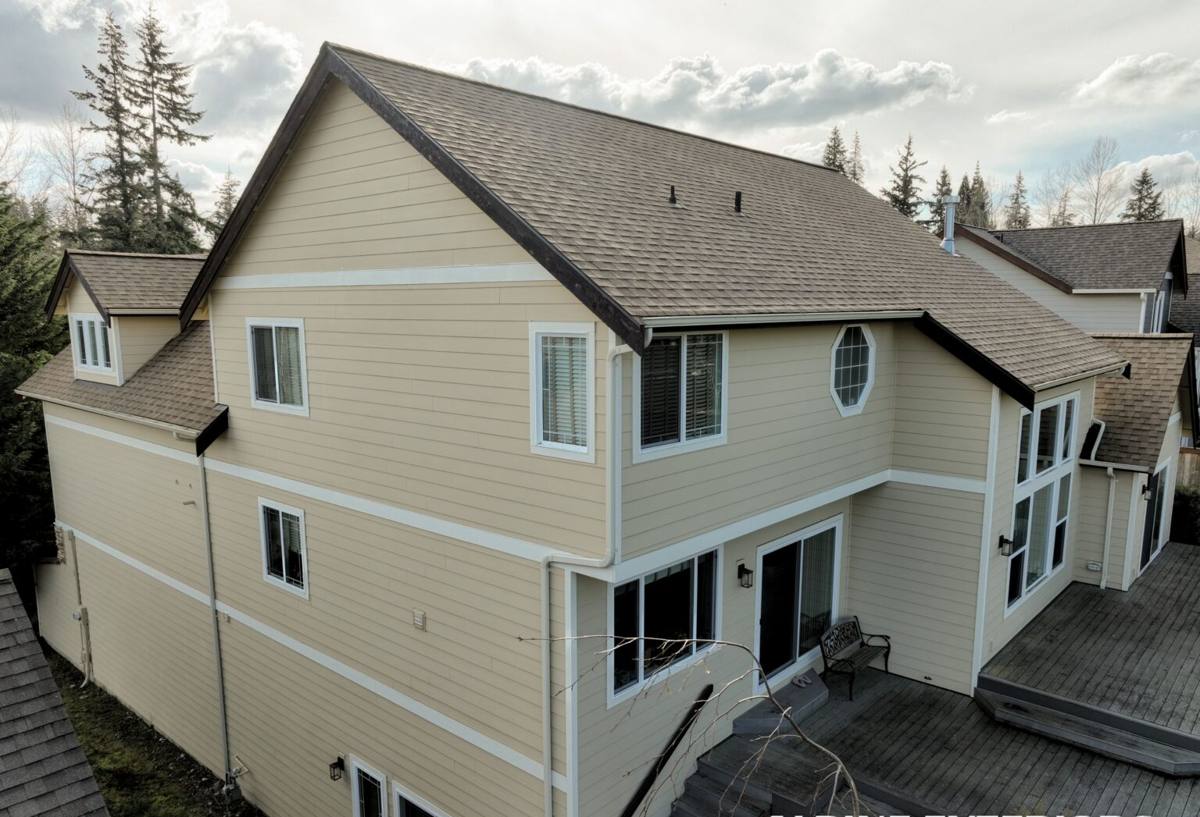
What a Correctly Built Deck Needs Here
Every deck starts with the same basic structure — footings, posts, beams, joists, decking, and railing — but the choices within that structure change based on exposure. A deck facing open water or prevailing wind off the bay needs different attention than one tucked against a house on the leeward side. Before we talk materials, three structural basics have to be right, because no amount of premium decking fixes a bad foundation underneath it.
Footings and Frost Depth
Footings need to be sized and set to local frost depth and soil conditions, not guessed at. Undersized or shallow footings are one of the more common problems we find when repairing older decks in this area — the deck looked fine for years until a wet winter caused noticeable movement.
Ledger Attachment and Flashing
Where a deck attaches to the house, the ledger board and its flashing are the single most important detail on the entire project. Water that gets behind an improperly flashed ledger doesn't evaporate quickly in our climate — it sits, and it rots framing and sheathing from the inside where you can't see it until the damage is advanced. Proper flashing, not just caulk, is non-negotiable.
Drainage Under and Around the Deck
Standing water under a deck, or water that sheets back toward the house instead of away from it, sets up conditions for rot and moss growth long before the visible decking shows any sign of trouble. Grading, gaps, and airflow underneath all factor into how well a deck sheds the volume of rain this area gets over a typical winter.
Framing and Fasteners: Standing Up to Salt Air
Salt air accelerates corrosion on any exposed metal, and a deck has a lot of exposed metal — joist hangers, structural screws, bolts, post bases. Standard coated fasteners that work fine twenty miles inland can start showing rust streaks within a few years this close to the water.
Framing Lumber
We use pressure-treated lumber rated for ground contact on any framing member close to soil or moisture, and we pay attention to how the wood is stored and handled before install — lumber that sits wet on a job site starts its life already compromised.
Hardware Selection
For hardware, we favor stainless steel or heavy hot-dip galvanized fasteners and connectors in exposed and near-water locations rather than the standard-duty coated hardware sold at most box stores. It costs more up front. It also doesn't leave rust stains streaking down your decking boards or fascia five years in, and it holds structural strength longer in a marine-influenced climate like Semiahmoo's.
Choosing Decking Material for This Climate
There's no single "best" decking material — there's the right material for how the deck will be used, how much maintenance the homeowner wants to do, and how much shade and moisture the deck sits under. In Blaine, moss resistance and moisture behavior matter more than they might in a drier part of the state.
| Material | Moisture Behavior | Moss/Algae Resistance | Maintenance | Typical Lifespan |
|---|---|---|---|---|
| Cedar | Naturally moisture-resistant but still needs sealing | Moderate — needs regular cleaning | Annual cleaning, periodic re-staining | 15-20 years with upkeep |
| Pressure-Treated Wood | Good if properly dried and sealed | Moderate — traps moisture in grain | Regular sealing, cleaning | 15-25 years with upkeep |
| Composite Decking | Doesn't rot, but surface can trap surface moisture | Better than wood; still needs periodic cleaning | Occasional washing, no sealing/staining | 25-30 years |
| PVC/Capped Decking | Fully moisture-sealed surface | Best resistance of the common options | Low — occasional washing | 25-30+ years |
Composite and PVC decking generally make more sense for exposed, shaded, or water-facing decks in this area simply because they don't absorb moisture the way wood does, which slows moss growth and eliminates the rot risk that wood carries. Wood decking still has a place — it's less expensive up front and some homeowners prefer the look and feel — but it needs a genuine maintenance commitment here, not just an occasional wash.
Moss, Algae, and Slip Safety Through the Wet Season
Moss doesn't just look bad — on a deck it's a slip hazard, and it holds moisture against the board surface longer than bare wood or composite would on its own. A long, wet stretch of the year like the one this region gets is exactly the environment moss thrives in.
Board Spacing and Airflow
Correct board spacing and adequate airflow underneath the deck are the biggest factors in how fast moss establishes. Decks built too tight to the ground, or with insufficient gapping between boards, dry out slower after every rain and stay damp longer — which is exactly what moss needs.
Surface Texture and Orientation
Deck orientation and shade exposure matter too. A north-facing deck under tree cover will always need more attention than one that gets afternoon sun. We factor sun exposure into material recommendations and layout where we can.
A Basic Maintenance Checklist
- Sweep debris and organic buildup off the deck surface regularly, especially in fall
- Rinse or wash the deck surface at the start and end of the wet season
- Keep gutters and downspouts clear so runoff isn't dumping onto the deck
- Trim back overhanging branches that keep sections of the deck shaded and damp
- Check for early moss or algae growth in shaded corners before it spreads
- Inspect fasteners and hardware yearly for early signs of corrosion
Railings, Stairs, and Finish Work That Lasts
Railings and stair components see constant hand contact and constant weather exposure, so material and hardware choices there matter just as much as the decking itself. Wood railings need the same sealing commitment as wood decking. Metal balusters or cable railing systems need corrosion-resistant hardware for the same reason framing does — salt air doesn't skip the railing just because it's higher up.
Fascia boards, stair stringers, and post wraps are also worth getting right the first time. These are the components most likely to be overlooked on a budget build, and they're often the first things to show visible wear because they take direct weather exposure without the benefit of airflow underneath like the deck surface has.
Permits, Setbacks, and Local Code
Deck projects in Blaine and unincorporated Whatcom County typically require a permit once the deck exceeds a certain height or size, and guardrail height, stair geometry, and footing depth all fall under code review. Properties near shoreline areas around Semiahmoo Bay or Drayton Harbor can also carry additional setback or shoreline management considerations depending on the parcel.
We handle the permit process as part of the job rather than leaving it to the homeowner, and we build to the code requirements that apply to the specific property — not a generic standard. Skipping permits on a deck project is a common shortcut that causes real problems later, particularly at resale when an unpermitted structure has to be disclosed or brought up to code.
Our Deck-Building Process
We approach every deck project in Blaine and the surrounding Semiahmoo area the same structured way:
- Site assessment — we look at exposure, drainage, existing structure (for replacements), and how the deck will actually be used
- Design and material selection — matched to your budget, maintenance preference, and the site's sun/shade and wind exposure
- Permitting — handled on your behalf with the applicable jurisdiction
- Framing and structural work — footings, ledger flashing, framing, and corrosion-resistant hardware done to code, not to a shortcut
- Decking, railing, and finish work — installed with proper spacing and fastening for long-term performance in this climate
- Final walkthrough — we go over the finished deck and basic maintenance expectations with you before we consider the job done
Why Local Experience in Blaine Matters
A crew that mostly builds decks inland can still build a structurally sound deck — but they're often learning this area's specific failure points on your project instead of already knowing them. We already know which details fail first on a deck exposed to salt air and driving rain, which materials hold up through a Whatcom County wet season without babysitting, and how local permitting works for properties in and around Blaine and Semiahmoo. That experience shows up less in how the deck looks on day one and more in how it's still performing five and ten years out.
If you're planning a new deck or need an honest look at an aging one, we're happy to come take a look and put together a straightforward estimate — no pressure, no upsell, just a clear picture of what your project needs. Use the form below to get started.