 Semiahmoo Exterior
 Why Birch Bay Roofs Take More Punishment Than Roofs Inland
A roof in Birch Bay works harder than a roof twenty miles inland, even though the shingles and the sky above them look the same. The difference is exposure. Birch Bay sits right on the water, which means salt air, wind-driven rain, and near-constant shade in low spots that never quite dry out. Add Whatcom County's long, wet winters and you get a roof that ages faster than the manufacturer's warranty chart assumes it will.
Salt Air and Corrosion
Airborne salt doesn't just sit on the surface of a roof — it gets into fasteners, flashing seams, and any exposed metal edge. Over years, that accelerates rust on lower-grade nails and flashing, which is exactly where leaks tend to start. It's not dramatic; it's slow, and it's the kind of thing that goes unnoticed until a fastener finally lets go.
Wind-Driven Rain
Storms coming off the water don't just drop rain straight down — they push it sideways, under shingle tabs and into any flashing detail that was cut a corner short. A roof that would perform fine in a calm inland rain can leak in Birch Bay if the underlayment, laps, and flashing weren't installed with that wind direction in mind.
The Long Moss Season
Whatcom County's moss season isn't really a season here — on shaded, north-facing slopes it's closer to year-round. Moss holds moisture against the shingle surface, works its way under tabs as it grows, and lifts granules loose over time. A roof that isn't detailed and maintained with moss in mind will show premature wear on those shaded slopes years before the sunnier sides of the same house.
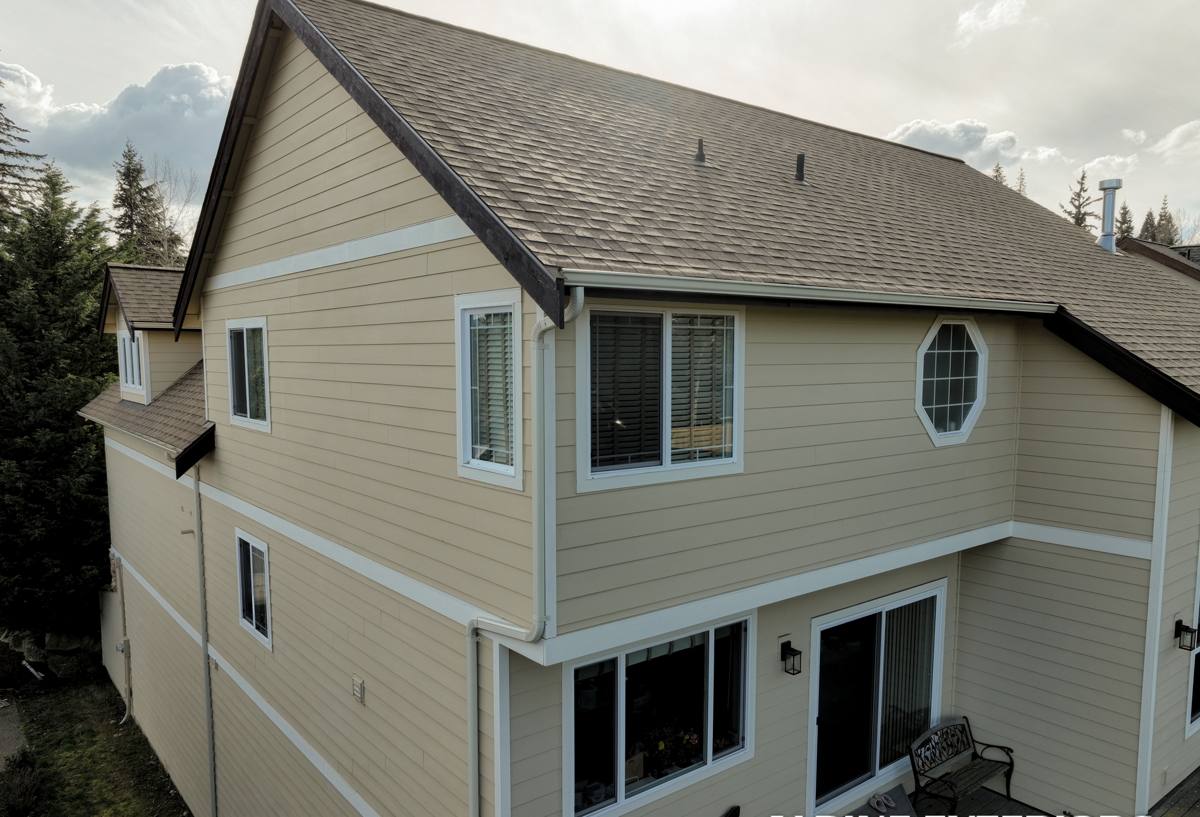
Signs Your Roof Has Reached the End of Its Service Life
Not every roof problem means a full replacement — plenty can be handled with a repair. But there's a point where patching stops making financial sense and a new roof becomes the honest recommendation, and Birch Bay's exposure tends to move that point up compared to a similar roof further inland. Signs worth taking seriously include:
- Granules collecting in gutters or at downspout outlets, especially after a windy rain
- Shingles that are cupping, curling at the edges, or cracking when you look closely from the ground
- Visible moss mats on north-facing slopes that keep coming back after cleaning
- Daylight visible through the roof deck from inside the attic
- Soft or spongy spots when walked, or sagging along the ridge or eaves
- Flashing around chimneys, vents, or skylights that's rusted, lifted, or gapped
- Interior water stains on ceilings, especially after a wind-driven storm
- A roof that's 20+ years old and has never been fully replaced, only patched
If a few of these apply, it's worth getting an honest look before another wet winter finds the weak spot for you, rather than waiting for a leak to force the decision.
What a Correct New Roof Installation Actually Involves
A new roof is only as good as what happens under the shingles. Anyone can lay shingles in a pattern that looks fine from the street; the difference between a roof that lasts and one that leaks in three years usually comes down to details you'll never see once the job is done, especially in a climate that pushes water sideways instead of just down.
Tear-Off and Deck Inspection
We remove the existing roofing down to the deck rather than layering over it. That's the only way to actually inspect the sheathing for rot, soft spots, or damage from long-term moss or moisture intrusion — problems that are common on shaded Birch Bay roofs and invisible from above. Any damaged decking gets replaced before anything new goes down, because new shingles over a soft deck just hide a problem instead of solving it.
Underlayment and Water Barrier
Given the wind-driven rain this area sees, underlayment choice and lap direction matter more here than in a drier inland town. We use synthetic underlayment with correctly overlapped, properly fastened seams, and add ice-and-water barrier at eaves, valleys, and other vulnerable transitions where wind-blown water is most likely to find a way in.
Flashing
Flashing around chimneys, skylights, sidewalls, and roof-to-wall transitions is where most leaks actually originate — not in the open field of shingles. We install new flashing rather than reusing old, corroded pieces, with step flashing and counter-flashing detailed to shed water instead of relying on caulk to hold it back.
Ventilation
Proper intake and exhaust ventilation keeps the attic dry and temperature-balanced, which matters both for shingle life and for moss control — a cooler, drier roof deck is less hospitable to moss growth than one trapping warm, moist attic air underneath it.
Roofing Material Comparison for Coastal Whatcom County Homes
There's no single "best" roofing material for every Birch Bay home — the right choice depends on your budget, roof pitch, shade exposure, and how long you plan to own the house. Here's how the common options generally compare for this specific climate:
| Material | Moss & Moisture Behavior | Salt Air Durability | General Cost Position |
|---|---|---|---|
| Architectural asphalt shingle | Good with algae-resistant granules and proper ventilation; needs periodic moss cleaning | Solid when paired with corrosion-resistant fasteners and flashing | Moderate — most common choice |
| Standing seam metal | Sheds water and moss growth well due to smooth, steep-shedding surface | Very good with marine-grade coatings and fasteners | Higher upfront, longer service life |
| Cedar shake | Attractive but holds moisture and is more moss-prone in shaded coastal settings without diligent upkeep | Requires regular treatment near salt air | Higher, with ongoing maintenance cost |
| Synthetic composite shingle | Good moss resistance, consistent performance in wet climates | Good, minimal metal exposure to corrode | Moderate to higher |
For most Birch Bay homes, we lean toward architectural asphalt with algae-resistant granules or standing seam metal, because both hold up well against the combination of moss pressure and salt exposure without demanding constant upkeep. We're happy to walk through the honest trade-offs for your specific roof, including how roof pitch and the number of layers being removed affect the overall scope, during an estimate.
Timing a Roof Replacement Around Local Weather
In this part of Whatcom County, the driest, most workable stretch generally runs from late spring through early fall, and that's when most roofing crews book up fastest. Asphalt shingles need a reasonable window of dry, moderate weather to seal properly, so scheduling a replacement before the wet season sets in gives the roof its best chance to cure the way it's designed to. Waiting until a leak forces the issue in the middle of winter often means temporary tarping and a less predictable timeline, simply because the weather itself becomes a scheduling variable. If your roof is already showing wear, planning the replacement during a drier window rather than reacting to a mid-winter leak is generally the easier path.
Our Installation Process
Every roof is different, but the sequence we follow stays consistent so nothing gets skipped:
- On-site inspection and measurement, including a look at attic ventilation and any existing moss or moisture damage
- Written estimate outlining material options, scope, and a realistic timeline
- Material delivery and site protection — landscaping, siding, and windows covered before work starts
- Full tear-off to the deck, with damaged sheathing identified and replaced
- Underlayment, ice-and-water barrier, and flashing installed at all vulnerable transitions
- Shingle or panel installation per manufacturer specification, keeping wind exposure in mind
- Ventilation check and adjustment where needed
- Full site cleanup, including a magnetic nail sweep of the yard and driveway
- Final walkthrough so you can see the finished work and ask questions before we call it done
Moss and Algae: Prevention Built Into the Installation
Moss control shouldn't be an afterthought you deal with a year after the roof goes on — it should be part of the installation itself. That starts with algae-resistant shingles on shaded slopes, correct ventilation so the deck isn't staying damp from the inside, and clean, tight valleys and flashing that don't give moss spores a foothold in trapped debris. None of that eliminates the need for occasional gentle cleaning on a Birch Bay roof, but it significantly slows how fast moss re-establishes itself compared to a roof installed without any of this in mind.
Permits, Codes, and Warranty Basics
A full roof replacement in unincorporated Whatcom County, including Birch Bay, typically requires a building permit, and inspections are generally tied to that permit process. We handle the permit application and coordinate any required inspections as part of the job, so you're not the one tracking down paperwork. On the warranty side, it's worth understanding there are usually two layers: a manufacturer's warranty covering the material itself, and a workmanship warranty from the installing contractor covering the labor. Ask any contractor you're considering to spell out both in writing before work starts, and get the terms of each in writing rather than taking a verbal promise at face value.
Why Hire a Crew That Already Works Birch Bay
Roofing crews that mostly work drier, inland areas don't always think about wind direction off the water, the shade patterns that keep certain slopes wet longer, or how aggressively moss comes back on a coastal roof. A crew that regularly works Semiahmoo and Birch Bay builds those details into the job by default — flashing laps oriented for the prevailing storm direction, algae-resistant shingle choices on shaded slopes, and fastener and flashing materials chosen with salt air in mind. That's not a sales pitch; it's just what happens when a crew sees the same climate problems on roof after roof and stops treating them as exceptions instead of surprises.
If your roof is showing its age or you're just trying to plan ahead before the next wet season, we're glad to take a look and give you a straightforward, no-pressure estimate — no obligation, just an honest read on where your roof actually stands. Use the form below to get started.