 Semiahmoo Exterior
 Why Birch Bay Decks Wear Out Faster Than the Manual Says
If you own a home along Birch Bay, you already know your deck doesn't age like the one your cousin has in Spokane. Every deck material sold in the Pacific Northwest is rated assuming "normal" PNW weather — but Birch Bay isn't just wet, it's wet and salted. The combination of onshore air off Semiahmoo Bay, near-constant fall and winter rain, and long stretches of shade from mature trees means moisture sits on wood and composite surfaces far longer than it would a few miles inland in Blaine or Ferndale. Add Whatcom County's extended moss season — often six months or more of the right temperature and humidity for spores to take hold — and you get decks that look tired years before their structural life is actually up.
This page is specifically about replacing a deck in the Birch Bay area, not general deck advice. The framing choices, fastener grades, and drainage details that matter here are different from what a contractor might spec for a dry-side or urban job, and that's the gap a lot of homeowners don't find out about until they're replacing a deck for the second time in a decade.
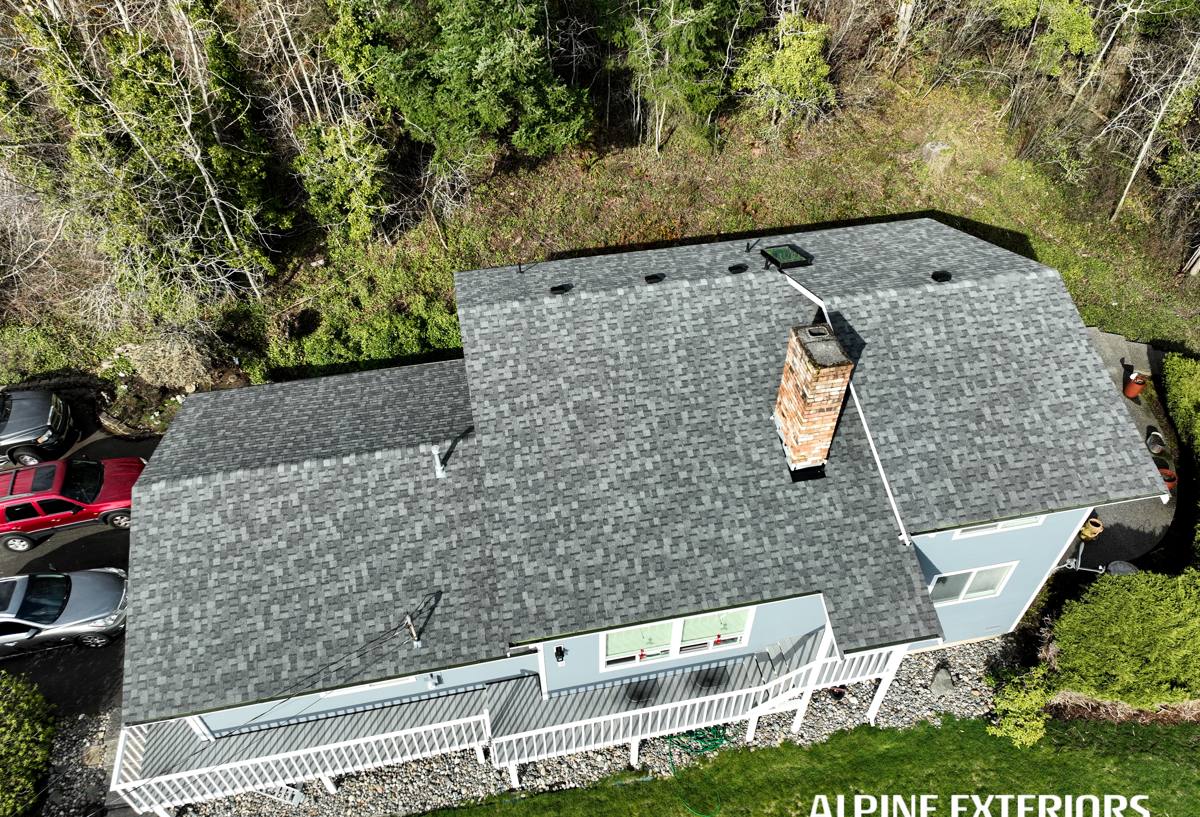
What Actually Fails First on a Birch Bay Deck
Ledger and Rim Joist Connections
The ledger board — where the deck attaches to the house — is the single most common failure point we see on replacement jobs near the water. Wind-driven rain gets pushed sideways during winter storms and works its way behind ledger boards that weren't flashed correctly or that used the wrong fastener coating. Once moisture gets trapped there, rot spreads quietly behind the siding line, and by the time it's visible the framing underneath is often already compromised.
Fasteners and Hardware
Standard hot-dip galvanized screws and joist hangers hold up fine in a lot of the country. Near saltwater air, they corrode faster, and corroded fasteners lose grip strength well before they look obviously rusted. This is one of the most overlooked cost-cutting shortcuts in deck work — the hardware is buried, so nobody sees it until a board is loose or a railing feels soft.
Ground-Level Framing and Post Bases
Low-clearance decks and those built close to grade trap moisture underneath, especially where landscaping or shade limits airflow. Post bases sitting in standing water or buried in soil rot from the bottom up — often the least visible, most structurally important part of the whole deck.
Decking Surface: Moss, Cupping, and Slip Risk
Even a structurally sound deck can become a maintenance headache if moss and algae are allowed to build up on the walking surface. Beyond looking bad, a mossy deck surface is a real slip hazard on wet mornings, and moss retains moisture against the board surface, accelerating whatever decay process is already underway.
What a Correct Deck Replacement Looks Like Here
A deck replacement isn't just tearing off old boards and screwing down new ones. Done right, in a climate like this, it's a full reset of every moisture-vulnerable detail:
- Full removal of old decking, framing, and any hidden rot down to sound material — not just what's visible from the top
- Ledger board reflashed with proper house-wrap integration and a drainage gap, not caulk alone
- Fasteners and structural hardware upgraded to corrosion-resistant grades suited to coastal exposure
- Joist tape or comparable protection on top of framing members to keep water from wicking into end grain
- Post bases set above grade with real drainage beneath them, not resting in soil or low spots
- Airflow and clearance underneath the deck evaluated and corrected where possible
- Decking material selected with this specific site's shade, drainage, and moss exposure in mind
- Railings and stairs rebuilt to current code, since older decks in this area often predate current guard and baluster spacing requirements
Skip any one of these and you're not really replacing the deck — you're rebuilding the same failure into new wood.
Decking Material Options for a Birch Bay Property
Pressure-Treated Wood
Still the most affordable option and a reasonable choice if you're willing to stay on top of cleaning and resealing. In this climate, that means realistically every year or two, not "every few years" — moss and mildew move fast here, and a neglected wood deck will show it within a season.
Cedar
Naturally more rot- and insect-resistant than treated pine, and it holds up well aesthetically if maintained. It still needs periodic sealing to perform well against driving rain and salt air, and cost runs higher than treated lumber.
Composite Decking
Higher upfront cost, but no annual sealing, and the better composite products resist moisture absorption and moss growth much better than any wood option. Our professional standard is to avoid the lowest-tier composite products in this specific climate — early-generation and budget composites can be more prone to moisture-related surface issues and mold staining in consistently damp, shaded conditions than the wood-alternative core products built for coastal exposure. That's a maintenance and warranty-structure trade-off worth understanding before you buy, not a reason to avoid composite altogether.
| Factor | Pressure-Treated Wood | Cedar | Composite |
|---|---|---|---|
| Upfront cost | Lowest | Mid-range | Highest |
| Maintenance in this climate | Annual cleaning/sealing | Periodic sealing | Occasional washing |
| Moss resistance | Low without upkeep | Moderate | Moderate to high (product-dependent) |
| Typical lifespan here | 10–15 years | 15–20 years | 20–25+ years |
| Salt air tolerance | Moderate, needs maintenance | Good | Good to very good |
Framing and Hardware: The Part You Won't See Again
Once decking boards go down, the framing underneath is hidden for another 15-20 years. This is exactly why it's worth spending time on before, not after. For Birch Bay replacements we treat the substructure as the part of the job that actually determines whether you're back here in a decade or in twenty-five years. That means matching fastener and hardware grade to the site's actual salt exposure rather than defaulting to whatever's cheapest at the supply house, and it means every ledger and post base gets checked for drainage, not just fastened and left.
Our Process for a Birch Bay Deck Replacement
- On-site assessment — We look at the existing deck's framing, ledger connection, drainage, sun/shade exposure, and how close it sits to grade, since all of these drive material and detailing decisions.
- Honest scope and estimate — You get a clear breakdown of what's structural necessity versus upgrade, with straightforward pricing and no surprise change orders for things we should have caught up front.
- Permitting — Whatcom County and local jurisdiction permitting is handled as part of the job, including any required inspections for structural and guard-rail work.
- Demolition and framing rebuild — Old material comes out, framing gets rebuilt or repaired to spec, and every moisture-control detail above gets addressed before decking goes down.
- Decking, railing, and finish work — Final surface, railings, and stairs are installed to code and to the material manufacturer's spec, since fastening patterns and gapping affect long-term performance.
- Walkthrough — We go over the finished deck with you, including basic maintenance expectations specific to your material choice and site conditions.
Why a Crew That Already Works Birch Bay Matters
A lot of deck problems in this area trace back to a crew building to a generic spec rather than to Whatcom County's coastal conditions. A contractor who regularly works Birch Bay, Semiahmoo, and the surrounding shoreline knows which fastener grades hold up against this specific salt and moisture combination, understands the local permitting process, and has seen firsthand what a five-year-old deck looks like when the ledger flashing was done wrong versus done right. That's not something you get from a crew that mostly builds decks on the dry side of the state and treats coastal jobs the same way.
It also means fewer surprises during the tear-off. When we've worked enough decks in this specific microclimate, we generally know where to expect hidden rot before we even pull the first board, which keeps the estimate closer to the final bill.
Maintenance That Actually Extends the Life of a New Deck Here
- Sweep debris and standing leaves off the surface regularly, especially in fall — trapped organic matter feeds moss and holds moisture against the boards
- Rinse or gently wash the deck surface a couple of times a year to interrupt moss and algae growth before it takes hold
- Check and clear any drainage gaps or gutters directing water onto or under the deck
- For wood decks, reseal on the schedule appropriate to the product — don't wait until it looks dry and gray
- Walk the underside of the deck periodically to check post bases and framing for early signs of moisture or rot
If your deck is showing its age — soft boards, persistent moss you can't stay ahead of, a railing that doesn't feel as solid as it used to — it's worth getting an honest, no-pressure look before you decide what to do. Use the form below to request a free estimate, and we'll walk the deck with you and give you a straight assessment of what it actually needs.