 Semiahmoo Exterior
 Why Window Replacement Works Differently in Bellingham
Bellingham sits right on the water in Whatcom County, and that location shapes what windows have to survive here. Salt-laden air off Bellingham Bay works into aluminum hardware and steel fasteners over time. Driving rain off Pacific storm systems doesn't just fall straight down — it gets pushed sideways into window assemblies, testing every seal and flashing detail. And the long, damp moss season that runs from fall through spring keeps siding, trim, and window perimeters wet for weeks at a stretch instead of drying out between rains like they might in a drier climate.
None of that means Bellingham homes need exotic windows. It means the install has to account for moisture the whole way through — not just the window unit itself, but how it ties into the wall, the flashing above it, and the drainage path below it. A window that's rated well on paper can still fail early if it goes in without the right prep for this climate.
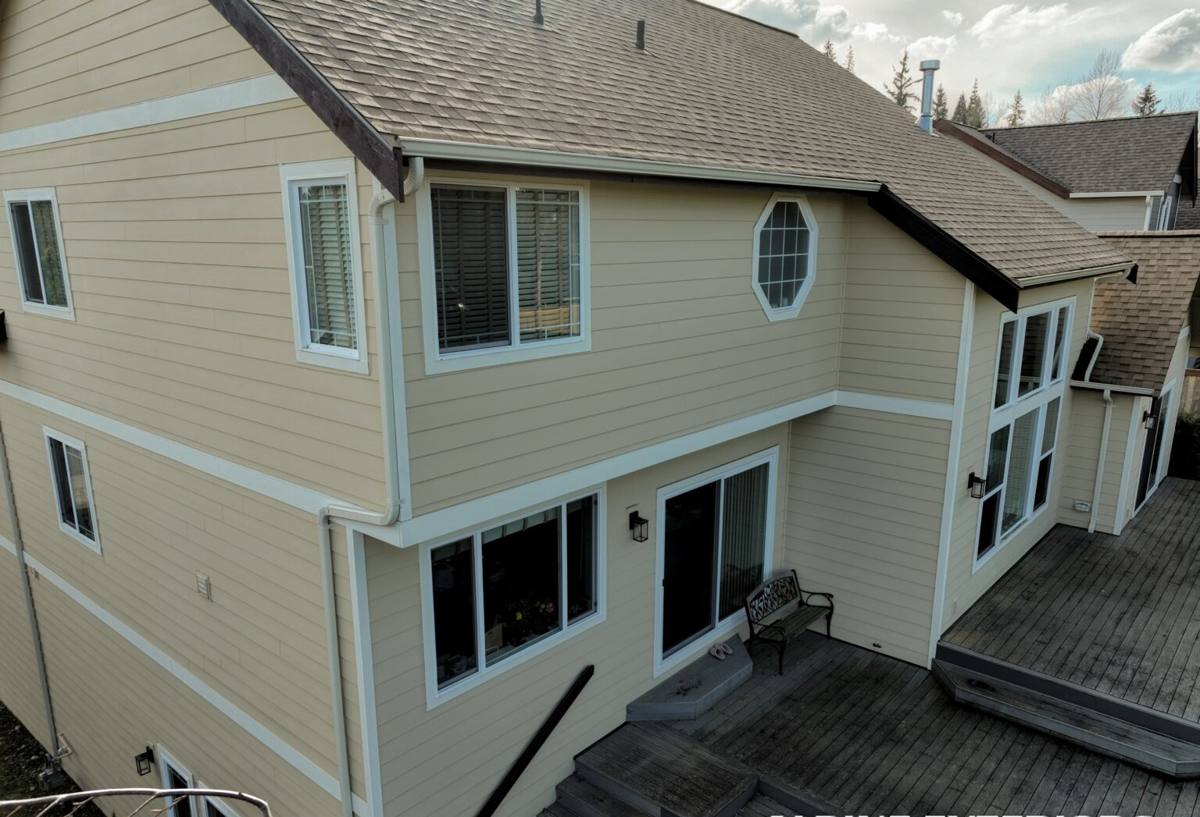
Signs Your Bellingham Home Needs New Windows
Window failure here rarely shows up as a sudden problem. It's usually a slow accumulation of small signs that homeowners notice individually before connecting them to the windows themselves.
What to Watch For
- Condensation building up between panes on a double- or triple-pane unit — a sign the seal has failed and the gas fill (or just the airspace) is compromised
- Drafts you can feel near the frame even with the window fully latched
- Soft or discolored trim and sill material, especially on walls that face prevailing wind and rain
- Difficulty opening, closing, or latching windows that used to operate smoothly — often a sign the frame has shifted or swollen
- Visible gaps between the window frame and the siding or trim
- A musty smell near windows, which can point to moisture getting behind the frame rather than just condensation on the glass
Any one of these on its own might just need a minor repair. Several showing up together, especially on the same wall, usually means water has been getting past the window assembly for a while and full replacement is the more honest fix.
What a Correct Window Replacement Job Actually Involves
The window itself is only part of the job. In a climate that sees this much sustained moisture, how the window is integrated into the wall matters as much as the product you choose.
Full-Frame vs. Insert Replacement
There are two general approaches to replacing a window. An insert (or "pocket") replacement fits a new window into the existing frame, leaving the original flashing and sill in place. A full-frame replacement removes the window down to the rough opening, exposing the framing, flashing, and sheathing underneath.
Insert replacement is faster and less disruptive, and it's a reasonable choice when the existing frame and flashing are still sound. But if there's any sign of water intrusion, rot, or failed flashing around the opening, an insert replacement just seals that damage inside the wall instead of fixing it. In a wet coastal climate, we won't recommend covering up a moisture problem to save a day of labor — it's not a trade-off worth making on a house that already sees this much rain.
The Details That Actually Keep Water Out
- Sill pan flashing — a sloped, waterproof pan under the window that directs any water that does get in back out, rather than letting it sit against the sheathing
- Proper flashing sequence — flashing installed shingle-style (each layer overlapping the one below) so water always sheds outward and down
- Correct sealant placement — sealed where it should be sealed, and deliberately left open where the window needs to drain or breathe
- Backer rod and low-expansion foam around the frame for both air sealing and insulation, without over-filling the gap
- Weather-resistant barrier integration — the house wrap or building paper has to lap correctly with the window flashing, not just butt up against it
Skip any one of these and the window can look fine for a year or two before problems show up inside the wall cavity, which is a far more expensive repair than the window replacement itself.
Choosing Materials and Glass for a Salt Air, High-Rain Climate
There's no single "best" window material — it depends on your home, your budget, and how much upkeep you want to take on. Here's how the common options hold up under Whatcom County conditions specifically.
| Material | How It Handles Salt Air & Rain | Maintenance |
|---|---|---|
| Vinyl | Good moisture resistance, won't corrode; performance depends heavily on quality of the extrusion and welded corners | Low — occasional cleaning |
| Fiberglass | Very stable in wet, temperature-swinging conditions; resists warping and doesn't corrode | Low |
| Aluminum | Prone to corrosion near salt air unless properly coated; conducts cold and can contribute to condensation | Moderate to high |
| Wood / wood-clad | Excellent insulator but the wood core needs the cladding and seals to stay intact — vulnerable if moisture gets behind the exterior cladding | Higher — periodic inspection of seals and finish |
Glass and Coatings
Most replacement windows now come standard with double-pane, Low-E coated glass, which cuts down on heat loss and UV fading. Triple-pane glass adds a third layer of glass and another sealed airspace, which improves insulation and sound dampening further — worth considering on a wall that takes direct wind and rain, or a room where a couple extra degrees of comfort matters. It comes at a higher upfront cost and adds weight, so it's a genuine trade-off rather than an automatic upgrade for every window in the house.
Gas fills (typically argon) between panes improve insulation value, but only for as long as the seal holds — which is exactly why failed seals and cloudy glass are one of the clearest signs it's time to replace rather than repair.
How Our Window Replacement Process Works
- On-site assessment — we look at the existing windows, the condition of the surrounding trim and flashing, and how each wall is exposed to wind and rain
- Product recommendation — we walk through material and glass options based on that specific wall's exposure, not a one-size-fits-all package
- Written estimate — clear scope, materials, and pricing before any work starts
- Removal and inspection — old windows come out and we check the rough opening, sheathing, and flashing for hidden moisture damage before anything new goes in
- Correct flashing and sealing — sill pan, shingle-lap flashing, and weather barrier integration done to hold up through a Whatcom County winter, not just look finished on install day
- New window installation — set, shimmed, and fastened to manufacturer specs
- Interior and exterior finish work — trim, caulking, and touch-up so the job looks intentional, not patched
- Final walkthrough — we test operation and go over care basics with you before we consider the job done
What Affects the Cost of Window Replacement
Costs vary a lot based on the scope of the project, and we'd rather explain the variables than throw out a number that doesn't apply to your house. In general, straightforward vinyl insert replacements sit at the lower end of the range, while full-frame replacements with wood-clad or fiberglass units and triple-pane glass sit at the higher end.
| Factor | Why It Moves the Price |
|---|---|
| Insert vs. full-frame replacement | Full-frame requires more labor and material to rebuild the opening correctly |
| Window size and count | Larger openings and whole-house projects have economies of scale but higher total cost |
| Material choice | Vinyl is typically the most affordable; fiberglass and wood-clad cost more |
| Glass package | Triple-pane and specialty coatings add cost over standard double-pane Low-E |
| Hidden damage | Rot or moisture damage found during removal adds repair scope before the new window can go in |
| Trim and finish work | Matching existing trim profiles or upgrading exterior trim material adds labor |
The only way to get a number that means anything is a look at your actual windows and walls, which is exactly what a free estimate is for.
Why a Crew That Already Works in Bellingham Makes a Difference
Window replacement done wrong doesn't usually fail on day one — it fails two or three winters later, after enough rain cycles have found the gap in the flashing. A crew that installs windows across Whatcom County through wet falls and long moss seasons has already seen where that kind of shortcut shows up, because we're the ones who get called back to fix it.
Local experience also means fewer surprises around permitting and code requirements for your jurisdiction, realistic scheduling around the region's wetter months, and product recommendations based on what actually holds up on homes exposed to Bellingham Bay's salt air and wind — not just a manufacturer's general marketing claims.
Caring for New Windows After Installation
New windows still need a bit of seasonal attention in this climate, especially through moss season when everything stays damp longer.
- Clear debris and moss buildup from window sills and adjacent trim before it holds moisture against the frame
- Check exterior caulking annually for cracking or separation, particularly on walls facing prevailing wind and rain
- Operate every window a few times a year, including ones you rarely open, so hardware doesn't seize up
- Wipe down tracks and weep holes so they can keep draining properly
- Watch for condensation between panes — it's the earliest sign of a seal failure and worth addressing before it becomes a bigger issue
- Keep an eye on interior sills for soft spots or discoloration after heavy rain events
If you're dealing with drafty, foggy, or hard-to-operate windows, or you're just planning ahead for a home that needs to hold up to another Whatcom County winter, we're happy to take a look and give you an honest assessment. Reach out for a free, no-pressure estimate using the form below.