 Semiahmoo Exterior
 Roofing in a Salt Air, Rain, and Moss Climate
Bellingham and the Semiahmoo area sit right where Pacific storm systems, salt-laden marine air off the Strait of Georgia and Drayton Harbor, and heavy tree cover all meet. That combination is harder on a roof than most homeowners realize. It's not one big threat — it's three smaller ones working together, year after year, until an aging roof fails faster than its age alone would suggest.
Salt air accelerates corrosion on exposed metal — flashing, fasteners, vent caps, and drip edge — well before the shingles themselves wear out. Driving rain, especially when it comes in sideways off a winter storm, finds every weak lap, nail pop, and undersized flashing detail and pushes water uphill under the shingle line instead of just running off. And the long, damp shoulder seasons common to Whatcom County give moss and moisture-loving lichen months at a time to root into shingle mat and granules, holding water against the roof deck instead of shedding it.
None of that means a roof in Bellingham needs to be exotic or overbuilt. It means the replacement needs to be done with these three specific stresses in mind — the right materials, the right fastener and flashing choices, and installation details that don't leave shortcuts for salt, rain, or moss to exploit.
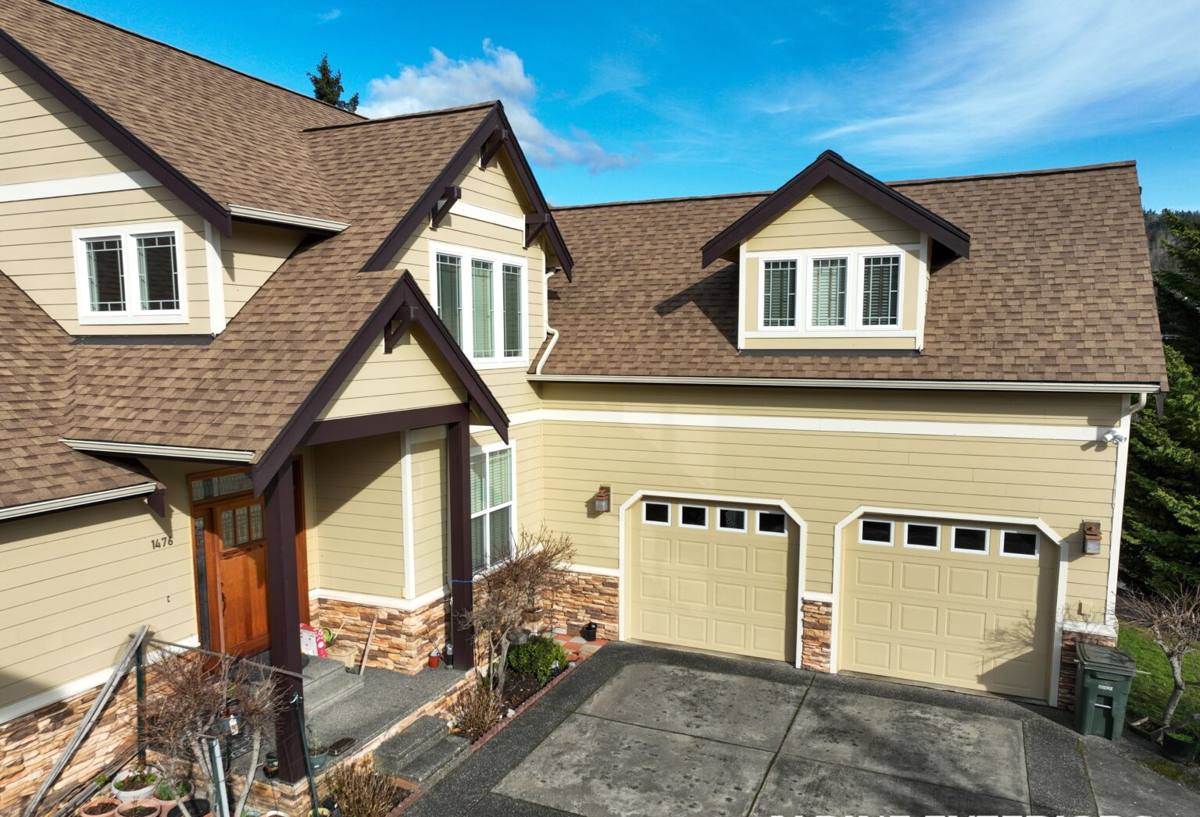
What Local Homes Actually Need From a Roof Replacement
Corrosion-resistant metal, not just "matching" metal
Every flashing point — chimneys, valleys, sidewalls, roof-to-wall transitions, pipe boots — should use metal and fasteners rated for coastal exposure. Standard galvanized fasteners can start showing rust streaks within a few years this close to salt air. We spec corrosion-resistant flashing and fastener packages as standard practice on Bellingham and Semiahmoo roofs, not as an upcharge option.
Ventilation that keeps the deck dry from underneath
A roof deck that stays damp from poor attic ventilation is more hospitable to moss, rot, and premature shingle failure than one that dries out between rain events. Balanced intake and exhaust ventilation matters as much here as the shingle brand on top.
Underlayment built for extended wet exposure
Between the marine layer, seasonal storms, and shaded roof sections that barely see direct sun in winter, a synthetic, high-temp-rated underlayment with good water resistance under a shingle system is the baseline we install, not an upsell.
Shingle and roofing choices that resist moss colonization
Algae- and moss-resistant shingle lines (using embedded copper or zinc granules) genuinely earn their keep on shaded, north-facing, or tree-covered roof sections common around Bellingham. On steeper-pitch or heavily treed lots we'll also talk through zinc or copper strip options at ridge lines as a supplemental moss deterrent.
What a Correct Roof Replacement Involves
A roof replacement is only as good as what's underneath the shingles. Here's what we treat as non-negotiable on every tear-off:
- Full tear-off to the deck — no roofing over existing layers, ever
- Deck inspection and repair of any soft, delaminated, or rotted sheathing before anything new goes down
- Ice-and-water shield at eaves, valleys, and any low-slope transitions
- Corrosion-resistant drip edge and step flashing at every wall and chimney intersection
- Synthetic underlayment across the full deck, not just felt paper
- Properly balanced ridge and soffit (or equivalent) ventilation
- Manufacturer-spec nailing pattern and exposure — not "close enough"
- New pipe boots and vent flashing rather than reusing old ones
- A final walk-through covering the gutter line, downspouts, and any moss-prone valleys
Skipping any one of these doesn't show up on day one. It shows up in year three or four, usually as a leak at a flashing point or a soft spot where moss held moisture against the deck all winter.
Our Process, Start to Finish
1. On-site inspection
We walk the roof (or use a lift/drone where pitch or access requires it), check the attic for ventilation and moisture signs, and look specifically at flashing, valleys, and any moss or lichen buildup — the early warning signs for this climate.
2. Straight assessment and written estimate
You get a clear explanation of what's actually going on with your roof — repair-worthy versus replacement-worthy — and a written scope and estimate before any work is scheduled. No pressure, no scare tactics.
3. Material selection based on your roof, not a sales script
Steep, shaded, tree-covered lots get a different conversation than an open, sunny roof plane. We'll tell you honestly where moss-resistant shingles or supplemental zinc/copper strips are worth it and where they're not.
4. Scheduling around Whatcom County weather
Tear-offs are weather-dependent by nature. We plan install windows with realistic buffer for Pacific Northwest rain patterns so your home isn't sitting open to the weather longer than necessary.
5. Tear-off and installation
Deck inspected and repaired as needed, underlayment and flashing installed to the standards above, shingles installed to manufacturer spec, and daily site cleanup including magnetic nail sweeps.
6. Final walk-through
We walk the finished roof with you, cover care and maintenance specific to your property (moss watch points, gutter maintenance schedule), and go over warranty documentation.
Cost Factors for a Bellingham-Area Roof Replacement
Every roof is different, but the factors that move price up or down are consistent. This is meant to help you understand what's driving your estimate, not to substitute for one.
| Factor | Why It Matters Here |
|---|---|
| Roof size and pitch | Steeper pitches near the water and around Semiahmoo often need additional safety measures and labor time |
| Deck condition | Moss and trapped moisture over time can lead to hidden sheathing repair needs discovered at tear-off |
| Number of flashing points | Chimneys, skylights, and multiple roof planes each need corrosion-resistant flashing detail |
| Shingle/material tier | Standard vs. algae-resistant vs. premium impact-rated lines carry different material costs |
| Ventilation upgrades | Older homes often need added intake or exhaust ventilation brought up to current standards |
| Access and tree cover | Heavily treed lots common around Bellingham can add labor time for debris management and safety setup |
As a general rule, we'd rather walk you through where your money is actually going — deck repair, better flashing, proper ventilation — than quote a number with no explanation behind it.
Signs Your Roof Is Telling You It's Time
- Granules collecting in gutters or at the base of downspouts
- Moss or thick lichen growth that keeps coming back after cleaning
- Curling, cracking, or cupping shingles, especially on south- or west-facing slopes
- Rust staining running down from flashing or vent caps
- Daylight visible through the attic roof deck
- Soft or spongy spots when walking the roof
- Interior water stains after wind-driven rain events
- A roof approaching or past its material's expected service life
Any one of these on its own might just need a repair. Several together, especially on an older roof, usually means replacement is the more honest recommendation — and we'll tell you that directly rather than stretching a repair past its usefulness.
Why It Matters That We Already Work in Bellingham and Semiahmoo
A crew that only occasionally works this stretch of Whatcom County can install a roof that looks correct and still be under-built for what this specific climate throws at it — undersized flashing metal, standard fasteners instead of corrosion-resistant ones, or a shingle line that has no business on a shaded, moss-prone slope. Working this area regularly means we're not guessing at what fails here first; we've seen it, and we build against it as standard practice, not as an add-on you have to know to ask for.
It also means we understand realistic scheduling around this region's rain patterns, know what local permitting and inspection expects, and can speak plainly about trade-offs specific to coastal, tree-covered, and inland Whatcom County properties rather than giving you a generic national answer.
Maintaining Your Roof After Replacement
A correctly installed roof still benefits from basic upkeep in this climate:
- Clear moss and debris from valleys and north-facing slopes before it accumulates
- Keep gutters and downspouts clear so water isn't backing up under the roof edge
- Trim back overhanging branches that keep roof sections shaded and damp
- Have flashing points checked periodically, especially after major windstorms
- Address small leaks immediately rather than waiting for them to spread
None of this requires a service contract — it's simply what keeps a well-built roof performing for its full expected lifespan out here.
Get a Straight Answer About Your Roof
If you're weighing a repair against a full replacement, or you just want an honest read on what your roof actually needs, we're glad to take a look. The estimate is free, there's no pressure attached to it, and you'll get a plain explanation of what we see — use the form below to get started.