 Semiahmoo Exterior
 Why Bellingham's Coastal Climate Is Hard on Windows
Bellingham sits close enough to Semiahmoo, Drayton Harbor, and the open water of the Salish Sea that salt-laden air is a fact of life for homes here, not an occasional inconvenience. That salt air works its way into window hardware, frame fasteners, and metal components year-round, and it doesn't take a break in the summer. Add in the driving rain that comes off Pacific storm systems through fall and winter, plus a long stretch of overcast, damp months that keep north- and west-facing walls shaded and wet, and you have a climate that is genuinely tougher on windows than most inland parts of Washington.
Old or poorly installed windows in this environment don't just get drafty — they let moisture track into wall cavities, corrode hardware until sashes stop latching, and develop the kind of persistent condensation that feeds mold and, eventually, moss and algae growth on sills and trim. If you've owned a home in Whatcom County for more than a few winters, you've probably already seen some version of this.
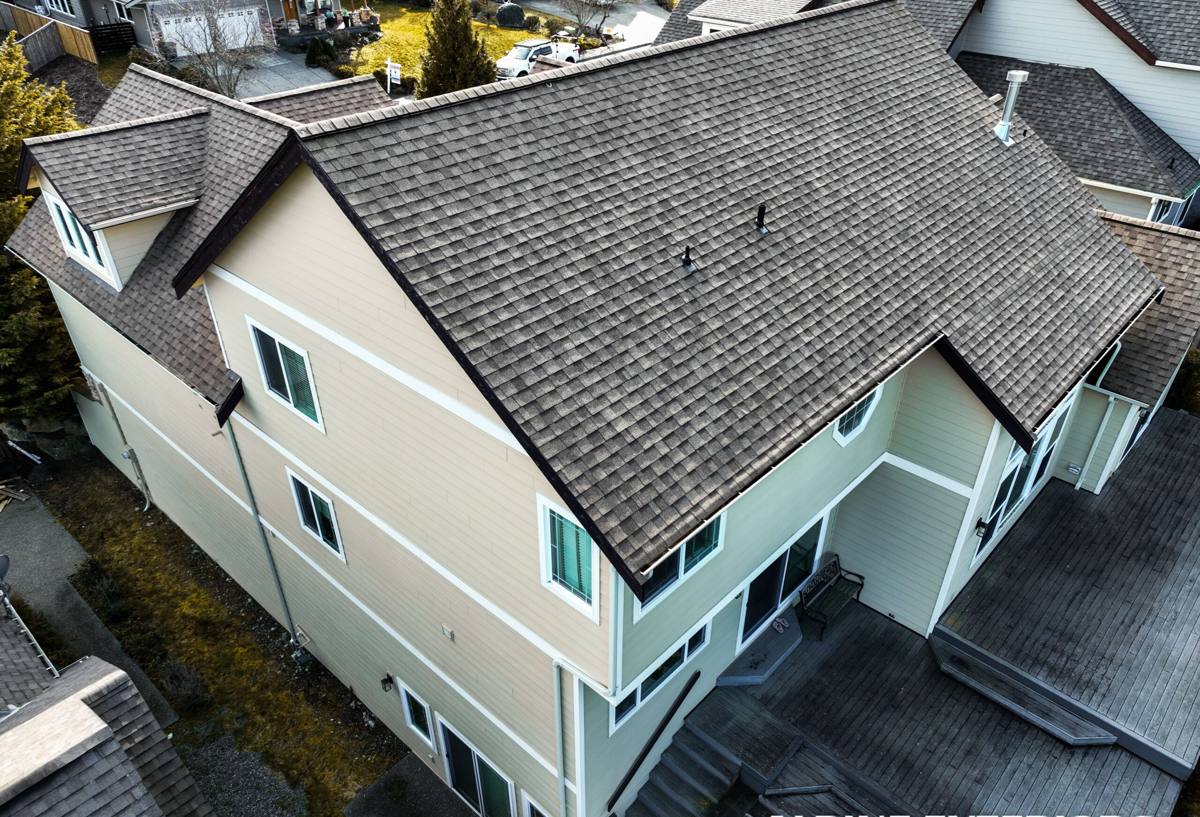
What "Energy-Efficient" Actually Means for a Bellingham Home
"Energy-efficient" gets used loosely in this industry, so it's worth being specific. For a marine climate like ours, three numbers matter more than any marketing language:
- U-factor — how well the window resists heat loss. Lower is better. This is the number that matters most for Bellingham's cool, wet winters, when heat loss (not heat gain) is the dominant problem.
- SHGC (Solar Heat Gain Coefficient) — how much solar heat passes through the glass. In our climate, moderate SHGC values are usually fine since we don't fight intense summer sun the way inland or southern regions do.
- Air leakage rating — how tightly the window seals when closed. Combined with driving rain, a poor air-leakage rating often shows up as a water-intrusion problem before it shows up as a comfort problem.
A window that's efficient in Arizona isn't automatically the right choice here. We size and spec glass packages around what actually happens to a window on a house near Semiahmoo Bay: repeated wetting and drying, salt exposure, and long stretches of low light rather than high heat.
Signs Your Bellingham Home's Windows Are Underperforming
Homeowners usually notice a handful of specific problems before they call anyone. If more than one of these sounds familiar, it's worth having the windows looked at rather than just the glass:
- Condensation building up between the panes (a sign the seal has failed and the insulating gas is gone)
- Drafts you can feel near the frame, especially during wind-driven rain
- Sashes that are hard to open, close, or lock — often from swollen wood or corroded hardware
- Visible staining, soft wood, or moss/algae starting to establish on the sill or lower frame
- A noticeable difference in comfort between rooms, especially ones facing the water or prevailing weather
- Rising heating bills that aren't explained by anything else in the house
Window Materials and Glass Options That Hold Up Here
Material choice matters more in a salt-air, high-rainfall climate than it does in most of the country. Here's how the common options generally perform in Bellingham conditions:
| Material | Salt Air / Coastal Performance | Moisture Behavior | Maintenance |
|---|---|---|---|
| Vinyl | Good — won't corrode; hardware quality varies by manufacturer | Doesn't absorb water; seams need proper detailing | Low |
| Fiberglass | Very good — dimensionally stable, resists pitting | Excellent; minimal expansion/contraction | Low |
| Aluminum | Fair — prone to corrosion near salt water unless properly finished | Conducts cold, can promote condensation | Moderate |
| Wood / wood-clad | Requires diligent maintenance near salt air | Vulnerable if finish or cladding fails | High |
None of these materials are automatically wrong for your home — the right choice depends on your budget, the home's style, and how much upkeep you're realistically going to do. Our job is to walk you through the honest trade-offs rather than push whatever has the best margin. For homes right along the water near Semiahmoo, we generally steer clients toward vinyl or fiberglass frames specifically because they don't corrode and hold up to repeated wetting without a maintenance schedule.
Glass Packages Worth Considering
Double-pane, low-E, argon-filled glass is the baseline we'd recommend for almost any Bellingham home today. Triple-pane adds further insulation value and can be worth it for north-facing rooms, homes closer to open water with more wind exposure, or anyone prioritizing quiet as much as efficiency — Whatcom County's storm winds off the water carry real noise. It costs more upfront, so we'll help you weigh that against your specific exposure and budget rather than recommend it across the board.
What a Correct Installation Actually Involves
In a climate that gets this much driving rain, the installation detailing matters as much as the window itself. A window that's a great product but poorly flashed will fail here faster than a mediocre window installed correctly. A proper job includes:
- Removing the old window and inspecting the rough opening and sheathing for hidden water damage or rot before anything new goes in
- Installing a proper weather-resistive barrier and flashing sequence — sill pan flashing especially, since it's the first line of defense against wind-driven rain finding its way into the wall
- Setting the window plumb, level, and square, then shimming and fastening per the manufacturer's specifications (not generic guesswork)
- Sealing and insulating the perimeter gap correctly — too little sealant leaves gaps, too much or the wrong type traps moisture
- Finishing with exterior trim and caulking rated for continuous UV and moisture exposure
Skipping or rushing any of these steps is the single most common reason a "new window" still leaks or drafts within a couple of years. It's rarely the window's fault — it's the installation.
Our Process for Bellingham Window Replacement
- On-site assessment. We look at each window's condition, the wall assembly behind it where accessible, exposure to weather and salt air, and how the room is actually used.
- Honest recommendation. We'll tell you which windows genuinely need replacement now, which can wait, and which materials and glass packages make sense for that specific wall's exposure.
- Written estimate. Clear scope, materials, and pricing before any work starts — no surprise change orders for things we could have identified up front.
- Careful removal and inspection. We check for hidden rot or moisture damage in the opening before installing anything new, and we'll flag it if we find it rather than covering it up.
- Proper flashing and installation. Following manufacturer specs and best practice for our rainfall levels, not shortcuts.
- Final walkthrough. We test operation, check seals, and make sure everything is finished and cleaned up before we consider the job done.
Before You Get Started: A Practical Checklist
- Note which rooms feel drafty, noisy, or hard to heat — this helps prioritize which windows to address first if you're not replacing all at once
- Check for soft wood, staining, or bubbling paint/trim around any window — these can indicate moisture already in the wall
- Decide on a realistic budget range and whether you're replacing all windows at once or phasing the project
- Think about noise — if you're near a busier road or open water with wind exposure, mention it, since glass package choice can address it
- Ask any contractor you're considering how they handle flashing and moisture barriers — the answer tells you a lot about how the job will hold up
Why Hiring a Crew That Already Works in Bellingham Matters
Window installation isn't one-size-fits-all, and a crew that mostly works drier, inland climates doesn't always carry the same instincts around flashing detail, material selection, and moisture management that a Whatcom County coastal property demands. We work on homes throughout the Semiahmoo and Bellingham area regularly, so we're used to what salt air does to hardware over a few winters, how driving rain behaves against different wall orientations, and where moss tends to establish first on a house that isn't getting enough sun to dry out between storms. That local pattern recognition is part of what separates a window job that lasts fifteen-plus years from one that needs attention again in five.
Living With a Long Moss Season
Moss and algae aren't just a roof problem in this part of Washington — they show up on window sills, frames, and trim too, especially on shaded, north-facing walls that don't get much direct sun from fall through spring. Beyond looking bad, sustained moss growth holds moisture against the frame and finish, which shortens the life of caulking, trim paint, and in some cases the frame material itself. Choosing materials that don't feed moss growth (smooth vinyl and fiberglass generally shed it more easily than textured wood trim) and keeping sills clear of debris are both worth factoring into your window plan if your home has a shaded exposure.
Let's Take a Look at Your Windows
If your windows are drafty, fogging, hard to operate, or just past their prime, we're happy to come take a look and give you an honest read on what's going on and what it would take to fix it. There's no pressure and no obligation — just a straightforward assessment from a crew that works Bellingham and the surrounding Whatcom County coastline regularly. Use the form below to request a free estimate.