 Semiahmoo Exterior
 Why Bellingham Roofs Wear Differently
A roof in Bellingham does not age the same way a roof does in Spokane or Yakima. The combination of marine air, near-constant fall and winter rain, and shade from mature trees creates a specific set of stresses on asphalt shingles: salt-laden moisture that accelerates granule loss and metal corrosion, prolonged dampness that never fully dries between storms, and moss and algae that get a foothold anywhere a roof stays wet longer than a day or two. None of this means asphalt shingle roofing is a poor choice here — it remains one of the most practical, cost-effective options for Whatcom County homes. It means the material selection, installation details, and maintenance plan all have to account for what this climate actually does to a roof, rather than following a generic install checklist written for a drier region.
We work on roofs throughout the Bellingham area regularly, and the patterns repeat: north-facing slopes and roof sections shaded by trees show moss and algae streaking years before the sun-exposed sides do; valleys and low-slope transitions hold water longer and show granule wear first; and exposed fasteners or older flashing details start showing rust streaks well before the shingles themselves are due for replacement. A correct roofing job here is built around those realities from the start.
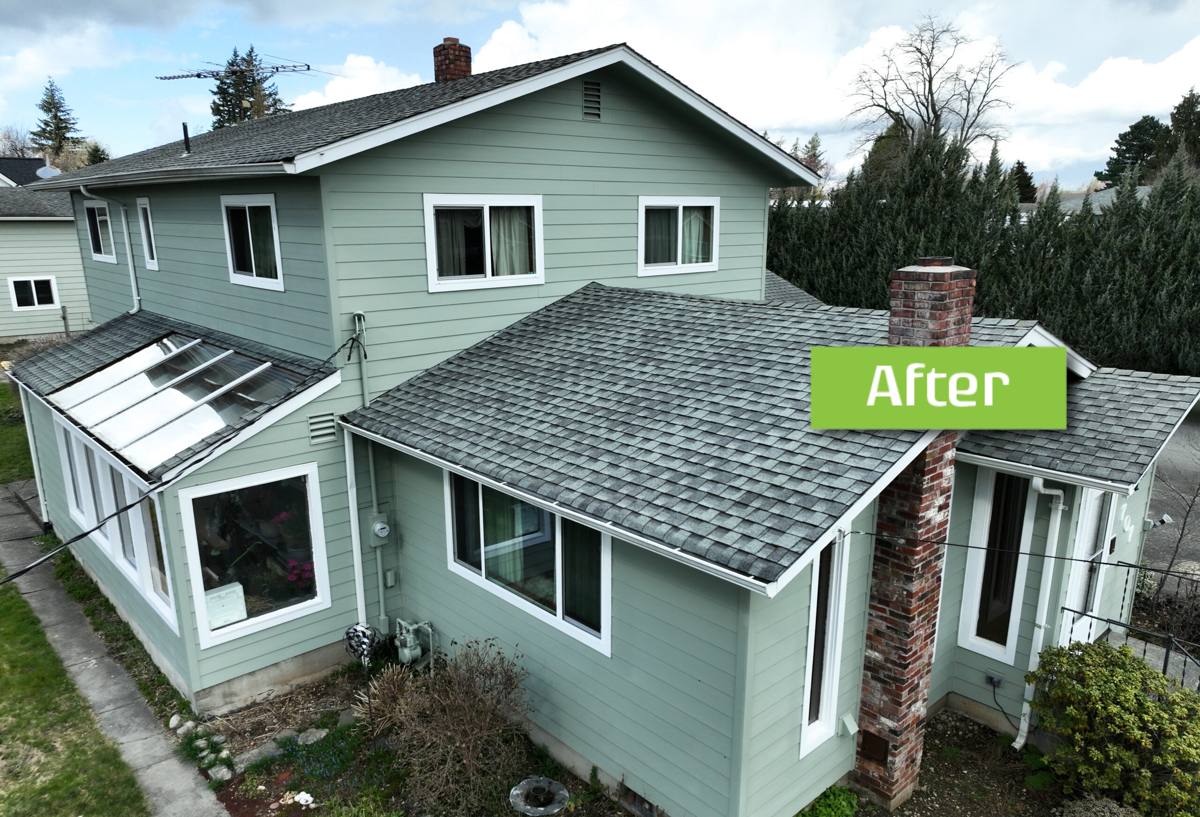
What Salt Air, Rain, and Moss Actually Do to Shingles
Salt Air and Coastal Moisture
Being close to Puget Sound and the Strait of Georgia means airborne salt reaches roofs even a few miles inland, especially on days with onshore wind. Salt-laden moisture speeds up corrosion on exposed metal — nail heads, flashing edges, and drip edge — and can contribute to earlier granule loss on shingles as the surface stays damp longer between dry spells. This is why fastener choice and flashing material matter more here than in an inland climate.
Driving Rain
Whatcom County doesn't just get a lot of rain — a fair amount of it comes in sideways during winter storms. Wind-driven rain finds any weak point in a roof system: a poorly lapped shingle course, a nail that missed the strike zone, an undersized or missing ice-and-water membrane at a valley or eave. Roofs that would hold up fine under straight-down rain in a milder climate can leak here if those details are cut short.
Moss Season
Bellingham's moss season runs long — realistically, most of the fall through spring — because shaded, north-facing, and low-slope roof sections rarely get enough sun to fully dry out between rain events. Moss isn't just cosmetic. As it establishes, it holds moisture against the shingle surface, lifts shingle edges as it grows, and can work its way under tabs and flashing over time. Left unmanaged for years, it shortens the usable life of an otherwise sound roof.
Choosing the Right Asphalt Shingle System for This Climate
Not every asphalt shingle product is built the same, and the differences matter more in a climate like this one. We generally steer homeowners toward algae-resistant shingles (look for "AR" in the product name) almost without exception here, because the copper- or zinc-infused granules that resist algae growth are one of the few upgrades that directly addresses Bellingham's moss and algae problem rather than just delaying it. Beyond that, the tier of shingle — and the underlying system it's installed with — makes a real difference in how the roof performs over 20-plus years of this weather.
| Shingle Type | Typical Lifespan Here | Wind Rating | Moss/Algae Resistance | Best Fit |
|---|---|---|---|---|
| 3-tab (standard) | 15–20 years | Moderate | Low unless AR-rated | Budget-driven replacements, low-slope garages/outbuildings |
| Architectural / dimensional | 25–30 years | Good to high (varies by line) | Good when AR-rated | Most Bellingham homes — the standard recommendation |
| Premium / impact-resistant | 30+ years | High | Very good when AR-rated | Exposed sites, steep or complex rooflines, homeowners planning to stay long-term |
Cost differences between these tiers are real, but they're not the whole story. A mid-tier architectural shingle installed correctly — proper underlayment, correct nailing, sound flashing — will consistently outperform a premium shingle installed with shortcuts. We'll always tell you honestly where the money is best spent on your specific roof rather than defaulting to the most expensive option.
What a Correct Install Involves in This Climate
Underlayment and Ice-and-Water Membrane
Given how much of Whatcom County's rain arrives wind-driven, we treat self-adhering ice-and-water shield as standard at eaves, valleys, and around penetrations — not an upsell. Synthetic underlayment across the rest of the deck sheds incidental moisture better than older felt products and holds up longer if a storm delays shingle installation partway through a job.
Flashing
Step flashing at walls, apron flashing at roof-to-wall transitions, and valley flashing all need to be sized and lapped correctly — this is where most leaks in older Bellingham roofs actually originate, far more often than through the shingle field itself. Given the corrosion risk from salt air, we favor flashing materials and fasteners rated for coastal exposure rather than the bare minimum.
Nailing and Fastening
Manufacturer nailing patterns exist for a reason, and skipping or under-driving nails is one of the most common ways wind and driving rain find their way under shingles. Correct nail placement, count, and depth are non-negotiable on every roof we install, and it directly affects whether the manufacturer's wind warranty is even valid.
Ventilation
A shingle roof lasts as long as its attic breathes properly. Poor ventilation traps moisture underneath the deck, which shows up as premature shingle curling, sheathing rot, and — in this climate especially — mold and mildew that has nowhere to escape. We check intake (soffit) and exhaust (ridge or roof vents) balance on every job, not just the shingles themselves.
Our Process for a Bellingham Re-Roof
- Inspection and estimate. We walk the roof (weather permitting) or use a close ground/ladder inspection, check the attic for moisture or ventilation issues, and give you a written scope — what needs to happen and why, not just a number.
- Tear-off and deck check. Full tear-off to the deck on most jobs, because layering over old shingles hides deck damage and shortens the life of the new roof. Any soft or rotted decking gets replaced before anything else goes down.
- Underlayment and flashing. Ice-and-water membrane at vulnerable areas, synthetic underlayment across the field, new flashing at walls, valleys, and penetrations.
- Shingle installation. Installed to manufacturer specification for nailing pattern and exposure, with attention to valleys, hips, and ridge for a clean, consistent line.
- Ventilation check and correction. Intake and exhaust venting confirmed or upgraded as part of the job, not treated as an afterthought.
- Cleanup and final walkthrough. Magnetic sweep for nails, gutter check, and a walkthrough so you know exactly what was done and what to watch for going forward.
Living With a Shingle Roof in Whatcom County
Even a well-built roof needs some ongoing attention in this climate, particularly around moss and debris. Homeowners who stay ahead of basic maintenance consistently get more years out of their roof than those who let moss and clogged gutters go unaddressed for years at a stretch.
- Clear gutters and valleys of needles and leaf debris at least twice a year — clogged gutters back water up under the shingle edge
- Have moss treated (not power-washed, which strips granules) as soon as it starts to show, rather than waiting until it's established
- Trim back overhanging branches to reduce shade and debris buildup on north-facing slopes
- Check attic ventilation isn't blocked by insulation at the soffits
- Walk the yard after major windstorms and look for lifted or missing shingles rather than waiting for a leak to show up inside
- Have the roof inspected every few years, especially once it's past the 10-year mark
Moss Removal Done Right
Pressure washing a mossy roof is one of the fastest ways to shorten its life — it strips protective granules and can drive water under shingle tabs. The right approach is a gentle treatment that kills moss at the root, followed by careful manual removal, then a preventive treatment or zinc/copper strip to slow regrowth. If your roof has heavy moss buildup, we're upfront about whether it's routine maintenance or a sign the roof is due for replacement.
Repair or Replace? Reading the Signs
Not every roofing issue means a full replacement, and we won't tell you it does. Some signs point to a targeted repair; others point to a roof at the end of its useful life.
| What You're Seeing | Likely Means |
|---|---|
| A few cracked or missing shingles after a storm | Spot repair, usually straightforward |
| Granule buildup in gutters, widespread shingle curling | Roof is aging out — replacement should be planned |
| Leak traced to a single flashing point (chimney, vent, wall) | Flashing repair, often without replacing the roof |
| Heavy, established moss across large roof sections | Depends on shingle condition underneath — needs an in-person look |
| Sagging deck, soft spots underfoot, or interior water stains spreading | Deck damage likely — replacement territory |
Why It Matters to Hire a Crew That Knows Bellingham
A roofing crew that mostly works drier, inland climates can still put on a technically fine-looking roof that underperforms here within a few years — not from bad workmanship in general, but from applying assumptions that don't hold up against Whatcom County's rain patterns and moss pressure. Knowing which slopes in this area need extra attention to ventilation, which flashing details actually need upgrading for coastal moisture, and how aggressively to plan for moss control isn't something you get from a generic install — it comes from working roofs in this specific climate season after season.
We also know the practical side: permitting expectations, typical roof pitches and access challenges on homes in and around Bellingham, and how to schedule a tear-off around a weather window instead of leaving a deck exposed during a rainy stretch. That local familiarity shows up in fewer callbacks and a roof that's actually built for the conditions it has to survive.
Ready to Talk About Your Roof?
If you're weighing repair versus replacement, comparing shingle options, or just want an honest read on what your roof needs, we're happy to take a look. Reach out using the form below for a free, no-pressure estimate — we'll tell you what we actually see, not just what sells a job.