 Semiahmoo Exterior
 Why Wiser Lake Homes Need Siding Built for This Corner of Whatcom County
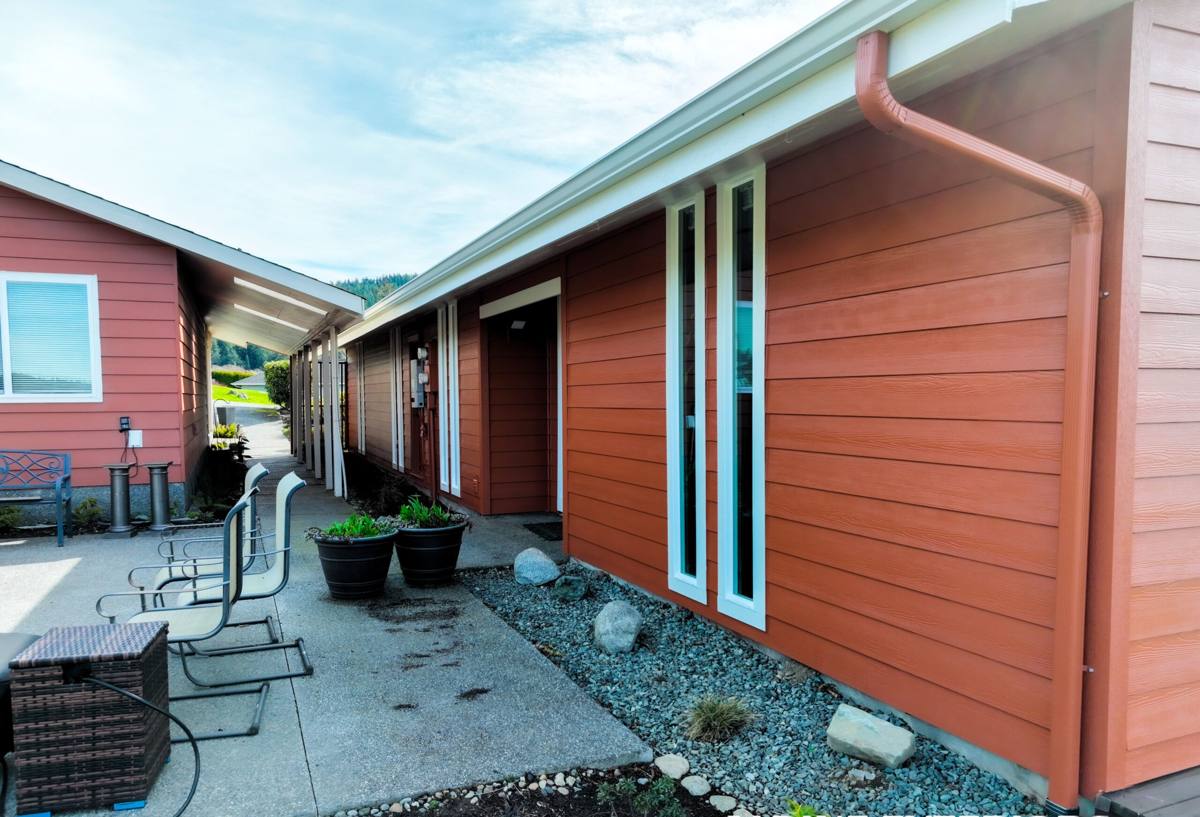
Wiser Lake sits inland from Semiahmoo Bay, but it doesn't escape the weather that defines this part of Whatcom County. Pacific storm systems still push driving rain through the tree line, damp air still settles over the water and doesn't leave for days, and the same moss and algae that coat roofs and fences all winter find their way onto exterior walls too. Homes here also tend to sit closer to mature trees and shoreline vegetation than homes in more open, coastal parts of our service area, which changes how siding actually weathers over time. A siding system that works fine on an open, sun-exposed lot near the bay can still struggle on a shaded, tree-ringed lot at Wiser Lake if it isn't installed with that difference in mind.
This page is about one thing: fiber cement siding, installed correctly, on a Wiser Lake home. Not a general siding overview, and not a sales pitch — just what this climate actually demands, what a correct installation involves, and why the crew doing the work matters as much as the product itself.
The Climate Wiser Lake Siding Actually Has to Survive
Salt-Tinged Air, Even This Far Inland
Semiahmoo Bay and the Strait of Georgia shape the air quality across this whole stretch of Whatcom County. Even a few miles inland at Wiser Lake, prevailing marine air still carries some of that salt content, and it settles on painted and coated surfaces the same way it does closer to the water — just a little more slowly. Combined with our long, wet winters, that salt-laden moisture accelerates the breakdown of lower-grade coatings and speeds up corrosion on fasteners and trim that weren't specified for a marine-influenced climate.
Shade, Standing Moisture, and a Long Moss Season
What makes Wiser Lake different from a more open coastal lot is tree cover and proximity to standing water. Homes tucked among trees near the lake get less direct sun and more shade, which means siding stays damp longer after every rain. That extended dampness is exactly what moss, algae, and mildew need to take hold, and once established on a wall surface, they hold moisture directly against the substrate instead of letting it evaporate off. The result is a moss season that runs longer here than it does on a sun-exposed lot just a few miles away — often into months that would otherwise be considered a "dry" stretch elsewhere in the county.
What "Correct" Fiber Cement Installation Means Here
Managing Water Behind the Siding, Not Just on It
Fiber cement is a genuinely durable material, but its performance depends almost entirely on what's behind it. A correct installation starts with a continuous weather-resistive barrier, properly lapped and taped at every seam, with flashing integrated at every window, door, and horizontal transition so water is directed out and down rather than trapped behind the cladding. On a shaded, damp lot like Wiser Lake, we treat a drainage gap or rainscreen detail as a practical necessity rather than an upgrade — it gives incidental moisture a path to drain and dry instead of sitting against the back of the panel where it can't evaporate.
Fastening, Joints, and Clearances
Fiber cement has to be fastened, gapped, and caulked to the manufacturer's specification to perform as designed — that means corrosion-resistant fasteners driven at the correct spacing and depth, factory-cut or properly sealed field cuts, and expansion gaps left at every butt joint and trim intersection. We also hold siding to proper clearance above grade, decks, and roof lines, which matters more at Wiser Lake than on an open lot because ground moisture and splash-back near tree-shaded, damp soil linger longer between dry spells. Skipping any one of these steps doesn't show up on day one — it shows up in five or ten years as soft trim, staining, or a coating that's failing well before it should.
Why We Install Only James Hardie Fiber Cement
We don't install vinyl, LP SmartSide, Cemplank, Allura, primed spruce, or cedar — not because those products can't be installed well, but because we've standardized our crews, our details, and our warranty conversations around one system: James Hardie. Fiber cement is non-combustible, which matters in a region that sees wildfire smoke and increasing summer fire risk even in a marine climate. Hardie's ColorPlus factory-applied finish is baked on under controlled conditions rather than field-painted, which gives it more consistent resistance to the fading and peeling that field-applied coatings are prone to in a climate this wet. And Hardie engineers specific product lines, including HZ5, for regions with exactly the freeze-thaw, moisture, and humidity profile we get here — it isn't a one-size-fits-all product pulled off a generic shelf.
Vinyl can warp and fade under UV and temperature swings and it doesn't hold paint if a homeowner ever wants to change color. Engineered wood products like LP SmartSide perform well when detailed and maintained precisely, but they're wood-based and depend heavily on unbroken factory sealing at every cut edge — a single missed seal in a damp, shaded environment like Wiser Lake is where problems start. Cedar and primed spruce are attractive but require an ongoing maintenance commitment — refinishing, caulking, and monitoring for rot — that most homeowners don't want to sign up for indefinitely, especially in a long moss season. Hardie's combination of non-combustible material, factory finish, and a strong transferable warranty is why it's the only product we put on a home.
How Hardie Compares for a Property Like Yours
| Factor | James Hardie Fiber Cement | Vinyl Siding | Engineered Wood (LP SmartSide) | Cedar / Primed Spruce |
|---|---|---|---|---|
| Moss and moisture resistance | High when installed with proper drainage detail | Doesn't feed moss, but traps moisture behind panels if flashing fails | Moderate — depends on unbroken factory seal at every cut | Low without frequent maintenance |
| Finish durability in salt-tinged air | Factory-baked ColorPlus finish, engineered for climate | Can fade and become brittle over time | Field-applied or factory-primed, finish life varies | Requires refinishing on a recurring schedule |
| Fire rating | Non-combustible | Combustible, can melt or deform | Combustible | Combustible |
| Typical maintenance | Periodic gentle washing, repaint on a long cycle | Occasional washing, no repainting needed but no color-change option either | Inspect caulking and cut edges regularly | Ongoing refinishing and rot monitoring |
| Warranty structure | Strong, transferable manufacturer warranty | Varies widely by manufacturer and grade | Manufacturer warranty, often installation-sensitive | Typically no manufacturer warranty on the material itself |
Our Process for a Wiser Lake Siding Project
Every Wiser Lake project follows the same sequence, adjusted for the specific tree cover, shade, and drainage conditions on your lot:
- On-site assessment — we look at sun exposure, tree proximity, existing moisture or moss staining, and the condition of the current water-resistive barrier and flashing before quoting anything.
- Prep and tear-off — old siding and trim come off, and we inspect the sheathing underneath for any hidden rot or moisture damage before it gets covered again.
- Weather barrier and flashing — a continuous, properly lapped barrier goes on first, with flashing detailed at every penetration and transition.
- Drainage detail — a rainscreen or drainage gap is built in where the lot's shade and moisture profile call for it, giving the wall assembly a way to dry.
- Hardie installation — panels, planks, or trim are fastened and gapped to manufacturer spec, with corrosion-resistant fasteners throughout.
- Final walkthrough — we review the finished work with you, including how the product is meant to be maintained in a climate like this one.
Keeping Moss and Moisture From Becoming a Long-Term Problem
Correct installation solves most of the problem, but a little homeowner attention keeps it that way over the life of the siding. A few habits make a real difference at Wiser Lake specifically, where shade and lake-adjacent humidity keep surfaces damp longer than in more open parts of the county:
- Trim back branches and vegetation that keep siding in constant shade or brush directly against the wall.
- Rinse siding gently once or twice a year to remove early moss and algae growth before it establishes and holds moisture.
- Check that gutters and downspouts are clear so roof runoff isn't running down or splashing onto siding.
- Watch caulking around windows, doors, and trim joints, and have gaps resealed before they let water behind the cladding.
- Keep soil, mulch, and planting beds from building up against the bottom edge of the siding.
- Have your siding looked at every few years by someone who can spot early flashing or seam failures before they become structural.
Why Hiring a Crew That Already Works Wiser Lake Matters
Fiber cement is forgiving of good work and unforgiving of shortcuts, and the mistakes that cause problems — a missed flashing detail, a fastener driven wrong, a drainage gap skipped to save time — are invisible on the day the job is finished. A crew that already works this specific area knows how much shade and lake-adjacent moisture a given lot actually gets, understands why the drainage detail isn't optional here even though it might be treated as optional elsewhere in the county, and has already seen how the local climate exposes shortcuts over time. That local pattern recognition is worth more than a generic install crew unfamiliar with how differently a shaded Wiser Lake lot behaves compared to an open one closer to the bay.
If you're planning a siding project on your Wiser Lake home, we're happy to walk the property, look at your current siding and moisture exposure, and give you a straightforward, no-pressure estimate — just fill out the form below to get started.