 Semiahmoo Exterior
 Cherry Point's Weather Is Hard on Windows
Homes around Cherry Point sit close enough to the water that windows take on a different kind of wear than you'd see further inland in Whatcom County. Salt-laden air corrodes hardware and pits metal finishes faster than in a dry climate. Wind-driven rain off the water doesn't just fall straight down — it pushes sideways into gaps, seams, and any flashing detail that was cut short during the original install. And the long stretch of wet, low-light months that Whatcom County gets every year means moss and algae get a real head start on any surface that stays damp, including window sills, trim, and the frames themselves.
None of this means windows in this area fail faster because the products are bad. It means the margin for error during installation is smaller. A window that would perform fine for twenty years in a sheltered inland yard can start leaking in five if the flashing sequence was wrong, because Cherry Point's climate finds every weak point and works on it constantly.
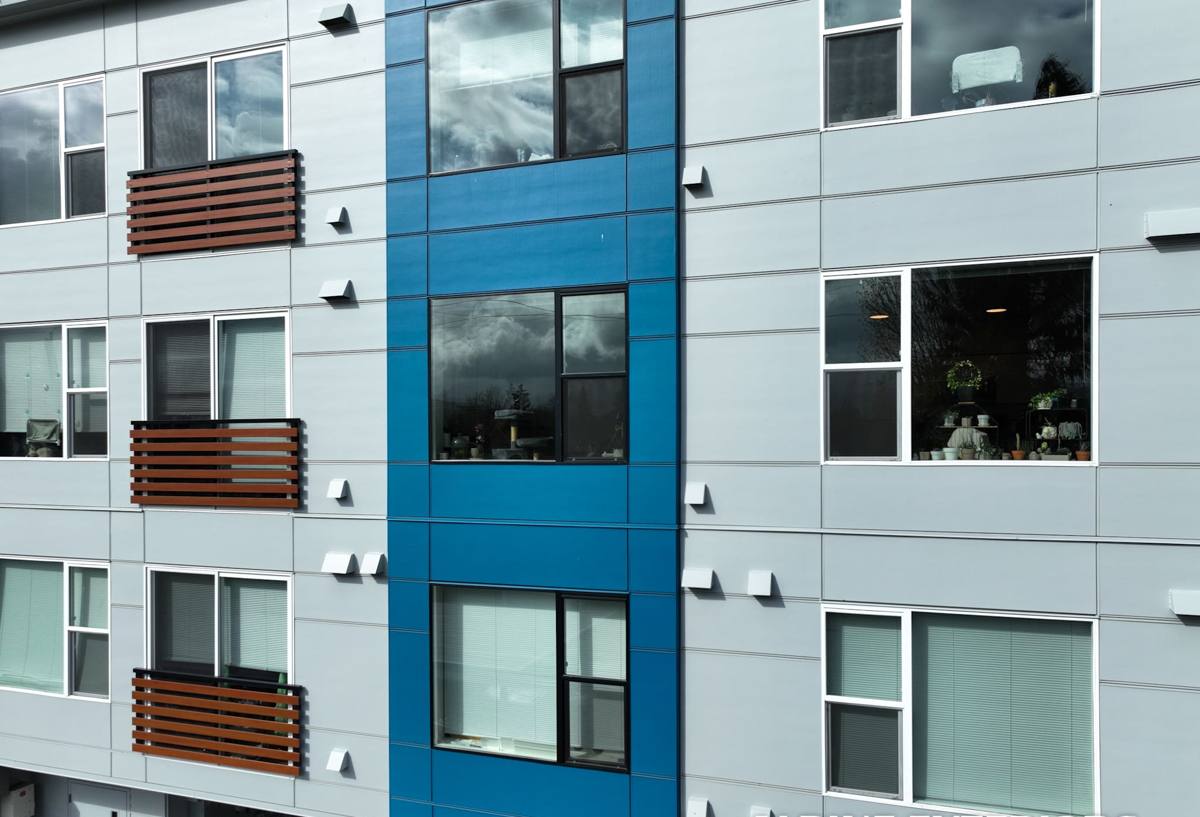
Signs Your Windows Are Losing the Fight
Most homeowners don't replace windows the day something goes wrong — they live with small annoyances for a while first. Here's what we'd want you to watch for, especially on the sides of the house that catch the most wind and rain:
- Fogging or a cloudy haze between panes of glass (a sign the seal has failed and the insulating gas has escaped)
- Cold drafts you can feel with your hand along the frame, even when the window is latched
- Wood sills or trim that feel soft, spongy, or show dark staining
- Sashes that stick, won't stay open, or hardware that no longer locks tightly
- Condensation forming on the inside of the glass regularly, not just on the coldest mornings
- Moss, algae, or black streaking building up on the frame or sill faster than you can keep it clean
- Visible gaps or separation where the frame meets the siding or trim
- A noticeable rise in heating costs with no other explanation
Any one of these on its own isn't an emergency. Several of them together, especially on a window that's original to an older home, usually means it's cheaper to replace than to keep patching.
What a Correct Replacement Actually Involves
Window replacement looks simple from the outside — old window out, new window in — but the parts that determine whether it holds up in this climate happen where you can't see them once the trim is back on.
Removing the Old Window the Right Way
Before anything new goes in, we check the rough opening for hidden problems: soft or rotted sheathing, old caulk that trapped moisture instead of shedding it, and any sign that water has been getting behind the original window for a while. Skipping this step is how a "quick swap" ends up hiding rot behind a brand-new window, which is a worse problem than what you started with.
Flashing and the Water-Resistive Barrier
This is the detail that matters most in a wind-driven-rain climate. Flashing has to be layered correctly — sill pan, side flashing, and head flashing installed and lapped in the right order — so that any water that does get behind the siding is directed back out, not down into the wall cavity. This step is invisible once the job is done, which is exactly why it's the one some crews rush. It's also the single biggest reason two window installations using the identical product can perform completely differently five years later.
Sealing and Insulating the Gap
The space between the new window frame and the rough opening needs to be insulated and air-sealed without over-packing it, which can bow the frame and cause the window to operate poorly. Interior and exterior sealant beads finish the job, but they're a backup to good flashing, not a substitute for it.
Choosing a Frame Material for a Coastal Whatcom County Home
There's no single "best" frame material — the right choice depends on your budget, your home's style, and how much upkeep you want to take on. Here's how the common options compare for a home dealing with salt air and heavy rain:
| Material | Moisture & Salt Air Tolerance | Maintenance | Notes |
|---|---|---|---|
| Vinyl | Good — won't rot or corrode | Low; occasional washing | Most cost-effective; wide range of quality tiers, so specify a heavier-gauge frame |
| Fiberglass | Very good — dimensionally stable, resists warping | Low | Handles temperature swings well; higher upfront cost than vinyl |
| Wood-clad | Depends on the cladding; the wood core is the weak point if the seal ever fails | Higher — cladding seams need periodic inspection | Best interior look for period homes; we're upfront that this is a maintenance trade-off in a wet climate, not a flaw in the product itself |
| Aluminum | Poor without a thermal break; conducts cold and can corrode near salt air | Moderate | We generally steer homeowners away from bare aluminum this close to the water |
For most Cherry Point homes, we end up recommending vinyl or fiberglass simply because they hold up to the salt and moisture cycle with the least ongoing attention. Wood-clad is still a good choice for homeowners who want that look and are willing to keep an eye on the cladding seams.
Glass Packages That Make Sense for This Climate
Low-E Coatings and Gas Fill
A low-emissivity coating and argon gas fill between panes are close to standard now, and for good reason — they cut down on both heat loss in winter and condensation on the glass, which matters when humidity is high for months at a time. In a house that runs cool and damp for long stretches, condensation resistance is as important as the insulation value.
Double-Pane vs. Triple-Pane
Double-pane with a good low-E coating covers most homes in this area well. Triple-pane adds real value on north- and west-facing walls that take the brunt of the wind, or in rooms where drafts have always been a complaint, but it adds weight and cost, so it's worth targeting specific windows rather than the whole house if budget is a factor.
Weep Systems
Weep holes — the small channels that let water that gets into the frame track drain back out — need to be positioned and sized correctly for a climate with sideways rain, and they need to stay clear. This is a small detail that gets overlooked constantly, and it's one of the easiest things to check on an existing window if you're not sure whether it was installed correctly.
How We Approach a Window Job in Cherry Point
Our process doesn't change dramatically from house to house, but the details we pay closest attention to are shaped by what this area's weather does to a window over time:
- Walkthrough and assessment — we look at every window being considered, check for existing water damage or rot, and note which walls take the most weather exposure
- Measuring and product selection — exact measurements, plus a conversation about frame material, glass package, and style based on your budget and how exposed each opening is
- Install day prep — protecting your interior and landscaping, then removing the old window carefully to check the opening before anything new goes in
- Flashing, install, and seal — the water-management details described above, done in the correct sequence, every time
- Final check and cleanup — testing operation, checking the seal, and leaving the site clean
We don't treat any of these steps as optional shortcuts to save time. In a climate that punishes bad flashing and poor sealing, cutting corners here is how a callback happens two winters later.
What Affects the Cost
Every home is different, so we won't quote a number without seeing the job, but the main factors that move the price up or down are consistent:
| Factor | Why It Matters |
|---|---|
| Frame material | Vinyl is generally the most affordable; fiberglass and wood-clad cost more upfront |
| Window size and style | Large picture windows, bays, and custom shapes cost more than standard double-hung or slider sizes |
| Number of openings | Per-window cost usually drops somewhat as the total job size grows |
| Hidden repair needs | Rot or sheathing damage found during removal adds labor and material that couldn't be quoted sight-unseen |
| Accessibility | Second-story or hard-to-reach windows take more time and equipment |
As a rough sense of scale, a straightforward vinyl window replacement typically lands in the low-to-mid thousands for a full house, with fiberglass and wood-clad running higher — but the only way to get a real number is to have someone look at your specific windows and openings.
Why a Crew That Already Works This Area Matters
A window installer who mostly works drier, more sheltered neighborhoods can still do competent work — but they're less likely to automatically account for the things that matter most here: sizing weep systems for sideways rain, choosing hardware finishes that hold up to salt air, and building in the flashing redundancy that a marine climate calls for. A crew that regularly works Cherry Point and the surrounding Semiahmoo area has already seen which details fail first in this weather and builds around them by default, instead of learning it on your house.
Keeping New Windows Performing Through Moss Season
New windows still need a little seasonal attention here, mostly because of how wet Whatcom County stays for months at a time:
- Rinse salt residue and grime off frames and glass periodically, especially on wind-exposed walls
- Check that weep holes stay clear of debris, moss, and dirt so water can drain out as designed
- Inspect exterior caulk lines once a year and touch up anywhere it's cracked or pulled away
- Keep nearby shrubs and vegetation trimmed back so frames and sills can dry out between storms
- Wipe down interior sills if condensation builds up during the coldest, dampest stretches
None of this is heavy maintenance — it's the kind of upkeep that takes a properly installed, quality window from a ten-year performer to one that's still doing its job decades from now.
If your windows are showing any of the signs above, or you just want an honest read on whether repair or replacement makes more sense for your home, we're happy to take a look. Fill out the form below for a free, no-pressure estimate.