 Semiahmoo Exterior
 Window Installation Built for Sumas Weather
Windows in Sumas take a beating that homes further inland rarely see. Between the salt-laden air drifting in off the water, wind-driven rain that comes at the house sideways for days at a stretch, and a moss season that seems to last most of the year, a window installed without that reality in mind starts failing years before it should. This page covers what a correct installation looks like for homes in this part of Whatcom County, and why the details matter more here than almost anywhere else in the state.
Window installation isn't just about picking a product out of a catalog. The window itself is only part of the system — the flashing, the sealant, the sill pan, and the way the unit ties into the wall's water and air barriers all determine whether it performs for twenty-five years or starts leaking in five. That's especially true in a coastal, high-rainfall climate like ours.
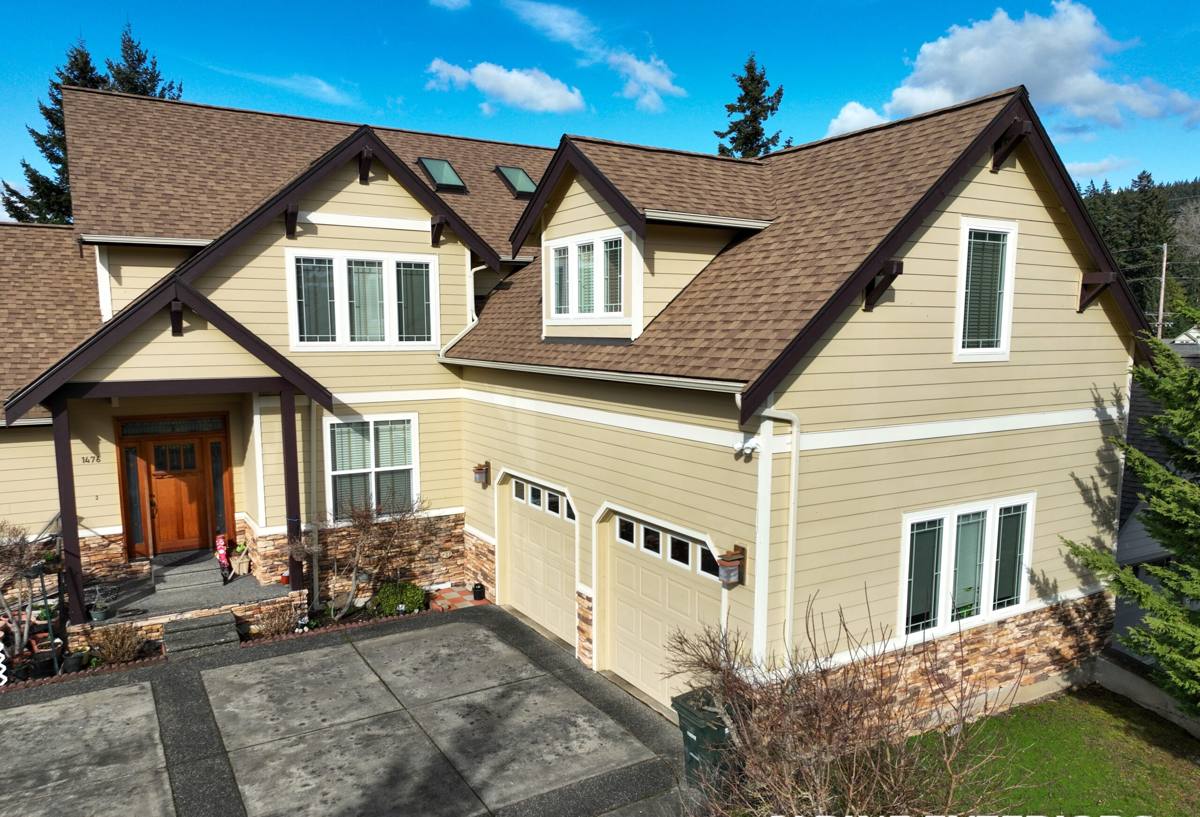
What Local Weather Does to Windows Over Time
Salt Air and Metal Hardware
Homes near the water deal with airborne salt that settles on everything, including window frames, hardware, and screens. Over years, salt exposure accelerates corrosion on lower-grade fasteners, hinges, and locking hardware, and it can dull or pit unprotected metal finishes. It's a slow process, but it's constant, and it's one reason we pay attention to hardware quality and finish on every install in this area, not just the glass and frame.
Wind-Driven Rain and Flashing Failure
Rain that falls straight down is easy to shed. Rain that's being pushed sideways by wind off the water is a different problem — it finds gaps that would never leak in calmer weather. Most window leaks we get called out to inspect in this area aren't glass or frame failures at all. They're flashing and sealant failures where wind-driven rain got behind the trim and into the wall assembly.
Moss, Algae, and Trapped Moisture
Whatcom County's long, wet, mild winters are ideal conditions for moss and algae growth on siding, trim, and window sills. Beyond the cosmetic issue, moss holds moisture against wood trim and sill surfaces far longer than bare wood would dry on its own, which speeds up rot at exactly the joints where a window meets the wall — the most vulnerable point in the whole installation.
Signs a Sumas Home Needs New Windows
Not every window problem means full replacement, but these are the signs worth taking seriously before they turn into wall or framing damage:
- Soft, spongy, or visibly rotted wood trim or sill around the window frame
- Persistent fogging or a visible haze between panes (a failed seal, common on older double-pane units)
- Drafts you can feel with a hand near the frame on a windy day
- Windows that are difficult to open, close, or lock — often a sign the frame has shifted
- Staining or bubbling paint on interior trim below or beside the window
- Visible daylight or gaps between the frame and the wall from outside
- Persistent moss or algae buildup on the sill that keeps returning after cleaning
If you're seeing more than one of these, it's worth having someone look at the whole opening, not just the glass — because by the time a window feels drafty, water has often already been getting into the wall for a while.
What a Correct Installation Actually Involves
Flashing and Water Management
This is the part that determines whether an installation lasts. Every window opening needs a sill pan or flashing detail that directs any water that gets past the exterior trim back out, not into the wall cavity. The house's weather-resistive barrier (the material behind the siding) has to be integrated with the window flanges in the correct shingle-lap order — top piece over the one below it — so water is always directed downward and outward, never trapped behind a layer that's lapped the wrong way.
Air Sealing and Insulation
The gap between the window frame and the rough opening needs to be sealed and insulated correctly — not overpacked with expanding foam (which can bow the frame and cause operational problems) and not left with gaps that let air and moisture in. Done right, this step is a major factor in both energy performance and long-term durability, and it's one of the easiest steps to do poorly if it's rushed.
Sealant Selection and Placement
Exterior sealant around a window has to stay flexible through decades of temperature swings and constant damp conditions without cracking or pulling away from the surface. Where sealant goes matters as much as what kind is used — it's a finishing touch, not a substitute for correct flashing underneath it.
Choosing the Right Window for This Climate
There's no single "best" window for every home, but some choices hold up better than others in a wet, salt-air environment. The table below covers the tradeoffs we walk homeowners through.
| Frame Material | Moisture Performance | Maintenance | Typical Cost Position |
|---|---|---|---|
| Vinyl | Won't rot; performs well in wet climates | Low — occasional cleaning | Lower to mid-range |
| Fiberglass | Very stable, resists moisture and temperature swings well | Low | Mid to upper-range |
| Wood-clad | Good if cladding and flashing are done correctly; exposed wood is vulnerable | Higher — finish and joints need monitoring | Upper-range |
| Aluminum | Prone to condensation and corrosion near salt air without thermal breaks | Moderate to higher | Varies widely |
Glass package matters too. Double-pane with a Low-E coating is the practical baseline for this region; triple-pane adds cost and weight and makes the most sense on north-facing walls or homes prioritizing maximum energy performance. Argon gas fill between panes is a modest, worthwhile upgrade for insulating value, though its benefit fades over the life of the window as it slowly diffuses out — not a dramatic difference, but a reasonable one for the added cost.
Full-Frame vs. Insert (Pocket) Replacement
There are two basic approaches to replacing an existing window, and the right one depends on the condition of what's already there.
Insert Replacement
A new window is fitted into the existing frame, which stays in place. This is faster and less invasive, but it only makes sense when the existing frame and the wall around it are still sound and dry. Installing an insert into a frame that already has hidden rot or a failed flashing detail just seals the problem behind the new window.
Full-Frame Replacement
The existing frame is removed down to the rough opening, exposing the flashing and sheathing so any damage can be found and repaired before the new window and correct flashing go in. It costs more and takes longer, but for openings that have had a history of leaks, visible rot, or moss buildup, it's the only way to actually fix the underlying issue rather than cover it.
We inspect the opening before recommending either approach — not before quoting a price for one.
How We Approach a Job in Sumas
- On-site inspection of the existing windows, trim, and any visible moisture or rot damage
- Honest recommendation on insert vs. full-frame replacement for each opening
- Written estimate covering material, labor, and any trim or flashing repair needed
- Removal of old units and inspection of the rough opening and sheathing before new flashing goes in
- Installation with sill pan flashing, correctly lapped weather barrier integration, and proper air sealing
- Exterior trim and sealant finish work
- Final walkthrough and operation check on every window installed
We don't skip the inspection step even on jobs that look straightforward from the outside, because in this climate the damage that matters is usually the damage you can't see from the driveway.
Why Local Experience Matters Here
A crew that mostly works drier inland climates can install a window that looks fine and still leaks within a couple of winters in a place like Sumas, simply because the flashing and sealing details that matter here aren't the same ones that matter elsewhere. Working regularly in Whatcom County and around Semiahmoo means seeing the same failure patterns repeatedly — where moss traps moisture, which sills take the worst of the wind-driven rain, which trim details hold up and which don't — and building that into how every installation is done, not treating it as an afterthought.
After Installation: Keeping Windows Performing
New windows still need occasional attention in this climate. Clearing moss and debris off sills, keeping weep holes (the small drainage openings at the bottom of the frame) clear, and doing a yearly visual check of exterior sealant for cracking will catch small issues before they become water intrusion problems. None of this is heavy maintenance — it's a few minutes a year that meaningfully extends the life of the installation.
If you're dealing with drafty, foggy, or aging windows on a Sumas-area home, we're glad to take a look and give you a straightforward, no-pressure estimate — just fill out the form below.