 Semiahmoo Exterior
 Storm Damage Roof Repair for Laurel Homes Near Semiahmoo
Laurel sits in the part of Whatcom County that takes the full brunt of what comes off the Strait of Georgia and the bay — wind-driven rain, salt-laden air, and long stretches of gray, wet weather that never quite let a roof dry out. When a storm rolls through, the damage isn't always obvious from the ground. A few lifted shingles, a bent piece of flashing, or a small tear in the underlayment can sit quietly for months before it turns into a stained ceiling or rotted decking. This page covers what storm damage roof repair actually looks like for homes in and around Laurel, what we check for, and how we handle it.
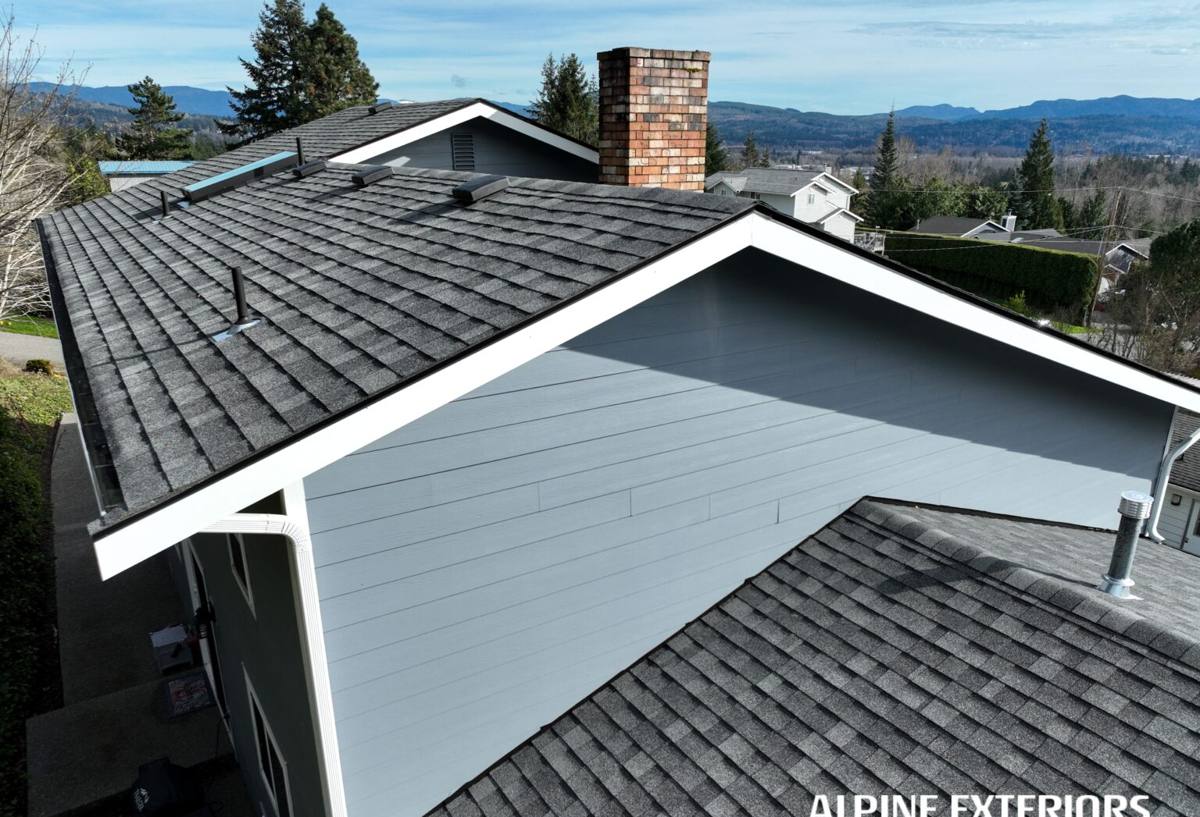
Why Storm Damage Behaves Differently Here
Roof damage in this part of Whatcom County isn't the same as roof damage in a drier inland climate. Three things make Laurel and the greater Semiahmoo area harder on roofing than most homeowners expect:
Salt Air
Proximity to the water means airborne salt settles on roofing metal, fasteners, and flashing year-round. It accelerates corrosion on anything that isn't properly rated or coated, which is why a roof here can show fastener rust or flashing failure well before the shingles themselves are worn out.
Driving Rain
Storms in this area rarely come straight down — wind pushes rain sideways and up under shingle edges, ridge caps, and valley metal. A repair that only patches the visible entry point without addressing wind-driven intrusion tends to fail again in the next storm.
A Long Moss Season
Cool, damp conditions here support moss growth for most of the year, not just a few winter months. Moss holds moisture against the roof surface, works its way under shingle tabs, and lifts them just enough for wind and rain to finish the job during a storm.
What Counts as Storm Damage — and Why It Matters
Not every problem after a storm is dramatic. We generally see damage fall into a few categories, and how we handle each one is different:
- Wind damage: lifted, creased, or missing shingles, usually along ridges, eaves, and roof edges where wind uplift is strongest.
- Flashing and penetration failures: chimney flashing, vent boots, and skylight flashing that have worked loose or corroded and now let water in during wind-driven rain.
- Debris impact: branches or larger debris that puncture, crack, or gouge the roofing material.
- Water intrusion without visible surface damage: wind-driven rain forced under intact-looking shingles, often the hardest type for a homeowner to catch without a close inspection.
- Moss-accelerated failure: shingle edges lifted by moss growth that finally give way under storm-force wind and rain.
The distinction matters because a repair that only addresses the visible symptom — say, replacing a few cracked shingles — without checking the flashing, underlayment, and decking underneath can leave the underlying cause untouched.
What a Correct Repair Actually Involves
Inspection First, Not a Guess
We start on the roof, not just from a photo or a ground-level look. That means checking shingle condition, flashing points, valleys, ridge caps, and the attic side if there's any sign of moisture. Storm damage often shows up in more than one spot, and a repair that only addresses the one leak a homeowner noticed can miss a second weak point that fails in the next storm.
Matching the Fix to the Cause
A shingle that blew off because of age and sun exposure gets handled differently than one that blew off because moss lifted it first. If moss is the underlying issue, we address that as part of the repair — not just the missing shingle — or the same section fails again within a season or two.
Materials Suited to a Coastal, Wet Climate
For flashing and fasteners, we use materials rated for the corrosion exposure this area sees rather than the cheapest option that would be fine somewhere drier. For underlayment, especially at eaves, valleys, and around penetrations, we use products designed to resist wind-driven water intrusion, since that's the failure mode we see most often here.
Decking and Structure Check
If water has been getting in for a while before the storm damage was noticed, the decking underneath may be soft or delaminated. A repair that shingles over compromised decking doesn't hold — we check for this and address it as part of the job, not as a surprise change order after the fact.
How We Handle a Storm Damage Call in Laurel
- Initial contact and triage: we ask what happened, when, and whether there's active interior water intrusion so we can prioritize accordingly.
- On-roof inspection: a full look at the damaged area and the surrounding roof, since storm damage rarely stays contained to one spot.
- Written scope and estimate: what we found, what needs to happen, and a clear price range before any work starts.
- Temporary protection if needed: tarping or sealing an active leak so the interior of the home isn't at further risk while a full repair is scheduled.
- The repair itself: matching materials, proper flashing detail, and attention to the specific cause of the failure — not just the symptom.
- Final walk-through: we show the homeowner what was done and why, in plain terms.
Repair vs. Replacement: How We Think About It
| Situation | Usually a Repair | Usually Points to Replacement |
|---|---|---|
| Age of roof | Roof is under roughly 10-15 years old | Roof is near or past its expected service life |
| Extent of damage | Isolated to one section or slope | Multiple sections show wear or damage |
| Decking condition | Solid, no soft spots found | Soft, delaminated, or rotted decking present |
| Moss and granule loss | Minor, localized | Widespread moss staining and granule loss across the roof |
| Prior repair history | First storm-related repair on this roof | Roof has needed repeated patchwork over recent years |
We'll always tell you honestly which side of that line your roof falls on. A patch that's likely to fail again within a year or two isn't a favor to anyone, and we'd rather explain the trade-off up front than have you call us back out for the same leak.
What Drives the Cost of a Storm Repair
Every storm repair is priced based on what's actually found on the roof, but a few factors consistently move the number:
| Cost Factor | Why It Matters |
|---|---|
| Size and location of the damaged area | Steep sections, high ridges, and hard-to-access roof planes take longer and require more setup |
| Whether decking needs replacing | Rotted or soft decking adds material and labor beyond the surface repair |
| Flashing complexity | Chimneys, skylights, and multiple valleys mean more detail work than a simple field repair |
| Matching existing materials | Older or discontinued shingle lines can be harder to match closely, affecting material sourcing |
| Moss and debris removal | A roof with heavy moss buildup needs cleaning before a proper repair can be assessed and made |
We give a written estimate before starting so there are no surprises, and we'll walk through which of these factors apply to your specific situation.
A Note on Insurance Claims
Many storm-related roof repairs are covered under homeowners insurance, particularly when there's a clear wind or impact event tied to the damage. We're not an insurance company and won't promise a specific outcome on a claim, but we can provide clear documentation of what we found and what we recommend, which is generally what an adjuster needs to evaluate a claim. It's worth having a professional look at the roof before or alongside filing, since damage that isn't documented properly at the time is harder to substantiate later.
What to Check After a Storm
You don't need to get on the roof yourself — and in wet, mossy conditions like ours, we'd rather you didn't. But a few things are worth checking from the ground or from inside the attic if you can safely access it:
- Water stains or new discoloration on ceilings, especially near chimneys, skylights, or where roof planes meet
- Granules collecting in gutters or downspouts after a storm — a sign of shingle wear or impact
- Visibly missing, curled, or lifted shingles from the ground, particularly along ridges and edges
- Damaged or bent gutters, which can indicate the force of wind or debris the roof also took
- Any musty smell in the attic, which can mean moisture has been getting in for longer than a single storm
- Daylight visible through the roof deck from inside the attic, if it's safe to check
If you notice any of these, it's worth having it looked at before the next storm system comes through — problems here tend to compound quickly in a climate this wet.
Why a Local Crew Matters for This Kind of Work
Storm damage repair isn't a one-size-fits-all trade. A crew that works roofs throughout Laurel and the surrounding Semiahmoo area already knows which failure points show up most often in this specific climate — where wind tends to catch a roof, how far moss typically works its way under shingles before it's visible, and which flashing details hold up against salt air and which don't. That's the kind of knowledge that comes from doing the work here repeatedly, not from a general roofing checklist. It also means faster response after a storm, since we're not driving in from outside the area to assess damage that may need temporary protection right away.
If a recent storm has left you with a leak, missing shingles, or just a nagging worry about a section of roof, we're happy to take a look and give you a straight answer. Fill out the form below for a free, no-pressure estimate — we'll tell you honestly what we find and what it would take to fix it right.