 Semiahmoo Exterior
 Why Drayton Harbor Homes Wear Out Siding Faster
Homes along Drayton Harbor sit right at the edge of one of Whatcom County's most exposed waterfronts. The siding on a house here does a different job than siding twenty miles inland. It's fighting salt-laden air coming off the harbor, wind-driven rain that hits walls sideways instead of falling straight down, and a damp, shaded shoulder season that can stretch on for months. Add in the moss and algae that thrive in that kind of persistent moisture, and you have a set of conditions that will find every weak point in a siding system — every gap, every under-caulked seam, every piece of the wrong material in the wrong place.
We've replaced siding on enough homes in and around Semiahmoo to know the failure patterns aren't random. They cluster on the water-facing walls, around window trim, at the bottom courses closest to grade, and anywhere the original installer used a product or a detail that wasn't built for this kind of exposure. A siding replacement here isn't just a cosmetic upgrade — it's a chance to correct those weak points for good.
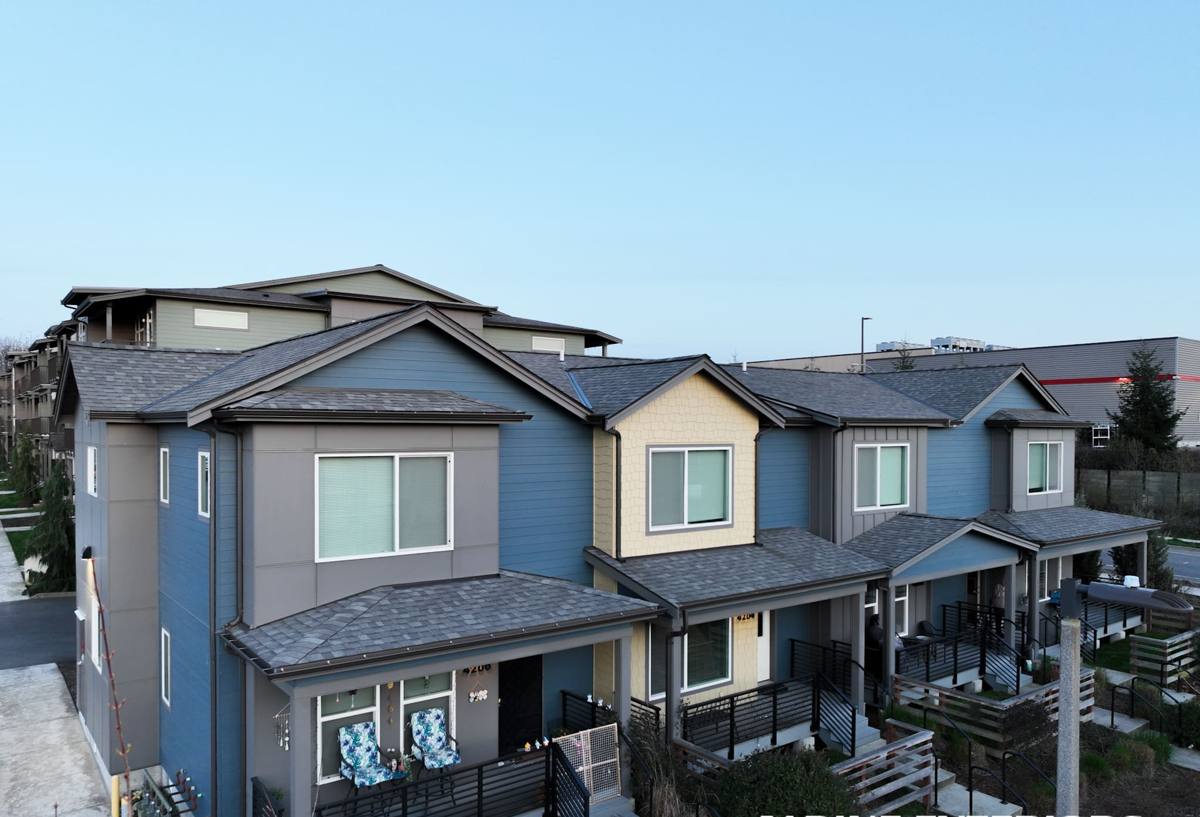
What "Correct" Looks Like in This Climate
A siding job that holds up on Drayton Harbor isn't just about the panel you see from the street. It's a system: the water-resistive barrier behind the panels, the flashing at every window and door, the gaps left for drainage, and the fastening pattern that keeps panels tight without trapping moisture. Skip any one of those and the siding itself almost doesn't matter — water will get behind it eventually, and once it does, salt air and cool, damp temperatures make drying-out slow.
The details that matter most here
- Proper rainscreen or drainage gap behind the siding, so any moisture that gets past the cladding can drain and dry instead of sitting against sheathing
- Correctly lapped and sealed window and door flashing — the single most common source of hidden rot we find on tear-offs
- Factory-finished panels with a real coating system, not field-painted siding that will need repainting on a much shorter cycle in this humidity
- Fasteners and trim hardware rated for corrosion resistance, given the salt content in the air off the harbor
- Bottom-of-wall clearance from grade, decking, and landscaping so the lowest courses aren't sitting in standing moisture
Why We Install James Hardie Fiber Cement — and Nothing Else
We standardized on James Hardie fiber cement siding, and we don't install vinyl, LP SmartSide, Cemplank, Allura, or unfinished wood siding like primed spruce or cedar. That's not a marketing position — it's the product decision we're willing to put our name behind after years of doing this work in exactly this kind of climate.
Vinyl is inexpensive and low-maintenance in the sense that it doesn't need repainting, but it's a poor match for driving rain and wind: seams and J-channels give water a path behind the panel, and vinyl doesn't hold up structurally under high wind loads the way a heavier fiber cement panel does. Engineered wood products like LP SmartSide use treated wood strand substrates that perform reasonably well in moderate climates, but wood-based products are inherently more vulnerable to sustained moisture exposure than fiber cement, and a harbor-front wall gets more sustained moisture than almost anywhere else in the county. Other fiber cement brands, including Cemplank and Allura, are legitimate products — we simply have more field experience, better factory-finish consistency, and stronger warranty backing with Hardie's HZ5 line, which is engineered specifically for wet, marine-influenced climates like this one. Primed spruce or cedar siding can look beautiful, but it demands a repainting and caulking maintenance schedule that most homeowners underestimate, and any lapse in that maintenance lets moisture in fast.
James Hardie fiber cement is non-combustible, doesn't swell or rot when it gets wet, holds its ColorPlus factory finish for decades without repainting, and comes with a strong transferable warranty — one a future buyer can rely on if you sell the house. For a waterfront property that will spend its whole life in salt air and rain, that combination is hard to match.
Comparing the Options Homeowners Consider
| Material | Moisture Behavior in Marine Climate | Maintenance Cycle | Our Position |
|---|---|---|---|
| Vinyl siding | Seams and channels allow water intrusion; can warp or crack under wind and cold | Low, but limited repair options when damaged | Not installed — poor fit for driving rain and wind exposure |
| LP SmartSide (engineered wood) | Wood-strand substrate vulnerable to prolonged moisture if seals fail | Moderate — depends on caulking and edge sealing staying intact | Not installed — moisture sensitivity too high for harbor exposure |
| Primed spruce or cedar | Natural wood movement and moisture absorption without diligent upkeep | High — regular repainting and caulk inspection required | Not installed — maintenance burden too demanding for most owners |
| Cemplank / Allura fiber cement | Good — comparable base material to Hardie | Low | Not our installed brand — we standardized on Hardie's finish and warranty |
| James Hardie fiber cement | Excellent — engineered HZ5 formulation for wet, marine climates | Low — factory finish holds color for years | What we install on every home |
What the Replacement Process Looks Like
Every siding replacement starts with a real inspection, not just a measurement. We look at what's happening behind the existing siding before we quote anything, because a house on Drayton Harbor that's had a moisture problem for years can have hidden sheathing damage that needs to be addressed before new siding goes on — putting new panels over a rotten substrate just hides the problem for another few years.
Our general approach
- On-site assessment of the existing siding, trim, and any visible or probable moisture damage, with particular attention to water-facing walls and window surrounds
- Removal of old siding and inspection of the sheathing and framing underneath, with repairs made before anything new goes up
- Installation of a proper water-resistive barrier and drainage plane suited to marine exposure
- Correct flashing at every penetration — windows, doors, vents, and hose bibs
- Installation of James Hardie panels or lap siding per manufacturer specification, including fastener spacing and clearances
- Final trim, caulking, and a walkthrough so you understand what was done and why
Dealing with Moss and Algae Long-Term
Moss and algae growth on siding isn't just an appearance issue — it holds moisture against the surface and can accelerate wear on materials that aren't built to resist it. Fiber cement's factory finish is far less hospitable to sustained moss and algae growth than bare wood, and it doesn't provide the porous surface that organic growth needs to take hold the way untreated wood siding does. That said, no siding material eliminates the need for basic upkeep in a climate this damp — keeping vegetation trimmed back from walls, maintaining gutters so runoff doesn't sheet down the siding face, and rinsing off buildup periodically will extend the life and appearance of any exterior.
What to Check Before Hiring Anyone for This Job
Siding replacement is one of those projects where the quality gap between a good installer and a mediocre one doesn't show up for a year or two — by which point the damage is already happening behind the wall. That makes vetting the contractor more important than usual, especially on a waterfront property where mistakes compound faster.
- Ask specifically how they handle window and door flashing — this is where most failures start
- Ask whether they install a drainage gap or rainscreen behind the siding, not just a barrier
- Ask how many jobs they've done specifically in waterfront or high-exposure Whatcom County locations
- Get manufacturer certification confirmation if they claim to install James Hardie products
- Ask what happens if they find sheathing damage once the old siding comes off — a vague answer here is a red flag
- Confirm the warranty terms in writing, including whether it's transferable to a future homeowner
A crew that already works Drayton Harbor and the surrounding Semiahmoo area has usually already made and learned from the mistakes that a contractor coming from a drier inland market hasn't encountered yet. That local experience shows up in the small decisions — where extra flashing goes, how tight the drainage gap needs to be, which details get extra attention on a water-facing wall.
Timing a Replacement Around Local Weather
Siding work can be scheduled through most of the year here, but the wet season narrows the practical installation window and can slow a project down if it starts too late. Planning a replacement before the heaviest rains set in gives a crew more workable days in a row, which generally means a tighter, better-sealed result. If you're already seeing signs of trouble — soft spots, visible gaps, persistent moss, or paint failure — it's worth having it looked at well before the wettest months arrive.
If you're weighing a siding replacement for a home in Drayton Harbor or elsewhere around Semiahmoo, we're happy to take a look and give you a straight, no-pressure estimate — no obligation, just an honest read on what your home needs.