 Semiahmoo Exterior
 Siding Installation for Homes at Semiahmoo Resort
Semiahmoo Resort sits out on the spit at the edge of Blaine, wrapped by Semiahmoo Bay on one side and Drayton Harbor on the other, with the Canadian border just a short distance north. It's a golf and marina resort community, and the homes and condos built around it face a kind of exterior exposure most inland Whatcom County properties never deal with: open water on more than one side, minimal windbreak, and a marine climate that stays active most of the year. A siding installation out here isn't the same job as a siding installation ten miles inland, and treating it that way is how homes end up with premature failures.
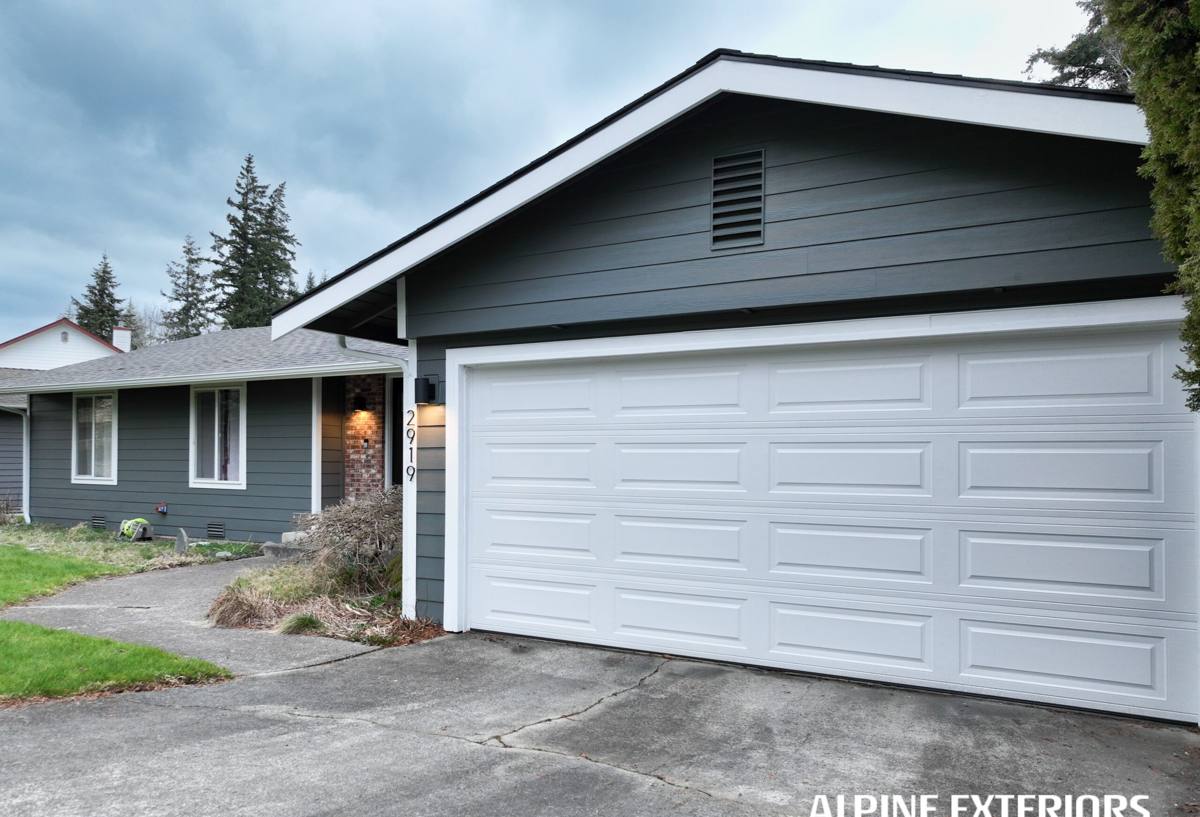
We install siding for homes in and around Semiahmoo Resort regularly, and we install one product system: James Hardie fiber cement. Nothing else. That's a standard we settled on after years of seeing what actually survives exposed, salt-air sites like this one and what starts breaking down within a few seasons. This page is about that one job — siding installation for Semiahmoo Resort homes — what the climate demands of it, what a correct install actually involves, and how our process works from first walk-through to final inspection.
What Semiahmoo Resort's Climate Demands From a Siding Job
Salt Air From More Than One Direction
Most Whatcom County towns deal with salt air from a single prevailing direction. Semiahmoo Resort, sitting on a narrow spit between two bodies of water, gets it from more than one. That matters at the material and hardware level long before it matters at the paint level — salt accelerates corrosion in fasteners, flashing, and any exposed metal trim, and it breaks down lower-grade finishes faster than a sheltered, inland site ever would. Every component that goes into a Semiahmoo Resort siding job has to be chosen with that corrosion exposure in mind, not just the visible siding panel itself.
Driving Rain With Almost No Windbreak
There's very little on the spit to slow wind before it hits a house, which means rain doesn't arrive straight down — it gets driven sideways into wall assemblies, window flashing, and roof-to-wall transitions with more force than most installations are ever tested against. That sideways load is what finds the gaps in a rushed or generic installation: an unsealed butt joint, a lapped house wrap seam that wasn't quite tight enough, a fastener pattern that left too much play. None of those show up on install day. They show up two or three wet seasons later.
A Moss and Mildew Season That Doesn't Really End
Mild temperatures and near-constant humidity give moss and mildew a long growing window across this part of Whatcom County, and Semiahmoo Resort's waterfront setting doesn't shorten it. Shaded, north-facing walls and any siding material with even a little surface porosity are the first places it takes hold. A siding installation that doesn't account for drainage and drying time is setting up exactly the conditions moss needs to establish itself early.
Why James Hardie Is the Right System for This Exposure
We don't offer a menu of siding brands and let the homeowner pick based on price. We install James Hardie fiber cement, and we don't install LP SmartSide, vinyl siding, Cemplank, Allura, primed spruce, or cedar. That's not a knock on every homeowner who has one of those products on their house — it's a professional standard built specifically around sites like Semiahmoo Resort, where the exposure is high enough that material choice stops being a preference and starts being a structural decision.
- Non-combustible fiber cement core: It doesn't feed a fire the way wood-based siding products can, which matters for both safety and insurance considerations on a resort property.
- Factory-applied ColorPlus finish: The color is baked on under controlled factory conditions instead of brushed on in the field, so it holds up against salt exposure and fading longer than a site-applied paint job.
- Climate-engineered HZ5 formulation: Built for regions with sustained moisture and freeze-thaw cycling, which describes a waterfront spit community better than it describes most siding spec sheets ever anticipate.
- Dimensional stability: Fiber cement doesn't swell, cup, or warp the way engineered wood products can after repeated wetting, which matters when the wet season runs most of the year.
- A strong transferable warranty: Backed by the manufacturer, provided the installation followed spec — which is the part that's actually on us, not the homeowner.
The material only performs as well as the installation behind it, though. A Hardie panel installed loosely, with the wrong fasteners or a skipped rain screen, will still eventually show problems on an exposed site like this. That's why the installation itself is where we spend most of our attention.
What a Correct Siding Installation Actually Involves
Tear-Off and Substrate Assessment
Before any new siding goes up, the old siding comes off and the wall sheathing underneath gets inspected. On a resort-area home that's been exposed to salt air and driving rain for years, this step matters more than it does on a sheltered inland property — soft sheathing, rusted fasteners, or hidden moisture staining need to be addressed before anything new goes over them. Installing new siding over a compromised substrate just hides a problem instead of fixing it.
Rain Screen and Drainage Plane
A rain screen is a small drainage gap between the siding and the wall sheathing that lets any moisture that does get past the exterior surface drain and evaporate instead of sitting against the wall. On a site with this much wind-driven rain, that gap isn't optional — it's the difference between a wall assembly that dries out after a storm and one that stays damp long enough to start rotting from the inside.
Fastening and Flashing
Hardie specifies fastener type, length, and spacing for a reason, and corrosion-resistant fasteners matter more here than almost anywhere else in the county given the salt exposure from two directions. Every seam, corner, and penetration needs flashing that's lapped correctly to shed water downward and outward, especially on walls that take wind-driven rain head-on with no windbreak to soften it.
Joints, Trim, and Finish Details
Butt joints, trim transitions, and any place two pieces of siding meet are where water finds its way behind the cladding first if they're sealed poorly or left too tight with no room to move. On a Hardie installation done right, these details get the same attention as the field of the wall, not treated as an afterthought once the visible panels are up.
Our Siding Installation Process
| Step | What Happens | Why It Matters at Semiahmoo Resort |
|---|---|---|
| Site walk-through | We inspect the existing siding, trim, and any visible moisture or corrosion signs | Exposed, waterfront homes often have damage that isn't visible from the ground |
| Scope and estimate | We put together a written scope based on what we actually find, not a generic quote | Every home on the spit has a different exposure angle and wind history |
| Tear-off and substrate check | Old siding comes off, sheathing gets inspected and repaired as needed | Hidden rot or rusted fasteners have to be addressed before new siding goes on |
| Rain screen and house wrap | Drainage gap and properly lapped house wrap installed across the wall | Manages the driving rain this site takes with almost no windbreak |
| Hardie panel installation | Fastened and spaced to manufacturer spec, with corrosion-resistant hardware | Salt air from two directions accelerates wear on lower-grade fasteners |
| Flashing, trim, and joint sealing | Every seam, corner, and penetration finished to shed water outward | These details are where wind-driven rain finds a way in first if rushed |
| Final walk-through | We review the finished job with the homeowner before calling it complete | Gives you a chance to ask questions and see the details up close |
We don't skip steps to move faster on a resort-area job, and we don't treat the visible finish as more important than the parts of the wall assembly nobody sees once the siding is up. On a site with this much exposure, the parts you can't see afterward are usually the ones that determine how the siding performs ten or fifteen years out.
Working in a Resort Community
Homes at Semiahmoo Resort often sit closer together, share access roads, or fall under community guidelines around exterior appearance and work hours that a typical single-lot residential job doesn't involve. A crew that's worked in and around the resort before knows to plan for that up front — coordinating access, keeping the site clean and contained during tear-off, and respecting shared spaces — instead of figuring it out mid-project. It's a smaller thing than the technical side of the installation, but it's part of what makes a project go smoothly on a property like this rather than becoming a headache for neighbors or the homeowner.
Signs Your Semiahmoo Resort Home May Need New Siding
- Soft or spongy siding, especially low on the wall or around window and door trim
- Rust staining around fasteners or trim, more noticeable this close to the water
- Paint or finish that's peeling, chalking, or fading faster than it should
- Visible warping, cupping, or gaps at siding joints and corners
- Persistent moss or mildew on shaded, north-facing walls that keeps coming back after cleaning
- Musty odors or soft drywall on interior walls that back up to an exterior wall
Any one of these on its own isn't necessarily an emergency, but on an exposed, waterfront property they tend to compound faster than they would further inland. Catching them early usually means a more limited scope of repair; waiting tends to turn a siding job into a siding-and-sheathing job.
Cost Factors for a Semiahmoo Resort Siding Installation
| Factor | What It Affects |
|---|---|
| Home size and wall complexity | More square footage and more corners, gables, and trim transitions mean more labor and material |
| Substrate condition | Rotted sheathing or corroded fasteners found during tear-off add repair scope before new siding goes on |
| Existing siding removal | Full tear-off versus working around existing trim changes both labor time and disposal |
| Exposure and access | Wind exposure and site access on the spit can affect scaffolding, staging, and scheduling |
| Hardie board profile and color | Lap siding, shingle-style panels, and board-and-batten each price differently, as do ColorPlus color selections |
These are the general drivers, not a quote — every home at Semiahmoo Resort has a slightly different orientation to the water and a different history of prior repairs or upgrades. We walk the property and look at what's actually going on with the existing siding and substrate before putting a real number on the work.
Get a Free, No-Pressure Estimate
If your Semiahmoo Resort home needs new siding, or you're not sure whether what you're seeing is cosmetic or something more, we're glad to take a look and give you a straightforward assessment. Reach out using the form below to schedule a free estimate — no pressure, no upsell script, just an honest read on what your home actually needs.