 Semiahmoo Exterior
 Why Siding on the Semiahmoo Spit Takes a Harder Hit Than Almost Anywhere Else in Whatcom County
Semiahmoo Resort sits at the end of the Semiahmoo Spit in Blaine, out past Drayton Harbor, with almost nothing between the homes there and the open water of Semiahmoo Bay. That exposure is part of what makes the location special, and part of what makes it one of the tougher siding environments in Whatcom County. Homes on the spit take salt-laden wind straight off the water, catch driving rain with no tree line or ridge to break it, and sit in a marine climate that keeps north- and shade-facing walls damp for weeks at a stretch during moss season. Siding that holds up fine on a home a few miles inland in Blaine gets tested harder here: fasteners corrode faster, paint film fails sooner, and any gap in the water management gets found by wind-driven rain instead of just ordinary rainfall.
We install exclusively James Hardie fiber cement, and homes at Semiahmoo Resort are close to the clearest case for why. This is not a location where a marginal siding product or a shortcut installation fails gracefully. It shows up in stained trim, cupped boards, and a repaint that comes due years earlier than it should. This page walks through what the exposure at Semiahmoo Resort actually does to a wall assembly, what a correct James Hardie installation looks like in that setting, and how our process is built around the realities of building on the spit rather than a generic install job.
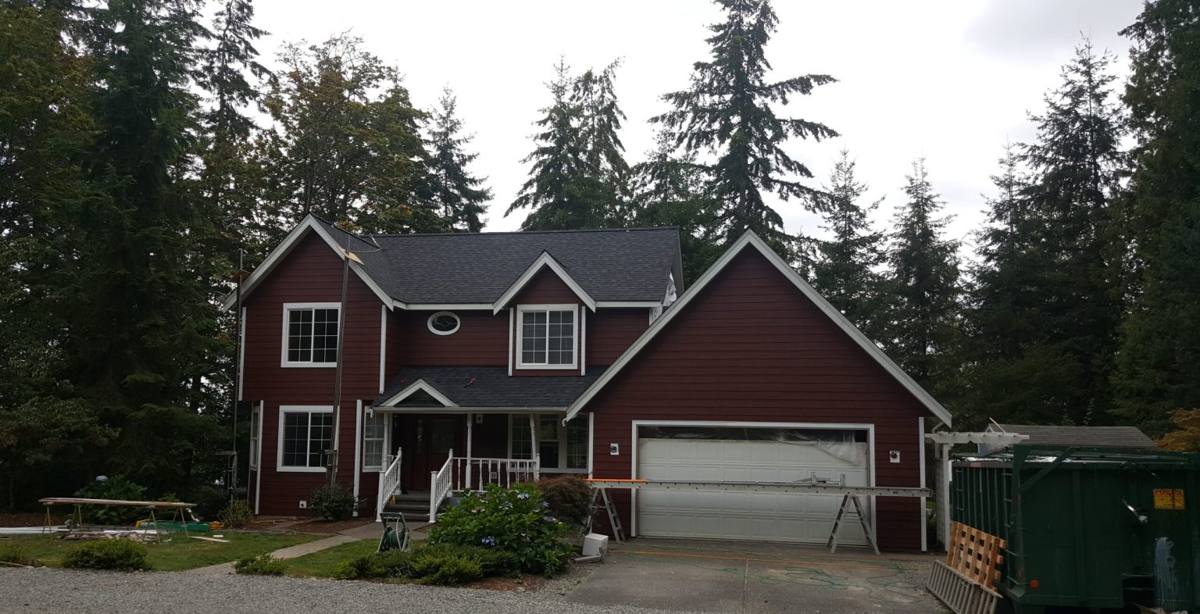
What Salt Air, Wind-Driven Rain, and a Long Moss Season Do to Siding
Salt air and fasteners
Airborne salt off Semiahmoo Bay settles on every exterior surface, including the fasteners and flashing hidden behind the siding. Standard fasteners corrode faster in this environment than they would a few miles inland, and once a fastener starts to rust, it can telegraph a stain through the siding face and eventually lose its grip on the board. Fastener selection isn't a place to cut corners on a home this close to the water.
Wind-driven rain, not just rainfall
Semiahmoo Resort's homes sit largely exposed to open water and wind, which means rain doesn't just fall on the walls, it gets driven into them horizontally and finds its way into any gap, unsealed joint, or missed flashing detail that a sheltered inland site would never expose. Water management behind the siding, the weather-resistive barrier, flashing, and drainage plane, matters more here than on a calmer lot, because the siding itself is the first line of defense, not the only one.
Moss, shade, and standing moisture
Whatcom County's long wet season keeps shaded and north-facing walls damp for extended stretches, and homes with mature landscaping or close-set neighboring structures hold that moisture even longer. Moss and algae growth on siding isn't just cosmetic. Sustained moisture against a wood-based product accelerates rot, while a properly installed fiber cement wall mostly just needs periodic cleaning.
Why James Hardie Is the Product We Put on Homes Like These
HZ5 engineered for this climate
James Hardie's HZ5 product line is engineered specifically for wetter, more moderate climates like the Pacific Northwest, with formulations aimed at moisture performance rather than heat and dryness. For a home directly on the Semiahmoo Spit, that's our baseline, not an upgrade option.
Factory-applied ColorPlus finish
ColorPlus finish is baked on at the factory under controlled conditions, with layers that hold color and resist fading, chalking, and peeling far longer than field-applied paint exposed to salt air and sun immediately after installation. In a marine environment, that finish durability translates directly into fewer repaint cycles over the life of the siding.
Non-combustible and dimensionally stable
Fiber cement doesn't expand and contract with humidity swings the way wood-based siding does, and it won't feed a fire the way wood, vinyl, or foam-backed products can. In a resort community where homes often sit close together, that non-combustible quality is a meaningful, practical advantage.
What a Correct Installation Looks Like in This Environment
The product is only half the equation. James Hardie siding installed to spec on a marine-exposed home and the same siding installed with inland shortcuts can perform very differently after a few winters on the spit. The table below outlines where we pay closer attention on a Semiahmoo Resort project compared with a typical sheltered, inland install.
| Install Detail | Typical Inland Approach | What We Do at Semiahmoo Resort |
|---|---|---|
| Fasteners | Standard hot-dip galvanized | Corrosion-resistant fasteners rated for coastal exposure, per Hardie's fastening requirements |
| Flashing and house wrap | Standard WRB and flashing | Extra attention to lapping, sealing, and drainage at every penetration and horizontal joint, since wind-driven rain tests gaps a sheltered wall never faces |
| Joints and caulking | Standard joint spacing | Proper gaps maintained per Hardie spec so caulk isn't asked to do a structural job it isn't built for |
| Clearances | Standard grade and roof clearances | Strict clearance from grade, decks, and roof lines to keep splash-back and standing moisture off the bottom courses |
| Ventilation | Case-by-case | A drainage gap considered on more exposed elevations so any moisture that does reach the back of the cladding can drain and dry |
None of this is exotic. It's the difference between following James Hardie's published installation requirements to the letter and treating them as optional guidance, and on a site this exposed, that difference shows up years sooner than it would somewhere calmer.
How We Approach a Semiahmoo Resort Project
- On-site assessment: we look at which elevations face the water and prevailing wind, where moss and moisture are already showing, and the condition of the existing wall assembly.
- Tear-off vs. recover decision: on a marine-exposed home, we're conservative about recovering over existing siding if there's any sign of trapped moisture, since hidden water damage is common enough on the spit to be worth checking before it's covered again.
- Water management first: house wrap, flashing, and drainage details go in before a single piece of Hardie board is hung, because that layer does the real work when wind drives rain into the wall.
- Installation to spec: fastening and clearances follow James Hardie's published requirements, not a "close enough" version, because on this site the gap between correct and close-enough shows up as a warranty problem.
- Final walkthrough: caulking, trim, and touch-up details are reviewed against Hardie's finished-product standards before we call the job done.
Ongoing Maintenance for Semiahmoo Resort Homes
Even correctly installed James Hardie siding benefits from a bit of routine attention in a salt-air, high-moss environment. None of it is difficult, but skipping it lets moss, salt residue, and grime do more damage over time than they would otherwise.
- Rinse siding with a garden hose on low pressure once or twice a year to remove salt residue and airborne grime before it builds up
- Keep gutters and downspouts clear so overflow doesn't run down the face of the siding
- Trim back landscaping and tree limbs that shade walls and keep them damp longer than necessary
- Address moss or algae early with a gentle wash rather than letting it establish on shaded, north-facing elevations
- Inspect caulking at trim and joints every couple of years and have any cracked or missing sections redone
- Watch for fastener staining or streaking on the siding face, which can signal a fastener or flashing issue worth a closer look
Why It Matters That We Already Work on the Spit
Semiahmoo Resort isn't a typical subdivision, and it doesn't get typical weather. A crew that mostly works sheltered inland neighborhoods can still turn out a technically fine installation and still under-build the water management, simply because they're not used to sizing that detail for a home taking wind straight off Semiahmoo Bay. We treat the exposure here as the starting condition, not an exception, and that changes fastener choice, flashing detail, and how conservative we are about trapped moisture before a recover job. It also means we're not guessing about how James Hardie's HZ5 line and ColorPlus finish hold up a few winters into a marine environment; we've watched it happen on homes like these.
Many planned and resort communities, Semiahmoo Resort included, also have design review or architectural guidelines that touch exterior materials and color. Homeowners should check with their HOA or architectural committee before finalizing a siding color or profile, and we're glad to work from whatever approval documentation is required as part of planning the project.
Getting Started
If your home at Semiahmoo Resort is due for new siding, or you'd like a second opinion on whether an existing installation was actually built for this exposure, we're happy to take a look. Reach out for a free, no-pressure estimate using the form below.