 Semiahmoo Exterior
 Why Point Roberts Wears Out a Shingle Roof Differently
Point Roberts sits on a small peninsula bounded by Boundary Bay and the Strait of Georgia, and the only road in and out crosses the international border before it ever reaches the rest of Whatcom County. That geography isn't just a quirk of the map — it shapes what a roof out here has to deal with every year. Homes on this point sit closer to open water than almost anywhere else we work, and that changes what "normal wear" looks like on an asphalt shingle roof.
Salt Air and Coastal Exposure
Airborne salt from Boundary Bay and the Strait settles on every exterior surface, roofs included. Over time it accelerates corrosion on exposed metal — nail heads, flashing edges, drip edge, vent housings — well before the shingles themselves are due for replacement. A roof built with standard interior-grade fasteners and untreated metal components will show rust streaking and early flashing failure years ahead of the same roof installed a few miles inland.
Wind-Driven Rain Off the Water
Storms that track up the Strait of Georgia don't just drop rain, they push it sideways. Wind-driven rain finds every gap in a shingle roof that a calm, straight-down rain never would — under tab edges, around vent boots, along ridge caps. On an exposed, low-lying point like this one, a roof that's merely "watertight" on a dry day can still leak during a January blow if the underlying details weren't built for lateral water intrusion.
A Long, Wet Moss Season
Whatcom County's mild, wet winters and heavy tree cover in many parts of Point Roberts add up to a moss season that runs far longer than most homeowners expect — often eight months or more of conditions damp and shaded enough for moss to take hold. Moss doesn't just look bad. It holds moisture against the shingle surface, works its way under tab edges as it grows, and can lift granules loose, all of which shortens the roof's real service life even if the shingles are rated for twice that long.
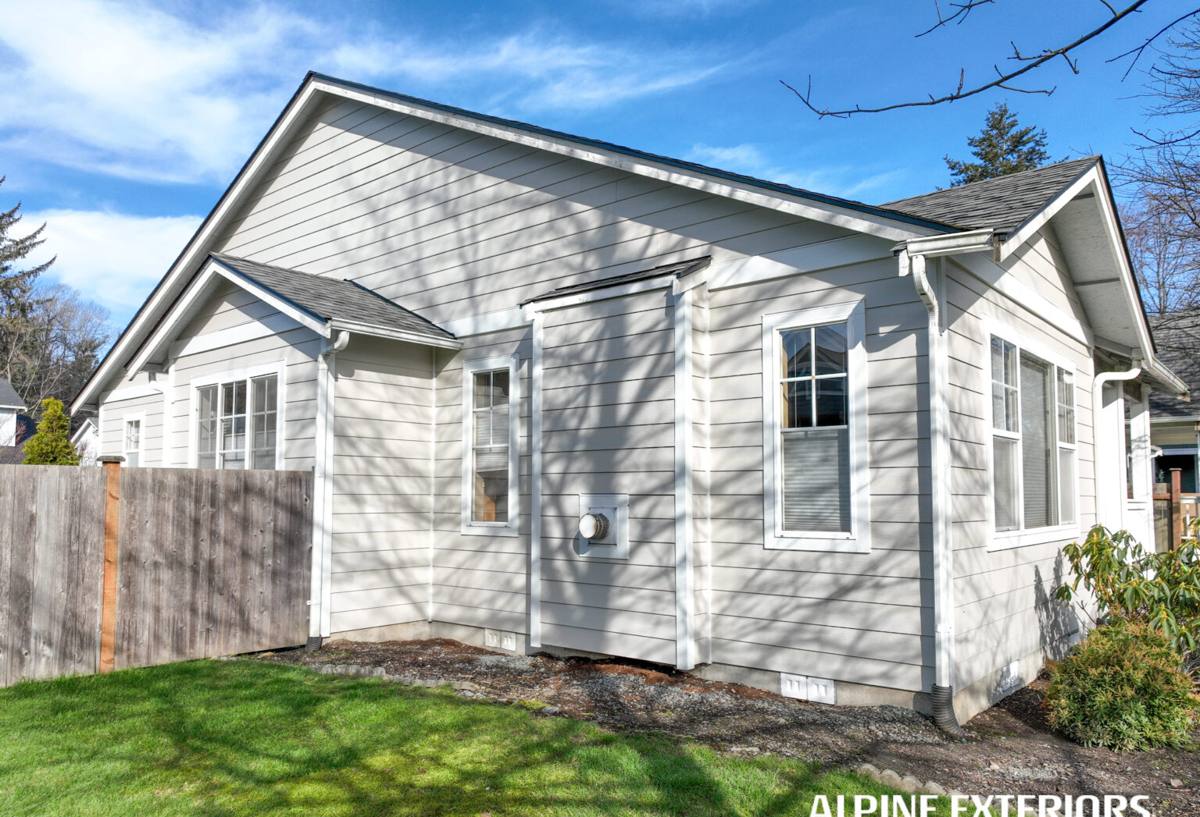
What a Correctly Installed Shingle Roof Needs Out Here
Underlayment and Ice-and-Water Barrier
Given the rain volume and wind exposure, we don't treat underlayment as an afterthought. A synthetic underlayment with strong water-shedding performance, paired with self-adhering ice-and-water barrier at eaves, valleys, and any low-slope transitions, gives the roof a real second line of defense — because on this peninsula, wind-driven rain will occasionally get past the shingle surface no matter how well it's installed.
Ventilation That Matches the Climate
Balanced intake and exhaust ventilation matters everywhere, but it matters more where humidity sits high for long stretches of the year. Poor attic ventilation traps moisture, which condensates on the underside of the roof deck and shortens the life of both the decking and the shingles from below — a failure mode that has nothing to do with the shingle brand and everything to do with airflow design.
Fastening for Wind Exposure
Open, waterfront lots catch more wind than sheltered inland sites. We fasten to the shingle manufacturer's high-wind nailing pattern rather than the minimum standard pattern, and we check nail placement carefully — a shingle that's nailed too high or at the wrong angle is one of the most common causes of blow-off in coastal wind events, and it's completely preventable at install time.
Flashing Details
Step flashing at walls and chimneys, proper valley metal, and corrosion-resistant drip edge all matter more here because of the salt air discussed above. We spec flashing materials and fasteners that hold up to coastal exposure rather than the cheapest option that would be fine thirty miles inland.
Choosing the Right Shingle for a Point Roberts Home
Not every shingle product is a good fit for a site this exposed. The table below is a general guide to how common shingle categories perform under the conditions this peninsula sees — it's a starting point for a conversation, not a substitute for looking at your specific roof, slope, and exposure.
| Shingle Type | Typical Wind Rating | Algae/Moss Resistance | Fit for Point Roberts |
|---|---|---|---|
| 3-tab strip shingles | Lower end of the range | Standard, no added resistance | Budget option; higher long-term maintenance in this exposure |
| Architectural / laminate shingles | Mid-to-high range | Available with algae-resistant granules | Solid all-around choice for most homes here |
| Impact- and algae-resistant shingles | High end of the range | Built-in copper or zinc granule treatment | Best match for waterfront or heavily shaded, moss-prone lots |
For most Point Roberts homes, we lean toward a mid-to-upper-tier architectural shingle with algae-resistant granules as the practical baseline, then step up to a heavier impact-rated product on lots that are especially exposed to wind or shaded enough to grow moss quickly.
What Affects Your Project Cost
Roof Access and Pitch
Steep pitches, multiple stories, and limited staging area around the house all add labor time and safety equipment requirements. Waterfront lots with limited driveway or side-yard access can also affect how quickly material and equipment get staged, which factors into scheduling and cost.
Tear-Off vs. Overlay, and Deck Condition
A full tear-off costs more upfront than an overlay but lets us inspect and repair the decking underneath — important here, since moisture trapped under old shingles for years can quietly rot sheathing that won't show from inside the attic until it's further along. Given the moisture exposure typical of this area, we generally recommend tear-off over overlay so nothing gets hidden under a second layer.
Every estimate accounts for these variables specifically for your roof rather than a flat per-square rate, since two houses on the same street can have very different access and deck conditions.
Our Process for a Point Roberts Roofing Project
- On-site inspection — we walk the roof, check the attic for ventilation and moisture signs, and note any decking concerns before quoting anything.
- Written estimate — a clear scope covering tear-off or overlay, underlayment and ice-and-water barrier placement, shingle selection, and flashing work, with no vague allowances.
- Material staging — since Point Roberts is only reachable by crossing the border, we plan delivery and crew logistics a few days ahead rather than relying on same-day supply runs.
- Tear-off and deck inspection — old roofing comes off, decking gets checked and repaired as needed, and we address anything found before covering it up.
- Installation — underlayment, ice-and-water barrier, flashing, and shingles go on per the manufacturer's high-wind specifications discussed above.
- Final walkthrough — we review the completed roof with you, including ventilation and any workmanship warranty details, before we consider the job done.
Keeping Moss and Salt Buildup Under Control
A well-installed roof still needs some ongoing attention in this climate. A short annual routine goes a long way toward getting full value out of the roof you paid for:
- Clear moss and debris from valleys and shaded slopes before it has a chance to establish, rather than after it's visibly thick
- Keep gutters clear so water sheds off the roof edge instead of backing up under the first course of shingles
- Rinse accumulated salt residue and organic debris off the roof surface periodically rather than pressure-washing, which can strip protective granules
- Trim back overhanging branches to reduce shade and moisture retention on north-facing or heavily treed slopes
- Have flashing, boots, and ridge caps checked yearly — these fail well before the shingle field does, especially in salt air
- Schedule a professional inspection after any major windstorm, even if nothing looks obviously wrong from the ground
Signs Your Roof Needs Attention
Because Point Roberts roofs age under harder conditions than the regional average, it pays to catch problems while they're still small repairs instead of full replacements. Watch for granules collecting in gutters or at downspout outlets, dark streaking or thickening moss patches on shaded slopes, curling or cupping shingle edges, rust staining around vent boots and flashing, and any soft spots or staining on ceilings after a hard wind-driven rain. None of these alone means the roof is failing, but any of them is worth a professional look before the next winter storm season.
Why Local Experience on This Peninsula Matters
Point Roberts is a different kind of job site than most of Whatcom County. Crews and material deliveries have to cross the border to get here, which means scheduling has to account for that in a way it doesn't for a job ten minutes off the interstate. A contractor who already works this area understands the lead time that requires, knows what the wind and salt exposure actually do to a roof over five and ten years rather than in a brochure, and builds that knowledge into the estimate instead of learning it on your roof. That experience shows up in fewer callbacks, fewer surprises mid-project, and a roof that's actually specified for where it sits rather than a generic regional standard.
If you're weighing a repair against a full replacement, or just want an honest read on what your current roof has left in it, we're glad to come out, take a real look, and put together a no-pressure estimate using the form below.