 Semiahmoo Exterior
 Why Lynden Roofs Take a Different Kind of Beating
A roof over Lynden isn't fighting the same battle as a roof forty miles inland. Between the salt-laden air moving off the water near Semiahmoo, the driving rain that comes sideways during Whatcom County storms, and a moss season that can run most of the year under tree cover, the materials and details that go into a new roof here need to be chosen on purpose — not just picked off a shelf because they're the standard option everywhere else.
None of this means Lynden roofs fail faster by default. It means a correctly installed roof and a merely adequate one drift apart faster here than they would in a dry, low-humidity climate. Fasteners that would hold fine inland can corrode early in salt air. Underlayment that's fine on a steep, sun-exposed roof can trap moisture on a shaded, low-slope one. Moss that's a cosmetic nuisance elsewhere can work its way under shingle edges here if it's left alone for a season or two. A new roof installation is the one time all of that gets addressed at the source, instead of patched around later.
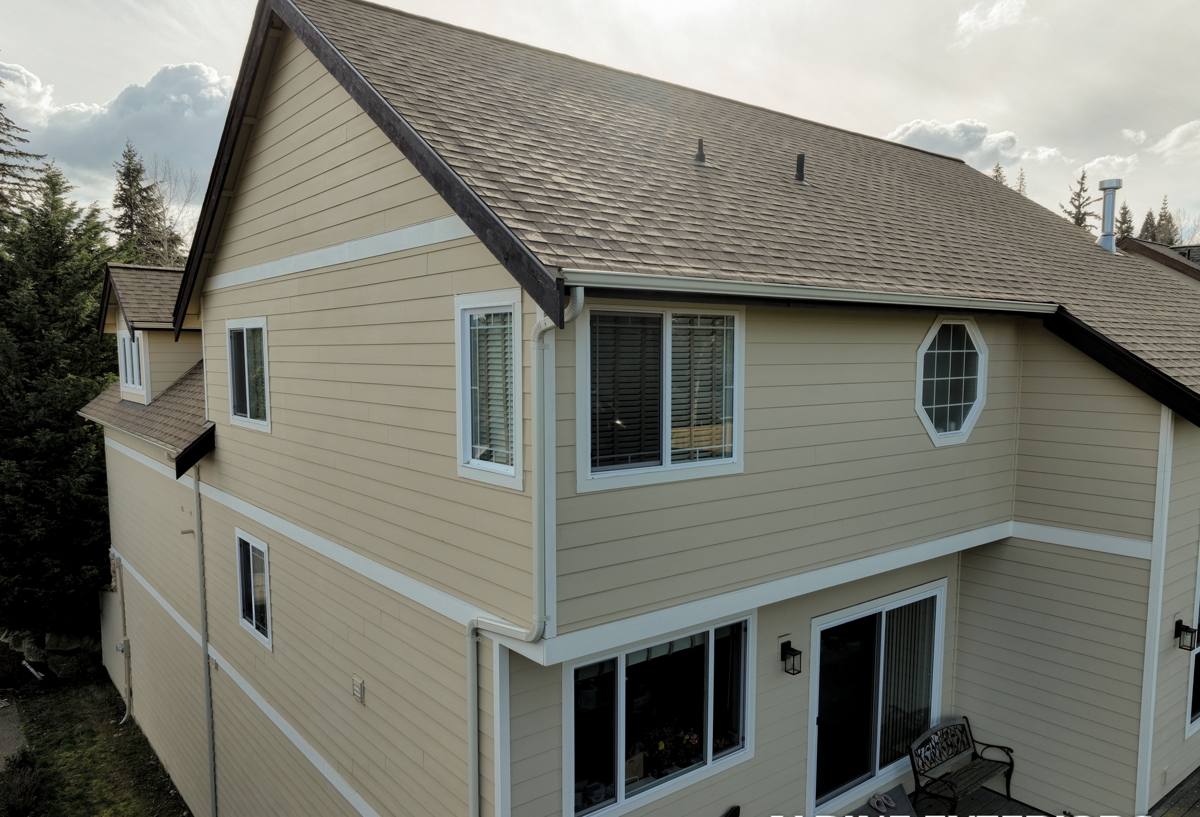
Signs a Repair Won't Cut It Anymore
Most homeowners don't wake up and decide to replace a roof — they get there after a string of smaller issues. It's worth knowing when you've crossed from "patch it" into "replace it" territory:
- Granule loss heavy enough that you're finding grit in gutters and downspouts every time it rains
- Shingles that are curling, cupping, or cracking across multiple sections of the roof, not just one localized spot
- Soft or spongy decking anywhere you can reach it — a sign moisture has already gotten past the surface layer
- Leaks that keep showing up in different spots after repairs, rather than staying fixed
- Moss or algae that's established itself under the shingle tabs, not just sitting on top of them
- A roof that's at or past the expected lifespan of its material, especially if it's never had a tear-off
If you're only seeing one or two of these and the roof is otherwise sound, a repair is often the right call. Once several show up together, a repair is usually just delaying a replacement that's already due — and spending money that won't count toward the new roof.
What a Correct New Roof Installation Actually Involves
"New roof" covers a lot of ground, and the difference between a roof that holds up here and one that doesn't usually comes down to details that aren't visible once the job is finished.
Tear-Off and Deck Inspection
We don't install over an existing roof. A full tear-off is the only way to actually see the deck — and in a climate with this much moisture exposure, that inspection matters. Soft or rotted sheathing gets replaced before anything new goes down. Skipping this step is how a new roof ends up with a hidden problem underneath it from day one.
Underlayment and Moisture Protection
Given the amount of driving rain Whatcom County sees, we don't treat underlayment as a formality. A synthetic underlayment goes down across the field for its tear strength and water resistance, with self-adhering ice-and-water membrane at the eaves, valleys, and around penetrations — the spots where wind-driven rain is most likely to find a way in.
Flashing, Fasteners, and Salt-Air Corrosion
Flashing around chimneys, vents, and wall intersections gets rebuilt, not reused. Reused flashing is one of the most common causes of leaks in a "new" roof. We also pay attention to fastener material here specifically — salt air accelerates corrosion on the wrong grade of nail or screw, and a fastener failure is a slow, hidden problem that shows up years later as a loose shingle or a leak with no obvious source.
Ventilation That Matches the Climate
A roof needs balanced intake and exhaust ventilation to manage heat and moisture in the attic. In a wet climate, poor ventilation doesn't just shorten shingle life — it's also one of the conditions that lets moss and mildew take hold from underneath, not just on the surface.
Choosing a Roofing Material Built for This Coastline
There's no single "best" roofing material — there's the right material for your home's exposure, budget, and how much maintenance you're willing to keep up with. For a Lynden home dealing with salt air, rain, and moss, here's how the common options actually compare:
| Material | Moss & Algae Resistance | Salt-Air Durability | Typical Lifespan | Ongoing Maintenance |
|---|---|---|---|---|
| Architectural asphalt shingle | Moderate — improves with algae-resistant granules | Good, with corrosion-resistant fasteners | 25–30 years | Low to moderate |
| Standing seam metal | Very good — sheds debris, hard for moss to grip | Very good with the right coating and fastener spec | 40–50+ years | Low |
| Cedar shake | Poor without diligent upkeep — moss-prone in shade | Fair — needs regular treatment near salt air | 20–30 years with maintenance | High |
We're upfront about the trade-offs. Cedar has real appeal and we'll install it if that's what a homeowner wants, but on a shaded, moisture-heavy lot it demands a maintenance schedule most people underestimate going in. Metal has a higher upfront cost but the lowest long-term burden. Architectural shingle remains the most common choice for good reason — it balances cost, appearance, and durability well when it's installed with the moisture and ventilation details above actually followed.
Our New Roof Installation Process
- Inspection and estimate. We look at the existing roof, the decking where accessible, attic ventilation, and any problem areas before recommending a scope — not before you've asked for one.
- Material selection. We walk through the options above based on your home's exposure and budget, with honest input on what each choice means for maintenance down the road.
- Scheduling around the weather. Given how much driving rain this area gets, we build in realistic windows rather than promising a date we can't guarantee against the forecast.
- Tear-off and deck prep. Old roofing comes off down to the deck, damaged sheathing gets identified and replaced, and the deck is prepped for underlayment.
- Installation. Underlayment, flashing, and the roofing material go on in that order, with fastener spacing and flashing details matched to the material manufacturer's specifications.
- Cleanup and haul-away. Old material, debris, and stray fasteners are cleared from the property, including a magnetic sweep of the ground around the house.
- Final walkthrough and paperwork. We go over the finished roof together, and you get warranty documentation for both materials and workmanship.
Moss and Algae: Managing the Long Wet Season
Moss isn't just a Lynden problem, but the combination of shade, moisture, and a mild wet season that stretches across much of the year makes it a bigger factor here than in drier parts of the state. A new roof is the best opportunity to get ahead of it, rather than fighting it after the fact.
Zinc or copper control strips installed near the ridge let rainwater carry trace metal down the roof slope, which discourages moss and algae growth over time without chemical treatment. Algae-resistant shingle granules help on the material side. None of that replaces basic upkeep, though — keeping gutters clear and trimming back overhanging branches where practical does more for long-term roof health than any single product choice.
What to Expect During the Project
A full reroof on an average home typically takes a few days of active work, though that can stretch if the weather doesn't cooperate — and in this area, it's worth planning for at least one weather delay rather than being surprised by it. Expect noise and some vibration through the house during tear-off, a dumpster or trailer on-site for debris, and landscaping near the house protected or covered where equipment and material will be staged.
Most jurisdictions in Whatcom County require a permit for a full roof replacement — we handle that as part of the job rather than leaving it to the homeowner to sort out. If your property has an HOA with material or color restrictions, it's worth checking those before finalizing a material choice, since that's outside anything a contractor can control.
Why a Crew That Already Works in Lynden Makes a Difference
Roofing crews that mostly work inland, drier climates aren't wrong about roofing in general — they're just calibrated for different conditions. A crew that regularly works Lynden and the surrounding Semiahmoo-area coastline already knows which fastener grades hold up, which underlayment details actually matter for the rain patterns here, and where moss tends to establish itself first on a given roof orientation. That's the kind of judgment that shows up in a roof's performance years three, five, and ten — not on day one, when every new roof looks the same.
Local experience also means fewer surprises during the project itself: knowing realistic weather windows, understanding local permitting expectations, and having working relationships with suppliers who stock the materials that actually perform in this climate rather than substituting something close.
A Homeowner's Checklist Before You Reroof
- Get a written scope that specifies underlayment type, flashing approach, and fastener material — not just "shingles and labor"
- Confirm whether decking replacement is included or billed separately if damage is found
- Ask how ventilation will be assessed and addressed, not just the roofing surface itself
- Clarify what happens if weather delays the project mid-tear-off
- Get the warranty terms in writing — both material and workmanship coverage
- Confirm cleanup and debris haul-away are included in the price
If your Lynden roof is showing its age or you're just trying to plan ahead before it becomes an emergency, we're happy to take a look and give you a straight answer — no pressure, no sales script. Use the form below to request a free estimate.