 Semiahmoo Exterior
 Why California Creek Siding Has to Work Harder
California Creek sits close enough to the water and low enough in the landscape that homes here take on a specific combination of punishment: salt-laden air drifting in off the Strait and Drayton Harbor, wind-driven rain that hits walls sideways instead of falling straight down, and a moss and mildew season that, in Whatcom County, can run from October clear through April. None of these is dramatic on its own. Together, over ten or fifteen years, they're what separates a wall system that still looks tight from one that's chalky, streaked, and soft at the bottom edge.
Salt air is corrosive to fasteners and trim metal, and it also holds moisture longer against a wall surface than dry inland air does. Driving rain doesn't just wet the face of the siding — it pushes water sideways into laps, seams, and butt joints that were never designed to be submerged, only shed. And moss doesn't just grow on roofs. Given a shaded, damp wall — which describes a lot of California Creek lots with mature trees and creek-side drainage — moss and algae will colonize siding, hold water against the substrate, and quietly work on whatever's underneath.
This is the climate context that should drive every decision on a siding job here, not just the color chosen off a fan deck.
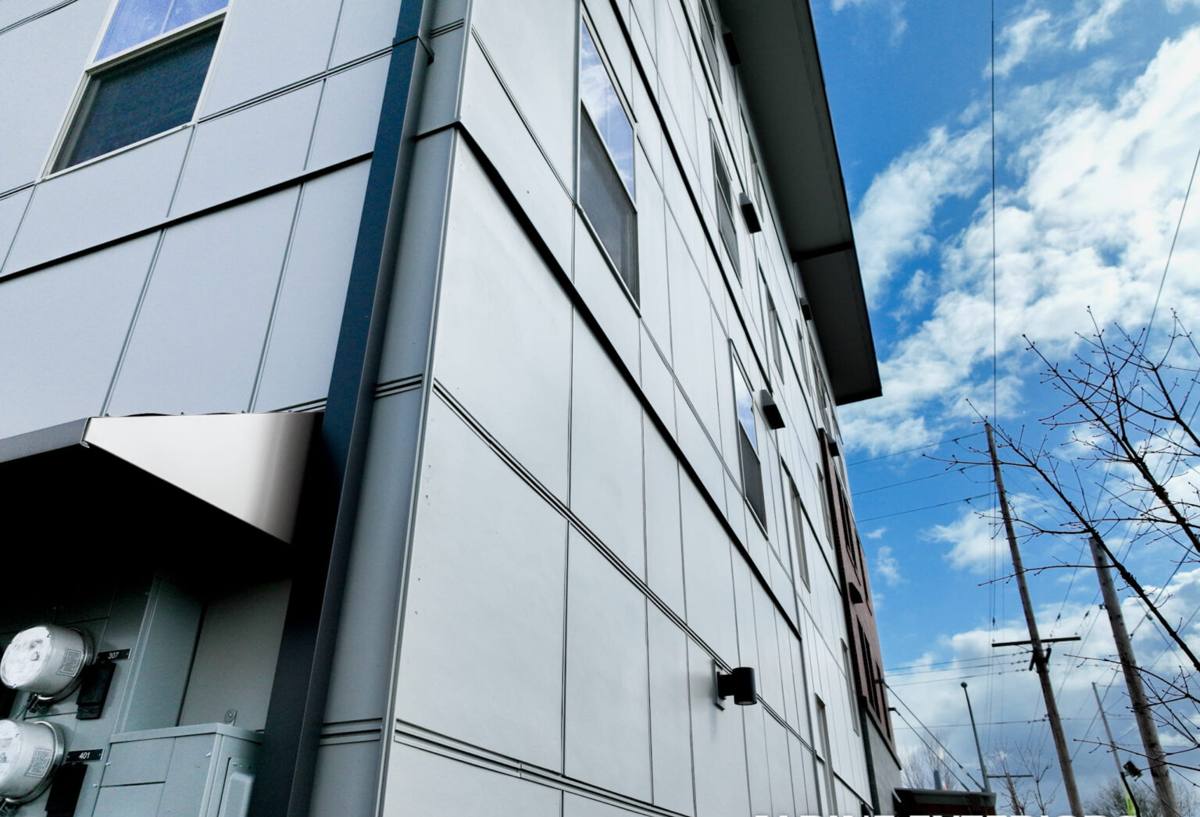
What James Hardie Brings to This Specific Problem
We install James Hardie fiber cement exclusively, and on a job like this it's not a brand preference — it's a materials decision. Hardie's HZ5 formulation is engineered specifically for climates with freeze-thaw cycling and sustained moisture exposure, which describes Whatcom County's coastal belt well. Fiber cement doesn't rot, doesn't feed mold the way wood-based products can, and doesn't absorb water into its core the way engineered wood siding does. It's also non-combustible, which matters less for salt air specifically but is part of why we standardized on it across the board.
The factory-applied ColorPlus finish is the other half of the equation. It's baked on under controlled conditions rather than field-applied, which means better adhesion and more consistent coverage than a job-site paint job — and in a salt-air environment, finish integrity at the surface is what keeps moisture from ever reaching the substrate in the first place. It also means touch-up, when it's ever needed, uses matched factory product instead of a mixed-on-site guess.
Why Not Something Cheaper
We get asked why we don't offer vinyl or engineered wood as a lower-cost option. The honest answer is that in a coastal, high-moisture, moss-prone location like California Creek, the products we've chosen not to install tend to show their weaknesses exactly here — vinyl can warp and gap with the temperature swings and wind loading off the water, and engineered wood siding is more sensitive to sustained moisture contact at seams and cut edges than fiber cement is. We'd rather install one product correctly than install several products with caveats attached.
What a Correct Installation Actually Involves Here
Hardie siding performs to spec only when it's installed to spec, and in a wet, wind-exposed location the details matter more than usual. A correct installation on a California Creek home includes:
- A drainable water-resistive barrier behind the siding, not just a static housewrap, so any water that does get past the cladding has somewhere to go
- A rain screen gap where wall assembly and budget allow, giving the wall a way to dry out between storms instead of staying saturated
- Correct minimum clearance between the bottom of the siding and grade, decking, or roofing — a detail that's routinely shortcut on lower-cost jobs and is one of the first places we see failure on older homes in wet, low-lying areas
- Proper flashing at every horizontal transition — window heads, roof-to-wall intersections, deck ledgers — since these are the spots where wind-driven rain actually gets in
- Fastener spacing, nailing pattern, and butt-joint treatment that matches Hardie's published installation specs, not a generalized "siding is siding" approach
- Factory-finished cut edges sealed per Hardie's requirements, since an unsealed cut edge is the one place ColorPlus doesn't already protect the substrate
Skip any one of these and the siding itself can be excellent while the wall still fails. This is the part of the job that doesn't show up in a photo but is the actual difference between a wall that holds up through a Whatcom County winter and one that doesn't.
What We See on Existing Siding in This Area
On tear-offs and inspections around California Creek and the broader Semiahmoo area, the recurring problems are consistent: caulk joints that failed years before the siding did, moss and green staining concentrated on north- and east-facing walls with less sun exposure, soft or delaminating material at the bottom courses where splashback and standing snow sat against the wall, and corroded or streaking fasteners where standard hardware was used instead of corrosion-resistant fasteners appropriate for a coastal environment. None of these are unusual findings for this climate — they're what happens to any wall system over enough winters without the right detailing. It's exactly why we don't treat flashing, clearances, and fastener selection as optional upgrades.
Moss Season, Specifically
Moss on siding isn't just cosmetic. It holds moisture against the wall surface for extended periods, which in turn slows drying and stresses caulk and paint film even on well-installed siding. It's most aggressive on shaded walls near mature trees or creek-side vegetation — common on California Creek lots — and it's a reason we talk through gutter placement, plant clearance, and drainage during the estimate, not just the siding product itself.
Product Lines and Colors That Make Sense Here
James Hardie offers several profiles, and the right pick depends on the home's style and exposure, not just preference.
| Product | Best Use | Why It Fits Coastal Whatcom County |
|---|---|---|
| HardiePlank lap siding | Most home styles, primary field siding | Widest color range, proven long-term performance in wet marine climates |
| HardieShingle | Accent gables, Craftsman/cottage detailing | Adds texture without the moisture vulnerability of real cedar shingle |
| HardiePanel | Modern/board-and-batten styles | Clean vertical lines, works well with rain screen detailing |
| HardieTrim | Corners, window and door surrounds | Matches fiber cement moisture behavior at the most exposure-prone edges |
On color, ColorPlus finishes are engineered to resist fading from UV and salt exposure better than field-applied paint, which matters on west- and water-facing elevations that take the most direct weather. Darker colors will show pollen and mineral streaking from rain runoff faster than lighter tones — worth factoring in on a home close to the creek where runoff carries more sediment.
Our Process, Start to Finish
- On-site assessment — we look at existing siding condition, wall orientation relative to prevailing wind and rain, drainage, and any moisture damage before quoting anything
- Detailed proposal — product line, color, trim package, and a clear scope of what's included: tear-off, WRB, flashing, and finish work, not just "siding installed"
- Prep and tear-off — removal of existing cladding, inspection of sheathing for hidden rot (common around old flashing failures), and repair before anything new goes up
- Weather barrier and flashing — the unglamorous work that determines whether the siding actually performs
- Hardie installation — to manufacturer spec, with attention to clearances and fastening in every exposed area
- Final walkthrough — checking joints, caulking, and trim details with the homeowner before calling the job done
Cost Factors on a California Creek Project
| Factor | Why It Moves the Price |
|---|---|
| Tear-off condition | Rotten sheathing found during removal adds repair scope beyond siding alone |
| Home height and access | Multi-story or tight-lot homes near the creek can require more staging and time |
| Trim and detail package | Corner boards, window trim, and accent shingle work add labor and material |
| Rain screen inclusion | Adds a drainage layer that pays off directly in this climate's wet-wall exposure |
| Color selection | Standard ColorPlus colors vs. premium or custom-matched options |
We don't quote off square footage alone — the assessment is what turns a rough range into an accurate number, and it's free.
Maintenance Homes in This Area Actually Need
Properly installed Hardie siding is low-maintenance, not no-maintenance. In a California Creek setting, that means an annual rinse-down to keep salt residue and moss spores from building up on shaded walls, prompt attention to any gutter overflow or downspout misdirection that's dumping water against a wall, and keeping vegetation trimmed back a few feet from siding so walls can dry between rain events. None of this is heavy work, but skipping it is how a well-installed wall ends up looking like a poorly-installed one after a decade.
Why Local Experience Matters on This Job
A crew that already works California Creek and the wider Semiahmoo area knows which elevations take the worst of the wind-driven rain, where moss pressure runs highest, and what a normal amount of coastal fastener corrosion looks like versus a sign of a bigger moisture problem. That's not something a general contractor pulling in from outside the region has reason to know, and it shows up in the details — flashing choices, fastener selection, where the rain screen gap gets prioritized — that don't make it into a generic siding quote.
If you're weighing a full re-side or replacing storm-damaged sections on a California Creek home, we're glad to walk the property, look at what your walls are actually dealing with, and put together a straightforward, no-pressure estimate using the form below.