 Semiahmoo Exterior
 Lynden Siding Has to Survive a Long, Wet Whatcom County Winter
Lynden sits inland from the Semiahmoo shoreline, but it doesn't escape the weather pattern that defines this corner of Washington. Whatcom County pulls in wet, marine-influenced air off the Pacific and the Salish Sea for much of the year, and that moisture doesn't stay at the coast — it rides inland on wind and rain and settles into every shaded eave, north-facing wall, and tree-lined lot in Lynden. Add the region's long moss season, months of low sun angle, and the kind of driving rain that comes sideways in a winter storm, and you have a climate that is genuinely hard on exterior building materials, even ones that look fine from the street.
Siding in this environment isn't just a cosmetic layer. It's the thing standing between your home's framing and a near-constant cycle of wet-then-dry, warm-then-cold conditions for eight or nine months of the year. Products that were never engineered for this kind of sustained moisture exposure tend to show it early — swelling at seams, staining under gutters, moss creeping up from grade, paint failing years ahead of schedule. That's the problem we've built our entire siding business around solving, and it's why we only install one product system: James Hardie fiber cement.
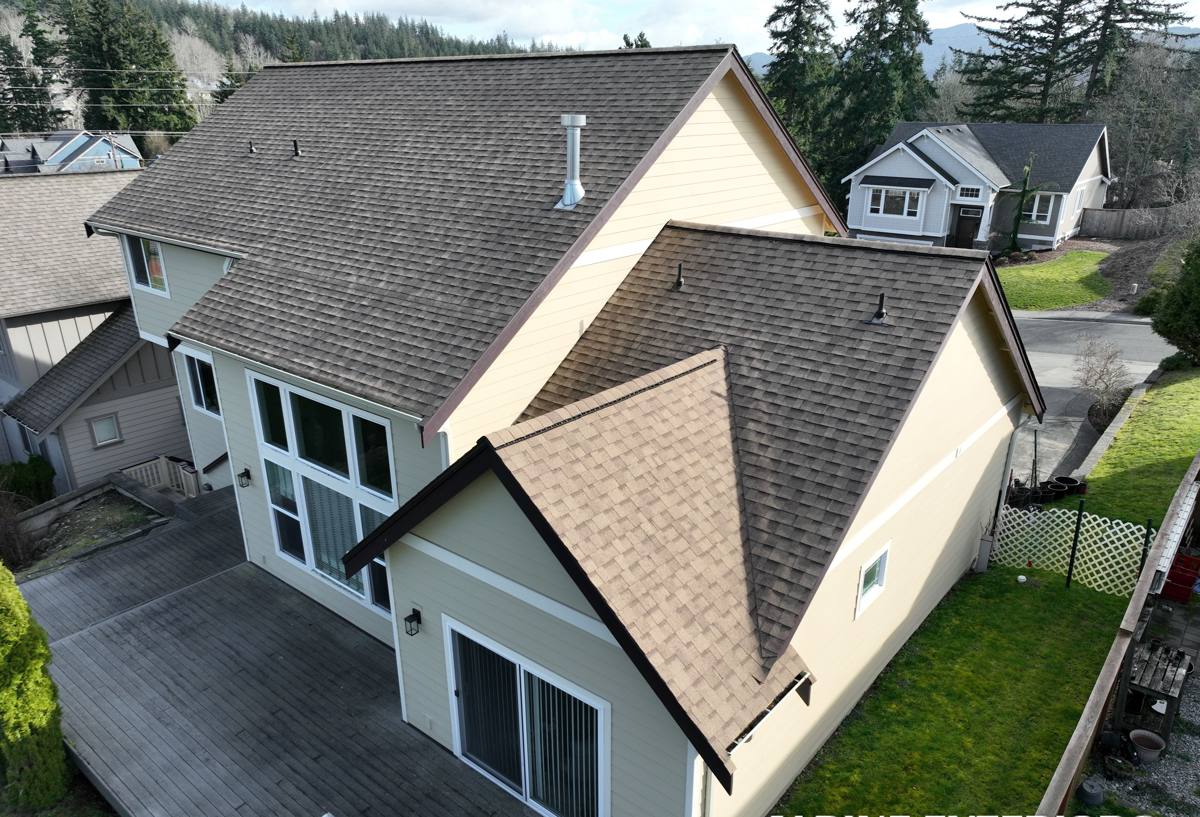
What Lynden Homes Actually Need From Their Siding
Before we talk product, it's worth being specific about what "weather-resistant siding" needs to actually do on a Lynden home, because the requirements are more particular than most homeowners realize.
Moisture Management, Not Just Moisture Resistance
Every siding product will get wet. The difference between a siding system that lasts and one that fails is what happens next — how fast it dries, whether water can get behind it, and whether the material itself absorbs and holds moisture. Fiber cement is dimensionally stable and doesn't swell or wick water the way wood-based products can, which matters enormously in a climate where a wall can stay damp for days at a stretch during a January system.
Resistance to Moss, Algae, and Mildew
Whatcom County's moss season isn't limited to roofs. Shaded siding, north walls, and anything near mature landscaping is a candidate for moss and algae growth if the surface and finish don't resist it. This is one of the most common complaints we hear from Lynden homeowners with older siding — a green or black film that keeps coming back no matter how often it's pressure washed.
A Finish That Doesn't Fail Before the Substrate Does
A lot of siding "failure" is really finish failure — the paint or coating gives up years before the underlying board does, and the homeowner is stuck repainting a wall that otherwise had life left in it. In a climate with this much UV-to-rain cycling, finish durability is not a minor detail.
Why We Standardized on James Hardie
We used to get asked to quote a mix of products — LP SmartSide, vinyl, primed cedar, primed spruce, sometimes other fiber cement brands. We stopped installing all of them and now install James Hardie exclusively. That's not a marketing position; it's the conclusion we reached after years of doing tear-offs and repairs on siding that didn't hold up in this exact climate.
| Product | What it does well | Why it's a harder fit for Whatcom County's climate |
|---|---|---|
| Vinyl siding | Low upfront cost, low maintenance in mild climates | Can warp or crack in temperature swings, seams allow water intrusion, doesn't stop moisture at the wall — it just covers it |
| LP SmartSide | Engineered wood strand product, easier to cut and handle than fiber cement | Wood-based core is more vulnerable to prolonged moisture exposure at cut edges and seams if caulking and flashing aren't perfect and stay perfect |
| Primed cedar / spruce | Natural look, renewable material | Requires ongoing repainting and sealing, and untreated cut ends and knots are entry points for rot in a region that stays damp for months |
| James Hardie fiber cement | Non-combustible, dimensionally stable, factory-baked ColorPlus finish, HardieZone HZ5 engineered for our climate zone | Higher material and labor cost than vinyl; installation detail matters (see below) |
The trade-off is real and we're upfront about it: Hardie costs more up front than vinyl, and it takes a skilled crew longer to install correctly than a lighter product. What you get in return is a wall system that isn't fighting the climate it lives in.
The ColorPlus Factory Finish Advantage
One detail that matters more in a place like Lynden than in a dry climate: where the finish is applied. James Hardie's ColorPlus Technology bakes the color onto the board in a controlled factory environment, in multiple coats, before it ever reaches your house. Field-applied paint — brushed or sprayed on site after installation — never bonds or cures the same way, and it's the first thing to fail when a wall stays wet for extended stretches. A factory finish also means color consistency across every board on the job, no lap marks, and a much longer stretch before repainting is even a conversation. In a region where repainting means scheduling around a short dry season, that's not a cosmetic perk — it's a maintenance-schedule advantage.
What Correct Installation Actually Involves
Fiber cement siding is only as good as the installation behind it. Most of the failures we get called out to inspect on Hardie siding in Whatcom County trace back to installation shortcuts, not the product itself. A correct install includes:
- A continuous weather-resistant barrier behind the siding, properly lapped and taped at seams
- Rainscreen or drainage gap where conditions call for it, so incidental moisture can drain and the wall can dry
- Correct flashing at every window, door, and roofline intersection — the majority of hidden leaks start here, not in the field of the siding
- Manufacturer-specified fastener type, spacing, and placement — under- or over-driven nails are a common cause of premature cracking
- Proper clearance from grade, decks, and roof lines to keep splashback and standing water off the bottom courses
- Caulked and sealed joints only where Hardie's installation guide calls for them — not as a substitute for correct flashing
- HZ5-rated boards and installation practices matched to our specific climate zone
Skip any one of these and you can end up with siding that looks right for a few years and then starts failing at the exact points a correct install would have protected.
Our Process on a Lynden Job
Every Lynden project starts with a walk-around of the existing exterior — not just the siding, but the trim, flashing, window sills, and anywhere we can see evidence of past moisture problems. That inspection shapes the scope more than the siding choice does, because a new product over a compromised weather barrier just hides the problem instead of fixing it.
1. Assessment and Scope
We identify what's driving replacement — moss, staining, cracked boards, failed paint, or just age — and check the sheathing and framing underneath where siding is coming off, since that's the only real way to know what's happening behind the wall.
2. Tear-Off and Substrate Repair
Old siding, damaged sheathing, and any compromised weather barrier get removed and repaired before anything new goes up. This is the step that gets skipped by crews trying to move fast, and it's the step that matters most.
3. Weather Barrier and Flashing
New house wrap or weather-resistant barrier, correctly lapped, taped, and flashed at every penetration and intersection.
4. Hardie Installation to Spec
Boards installed per James Hardie's published fastening and clearance requirements for our climate zone, not "close enough."
5. Final Walkthrough
We walk the finished exterior with the homeowner, checking trim lines, caulk joints, and clearances before calling the job done.
Signs Your Current Siding Is Already Failing
Homeowners in Lynden often live with early warning signs for a while before calling anyone, mostly because the damage isn't obvious from the driveway. Worth checking for:
- Soft or spongy spots when you press on siding, especially near the bottom courses or under windows
- Persistent moss or dark staining that returns within months of cleaning
- Peeling, bubbling, or chalky paint, particularly on shaded or north-facing walls
- Visible gaps, warping, or buckling at seams and panel joints
- Rising utility bills with no other explanation, which can point to a compromised weather barrier
- Interior signs — musty smell, bubbling drywall, or trim discoloration on exterior-facing walls
What Affects the Cost of a Fiber Cement Siding Job in Lynden
| Factor | Why it matters |
|---|---|
| Home size and wall complexity | More corners, gables, and trim details mean more cutting, fitting, and labor time |
| Condition of existing sheathing | Rot repair found during tear-off adds scope that can't be known until the old siding is off |
| Siding profile and Hardie product line | Lap siding, shingle-style panels, and board-and-batten all price differently in material and install time |
| Trim and accessory scope | Fascia, soffit, and trim replacement alongside siding affects total project cost |
| Access and site conditions | Lot layout, landscaping, and building height affect staging and crew time |
We give every homeowner a specific number after a real on-site assessment — general siding cost ranges you find online rarely account for what a particular Lynden home actually needs once the old siding comes off.
Maintenance in a Moss-Prone Climate
Fiber cement with a factory finish is genuinely low-maintenance, but "low-maintenance" doesn't mean "no maintenance" in a climate like this. A yearly rinse to clear moss and organic buildup before it takes hold, keeping gutters clear so water isn't sheeting down the wall, and trimming back vegetation that keeps siding shaded and damp will extend the life of the finish considerably. None of that compares to the upkeep a painted wood product demands, but it's worth setting expectations honestly rather than pretending any exterior material is maintenance-free here.
Why It Matters That We Already Work in Lynden
A crew that already understands Whatcom County's weather pattern makes different decisions on a Lynden job than a crew installing siding for the first time in this climate — where to add drainage detail, how to flash a problem area that's given older homes trouble, which orientations need extra attention for moss and moisture. That's not something you can fully substitute with a manufacturer's install manual alone, even a good one. It comes from having repaired the mistakes other installs left behind and having watched how siding actually performs through a full Lynden winter, not just how it looks on installation day.
If you're weighing a siding replacement in Lynden, we're happy to walk your home, look at what's actually happening behind the existing siding, and give you a straight, no-pressure estimate for James Hardie fiber cement done to spec. Use the form below to get started.