 Semiahmoo Exterior
 Deck Repair Built for the Drayton Harbor Climate
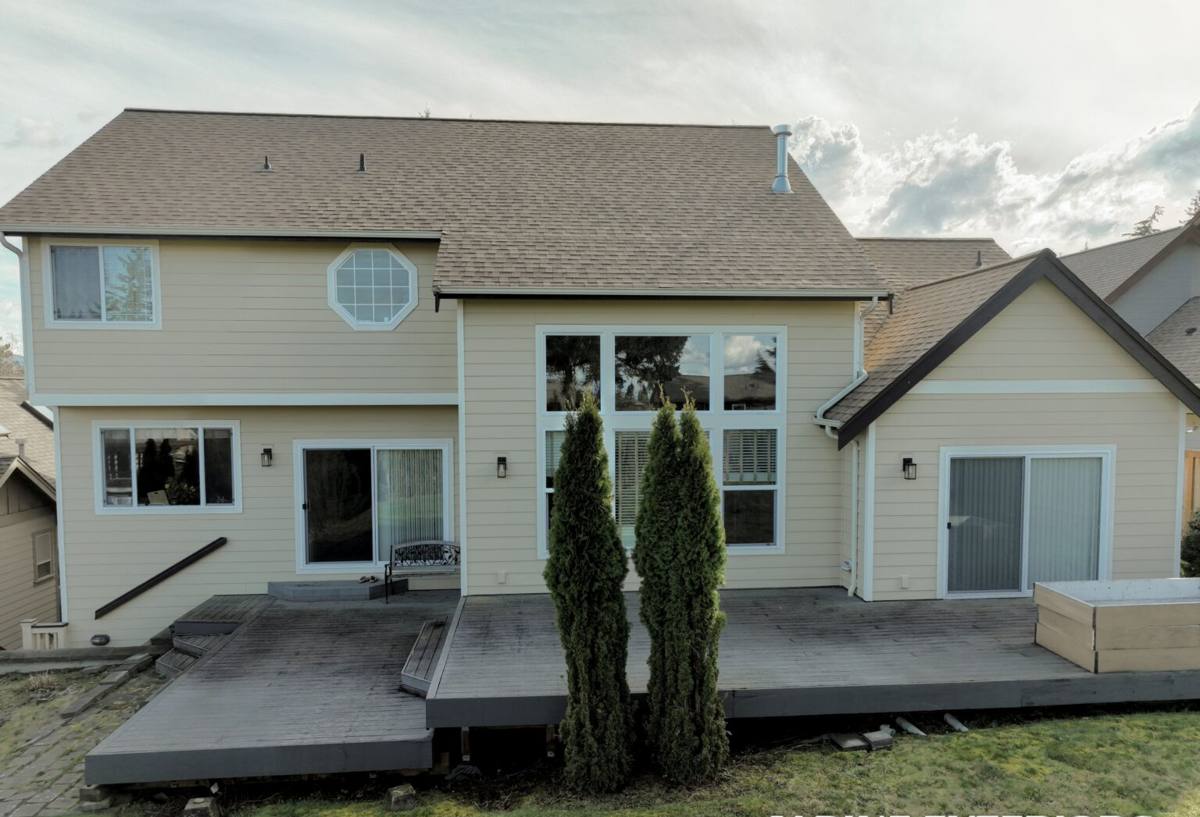
Decks around Drayton Harbor live a harder life than decks fifty miles inland. The combination of salt-laden air off the water, near-constant winter rain, and a moss season that can stretch from fall through spring puts real stress on wood, fasteners, and finishes. A deck that would need attention every eight or ten years in a drier climate often needs it every three to five years here. That's not a knock on any particular deck — it's just what Whatcom County's marine environment does to exterior wood structures.
We work on decks throughout the Semiahmoo area, including the homes around Drayton Harbor, and we see the same failure patterns repeat: soft spots near ledger boards, corroded fasteners, moss-choked gaps between boards, and railings that have loosened from years of damp-dry cycling. This page walks through what actually causes that damage, what a correct repair looks like, and how we approach the work.
Why Salt Air, Rain, and Moss Are a Tough Combination
Each of these factors causes damage on its own, but together they compound each other.
Salt Air
Airborne salt from Drayton Harbor and the surrounding waterways accelerates corrosion on any exposed metal — nails, screws, joist hangers, railing brackets. Once a fastener starts to corrode, it loses holding strength long before it looks obviously rusted. That's a problem you can't always see from the surface.
Driving Rain
Whatcom County's rain doesn't just fall straight down — wind off the water pushes it sideways, driving moisture into joints, under flashing, and behind ledger boards that would stay dry in a calmer climate. Water that gets trapped rather than shed is what turns a minor issue into structural rot.
Moss
Moss thrives in the shaded, damp gaps between deck boards and along north-facing structures. It's not just cosmetic — moss holds moisture against the wood surface far longer than bare wood would stay wet, which speeds up decay underneath a finish that still looks fine on top.
The result is that damage on a Drayton Harbor deck is often worse than it looks from a casual walk-through, which is exactly why a proper inspection matters before any repair plan is written.
Signs Your Deck Needs Repair — Not a Full Rebuild
Most decks we look at don't need to be torn out and rebuilt. They need targeted repair to the specific areas that are actually failing. Here's what we check for:
- Boards that feel spongy, spring underfoot, or show dark staining along the edges
- Gaps between boards packed with moss, dirt, or decayed debris that traps moisture
- Rust streaks below fastener heads, or screws that spin freely without holding
- A ledger board (where the deck attaches to the house) that feels soft or shows water staining on the siding above or below it
- Railings or posts that wiggle, lean, or feel less rigid than they should
- Visible daylight or gaps where flashing has pulled away from the house
- Stairs with uneven treads, loose stringers, or handrails that flex
- A finish (stain or sealant) that's worn through and left bare, graying wood exposed
If you're seeing one or two of these, it's usually a repair, not a replacement. If you're seeing several at once — especially soft framing combined with a compromised ledger — that's when a full rebuild starts to make more financial sense than chasing repairs piecemeal.
What a Correct Deck Repair Actually Involves
A repair that only addresses the visible symptom — swapping out a few gray boards, for instance — often leaves the underlying cause untouched. A correct repair works from the structure outward.
Framing and Structural Members
Joists, beams, and posts get checked for soft spots with a probe, not just a visual look. Any framing member that's lost structural integrity gets sistered or replaced — this is not an area to patch and hope.
Ledger Board and Flashing
Because the ledger board ties the deck to the house, it's one of the most consequential things to get right. We check the flashing above and behind it, confirm water is being shed away from the house rather than trapped against it, and correct any flashing that's failing before it causes hidden rot in the wall behind it.
Decking Boards
Individual boards that are cracked, cupped, or soft get replaced. Board spacing gets corrected where gaps have closed up and are trapping moisture and moss.
Fasteners and Hardware
Corroded nails, screws, and joist hangers get replaced with fasteners rated for exterior and coastal exposure. This is a small line item that has an outsized effect on how long a repair actually lasts near the water.
Railings and Stairs
Posts get checked at their base connection, since that's where moisture collects and rot typically starts. Loose railings are re-secured to solid framing, not just tightened at the surface.
Repair vs. Replacement: What Actually Drives the Decision
Homeowners often ask us to just tell them a number without a look at the deck, but the honest answer is that cost depends on a handful of specific factors. Here's how we weigh it:
| Factor | Leans Toward Repair | Leans Toward Replacement |
|---|---|---|
| Framing condition | Solid, dry to the probe | Soft or spongy in multiple joists/beams |
| Ledger board | Sound, flashing intact | Soft, rotted, or flashing has failed |
| Extent of damage | Isolated to a few boards or fasteners | Widespread across the deck surface |
| Deck age | Under 15-20 years, built to a decent standard | Original construction quality was poor or it's well past typical lifespan |
| Moss/moisture pattern | Surface-level, hasn't reached the wood core | Long-term trapped moisture with visible decay |
| Code/attachment concerns | Ledger and post connections meet current standards | Outdated or unsafe structural connections |
We'll always tell you honestly which side of that line your deck falls on. Repair is almost always the more cost-effective route when the framing and ledger are sound — there's no reason to pay for a full rebuild if the bones are good.
Our Deck Repair Process
- Inspection. We walk the full deck, probe framing and decking for soft spots, and check the ledger, flashing, and railing connections.
- Written plan. You get a clear explanation of what's actually wrong, what needs to be repaired versus what's cosmetic, and an honest price range before any work starts.
- Repair. We address the structure first — framing, ledger, flashing — then move outward to decking, fasteners, and railings.
- Finish protection. Repaired and replaced wood gets sealed or finished to match, so the repair blends in rather than standing out as a patch job.
- Walkthrough. We go over what was done and what to watch for going forward, including simple maintenance that extends the life of the repair.
Materials We Use — and Why
For fasteners and hardware, we use exterior- and coastal-rated stainless or heavily coated fasteners rather than standard galvanized options. In a salt-air environment, the extra cost upfront is minor compared to the cost of re-doing a repair in a few years because fasteners corroded early.
For decking material, both quality wood and composite decking have a place, and the right choice depends on your budget, the look you want, and how much upkeep you're willing to do:
| Wood Decking | Composite Decking | |
|---|---|---|
| Upfront cost | Lower | Higher |
| Maintenance | Periodic sealing/staining needed, especially here | Minimal — no sealing required |
| Moss resistance | Requires regular cleaning to prevent buildup | Sheds moisture better, less moss retention |
| Repairability | Individual boards easy to replace | Board replacement possible but less common |
| Appearance over time | Natural look, grays without maintenance | Consistent color, doesn't gray |
Neither option is wrong. We'll walk you through the real trade-offs for your specific deck rather than pushing one material across the board.
Maintenance That Actually Matters Here
A good repair lasts a lot longer with a small amount of upkeep, especially given the local climate:
- Sweep debris and moss out of board gaps a couple times a year, especially going into the wet season
- Rinse salt residue off the deck surface periodically if you're close to the water
- Re-seal or re-stain wood decking on the schedule your finish product recommends — don't wait until it's visibly failed
- Check railing posts annually for any looseness at the base
- Keep gutters and downspouts clear so roof runoff isn't draining onto or behind the deck
Why It Matters to Hire a Crew That Already Works Drayton Harbor
Deck repair isn't identical everywhere. A contractor who mostly works inland may not think twice about standard galvanized fasteners or skip a close look at ledger flashing — habits that hold up fine in a drier climate but fall short here. Working regularly in and around Semiahmoo and Drayton Harbor means we're used to building in fastener upgrades, flashing checks, and moss-aware detailing as standard practice, not an upsell.
It also means we're not guessing at how a repair will hold up in this environment — we're building repairs based on what we've actually seen fail, and what's actually held up, on decks like yours.
If your deck is showing soft spots, loose railings, moss buildup, or you just want an honest read on its condition, we're happy to take a look. Reach out for a free, no-pressure estimate using the form below.