 Semiahmoo Exterior
 Why Wiser Lake Decks Wear Out Faster Than People Expect
Homes around Wiser Lake sit in a tough spot for outdoor structures. You've got moisture coming from two directions at once: the lake itself, which keeps humidity high and slows drying after every rain, and the broader Whatcom County weather pattern of long, wet stretches with short windows of real sun. Add in the salt-tinged air that drifts inland from the Semiahmoo and Drayton Harbor area, and you get a combination that's hard on fasteners, hard on finishes, and hard on any decking material that isn't built to handle repeated wet-dry cycling.
Moss is the other factor homeowners underestimate. A deck near water and tree cover can stay damp for days after a storm, and that's exactly the environment moss and algae need to take hold. Once moss establishes itself on boards, joists, or stair treads, it holds moisture against the wood constantly and turns walking surfaces slick and dangerous. By the time moss is visible on the surface, there's a good chance moisture has already been working on the structure underneath for a while.
None of this means a deck at Wiser Lake can't last. It means the build has to account for this specific exposure from the start — not just meet a generic code minimum, but be detailed for a lake-adjacent, coastal-influenced climate.
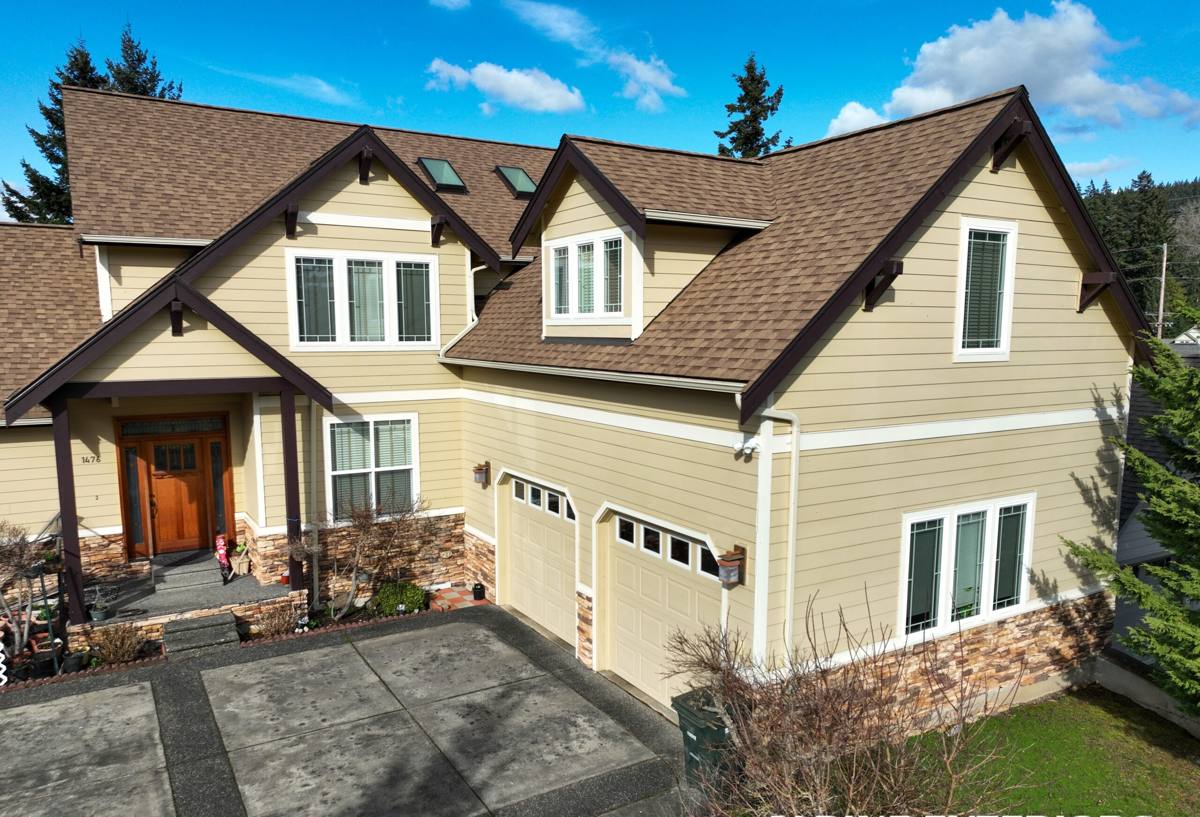
Signs a Wiser Lake Deck Needs Replacement, Not Just Repair
Repair makes sense when the damage is isolated. Replacement becomes the honest recommendation when the problems are systemic — when the same issues keep showing up because the structure underneath has been compromised. Some signs we look for on lake-area decks:
- Soft or spongy spots in decking boards, especially near the house or at board ends
- Rot or discoloration at the ledger board where the deck attaches to the house
- Rust streaking or crumbling around fasteners and connectors
- Posts or footings that have shifted, or a deck that feels bouncy when you walk across it
- Persistent moss or black-green staining that returns within weeks of cleaning
- Railings that wiggle at the post connection rather than just at the top rail
If it's one board or a section of railing, repair is usually the right call. If it's the framing, the ledger connection, or footings, patching just delays a bigger problem — and on a structure people stand on, that's not where we cut corners.
What a Correct Deck Replacement Actually Involves
Starting From the Ledger Down
The ledger board — where the deck attaches to the house — is the single most common failure point on older decks in wet climates, because it's the hardest spot for water to escape once it gets behind the siding or decking. A proper replacement means removing the old ledger, inspecting and repairing the rim joist and sheathing behind it if needed, and installing new flashing designed to shed water away from the house rather than trap it.
Framing Built for the Load and the Climate
Joists, beams, and posts get sized to current code for the actual span and load, not just matched to whatever was there before. In a damp environment, we also pay attention to ventilation under the deck — cutting off airflow under a low deck is a common reason boards stay damp longer than they should and rot from the underside first.
Footings That Won't Move
Soil around Wiser Lake can hold water longer than well-drained upland soil, which affects how footings perform over time. Footings are set to the depth and bearing required by code, not shortcut with surface-set blocks, which is a common source of the "bouncy deck" problem years down the road.
Fasteners and Hardware Matched to the Exposure
Given the salt air influence in this part of Whatcom County, we use corrosion-resistant fasteners and structural connectors rated for the treated lumber and environment involved. Mismatched hardware — the wrong fastener with the wrong treated lumber chemical formulation — is a quiet cause of early corrosion that's easy to avoid and expensive to ignore.
Choosing Decking Material for a Lake and Coastal Climate
There's no single "best" decking material — there's the right material for your budget, your maintenance appetite, and this specific exposure. Here's how the common options actually compare for a Wiser Lake property:
| Material | How It Handles This Climate | Maintenance | Typical Lifespan |
|---|---|---|---|
| Pressure-treated wood | Affordable, but needs consistent sealing to resist the wet-dry cycling and moss growth common here | Annual cleaning and periodic re-sealing | 10-15 years with upkeep |
| Cedar | Naturally rot-resistant and handles moisture well, but still needs finish maintenance in salt-influenced air | Periodic cleaning and refinishing | 15-20 years with upkeep |
| Composite decking | Resists moisture absorption and doesn't feed moss the way bare wood can; performs consistently in wet, low-sun areas | Occasional washing, no sealing or staining | 25-30 years, manufacturer-dependent |
| PVC decking | Fully synthetic, handles constant moisture exposure with minimal risk of rot or moss adhesion | Occasional washing | 25-30+ years, manufacturer-dependent |
We install all of these and won't push a homeowner toward the priciest option if wood fits their budget and they're willing to keep up with maintenance. What we do insist on is being upfront about the trade-off: wood costs less up front but asks more of you every year, while composite and PVC cost more up front and ask very little of you afterward. In a moss-prone, wet climate like this one, that maintenance gap tends to matter more than it would somewhere drier.
Our Deck Replacement Process
- On-site evaluation. We inspect the existing deck's framing, ledger, footings, and decking to see what's actually driving the failure — not just what's visible from the top.
- Honest scope and options. You get a clear picture of what needs to be replaced, what materials fit your budget, and what trade-offs come with each choice.
- Permitting. Deck replacement in Whatcom County typically requires a permit, and we handle that process so the finished structure is documented and inspected correctly.
- Demolition and structural rebuild. Old decking, framing, and any compromised ledger or footing material comes out, and the new structure goes in to current code.
- Decking, railing, and finish work. Boards, railings, and stairs are installed to the manufacturer's spacing and fastening specs — details that directly affect how the deck handles moisture over time.
- Final walkthrough and cleanup. We review the finished deck with you, cover care and maintenance specific to the material you chose, and leave the site clean.
Permits and Code Considerations Around Wiser Lake
Most full deck replacements in unincorporated Whatcom County require a building permit, particularly when framing, footings, or the ledger connection are being redone. Depending on the property's proximity to the lake shoreline, there can also be additional review related to setbacks or critical areas ordinances. We factor this into the process up front rather than surprising a homeowner mid-project — pulling the right permit protects you both during the build and later, when you sell or insure the property.
Maintaining Your New Deck in This Climate
The build quality matters most, but a little seasonal attention keeps any deck performing the way it should — especially with the moss season this area sees:
- Sweep debris and standing water off the deck surface regularly, especially under overhanging trees
- Clean moss and algae off boards and stairs as soon as it appears, before it has time to hold moisture against the surface
- Check that gaps between boards stay clear so water can drain rather than pool
- Inspect the ledger board area and any flashing once a year for signs of moisture intrusion
- Re-seal or re-stain wood decking on the schedule the product calls for — don't wait until it looks obviously worn
- Confirm under-deck ventilation hasn't been blocked by storage, landscaping, or skirting
Why a Crew That Already Works Wiser Lake Matters
Deck framing details that work fine in a dry inland climate don't always hold up the same way next to a lake with steady moisture and moss pressure. A crew that regularly works this area already knows which ledger flashing details actually keep water out here, which fastener and hardware combinations hold up against the salt-air influence, and where the permitting process locally tends to add extra steps around shoreline-adjacent properties. That familiarity shows up less in what gets said during the estimate and more in what doesn't fail five years later.
If your deck at Wiser Lake is showing soft spots, persistent moss, or just isn't holding up the way it used to, we're happy to take a look and give you a straightforward assessment — repair where repair makes sense, replacement where it doesn't. Reach out for a free, no-pressure estimate using the form below, and we'll walk the deck with you and lay out your options plainly.