 Semiahmoo Exterior
 Deck Replacement Built for Custer's Climate
Custer sits close enough to Semiahmoo Bay and the Strait of Georgia that salt-laden air reaches almost every deck in the area, even ones a mile or two inland. Add Whatcom County's long wet season, near-constant driving rain off the water, and months where moss and algae simply don't stop growing, and you have one of the harder climates in Washington for an outdoor structure to survive. A deck that was built to a generic spec, or built for a drier part of the state, tends to show it early: soft spots at the ledger board, black streaking on the boards, rust bleeding from fasteners, and railings that wobble a year or two before they should.
We replace decks in Custer with that climate in mind from the first measurement, not as an afterthought. That means choosing framing hardware rated for coastal exposure, detailing the ledger connection so water can't collect against the house, and picking a decking material the homeowner can actually keep up with given how much moss pressure this area gets. This page focuses specifically on deck replacement — full removal of the old structure and installation of a new one — for homes in and around Custer.
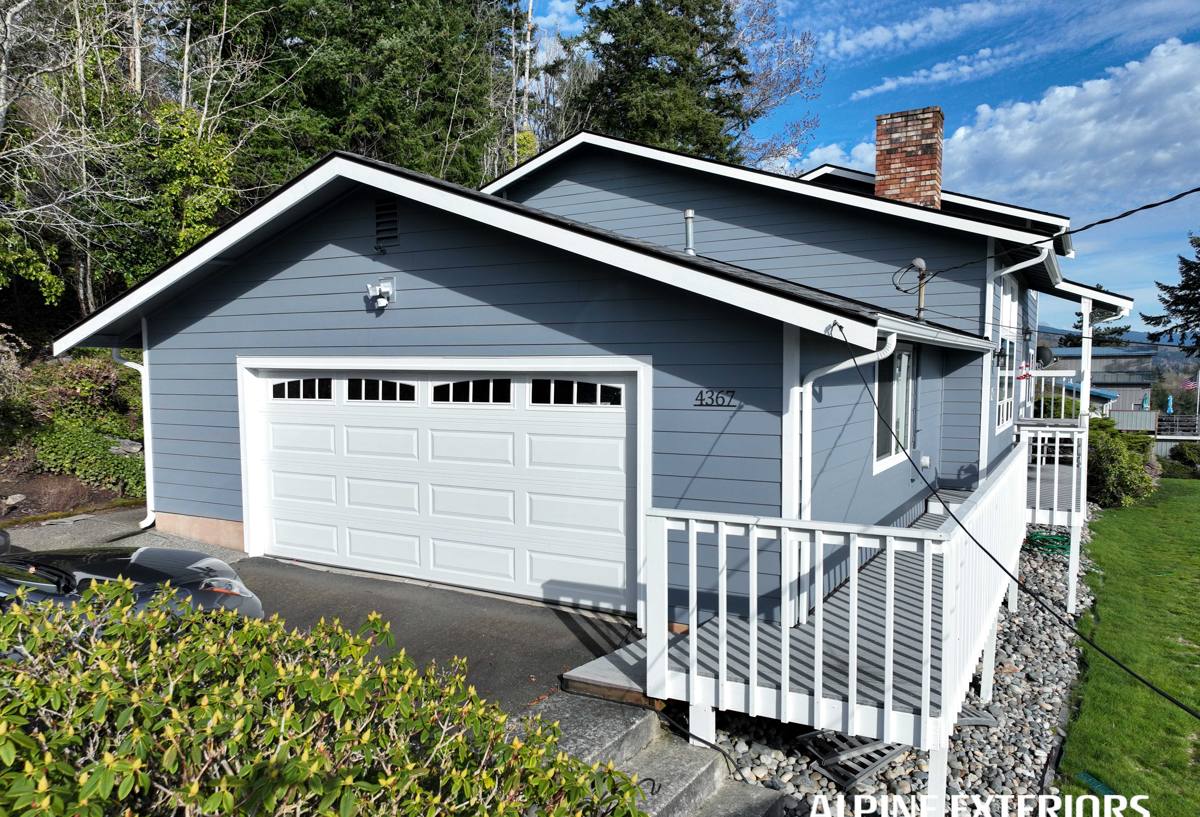
Why Coastal Whatcom County Is Hard on Decks
Salt Air and Metal Fasteners
Airborne salt from the bay accelerates corrosion on anything metal — nails, screws, joist hangers, structural screws, even some railing hardware. Standard galvanized fasteners that would last decades inland can start rusting within a few years this close to the water. Once a fastener corrodes, it loses holding strength long before it looks obviously bad, which is part of why so many older Custer decks develop hidden structural weakness before anyone notices a visible problem.
Driving Rain and Water Intrusion
Rain here doesn't just fall straight down — wind off the water pushes it sideways into ledger boards, under railing posts, and into any gap where flashing was skipped or done poorly. Over time this drives moisture into the house rim joist and deck framing, which is where we most often find rot when we tear an old deck off a Custer home.
Moss, Algae, and Deck Surfaces
Whatcom County's moss season runs long — realistically most of the fall through spring, and often into summer on shaded, north-facing decks. Moss and algae hold moisture against the decking surface, make boards slick and dangerous underfoot, and accelerate wear on both wood and composite products if they're never cleaned off. A deck design that ignores drainage and airflow underneath will fight moss every year of its life.
Signs Your Custer Deck Needs Full Replacement, Not Repair
- Soft, spongy, or bouncy sections in the decking or framing when you walk on them
- Visible rust streaks running down from screws, nails, or hardware
- Gaps or separation where the deck attaches to the house (the ledger board)
- Railing posts that wobble or have visibly rotted at the base
- Persistent black or green staining that pressure washing no longer removes
- A deck older than 15-20 years that has never had the substructure inspected
- Any sign of rot when you probe framing members with a screwdriver
If you're only seeing one or two surface-level issues on an otherwise sound structure, repair may be the honest answer. We'll tell you that directly rather than push a full replacement you don't need. But once the framing, ledger connection, or multiple structural members are compromised, patching individual boards is a short-term fix that usually costs more in the long run than doing the job once, correctly.
What a Correct Deck Replacement Involves
Full Removal and Inspection
We remove the old deck down to the house connection and inspect what's behind it — the rim joist, sheathing, and any framing that was hidden by the old structure. This is often the only point in a deck's life when anyone actually sees this area, and in coastal Whatcom County it's common to find moisture damage that wasn't visible from above.
Ledger Board and Flashing Detail
The ledger connection is where a deck attaches to the house, and it's the single most common failure point in this region because it's also the hardest spot to keep water out of. We flash it properly — meaning the flashing sheds water away from the house rather than trapping it against the rim joist — and use corrosion-resistant fasteners rated for the connection.
Framing and Structural Hardware
Given the salt exposure around Semiahmoo and Custer, we use joist hangers, structural screws, and post bases rated for coastal or wet-exposure conditions rather than standard interior-grade hardware. It costs a little more up front and it's not visible once the deck is finished, but it's the difference between framing that lasts and framing that quietly corrodes from the inside.
Drainage and Airflow Underneath
We grade and space the substructure so water and air can move underneath the deck instead of pooling there. This single detail does more to slow moss growth and wood decay than any surface treatment applied after the fact.
Decking Surface
Whether you choose wood or composite, board spacing, fastening method, and orientation all affect how well the surface sheds water and resists moss buildup. We set boards with drainage in mind, not just visual fit.
Choosing a Decking Material for This Climate
There's no single "best" decking material for every Custer home — it depends on budget, how much upkeep you're willing to do, and how much shade and moss pressure your specific lot gets. Here's how the common options actually compare in this climate, honestly:
| Material | Moss/Moisture Behavior | Maintenance | Typical Lifespan Here |
|---|---|---|---|
| Pressure-treated wood | Absorbs moisture; needs sealing to resist moss and rot | Annual cleaning, re-seal every 2-3 years | 10-15 years with upkeep |
| Cedar | Naturally rot-resistant but still needs sealing near the water | Regular cleaning and periodic sealing | 15-20 years with upkeep |
| Composite decking | Doesn't absorb water like wood, but moss/algae will still grow on the surface if it stays damp and shaded | Periodic washing; no sealing or staining | 20-25+ years, manufacturer-dependent |
| PVC decking | Fully moisture-resistant surface; still needs washing to keep moss off | Lowest ongoing maintenance | 25+ years, manufacturer-dependent |
We install both wood and composite/PVC systems and will walk through the real trade-offs for your home rather than steering you toward whichever is easiest for us to install. Composite and PVC cost more up front but reduce the sealing and staining cycle that wood demands in a climate this wet. Wood costs less initially but only holds up if the homeowner keeps up with maintenance — something worth being honest with yourself about before you choose.
Our Process for a Custer Deck Replacement
- On-site assessment. We look at the existing deck, the ledger connection, and the framing underneath (where accessible) to determine actual scope — repair versus full replacement.
- Written estimate. You get a clear scope of work and price before anything is scheduled, including material options.
- Removal and structural inspection. We tear off the old deck and inspect the house connection and framing for hidden rot or corrosion.
- Framing and flashing. New framing goes in with coastal-rated hardware, and the ledger is flashed to shed water away from the house.
- Decking and railing installation. Boards and railings are installed to your chosen material, with attention to drainage and airflow underneath.
- Final walkthrough. We go over the finished deck with you, including basic maintenance expectations for whichever material you chose.
Permits and Local Considerations
Deck replacement projects in Whatcom County often require a permit, particularly when the deck is attached to the house or elevated more than a modest height above grade — requirements can vary by parcel and by how close the deck sits to property lines or the water. We handle the permitting conversation as part of the project rather than leaving it for the homeowner to sort out, and we build to code for structural attachment, railing height, and guard spacing.
What to Ask Before Hiring Anyone for Deck Replacement
- Do you pull permits when required, and is that included in the estimate?
- What fastener and hardware grade do you use for coastal exposure?
- How do you flash the ledger board connection?
- Will you inspect the framing behind the old deck before quoting a final price?
- What's your warranty on labor versus the manufacturer's warranty on materials?
- Can you show me examples of decking materials in person, not just a brochure?
A contractor who's worked in Custer and the surrounding Semiahmoo area specifically will already have answers to these without hesitating, because they've dealt with the salt air, the rain angle, and the moss season on real jobs nearby — not just in general terms from a training manual.
Why Local Experience Matters for This Job
Deck replacement isn't a product you buy off a shelf — it's a set of decisions about hardware, flashing, drainage, and material that all have to be right for the specific conditions a house sits in. A crew that's replaced decks elsewhere in Washington but hasn't worked this close to the water may not default to coastal-rated hardware or think as carefully about ledger flashing, because inland jobs don't punish those shortcuts as quickly. In Custer, they show up in three to five years instead of fifteen. We work this stretch of Whatcom County regularly, and we build every deck replacement assuming the salt air, the rain, and the moss season are all going to test it — because here, they will.
If you're weighing repair versus replacement, or just want an honest look at what your current deck actually needs, we're happy to come take a look. Request a free, no-pressure estimate using the form below.