 Semiahmoo Exterior
 Building a Deck That Actually Holds Up in Point Roberts
Point Roberts sits in an unusual spot — a small peninsula tucked below the 49th parallel, surrounded by water on three sides and exposed to weather that's noticeably harder on outdoor structures than what you'd deal with further inland in Whatcom County. A deck built with generic, big-box specs might look fine for the first summer or two. Then the fasteners start bleeding rust, the boards under the railing stay damp for days after a storm, and by year three there's a green film on every north-facing stair tread. None of that is inevitable. It's a result of building to a spec that wasn't chosen for this location.
This page is specifically about deck building for homes in and around Point Roberts and the broader Semiahmoo area — what the local climate demands, what a correctly built deck actually involves below the surface, and why the details matter more here than they would in a drier, inland part of the state.
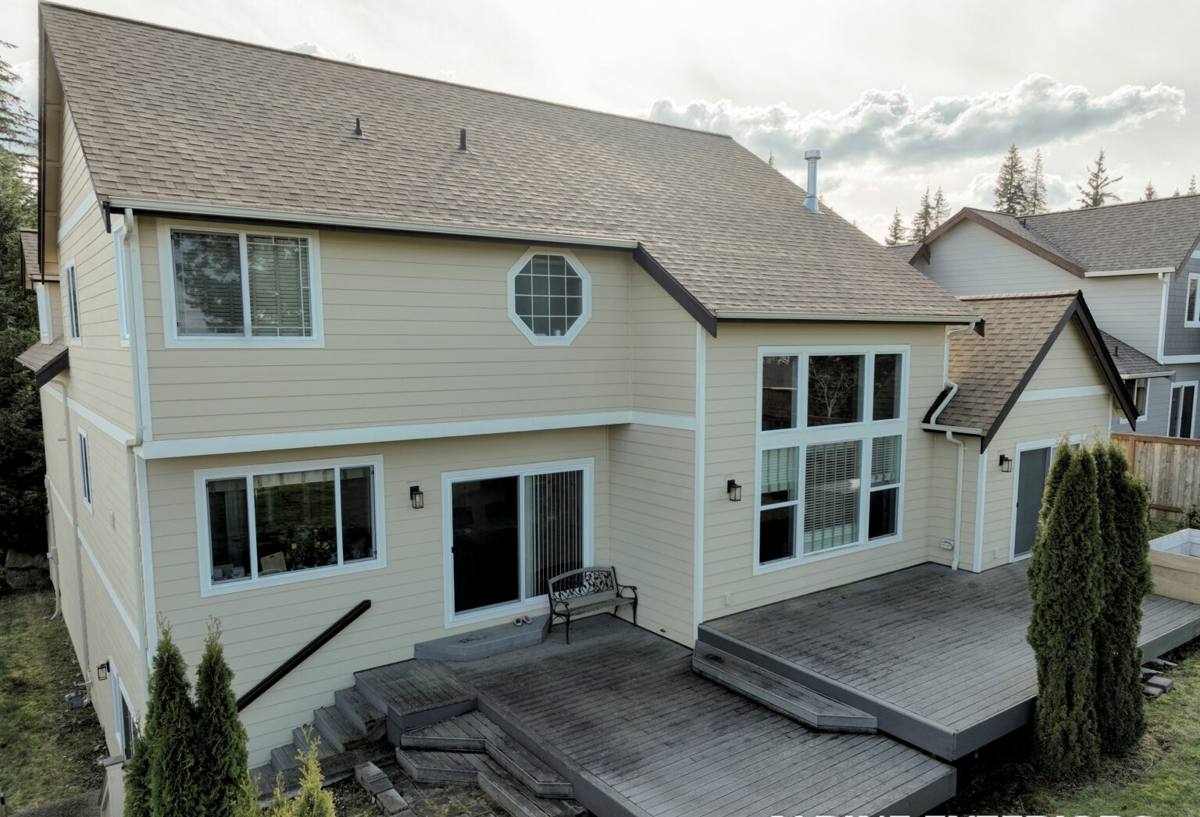
What Salt Air and Driving Rain Do to a Deck Over Time
Two climate factors drive almost every deck problem we see out here: airborne salt and sustained wind-driven rain. Neither one destroys a deck overnight. Both work slowly, which is exactly why they get overlooked until the damage is expensive to fix.
Fastener and Hardware Corrosion
Salt-laden air accelerates corrosion on any metal that isn't rated for a marine or coastal environment. Standard electro-galvanized screws, joist hangers, and structural connectors can start showing surface rust within a year or two this close to the water. Once a fastener is compromised, the connection it's holding — a ledger bolt, a post base, a hanger under a stair stringer — is weaker than it looks from above. The deck can appear solid while the hardware underneath is quietly failing.
Moisture Intrusion at Ledger Boards and Framing
Driving rain doesn't fall straight down here the way it might in a calmer inland location — wind pushes it sideways, up under rail caps, and into any gap where flashing was skipped or installed loosely. The ledger board, where the deck attaches to the house, is the single most common failure point we find on older decks. Without proper flashing and a drainage gap behind the board, water gets trapped between the ledger and the house sheathing and rot sets in from the inside out, long before it's visible from the deck surface.
Moss, Algae, and the Long Wet Season
Whatcom County's extended wet, low-sun season gives moss and algae months to establish themselves on any horizontal wood surface that doesn't dry out quickly. On a deck, that shows up first in shaded corners, under furniture, and on north- or east-facing sections that don't get direct sun. Beyond the cosmetic issue, a mossy deck surface is a genuine slip hazard, and moss holds moisture against the wood, which shortens the life of the boards underneath it.
Design choices matter as much as material choice here. Board spacing, surface texture, and how much sun a section of deck actually gets over the course of a day all affect how fast moss takes hold. A deck designed without accounting for shade patterns and airflow will grow moss faster than one built with drainage and ventilation in mind from the start — regardless of which decking product is installed.
| Decking Material | Moss/Algae Resistance | Typical Maintenance | Notes for This Climate |
|---|---|---|---|
| Pressure-treated wood | Low — needs regular cleaning | Annual wash, periodic sealing | Budget-friendly; requires the most upkeep in a wet, salt-air setting |
| Cedar | Moderate | Cleaning + refinishing every few years | Naturally rot-resistant, but finish needs renewal to keep that resistance active |
| Composite | Moderate to good, varies by brand | Occasional washing | Won't rot, but lower-end composites can still stain and grow surface algae in shade |
| PVC/capped polymer | Good | Occasional washing | Fully sheds moisture; higher upfront cost, least long-term maintenance |
Choosing the Right Decking Material for a Salt-Air Property
There's no single "correct" decking material for every project — it depends on budget, how much maintenance the homeowner actually wants to do, and how exposed the specific site is to salt spray and wind. What we won't do is install a product in a way that ignores its known trade-offs. Composite and PVC boards, for example, still need proper ventilation underneath — trapping moisture against any decking material, including "low-maintenance" ones, shortens its life and can void the manufacturer's warranty. Wood, on the other hand, buys you a lower material cost in exchange for a maintenance schedule you have to actually keep up with, especially this close to the water.
Our job is to lay out the real trade-offs — cost, upkeep, appearance, and how each material behaves specifically in a coastal, high-rain environment — and let the homeowner make an informed call rather than defaulting to whatever's cheapest or trendiest.
Framing, Footings, and Drainage Done Right
The parts of a deck nobody sees are the parts that determine whether it lasts fifteen years or thirty. For this area, that means:
- Stainless steel or hot-dip galvanized (not just electro-galvanized) fasteners and structural hardware throughout, not only at the ledger
- Proper flashing and a drainage gap at the ledger board connection, sealed against wind-driven rain rather than just vertical rain
- Footings set to the required frost depth and sized for the actual soil conditions on site, not a generic assumption
- Post bases that keep wood posts off standing water and allow drainage away from the base
- Joist spacing and blocking that account for the decking material's actual span rating, not just what "looks close enough"
- Under-deck airflow so the framing and the underside of the decking can actually dry out between storms
Skipping any one of these doesn't usually cause an obvious problem right away. It shows up two, five, or ten years later as soft framing, a loose railing post, or a deck that "just feels different" underfoot — by which point the fix is a rebuild, not a repair.
Permits and Practical Access Considerations
Deck projects in Whatcom County typically require a building permit, and requirements can shift depending on deck height, size, and whether it's attached to the house. We handle that process as part of the job rather than leaving the homeowner to sort it out.
Point Roberts also has a practical wrinkle that doesn't come up on a typical mainland job: it's a U.S. exclave, reachable by land only through Canada. That affects how materials and crews get scheduled — border crossing times, customs on lumber and hardware deliveries, and coordinating a crew's day around that trip all have to be planned for up front. A contractor unfamiliar with the area can underestimate this and let it turn into delays mid-project. We plan around it from the start.
Our Deck-Building Process
Every project runs through the same sequence, adjusted for the specifics of the site:
- On-site assessment: we look at sun exposure, wind direction, drainage, existing structure (for replacements), and how close the site sits to salt spray.
- Design and material walkthrough: honest comparison of decking and railing options against the homeowner's budget and maintenance appetite.
- Permitting: we pull the required Whatcom County permits and handle inspections.
- Demolition (if replacing an existing deck): including a check of the ledger area and framing underneath for hidden rot before we build over it.
- Framing: footings, posts, beams, and joists built with coastal-rated hardware and proper drainage detailing.
- Decking, railing, and stairs: installed to the manufacturer's spec, including ventilation gaps and fastening patterns.
- Final walkthrough: we go over the maintenance schedule specific to whatever material was installed.
Maintaining a Deck in This Climate
A well-built deck still needs seasonal attention here — the climate doesn't let anyone skip maintenance entirely. What that looks like varies by material, but the general checklist is similar across the board:
- Clear leaves and debris from between boards and off ledger flashing before the wet season sets in
- Wash the deck surface at least once a year to knock back moss and algae before it establishes
- Check railing posts and stair connections annually for movement — early looseness is cheap to fix, late looseness isn't
- Inspect visible fasteners for rust and replace with coastal-rated hardware if corrosion appears
- Re-seal or refinish wood decking on the schedule the product actually requires, not "whenever it looks bad"
- Keep gutters and downspouts near the deck clear so runoff isn't dumping extra water onto or under the structure
Why It Matters to Hire a Crew That Already Works in Point Roberts
A deck built to a generic inland spec will eventually tell on itself here — through rusted hardware, a soft ledger board, or a stair tread nobody wants to walk on in December. A crew that already builds in Point Roberts and along the Semiahmoo shoreline knows which fastener grade to spec by default, how to detail a ledger connection against wind-driven rain, and how to design for shade and drainage so moss doesn't win by year two. That's the difference between a deck that needs to be rebuilt in a decade and one that just needs normal upkeep for thirty years.
If you're planning a new deck or need to replace one that's showing its age, we're happy to come take a look and give you a straightforward, no-pressure estimate. There's a form below — reach out and we'll get a time on the calendar.