 Semiahmoo Exterior
 Building Decks for a Harbor Environment
Blaine Harbor sits close enough to the water that every deck built here is fighting a different battle than one built twenty miles inland. Salt-laden air moves off the harbor and settles on exposed wood, metal fasteners, and railing hardware. Add Whatcom County's long wet season and the shade that many harbor-adjacent lots get from mature trees and hillside terrain, and you have a recipe for moss, slow-drying boards, and corrosion that shows up faster than most homeowners expect. A deck that would hold up fine in a drier, sunnier part of the state can start showing problems within a few seasons here if it wasn't built with this specific environment in mind.
This page is about one job in one place: building decks for homes in and around Blaine Harbor. Not a general overview of decking — the specific decisions that matter when your deck sits a short walk from saltwater and under a marine sky for most of the year.
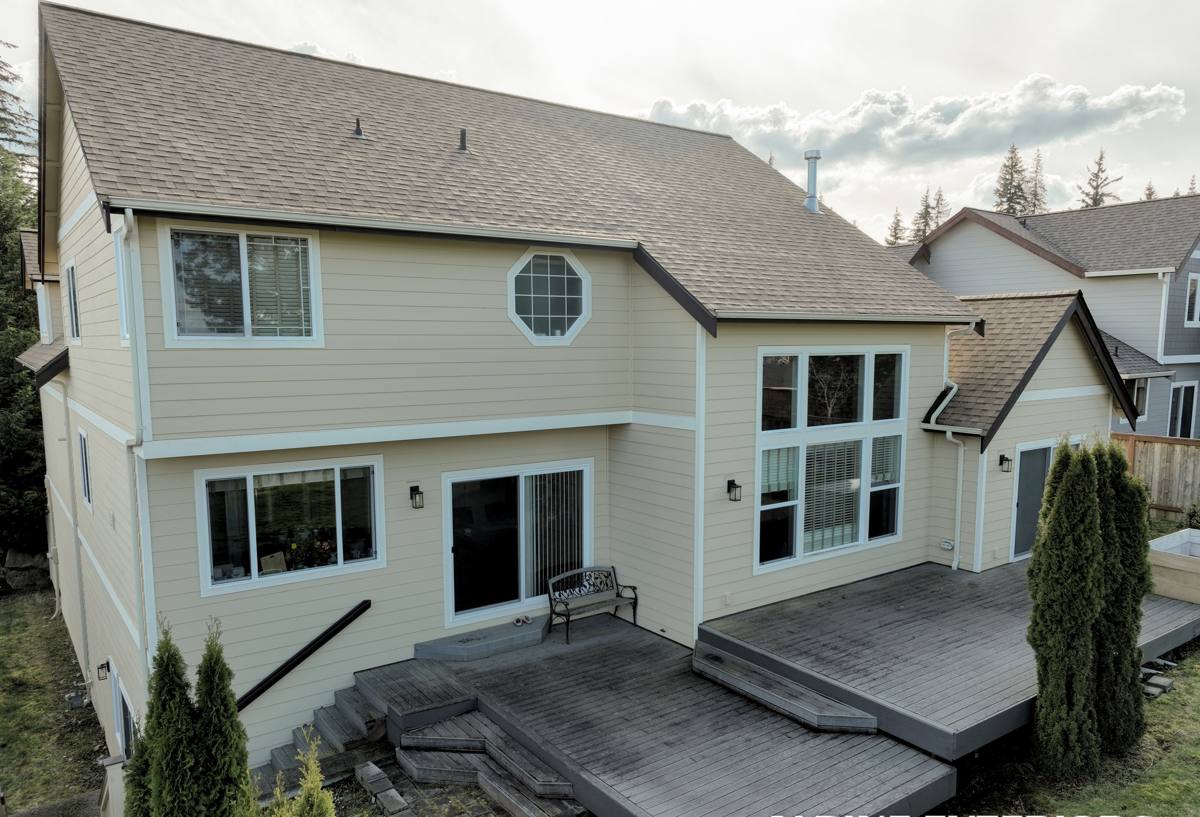
What Salt Air, Rain, and Moss Actually Do to a Deck
Salt air and metal
Salt in the air accelerates corrosion on any exposed metal — screws, joist hangers, post bases, railing brackets. Standard coated fasteners that are rated fine for general residential use can start rusting at the head within a year or two this close to the water. Once a fastener starts to corrode, it weakens at exactly the point holding your deck boards or structural framing together, and the staining it leaves behind is hard to reverse.
Driving rain and moisture retention
Whatcom County doesn't just get rain — it gets sustained, wind-driven rain that finds its way into joints, under railing posts, and behind ledger boards if those areas weren't properly flashed and sealed during construction. Wood that stays damp for extended stretches is what leads to rot, and a deck built without attention to drainage and airflow underneath will stay damp far longer than one built with those details in mind.
Moss and the long shoulder seasons
Moss needs shade and moisture to establish, and much of the year here provides both. Once moss takes hold on decking boards, it holds moisture against the wood surface and creates a genuinely slippery walking surface — a real fall hazard on stairs and ramps, not just a cosmetic issue. Deck surfaces with poor drainage or that stay shaded most of the day are the first to develop it.
Choosing the Right Decking Material for Blaine Harbor
There's no single "best" decking material for every home — it depends on your budget, how much upkeep you want to do, and how close your lot is to open water and prevailing wind. Here's how the common options actually perform in this specific environment.
| Material | Salt air performance | Moss/moisture behavior | Maintenance |
|---|---|---|---|
| Pressure-treated fir/hem | Fair — needs sealed fasteners and regular sealing | Prone to moss if not cleaned; absorbs moisture readily | Annual cleaning, re-sealing every 2-3 years |
| Cedar | Good — naturally rot-resistant, but still needs finish maintenance | Better natural resistance, still needs periodic cleaning | Refinish every 2-4 years, moderate |
| Composite decking | Very good — doesn't absorb moisture or corrode | Can still grow surface moss/algae if shaded; cleans off easily | Low — occasional washing |
| PVC decking | Excellent — fully moisture-sealed material | Same as composite; smooth surfaces resist buildup | Lowest — rinse as needed |
For homes with more direct exposure to harbor wind and spray, we generally steer clients toward composite or PVC decking and stainless or heavily coated marine-grade hardware, simply because the maintenance burden of natural wood in that exposure is significant. For more sheltered lots further from the water, a well-built and properly maintained cedar or treated deck is still a solid, more budget-friendly choice. We'll walk your specific lot with you and give you an honest read on which category makes sense before you commit to a material.
Framing and Substructure: Where Most Deck Failures Actually Start
The decking boards are what you see, but the framing underneath is what determines whether your deck lasts fifteen years or thirty. This is also where corner-cutting is easiest to hide — and hardest to catch later without tearing into the structure.
Ledger board flashing
Where the deck attaches to your house, proper flashing is what keeps driving rain from working its way behind the ledger board and into your home's wall assembly. This is one of the most common failure points we see on older decks in wet coastal climates, and it's invisible until the damage is already spreading.
Joist protection
Joist tape or a comparable moisture barrier on top of each joist keeps water from pooling in the screw holes where deck boards attach — a small detail that meaningfully extends the life of the framing underneath.
Post bases and footings
Posts that sit directly on concrete or in standing water are the fastest path to rot at the base of your structure. Elevated post bases that keep wood off wet surfaces, paired with corrosion-resistant hardware, matter more here than in a drier climate.
Fasteners and Hardware: The Detail Homeowners Never See
This is the single most overlooked factor in coastal deck longevity. A deck can look perfect and still be quietly failing if the fasteners holding it together aren't rated for the environment. In salt-air exposure, we specify stainless steel or heavy-duty coated fasteners rated for coastal/marine use throughout — joist hangers, structural screws, railing brackets, and post connectors alike. It costs more up front than standard galvanized hardware, but replacing corroded structural fasteners years down the road means partially disassembling the deck. It's far cheaper to get this right the first time.
Railings, Stairs, and Slip Safety
Railings take direct weather exposure and get handled constantly, which makes them a priority for both material choice and hardware. Stairs deserve particular attention in this climate — they're the part of a deck most likely to develop moss in shaded corners, and the part where a slippery surface has the most consequence. Options like grooved or textured composite boards, or a simple maintenance routine for wood treads, both help. We'll talk through what fits your household and your stairway's exposure to sun and shade.
Our Build Process
Every Blaine Harbor deck we build follows the same core process, adjusted for your lot's specific exposure and layout:
- On-site assessment of sun/shade exposure, prevailing wind direction, and proximity to water
- Material recommendation based on your budget, maintenance preference, and that exposure
- Proper permitting and structural design sized to your local building requirements
- Ledger flashing and moisture barrier installation at every wall attachment point
- Corrosion-resistant fastener and hardware selection throughout, not just at visible points
- Elevated, properly drained post bases and footings
- Final walkthrough covering how to maintain your specific decking material through the wet season
We don't shortcut the framing stage to save time, even though it's the part that's invisible once the decking goes down. It's the part that determines whether you're calling us back in five years for repairs.
Maintenance Realities for This Climate
No deck material here is truly maintenance-free, whatever the marketing on some composite products might imply. What differs is how much and how often:
- Wood decks need annual cleaning and periodic sealing to keep moisture out and slow moss growth
- Composite and PVC decks need occasional washing to clear surface algae/moss, especially in shaded areas
- Metal hardware — even good hardware — benefits from an annual visual check for early corrosion signs
- Gutters and downspouts near the deck should be checked so runoff isn't draining directly onto or under the structure
We'll give you a realistic maintenance schedule for whatever material you choose, not a sales pitch that undersells the upkeep.
Why a Crew That Already Works Blaine Harbor Matters
Deck-building fundamentals don't change from town to town, but the judgment calls do. Knowing which fastener grade actually holds up a few blocks from the harbor versus further inland, which material choices are worth the extra cost here versus overkill, and how local shade and drainage patterns tend to create moss problems on specific lots — that comes from having built and maintained decks in this exact area, not from a general contracting background applied to a new zip code. We serve Semiahmoo and the surrounding Whatcom County communities, and Blaine Harbor's mix of salt exposure, rain, and seasonal shade is a environment we build for regularly, not something we're guessing at.
If you're planning a new deck or replacing one that's showing its age, we're happy to come take a look and give you a straightforward, no-pressure estimate. There's a form below — tell us a bit about your project and we'll get back to you.