 Semiahmoo Exterior
 Building Decks for Cherry Point's Coastal Climate
Cherry Point sits along the water in Whatcom County, close enough to Semiahmoo Bay and the Strait of Georgia that salt-laden air is a daily fact of life for anything built outdoors. Add in the long, wet Pacific Northwest winters and the shade cover common on many Cherry Point lots, and you have three forces working against an ordinary deck at once: salt corrosion, standing moisture, and moss. A deck built to a generic national spec — the kind you'd see in a big-box how-to guide — will show problems here years before it would somewhere drier or further inland. A deck built for this specific coastline holds up.
This page covers what a custom deck actually needs to survive Cherry Point conditions, what our process looks like from first call to final walkthrough, and why local building experience matters more here than almost anywhere else in the county.
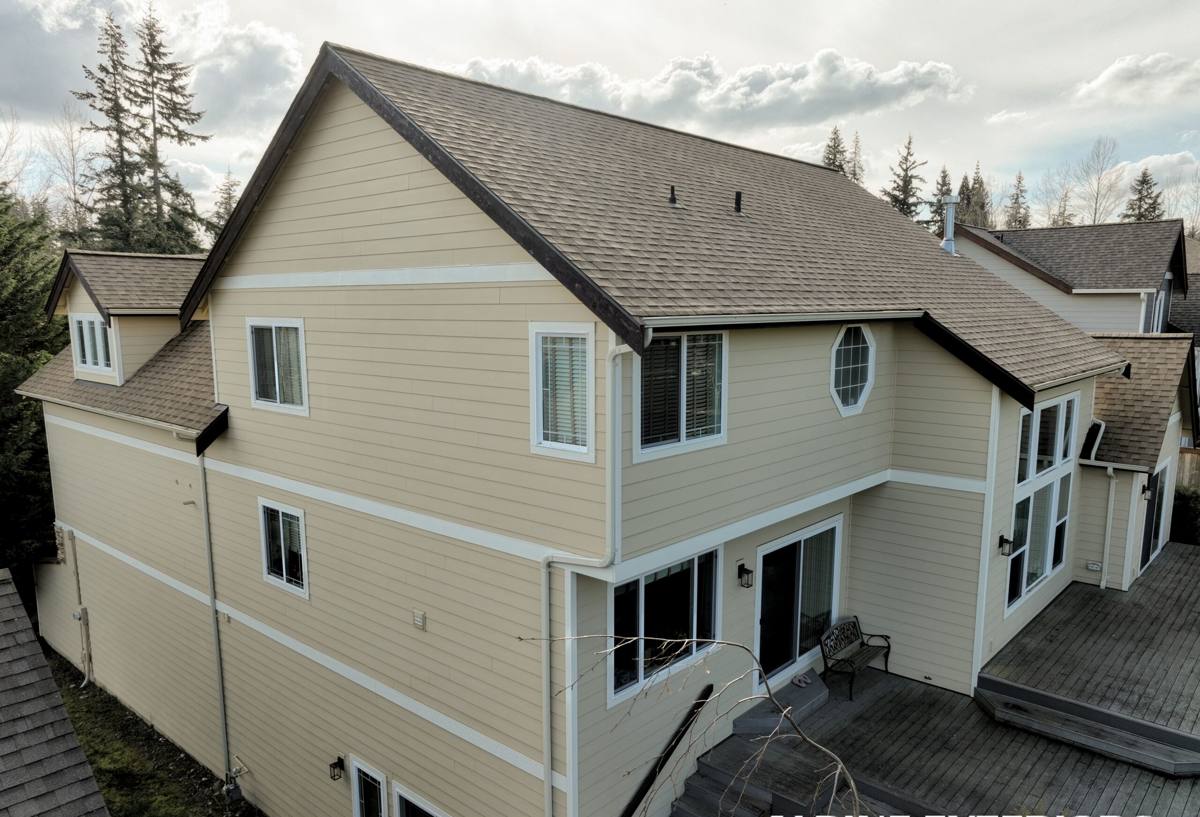
What Salt Air, Rain, and Moss Actually Do to a Deck
Each of these three factors attacks a deck differently, and a deck that only accounts for one or two of them will still fail.
Salt Air
Airborne salt accelerates corrosion on any exposed metal — fasteners, brackets, hinges, and railing hardware. Standard zinc-coated deck screws that would last decades inland can start rusting and staining the decking around them within a few seasons this close to the water. Once a fastener corrodes, it loses holding strength long before the wood or composite around it shows any obvious sign of trouble.
Driving Rain
Wind-driven rain doesn't just fall straight down — it gets pushed sideways into ledger connections, under railing posts, and into any gap where two deck components meet. Over time, water that gets trapped rather than shed causes rot in framing, delamination in lower-grade composite boards, and softening around post bases. Drainage and flashing details that would be optional in a drier climate are not optional here.
Moss
Whatcom County's long moss season is driven by shade, moisture, and cool temperatures that stick around for months at a time. Moss holds water against the decking surface, keeps boards from drying out between rain events, and makes a deck surface slick and dangerous underfoot. Left unaddressed, moss growth also accelerates the wood decay or surface degradation happening underneath it.
Choosing the Right Decking Material for This Climate
There's no single "best" decking material — the right choice depends on how much sun and shade your lot gets, your maintenance tolerance, and your budget. Here's how the common options actually perform under Cherry Point conditions specifically.
| Material | Salt Air / Corrosion Resistance | Moss & Moisture Resistance | Maintenance Needed | Typical Lifespan |
|---|---|---|---|---|
| Pressure-treated pine | Good with stainless or coated fasteners | Needs regular cleaning and sealing to resist moss and rot | Annual cleaning, re-sealing every 2-3 years | 15-20 years with upkeep |
| Western red cedar | Naturally decent, hardware still matters | Naturally rot-resistant but still needs cleaning in shaded areas | Cleaning and oil/stain every 2-3 years | 20-25 years with upkeep |
| Capped composite | Excellent — minimal fastener exposure with hidden clip systems | Resists moss growth on the cap layer; still needs periodic washing | Occasional washing, no sealing or staining | 25-30+ years |
| Tropical hardwood (e.g. ipe) | Very good, dense and naturally resistant | Good, but can still grow moss in deep shade without cleaning | Periodic oiling to maintain color, otherwise low | 25-40 years |
For heavily shaded Cherry Point lots close to the water, we most often steer homeowners toward capped composite or a well-detailed cedar build, simply because both minimize the exposed, corrosion-prone hardware and moisture traps that cause the most trouble here. Pressure-treated lumber is still a sound, budget-conscious choice — it just demands more consistent upkeep to keep moss and moisture from getting ahead of you.
Framing and Fasteners: The Part You Don't See
The decking surface gets all the attention, but the framing underneath and the fasteners holding it together are what actually determine whether a deck lasts. In a salt-air environment, this is where we spend extra care that a generic build wouldn't.
- Stainless steel or marine-grade coated fasteners at any connection exposed to weather, not just standard exterior-rated screws
- Ledger board flashing that directs water away from the house rim joist rather than letting it pool behind the deck
- Joist tape or a moisture barrier on top of framing members to slow water absorption into end grain and fastener holes
- Post bases set above grade and away from standing water, with proper drainage beneath
- Gapping between boards sized correctly so the deck sheds water and dries instead of trapping it
None of this is visible once the deck is finished, which is exactly why it's the part most likely to get shortcut on a rushed or low-bid job. It's also the part that determines whether you're dealing with a soft, rotting frame in twelve years or a deck that just needs a cosmetic refresh.
Design Considerations for Cherry Point Properties
Beyond materials and framing, a few design choices make a real difference for how a deck performs and how much upkeep it demands over time.
Sun, Shade, and Airflow
Lots with heavy tree cover — common around Cherry Point — trap moisture and encourage moss growth on any deck surface that doesn't get airflow. Where possible, we look at railing style, deck height, and orientation to encourage some natural drying between rain events rather than fighting the shade with maintenance alone.
Wind and Water Exposure
Waterfront and near-waterfront lots take more direct wind-driven rain than sheltered inland properties. Railing hardware, post connections, and any built-in features like benches or planters need weather detailing appropriate to that exposure, not a standard inland spec.
Views and Layout
Many Cherry Point homeowners are building a deck specifically to take advantage of water views. We design the layout — stair placement, railing style (including cable or glass options that preserve sightlines), and multi-level configurations — around how you'll actually use the space, not just a rectangle attached to the back door.
Our Process, Start to Finish
- Free on-site estimate — we walk the property, look at sun/shade exposure, drainage, and existing structure, and talk through what you actually want from the space.
- Design and material selection — we lay out the deck footprint, railing style, and material options with honest pricing and trade-off information, not just a single quote.
- Permitting — we handle the Whatcom County or applicable permit process for you, including any setback or waterfront review that applies to your property.
- Framing and structural work — this is where the corrosion-resistant hardware, flashing, and drainage detailing described above get built in, not added as an afterthought.
- Decking, railing, and finish work — surface installation, railing, stairs, and any built-ins are completed and inspected.
- Final walkthrough — we go over the finished deck with you and explain what maintenance it actually needs going forward.
Maintenance: What Actually Keeps a Cherry Point Deck Looking Good
Every deck material needs some upkeep in this climate — the differences are in how much and how often. Here's a practical checklist for keeping a Cherry Point deck in good shape year-round.
- Sweep debris and standing leaves off the deck regularly, especially in fall — trapped organic matter is what feeds moss
- Rinse salt residue off the surface and railings a few times a year if you're close to the water
- Check fastener heads and hardware annually for early rust staining, and address it before it spreads
- Clean shaded or moss-prone areas with an appropriate deck cleaner before moss gets established, not after
- Re-seal or re-stain wood decking on schedule — don't wait until it visibly needs it, since UV and moisture damage starts before it's visible
- Confirm drainage paths under and around the deck stay clear so water isn't pooling against posts or framing
Permits and Local Considerations
Whatcom County permitting requirements and any applicable shoreline or setback rules depend on your specific lot, especially for properties near the water. Requirements can also differ for decks attached to the house versus freestanding structures, and for decks above a certain height off grade. We handle this process as part of the build so you're not left navigating it alone, and we'll flag early in the estimate if your property has any conditions that affect design or approval.
Why Hire a Crew That Already Works in Cherry Point
A contractor who mostly builds decks inland, in drier conditions, will often use specs that are perfectly fine there and inadequate here. The difference shows up years later — in rusted fasteners, soft framing around a ledger board, or a deck surface that's slick with moss every winter. Working regularly in Whatcom County's coastal communities means we're already accounting for salt exposure, drainage, and moss pressure in the default build, not treating them as upgrades. It also means we know the local permitting process and can speak plainly about what a given property's exposure actually calls for, rather than applying a one-size-fits-all approach.
If you're planning a new deck or replacing one that hasn't held up to Cherry Point's climate, we're happy to take a look and give you a straightforward, no-pressure estimate — just fill out the form below.