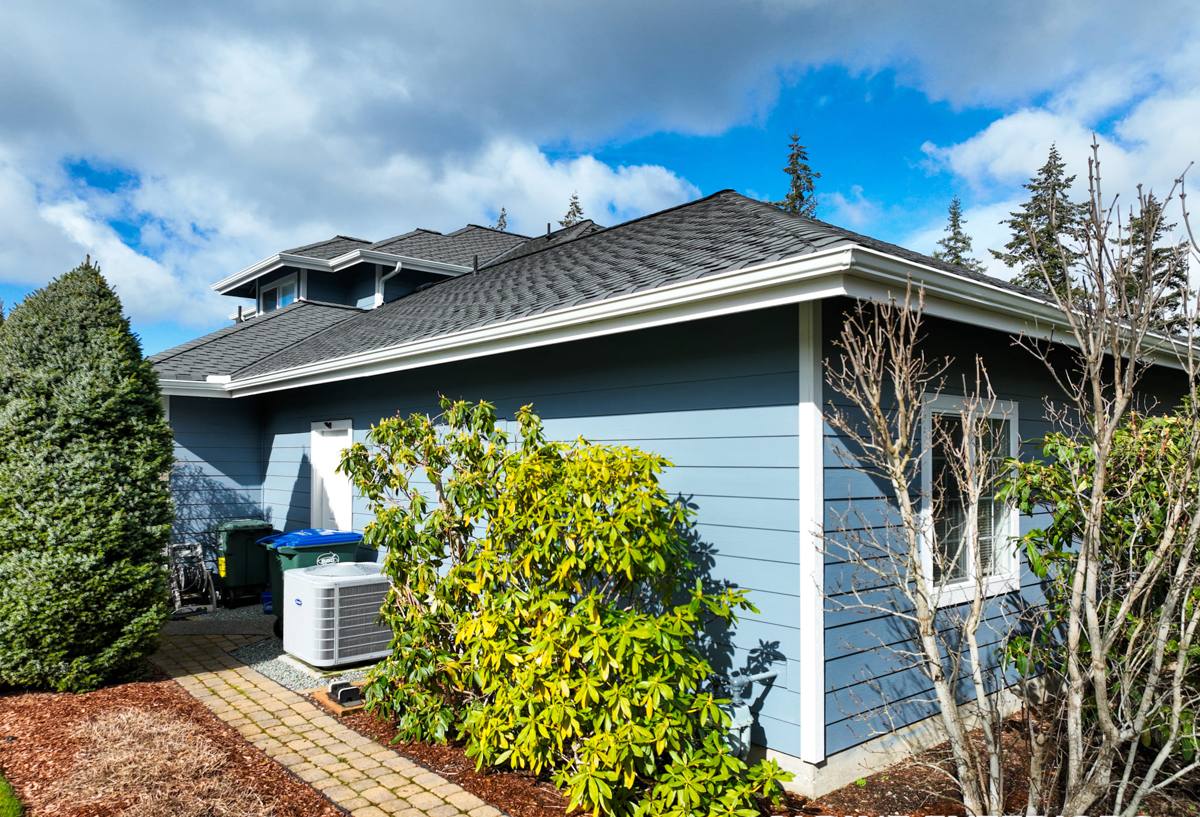
 Semiahmoo Exterior
 Why Custer Roofs Wear Differently
Custer sits inland from Semiahmoo Bay, but it doesn't take a waterfront lot to feel the effects of coastal weather. Salt-laden air moves off the water and inland with the prevailing winds, and it settles on every exposed surface of a home — including the roof. Combine that with the driving rain that Whatcom County sees for a good stretch of the year, plus long stretches of shade and dampness that let moss take hold, and you get a roofing environment that's genuinely tougher on materials than what you'd find in a drier inland climate.
None of this means Custer homes need exotic materials or gimmicks. It means the fundamentals — proper flashing, real ventilation, correct underlayment, and fasteners that won't corrode — matter more here than they would somewhere dry and mild. A roof replacement done to a generic standard, without accounting for salt exposure and near-constant moisture, tends to show problems years before it should.
Signs a Custer Roof Needs Replacing, Not Just Repair
Homeowners often call us for a repair and learn the roof is past the point where patching makes sense. A few honest signs to look for before you decide which route to take:
From the ground
- Shingles that are cupping, curling at the edges, or missing granules in patches
- Dark streaking or thick moss growth across large sections, especially on north-facing slopes
- Sagging ridgelines or valleys that don't look straight
- Rust staining or visible corrosion around flashing, vents, or metal valleys
From inside the attic
- Daylight visible through the roof deck
- Damp insulation, water stains on rafters, or a musty smell
- Soft or spongy spots when you walk the roof or press on the deck
If a roof is showing two or three of these signs across multiple areas rather than one isolated spot, repair usually becomes a short-term fix that delays a bigger bill rather than avoiding it. We'll always tell you honestly which category your roof falls into — we don't sell replacements to homeowners who just need a repair, and we won't talk you into a repair that's going to fail again in a year.
What a Correct Roof Replacement Involves
A roof replacement is more than stripping old shingles and nailing down new ones. In a climate like ours, the layers underneath the shingles do as much work as the shingles themselves.
Tear-off and deck inspection
We remove the old roofing down to the deck rather than layering over it. This lets us actually see the plywood or sheathing underneath — rot, soft spots, and old water damage hide under existing shingles and only show up once they're gone. Any damaged decking gets replaced before anything new goes down; installing new roofing over a compromised deck just guarantees an early failure.
Underlayment and ice-and-water protection
Given how much driving rain the area gets, we pay close attention to underlayment quality and placement, with extra protection at eaves, valleys, and roof penetrations where wind-driven rain is most likely to find a way in. This is one of the areas where cutting corners doesn't show up right away — it shows up two or three winters later as a leak that's hard to trace.
Flashing and fasteners
Salt air accelerates corrosion on standard fasteners and flashing over time. We use corrosion-resistant materials in these applications so the roof isn't fighting rust from day one. Flashing around chimneys, skylights, and wall intersections gets rebuilt correctly rather than caulked over — caulk is a maintenance item, not a flashing detail.
Ventilation
Proper intake and exhaust ventilation keeps the attic dry and temperature-balanced, which does two things: it protects the roof deck from the inside, and it reduces the damp, cool conditions that moss and algae need to establish themselves in the first place. A lot of older Custer homes were built with minimal or blocked ventilation, and correcting that during a replacement pays off for the life of the roof.
Roofing Material Options for Whatcom County Homes
There's no single "right" material for every home — it depends on your roof's exposure, your budget, and how much upkeep you want to take on. Here's how the common options stack up for a home in this climate:
| Material | Moss/Moisture Resistance | Salt Air Durability | Typical Lifespan | Maintenance |
|---|---|---|---|---|
| Architectural asphalt shingles | Good, with proper ventilation and periodic cleaning | Good when fasteners and flashing are corrosion-resistant | 25–30 years | Low to moderate |
| Standing seam metal | Excellent — sheds moss and moisture readily | Very good with a quality coated finish | 40–50+ years | Low |
| 3-tab asphalt shingles | Fair — more prone to moss in shaded areas | Fair | 15–20 years | Moderate |
| Wood shake/shingle | Poor without diligent upkeep | Requires regular treatment near salt air | Varies widely with maintenance | High |
Most homeowners in Custer land on architectural asphalt shingles for the balance of cost, appearance, and durability, with standing seam metal as the upgrade choice for homeowners who want to minimize long-term maintenance and don't mind the higher upfront cost. We'll walk you through the honest trade-offs for your specific roof rather than pushing whatever's easiest for us to install.
Our Roof Replacement Process
Homeowners want to know what's actually going to happen to their house, so here's the sequence we follow on a typical replacement:
- On-site inspection and estimate — we walk the roof and attic, note problem areas, and give you a clear written scope, not a vague ballpark.
- Material selection — we go over the options above based on your roof's exposure and your budget, with no pressure toward the most expensive choice.
- Scheduling around the weather — given how much rain this area gets, we plan tear-off in stages so your home isn't left exposed if conditions turn.
- Tear-off and deck repair — old roofing removed, deck inspected, any damaged sheathing replaced.
- Underlayment, flashing, and ventilation installation — the parts you won't see but will matter most in ten years.
- New roofing installation — installed to manufacturer specifications so warranties stay intact.
- Cleanup and final walkthrough — magnetic sweep for stray fasteners, debris hauled off, and a walkthrough so you know exactly what was done.
Moss, Algae, and the Long Wet Season
Moss isn't just a cosmetic issue — left alone, it holds moisture against the roofing material and works its way under shingle edges, which shortens the life of the roof underneath it. A long moss season, shaded roof sections, and consistent moisture make this an ongoing issue for a lot of homes in the area, not a one-time problem you fix and forget.
During a replacement, we build in moss resistance rather than treating it as an afterthought:
- Zinc or copper strips installed near the ridge, which release trace amounts of metal ions that inhibit moss growth as rain washes over the roof
- Ventilation improvements that keep the roof deck and attic drier, reducing the damp conditions moss needs
- Shingle selection with algae-resistant granules for shaded or north-facing slopes
- Guidance on gutter maintenance, since clogged gutters hold water against the roof edge and accelerate moss and rot in that area
These steps won't make a roof moss-proof forever, but they meaningfully extend the time between cleanings and reduce the moisture damage moss can cause in the meantime.
Why Hiring a Crew That Already Works in Custer Matters
Roofing crews that mostly work drier, inland climates sometimes underbuild for what this area actually throws at a roof — lighter underlayment, standard fasteners instead of corrosion-resistant ones, or ventilation that's adequate on paper but not enough for how wet and shaded a lot of Whatcom County roofs are. A crew that regularly works in Custer and the surrounding Semiahmoo area already knows which details matter here: how far up the eaves the ice-and-water membrane needs to run, which roof orientations collect the most moss, and how local wind patterns off the water stress a roof's edges and flashing.
Local experience also means fewer surprises during permitting and inspection, since the requirements and typical construction of homes in this part of Whatcom County are already familiar territory rather than something a crew has to learn on your project.
Cost Factors for a Custer Roof Replacement
Every roof is different, so we don't quote blind numbers before seeing your home — but the factors that move the price are consistent. Understanding them helps you compare estimates and know what you're actually paying for:
- Roof size and pitch — larger and steeper roofs take more material and labor time
- Material choice — asphalt shingles, metal, and premium underlayment systems all carry different material costs
- Deck condition — hidden rot or soft decking discovered during tear-off adds material and labor to replace it correctly
- Number of penetrations — chimneys, skylights, and vents each require additional flashing work
- Roof complexity — valleys, dormers, and multiple roof planes take longer to flash and detail properly
- Access and site conditions — tree cover, tight lot lines, or difficult staging can affect labor time
- Ventilation upgrades — adding or correcting intake and exhaust ventilation where the existing setup is inadequate
A written estimate should break these out clearly so you know what you're paying for and why, rather than a single lump number you have to take on faith.
Get a Straightforward Roof Replacement Estimate
If your roof is showing its age, or you just want an honest read on how many years it has left, we're happy to take a look. The estimate is free, there's no pressure to move forward, and we'll tell you plainly whether you're looking at a replacement, a repair, or a few more years of watching it. Use the form below to get started.