 Semiahmoo Exterior
 Siding Replacement Built for California Creek's Conditions
Homes along California Creek and the surrounding Semiahmoo area sit in one of the more demanding microclimates in Whatcom County. You've got salt-laden air moving in off Semiahmoo Bay, long stretches of driving rain through fall and winter, and — because so many of these lots carry mature tree cover and creek-side shade — a moss and algae season that barely lets up. Siding here doesn't fail because a homeowner did anything wrong. It fails because most siding products simply weren't engineered for this combination of salt, moisture, and shade working on it year-round, every year, for decades.
This page is about one job, done right, in one area: full siding replacement for houses in and around California Creek. Not a repair, not a patch, not a general overview of siding options — a straight look at what this climate does to a home's exterior, what a correct replacement job actually involves, and why local experience matters as much as the material you choose.
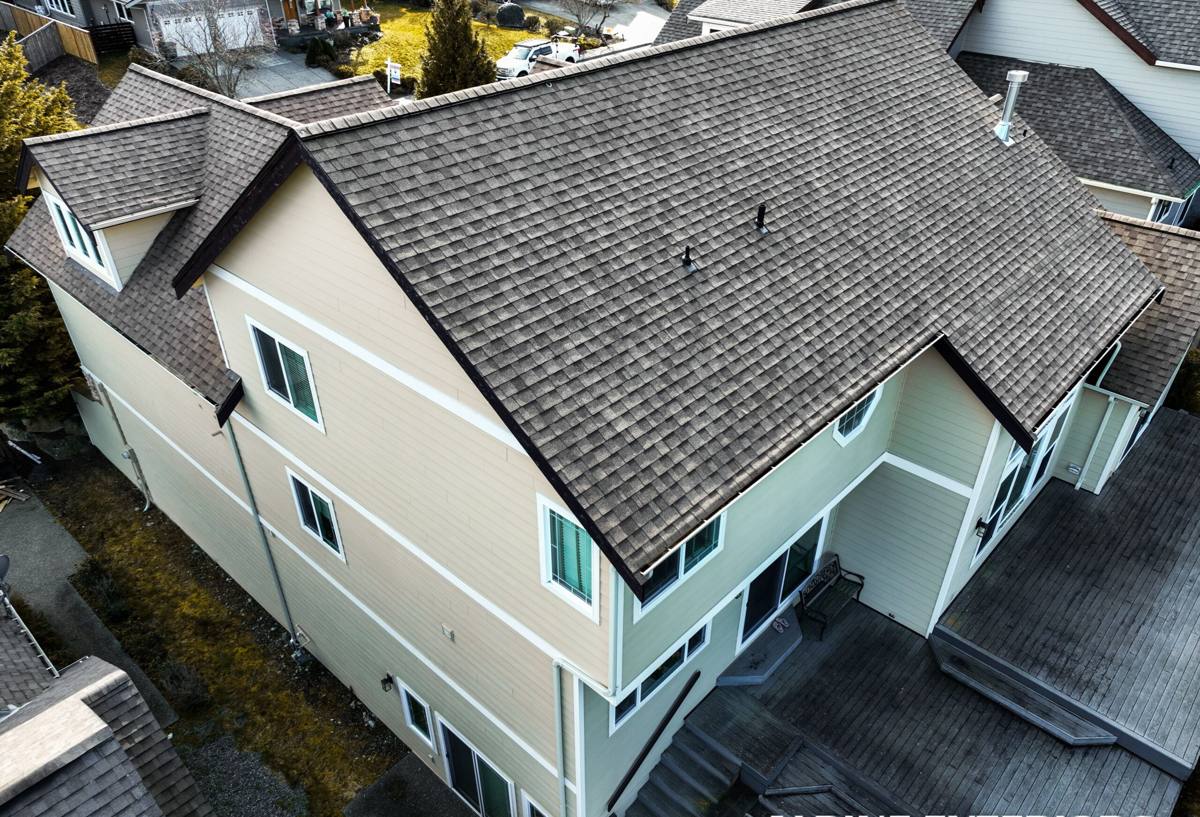
What Salt Air, Rain, and Moss Actually Do to Siding Over Time
Salt Air and Corrosion
Coastal proximity means airborne salt settles on every exterior surface, not just the ones facing the water. Over years, that salt accelerates corrosion on fasteners, flashing, and trim — especially on lower-grade materials or installations that used the wrong fastener spec to begin with. Siding that isn't dimensionally stable, or that relies on caulked seams to stay weathertight, tends to show this stress first: chalking, fastener bleed, and soft spots around trim.
Driving Rain and Water Intrusion
Whatcom County doesn't just get rain — it gets wind-driven rain that hits siding at an angle, working its way behind poorly lapped panels, undersized J-channel, and gaps where house wrap wasn't properly integrated with window and door flashing. Once water gets behind the siding plane, the type of siding on the outside almost stops mattering; what matters is whether the water-resistive barrier and flashing details underneath were done correctly. A lot of premature siding failure in this region traces back to what's hidden, not what's visible.
Moss, Algae, and Shaded Lots
Creek-side and tree-covered properties hold moisture longer than open lots. North-facing walls and anything shaded by conifers can stay damp for days after a storm, which is exactly the environment moss and algae need to take hold. On wood-based or vinyl products, that sustained dampness contributes to rot, warping, and coating breakdown. It's a slow process, which is part of the problem — by the time it's visibly obvious, the damage underneath is often further along than it looks.
Signs a California Creek Home Needs Replacement, Not Repair
Not every siding problem calls for a full tear-off. But in this climate, certain signs mean the assembly underneath has likely been compromised, and patching the surface won't fix it.
- Soft or spongy siding when pressed, especially near the bottom courses or around windows
- Persistent moss or algae staining that returns within a season of cleaning
- Visible gaps, buckling, or separation at panel seams and corner trim
- Paint or coating that's peeling or bubbling rather than just fading
- Interior signs — musty smell, staining, or soft drywall near exterior walls — that point to moisture behind the siding
- Fastener heads showing rust bleed or backing out of the substrate
- Siding that's more than 20-25 years old and was never rated for this level of coastal exposure
If you're seeing more than one of these at once, it's worth having a crew assess the wall assembly, not just the surface layer.
Why We Install Only James Hardie Fiber Cement
We don't install vinyl siding, LP SmartSide, Cemplank, Allura, or primed wood products like spruce or cedar lap. That's a deliberate standard, not a lack of options. In a climate like this one, the material choice has an outsized effect on how long a siding job actually lasts, and we'd rather stand behind one system we know works than offer a menu of products with very different long-term outcomes.
James Hardie fiber cement is non-combustible, which matters in a region where wildfire risk has become a real consideration for insurers and homeowners alike. It's dimensionally stable in a way wood-based and vinyl products aren't, so it doesn't expand, contract, and gap the way those materials can under repeated wet-dry cycles. The ColorPlus factory finish is baked on under controlled conditions rather than field-applied, which gives it far better resistance to fading, chalking, and moss adhesion than a site-painted surface. And Hardie's HZ5 product line is specifically engineered for climates with high moisture exposure — freeze-thaw cycling, driving rain, and humidity — which describes this part of Whatcom County well.
None of this means other products are junk. LP SmartSide and cedar can look good and perform reasonably in the right setting. But for a salt-air, high-rain, moss-prone area like California Creek, we've made the call that the maintenance burden and moisture risk of those alternatives isn't worth it on a project we're putting our name on. Hardie's transferable warranty and track record in coastal Pacific Northwest conditions are why it's the only system we put on homes here.
Hardie Product Lines We Use Locally
| Product | Best Use | Why It Fits This Area |
|---|---|---|
| HardiePlank Lap Siding | Full wall replacement | Standard workhorse; HZ5 formulation handles wet, coastal exposure |
| HardieShingle | Accent gables, dormers | Adds texture without introducing a second material system to maintain |
| HardieTrim | Corners, fascia, window trim | Matches the plank's moisture performance instead of pairing cement board with wood trim |
| HardiePanel | Vertical accents, porches | Useful on covered areas less exposed to direct wind-driven rain |
What a Correct Siding Replacement Job Actually Involves
The siding itself is maybe half the job. The other half is everything installed underneath and around it, and in a climate like this, that half determines whether the job lasts 10 years or 40.
Tear-Off and Sheathing Check
Full removal of the old siding, followed by an inspection of the sheathing underneath for rot, delamination, or existing moisture damage. On creek-adjacent or shaded lots, this step matters more than usual — it's common to find damage that wasn't visible from outside.
Water-Resistive Barrier and Flashing
A correctly lapped house wrap, integrated with window and door flashing so water sheds outward at every transition, not into the wall cavity. This is the single most common point of failure we find on older homes in wind-driven-rain areas — flashing that was installed but not properly sequenced with the barrier.
Fastening to Manufacturer Spec
Hardie siding has specific fastener spacing, type, and embedment requirements, and those requirements exist for a reason in coastal, high-moisture zones. Corrosion-resistant fasteners, correct penetration into framing, and proper blind- or face-nailing per the product line all affect how the assembly holds up to salt air over time.
Finish Details
Caulking only where Hardie's install guide calls for it (not as a substitute for correct flashing), proper clearance at grade and roof lines to keep siding out of standing water and splashback, and factory-finished ColorPlus panels wherever possible to avoid field-painted seams that are the first place moss and algae take hold.
Our Process for California Creek Projects
- On-site assessment — we look at sun exposure, tree cover, drainage, and the current wall assembly, not just the visible siding condition.
- Scope and product plan — which Hardie lines fit the home, where trim and flashing need attention, and an honest read on what's repair-worthy versus what needs full replacement.
- Written estimate — clear line items, no vague allowances.
- Tear-off and prep — removal, sheathing inspection, and any necessary repair before a single new panel goes up.
- Installation to spec — barrier, flashing, fastening, and trim, done in the sequence that actually keeps water out.
- Final walkthrough — checking finish quality and clearances before we call it done.
Cost Factors for Siding Replacement Near California Creek
Every home is different, but a few factors consistently move the price on projects in this area more than they might elsewhere.
| Factor | Why It Affects Cost Here |
|---|---|
| Existing water damage | Shaded, moss-prone walls more often need sheathing repair once old siding is off |
| Wall complexity | Multiple gables, dormers, and trim transitions increase flashing and labor time |
| Access and site conditions | Sloped or tree-covered lots common near the creek can affect staging and scaffolding |
| Product mix | Combining lap siding with shingle accents or trim upgrades adds material cost but improves long-term performance |
| Trim and flashing detail | Getting this right costs more upfront than a bare-minimum install, and is the main driver of how long the job lasts |
We'd rather walk you through these factors on-site than throw out a number that doesn't reflect your home's actual condition.
Why a Crew That Already Works This Area Matters
Siding installation isn't just about following a manufacturer's manual — it's about applying that manual to the specific conditions a home faces. A crew that's already worked homes near Semiahmoo Bay and along California Creek has seen firsthand where wind-driven rain hits hardest, which lot types hold moisture longest, and how Whatcom County's permitting and inspection process works for exterior projects. That's not something you get from a crew that mostly works inland or in a different climate zone and treats every job the same way. Local experience shows up in small decisions — extra flashing at a vulnerable transition, a different fastener spacing on an exposed wall — that don't show up on an estimate line item but do show up in how the siding performs ten years later.
Get a Straightforward Estimate
If your home near California Creek is showing signs of siding wear, or you're planning ahead before the next wet season sets in, we're happy to take a look and give you an honest read on what it needs. The estimate is free, there's no pressure, and you'll get a straight answer about whether you're looking at a repair or a full replacement — use the form below to get started.