 Semiahmoo Exterior
 Siding Built for What California Creek Homes Actually Face
California Creek sits close enough to Semiahmoo Bay and the open water of Whatcom County that homes here take a different kind of weathering than houses further inland. Salt-laden air moves through year-round, wind-driven rain comes at siding sideways rather than straight down during winter storms, and the combination of moisture and shade in this part of Washington keeps moss and algae active for most of the year. None of that is unusual for the region, but it does mean siding installation here has to account for conditions that a generic install spec doesn't fully cover.
We install exclusively in this part of Whatcom County, and California Creek is one of the areas we work in regularly. That means we've seen firsthand what happens to siding that wasn't detailed correctly for salt exposure and sustained moisture — and what holds up when it's done right.
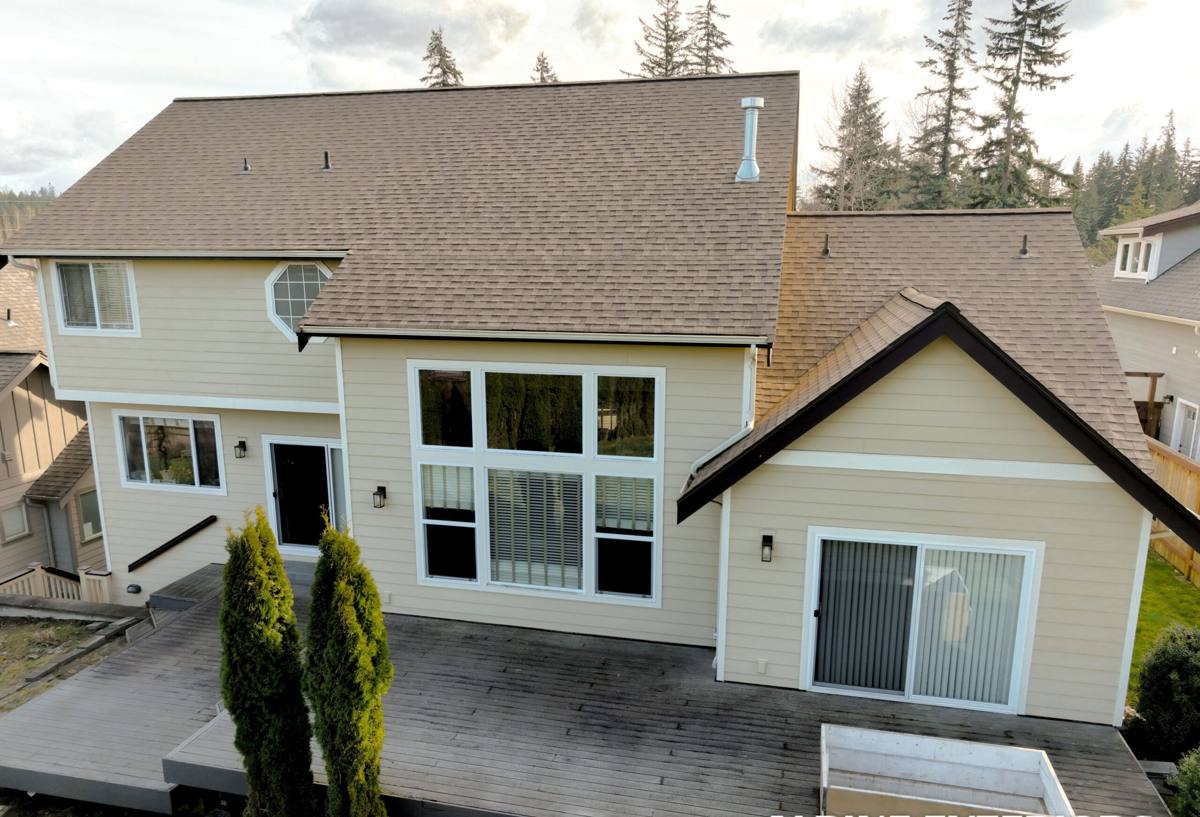
Why Salt Air, Rain, and Moss Change the Job
Salt Air
Airborne salt accelerates corrosion on exposed metal fasteners, flashing, and trim, and it can degrade cheaper coatings and caulks faster than inland exposure would. Siding materials and finishes that aren't engineered to resist that kind of exposure tend to show fading, chalking, or fastener staining earlier than the manufacturer's stated lifespan would suggest.
Driving Rain
Wind off the water pushes rain into seams, laps, and penetrations that would stay dry in a calmer climate. Siding installation in this environment depends less on the siding material itself and more on what's happening behind it — the water-resistive barrier, the flashing details, and whether there's a drainage path for water that does get past the cladding.
Moss and Algae
Shade, moisture, and mild temperatures give moss and algae a long growing season here. Siding with a factory-applied finish resists staining better than field-painted or unfinished material, and installation choices — like keeping the bottom course properly clear of grade and vegetation — make a real difference in how much moss pressure a wall actually sees.
What a Correct Siding Installation Involves
A siding job that's going to hold up in California Creek's climate isn't just about nailing panels to a wall. The parts nobody sees after the job is done are usually what determines whether the siding lasts fifteen years or fifty.
- A continuous, correctly lapped water-resistive barrier behind the siding — not just housewrap stapled up and left at that
- Properly integrated flashing at every window, door, and roofline intersection, so water is directed out and down rather than trapped
- A drainage plane or rainscreen gap where conditions call for it, giving incidental moisture a way to escape instead of sitting against the wall sheathing
- Correct fastener type, spacing, and depth for the specific siding product, matched to local wind exposure
- Manufacturer-specified clearances at grade, decks, patios, and roof lines to keep the bottom edge of the siding out of standing water and away from constant shade and moisture
- Sealant only where the manufacturer calls for it — over-caulking siding joints can trap moisture instead of shedding it
Skipping or rushing any one of these doesn't usually show up right away. It shows up two, five, or ten years later, as buckling, staining, soft spots at trim, or paint failure — problems that trace back to installation, not the siding material itself.
Why We Install James Hardie Fiber Cement Only
We standardized on James Hardie fiber cement siding and don't install vinyl, LP SmartSide, or other engineered wood products. That's a deliberate call, not a default. Fiber cement is non-combustible, dimensionally stable in the freeze-thaw and wet-dry cycling common to Whatcom County, and it holds paint and factory finish far longer than vinyl or wood-based sidings tend to in a marine climate.
Hardie's ColorPlus finish is baked on at the factory under controlled conditions, which gives it better fade and chip resistance than field-applied paint — a meaningful advantage where UV, salt air, and constant moisture all work against a finish at once. For this region, we typically spec Hardie's HZ5 product line, which is engineered specifically for climates with high moisture exposure and freeze-thaw cycling, rather than the HZ10 line built for hot, dry climates.
We back that up with Hardie's manufacturer warranty coverage, which is transferable and tied to installation done to their specification — another reason the details above aren't optional on our jobs.
How Hardie Compares to Alternatives We Don't Install
| Factor | James Hardie Fiber Cement | Vinyl Siding | Engineered Wood (LP-Style) |
|---|---|---|---|
| Combustibility | Non-combustible | Melts/deforms under heat | Combustible |
| Moisture behavior | Dimensionally stable, engineered for wet climates (HZ5) | Doesn't absorb water, but can warp and gap | Vulnerable to swelling if seals fail |
| Finish durability | Factory ColorPlus finish, long fade resistance | Color molded in, can fade/chalk over time | Factory-primed or coated, repaint needed sooner |
| Typical lifespan | 30+ years with correct install | 20-30 years, earlier warping in some climates | 15-25 years, shorter with moisture exposure |
| Maintenance | Occasional wash, repaint only if desired | Low, but limited repair options if damaged | Moderate — coating maintenance matters |
Every product on that list has legitimate uses somewhere. We simply don't think vinyl or engineered wood are the right long-term answer for homes exposed to the kind of salt air and driving rain that California Creek sees, and we'd rather install one product exceptionally well than offer several we don't fully stand behind.
Our Siding Installation Process
- On-site assessment. We look at existing siding condition, sheathing and framing underneath where accessible, drainage at grade, and any problem areas — deck ledgers, window returns, roof-to-wall intersections — that need special attention.
- Tear-off and sheathing check. Old siding comes off and we inspect the sheathing for rot or moisture damage before anything new goes up. Damaged sheathing gets repaired, not covered over.
- Water-resistive barrier and flashing. A continuous barrier goes on correctly lapped, with flashing integrated at every penetration and transition per manufacturer detail.
- Hardie installation. Panels, planks, or shingles go up per James Hardie's fastening schedule and clearance requirements, with attention to how this specific home is exposed to prevailing wind and rain.
- Trim, caulking, and touch-up. Finish details are sealed only where called for, and any factory-finish touch-up is done with Hardie-matched product.
- Final walkthrough. We review the completed job with the homeowner and cover basic care going forward.
Signs a California Creek Home May Need New Siding
- Persistent moss or algae staining that returns quickly after cleaning
- Soft, spongy, or crumbling sections, especially near the bottom courses or around trim
- Visible warping, buckling, or gaps between panels
- Paint that's peeling, bubbling, or failing faster than expected
- Rising energy bills that may point to failing insulation or air gaps behind old siding
- Visible rust streaks from failing or corroding fasteners
- Cracks or holes that let moisture behind the cladding
Any one of these on its own isn't necessarily an emergency, but a few together usually means the siding system as a whole — not just the surface — is past its useful life.
What Drives the Cost of a Siding Installation
| Cost Factor | Why It Matters |
|---|---|
| Home size and wall complexity | More corners, dormers, and roof intersections mean more flashing and cutting time |
| Existing siding removal | Tear-off and disposal of old material adds labor beyond a straightforward install |
| Sheathing condition | Rot or moisture damage found during tear-off requires repair before new siding goes on |
| Siding profile chosen | Lap, shingle, and panel styles from the Hardie lineup differ in material and install time |
| Trim and detail work | Window surrounds, corner boards, and fascia detail add material and labor |
| Site access | Tight lots, slopes, or limited staging area can affect equipment needs and timeline |
We don't quote in the abstract — every job gets a walk-through and a written estimate based on the actual home, not a per-square-foot guess.
Why Local Experience in California Creek Matters
A siding crew that hasn't worked much in this specific stretch of Whatcom County can still do competent work, but they're often solving the salt-air and moisture problems for the first time on your house. A crew that already works California Creek and the surrounding Semiahmoo area has already seen how homes here weather, which sides of a house take the worst of the driving rain, and where moss tends to establish first. That translates into fewer surprises during tear-off and better judgment calls on flashing and drainage details that aren't always spelled out in a generic install manual.
Local, licensed contractors are also easier to hold accountable — you're not waiting on a crew that's an hour away for warranty callbacks or follow-up questions. That matters more with siding than with most trades, since problems from a poor install often don't show up until well after the first winter.
Caring for Your New Siding
James Hardie siding doesn't need much upkeep, but a little attention goes a long way in this climate. An occasional rinse with a garden hose keeps salt residue and early moss growth from building up, and keeping plantings and mulch pulled back from the bottom edge helps maintain the clearance that keeps moisture away from the material. Beyond that, periodic visual checks after major storms — looking for loose trim, damaged caulking, or debris buildup in gutters that could hold water against the wall — are usually enough to keep a correctly installed system performing for decades.
If your California Creek home's siding is showing its age or you're planning ahead for a replacement, we're happy to take a look and walk you through what we'd recommend for your specific house. Reach out for a free, no-pressure estimate — there's a form below to get started.