 Semiahmoo Exterior
 Board & Batten Siding for Point Roberts Homes
Board and batten is one of the most requested siding styles in Whatcom County right now, and Point Roberts homeowners have good reason to like it. The vertical lines read clean and modern on newer builds, but they also suit the older cabins and cottages that make up a lot of the peninsula's housing stock. The look is simple. Getting it to actually perform for twenty-plus years on a property that sits surrounded by water on three sides is a different matter, and that's where most board and batten jobs go wrong.
This page covers what board and batten siding needs to hold up in Point Roberts specifically, what a correctly installed system looks like, and why we only install it in James Hardie fiber cement rather than the vinyl, cedar, or engineered wood versions that get sold under the same name.
Why Point Roberts Is a Tougher Environment Than It Looks
Point Roberts is a small peninsula hanging off the bottom of Boundary Bay, cut off from the rest of Washington State by water and Canadian land. That geography is charming, but it also means every exterior surface on the point deals with conditions that inland Whatcom County siding never sees.
Salt Air
Homes here sit close to saltwater on multiple sides, and airborne salt is corrosive to fasteners, staples, and any siding material that isn't rated for coastal exposure. Salt-laden moisture works into seams and joints, and over years it accelerates rust on exposed metal and breaks down finishes that weren't built to take it.
Driving Rain
Wind off the water pushes rain sideways into wall assemblies rather than letting it fall straight down and shed off. Vertical board and batten profiles are actually good at handling this when the flashing and drainage details behind the boards are done correctly — and bad news when they aren't, because a driving-rain climate finds every gap.
A Long Moss Season
Point Roberts gets the same mild, wet Pacific Northwest winters as the rest of the Salish Sea coastline, which means shaded walls and north-facing elevations stay damp for months at a stretch. That's exactly the environment moss and algae need to take hold, and once organic growth is established on a siding surface it holds moisture against the substrate even longer.
None of this is unusual for the region — it's the same pattern we see up and down the Semiahmoo area — but it means siding decisions that would be fine forty miles inland can fail early on a Point Roberts wall.
What Board & Batten Actually Needs to Hold Up Here
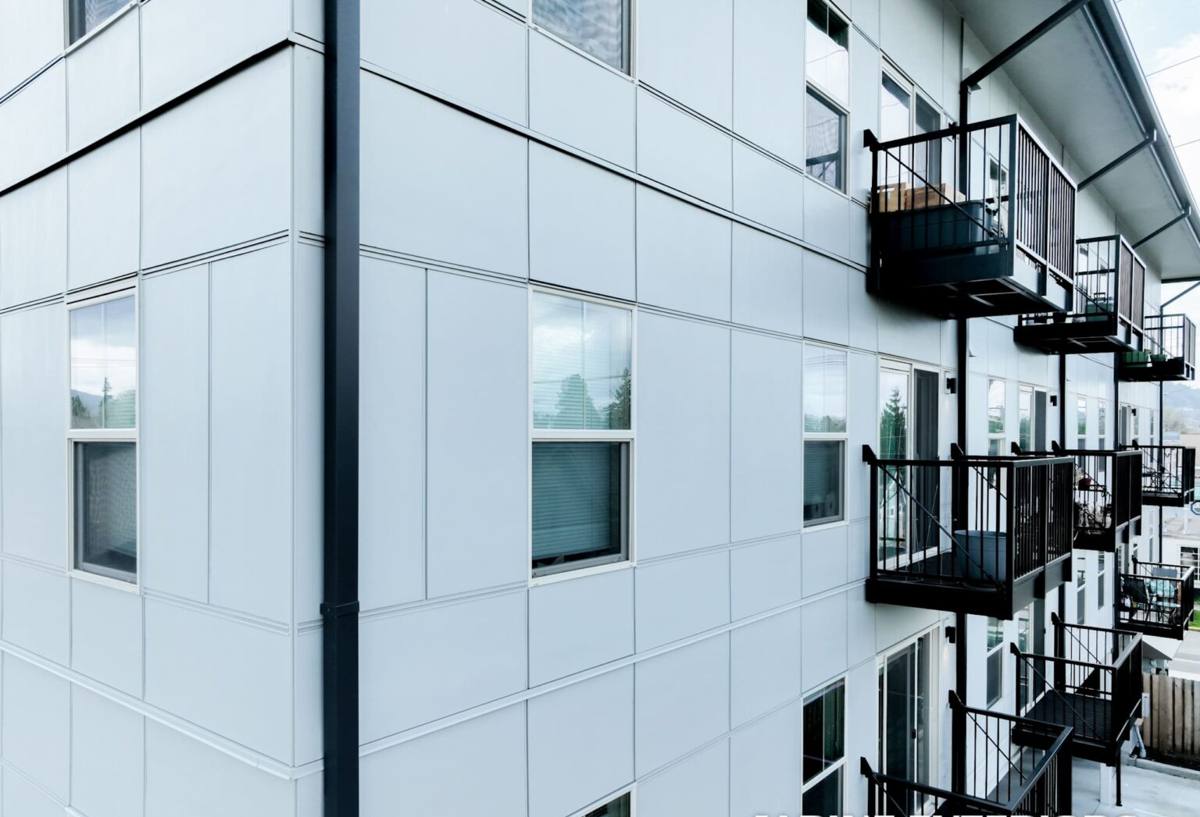
A correct board and batten installation is a system, not just a set of vertical boards and cover strips nailed to the wall. The parts that matter most in a climate like this are the ones you can't see once the job is finished.
- A drainage plane behind the siding. A weather-resistive barrier and, ideally, a rainscreen gap so any water that gets past the battens can drain and the wall can dry.
- Correct batten spacing and fastening. Battens need to land over the panel seams and be fastened into framing on a consistent schedule — not just wherever is convenient.
- Flashing at every penetration. Windows, doors, hose bibs, light fixtures, and vents all need proper flashing integrated with the drainage plane, not just caulked over.
- Bottom and top terminations detailed for water shedding. Where the siding meets the foundation, roofline, or trim, water has to be directed out and away, not trapped.
- Factory-finished material where possible. A factory finish holds up to salt air and UV far longer than field-applied paint or stain, and it eliminates the maintenance-painting cycle entirely.
Skip any one of these and the siding may look right for a year or two before problems start showing up behind it, usually in the form of trapped moisture, rot at the sheathing, or premature finish failure.
Why We Install Board & Batten Only in James Hardie Fiber Cement
Board and batten gets sold in several materials, and we get asked regularly why we don't offer it in vinyl, cedar, or engineered wood. Here's the honest answer for each.
Vinyl Board & Batten
Vinyl is inexpensive and low-maintenance in the sense that it doesn't need painting, but it's a poor match for a driving-rain, salt-air environment. Vinyl panels expand and contract significantly with temperature swings, the seams and battens are more prone to working loose over time, and the material itself can become brittle in cold snaps. It's also not the look most homeowners actually want when they ask for board and batten — the crisp, flat, shadow-lined profile of real board and batten doesn't translate well to vinyl.
Cedar Board & Batten
Cedar is a genuinely beautiful, traditional choice for this style, and we understand the appeal. The trade-off is maintenance: cedar in a wet, salt-exposed, moss-prone climate needs regular refinishing, is vulnerable to moisture intrusion at end grain and fastener points, and is a food source for the organic growth this area is prone to. Homeowners who choose cedar need to go in knowing it's an ongoing commitment, not a one-time install.
Primed Wood and Engineered Wood (LP SmartSide)
These products can perform well when installation and maintenance are perfect, but they rely on an intact factory or field coating to keep moisture out of a wood-based substrate. In a climate with this much sustained dampness, any breach in that coating — a missed caulk joint, a fastener that backs out, an unpainted cut edge — gives moisture a path into material that will swell, delaminate, or rot once it's wet. We've standardized away from these products because the margin for error is too thin for a coastal property.
James Hardie Fiber Cement
Hardie's board and batten systems — typically HardiePanel vertical siding paired with HardieTrim battens — are non-combustible, dimensionally stable, and don't rot, swell, or feed moss the way wood-based products do. The HZ5 product line is engineered specifically for wet, freeze-prone coastal climates like this one. ColorPlus factory finish is baked on and warranted separately from the substrate, so homeowners aren't stuck on a repainting cycle to protect the material underneath. It's a heavier, more labor-intensive product to install correctly, which is exactly why installation quality matters as much as the product choice itself.
Comparing the Options
| Material | Moisture Behavior in This Climate | Maintenance | Typical Lifespan |
|---|---|---|---|
| James Hardie Fiber Cement | Does not rot or swell; factory finish sheds salt air and rain well | Occasional wash; no refinishing needed | 30+ years with proper install |
| Cedar | Absorbs moisture at end grain and fasteners; prone to moss/algae | Refinish every 3–7 years | 15–25 years, install/care dependent |
| Vinyl | Sheds water but seams/battens can loosen under wind-driven rain | Occasional wash; panels not repairable, only replaceable | 20–30 years, weather dependent |
| Primed Wood / Engineered Wood | Vulnerable once coating is breached; substrate can swell or delaminate | Repaint/reseal on a schedule; inspect cut edges | Highly install and maintenance dependent |
Our Process for Point Roberts Projects
Working on the point comes with logistics most siding crews never have to think about. Point Roberts is separated from the rest of Whatcom County by water and by Canadian territory, so material deliveries, crew scheduling, and site visits all need to be planned around that reality rather than treated as an afterthought. We build that into the timeline up front so it doesn't turn into delays mid-project.
- An on-site assessment of your current siding, wall assembly, and any moisture or rot already present.
- A written scope covering drainage plane details, flashing plan, batten layout, and material selections.
- Removal of old siding with a check of the sheathing underneath before anything new goes up.
- Installation of the weather-resistive barrier and, where called for, a rainscreen gap.
- James Hardie panel and batten installation to manufacturer fastening specifications, not shortcuts.
- Final flashing, trim, and caulking detail work at every penetration and termination point.
Because we already plan around Point Roberts' access and logistics, projects here don't get treated as an inconvenience squeezed between mainland jobs — they get scheduled properly from the start.
Maintaining Board & Batten Once It's Installed
Correctly installed Hardie board and batten is low-maintenance, not no-maintenance. A short annual routine keeps it performing:
- Rinse the exterior once or twice a year to clear salt residue, especially on elevations facing the water.
- Keep gutters clear so roof runoff isn't dumping extra water down wall sections.
- Trim back vegetation and branches touching the siding — they trap moisture and encourage moss.
- Walk the exterior after major windstorms and check trim, flashing, and caulk joints for movement or gaps.
- Address any caulk cracking or fastener issues promptly rather than letting water find a way behind the panels.
Signs It's Time to Talk About Replacement
If your current siding shows soft spots, visible moss buildup that keeps returning after cleaning, cracked or bubbling paint, or gaps opening up at seams and trim, those are signals the wall assembly behind it may already be taking on moisture. In a Point Roberts climate, waiting rarely makes those problems smaller.
If you're weighing board and batten siding for a home in Point Roberts or elsewhere around Semiahmoo, we're happy to take a look and give you a straightforward, no-pressure estimate on what your project actually needs.