 Semiahmoo Exterior
 Window Installation in Blaine: Built for This Coastline
Blaine sits at the northern edge of Whatcom County, wrapped by Semiahmoo Bay and Drayton Harbor and close enough to the water that salt air is part of daily life for most homes in town, not just the ones on the waterfront. That exposure changes what a window installation actually needs to hold up here. A window is the single biggest interruption in a wall's weather barrier — more seams, more flashing, more places for wind-driven water to test the installation — and in a town that takes salt air, driving rain, and a moss season that runs most of the year, those seams get tested harder and more often than they would somewhere calmer and drier.
This page covers window installation specifically for Blaine homes: what the local climate does to a window over time, what a correct installation actually involves underneath the trim, how our process works, and why it matters to hire a crew that already works this part of Whatcom County rather than one learning the area on your project.
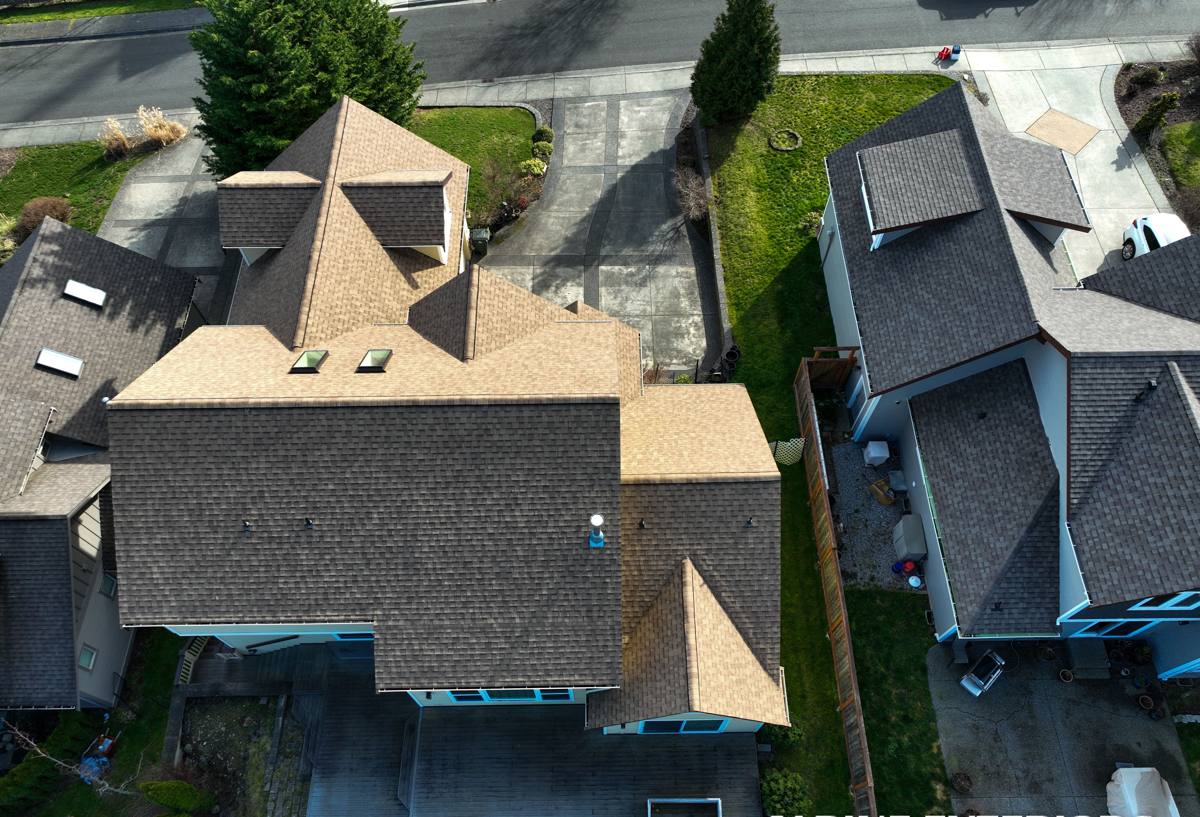
What This Climate Does to a Window Installation
Salt Air Off Semiahmoo Bay and Drayton Harbor
Being wrapped by water on two sides means Blaine homes take a steadier dose of salt-laden air than towns set further inland in the county. Salt accelerates corrosion in exposed hardware — hinges, locks, screen frames, and lower-grade fasteners — and a fastener that's corroding loses holding strength well before it looks obviously bad. Cheaper hardware finishes tend to pit or stiffen first, which is usually the earliest sign that a window's finish wasn't specified for the corrosion load this town actually delivers.
Driving Rain and Wind-Driven Water
Storms coming off the bay and the Strait don't fall straight down in Blaine; wind pushes rain sideways into head flashing, jamb connections, and sill pans with more force than a sheltered inland lot ever sees. That sideways load is a bigger test of the installation than it is of the window product itself. A well-made window with sloppy flashing will leak here; a modest window installed with correct flashing and a properly pitched sill pan usually won't. Most of the water damage we find around windows in this town traces back to how the window was installed, not what brand it is.
A Moss and Mildew Season That Runs Long
Mild temperatures and near-constant dampness give moss and mildew a long growing season in Blaine, and window sills and trim that don't drain well hold moisture longer than they would in a drier climate. That moisture supports mildew growth and, on wood-framed windows and trim, slow rot at the sill and lower corners. It's gradual — most homeowners don't notice it until paint starts failing or a sill feels soft underfoot.
Full-Frame vs. Insert Replacement: Which Fits Your Blaine Home
One of the first decisions on any window installation is whether to do a full-frame replacement, which removes the old window down to the rough opening and rebuilds the flashing from scratch, or an insert replacement, which fits a new window into the existing frame. Insert replacement is faster, less invasive to the surrounding siding and trim, and works well when the existing frame is structurally sound and was properly flashed in the first place. Full-frame replacement takes longer and costs more, but it's the honest answer when there's already moisture damage at the sill or jambs, or when the flashing behind the old window was never done correctly to begin with — which we see more often on older Blaine homes that predate current flashing standards.
We'll tell you which situation you're actually in after opening things up, rather than defaulting to the cheaper option and sealing a moisture problem up behind a new window. On a coastal property, that inspection step matters more than it would inland, since hidden sill or jamb damage is more common here.
Choosing a Window Frame Material for This Climate
There's no single right answer for every home — budget, sun exposure, and how long you plan to stay in the house all factor in. What matters is understanding the real trade-offs for a climate with this much sustained salt and moisture before you decide.
| Frame Material | Moisture & Corrosion Behavior | Typical Maintenance | Realistic Lifespan Here |
|---|---|---|---|
| Vinyl | Won't rot; seams and welds hold up well if installation quality is good | Low; occasional track and weep-hole cleaning | 20-30 years |
| Fiberglass | Dimensionally stable, resists moisture and corrosion well | Low | 30-40+ years |
| Wood, painted or clad | Attractive but vulnerable to moisture at joints and sills without diligent upkeep | Higher; regular paint or finish maintenance | 15-30 years depending on upkeep |
| Aluminum | Conducts cold and can corrode over time in salt-influenced air unless well-finished | Moderate | 20-30 years |
We'll walk you through which frame material fits your home's exposure and budget rather than defaulting to whichever product is easiest to sell. A shaded, north-facing wall and an open, water-facing elevation on the same Blaine house don't always call for the same answer.
Installation Fundamentals We Don't Treat as Optional
Most window failures in this climate aren't failures of the window itself — they're shortcuts in the flashing and sealing details that don't show up until a wet season or two later. On every installation in Blaine, that means:
- A properly pitched sill pan that sheds water outward instead of letting it pool under the frame
- Head flashing integrated with the housewrap or building paper above the window, lapped correctly for water to shed downward and outward
- Jamb flashing tied into the surrounding wall assembly rather than relying on caulk alone
- Weep holes and drainage paths left clear and functional, not sealed shut during installation
- Corrosion-resistant fasteners and hardware appropriate for sustained salt exposure
- Insulation and air sealing around the frame that doesn't trap moisture against the framing
None of these add meaningfully to the cost of a job relative to the window itself, but skipping them is exactly what turns a window that should last decades into one that's leaking behind the wall within a few years — and on a bay-facing lot, that clock runs faster than it would inland.
Code, Glazing, and New Construction Windows
New-construction and full-replacement windows in Washington have to meet the U-factor and performance requirements set out in the Washington State Energy Code, and that applies to every project regardless of who's installing it. Beyond the minimum code number, glazing and low-E coatings should be matched to how much sun and shade a given elevation actually gets — a north-facing wall looking out over the harbor doesn't need the same solar heat gain package as a sun-exposed south wall on the same house. We'll go over the U-factor and NFRC ratings on any window package before it's ordered, so you know exactly what's being specified and that it meets current code.
For homes closer to open water, it's also worth asking about hardware and weatherstripping rated for sustained wind-driven rain rather than a standard product line built for average, sheltered conditions. The window itself may look identical on a spec sheet; the hardware and seal quality underneath it is where the difference actually shows up over a few winters.
How Our Installation Process Works
We start with an on-site look at the openings — checking existing frame and sill condition, how close the property sits to the bay or harbor, and how the current flashing, if any, ties into the siding around each window. From there we go over frame material and glazing options that fit the budget and the home's actual exposure, and give a straightforward read on whether each opening is a candidate for insert replacement or needs a full-frame approach.
Once the scope is set, we handle permitting where the project calls for it and sequence the work so flashing ties correctly into the surrounding siding rather than getting patched around it afterward. Install day follows the same sequence every time: remove the old unit, inspect and repair the rough opening as needed, set and level the new window, build the flashing assembly in the correct shingle-lap order, then insulate and seal around the frame. We finish with a walkthrough covering operation, hardware care, and what that specific window and frame material actually needs going forward — for most modern windows, that's minimal, but it's not nothing in this climate.
Why It Matters That We Already Work Blaine
A crew that mostly installs windows further inland can still do competent work, but a Blaine job has variables that don't come up as often elsewhere in Whatcom County — corrosion-grade hardware needs from sustained salt exposure, flashing details sized for wind-driven rain off open water, and older housing stock where the original flashing wasn't done to current standards. Working this town regularly means we're not guessing at those requirements on your project. We've seen which frame materials and hardware grades actually hold up against Blaine's specific combination of salt air, driving rain, and moss, and which installation shortcuts turn into a call-back two winters later.
A few questions worth asking any contractor before hiring them for window installation in Blaine:
- Ask them to walk through their exact flashing sequence at the sill, jambs, and head — not just what window brand they're installing
- Confirm they carry current Washington contractor licensing and active liability insurance
- Ask how the product warranty and the installation labor warranty are structured separately, and get both in writing
- Ask how they handle rot or hidden damage found once the old window comes out
- Get a clear, written scope before any contract is signed
A contractor who answers those specifically, rather than in general terms, is a better sign than one who only quotes a price.
Get a Free, No-Pressure Estimate
Whether you're replacing aging, drafty windows or planning openings for a new build in Blaine, we're glad to walk the property with you and give a straightforward, honest read on what it actually needs. Reach out using the form below to schedule a free estimate — no pressure, no upsell script.