 Semiahmoo Exterior
 Blaine Harbor Sits in a Tough Microclimate for Siding
Homes around Blaine Harbor and the Semiahmoo waterfront take on more than the average dose of weather. Whatcom County's marine air carries salt off Semiahmoo Bay and the Strait of Georgia, wind-driven rain comes in sideways off the water during winter storms, and the combination of shade, humidity, and mild temperatures keeps moss and algae active for most of the year. None of that is dramatic on its own, but stacked together, year after year, it's exactly the kind of exposure that finds the weak points in a siding system faster than a drier, calmer climate would.
Salt air is corrosive to exposed metal fasteners, flashing, and trim connectors. Driving rain doesn't just wet a wall surface — it gets pushed under laps and around penetrations if the drainage details aren't right. And moss doesn't just look bad; a mat of moss or algae holds moisture against a wall far longer than open air would, which is a problem for any siding material that isn't inherently rot- and moisture-resistant. A siding job that looks fine on a dry August afternoon can still fail here if it wasn't built for a Blaine Harbor February.
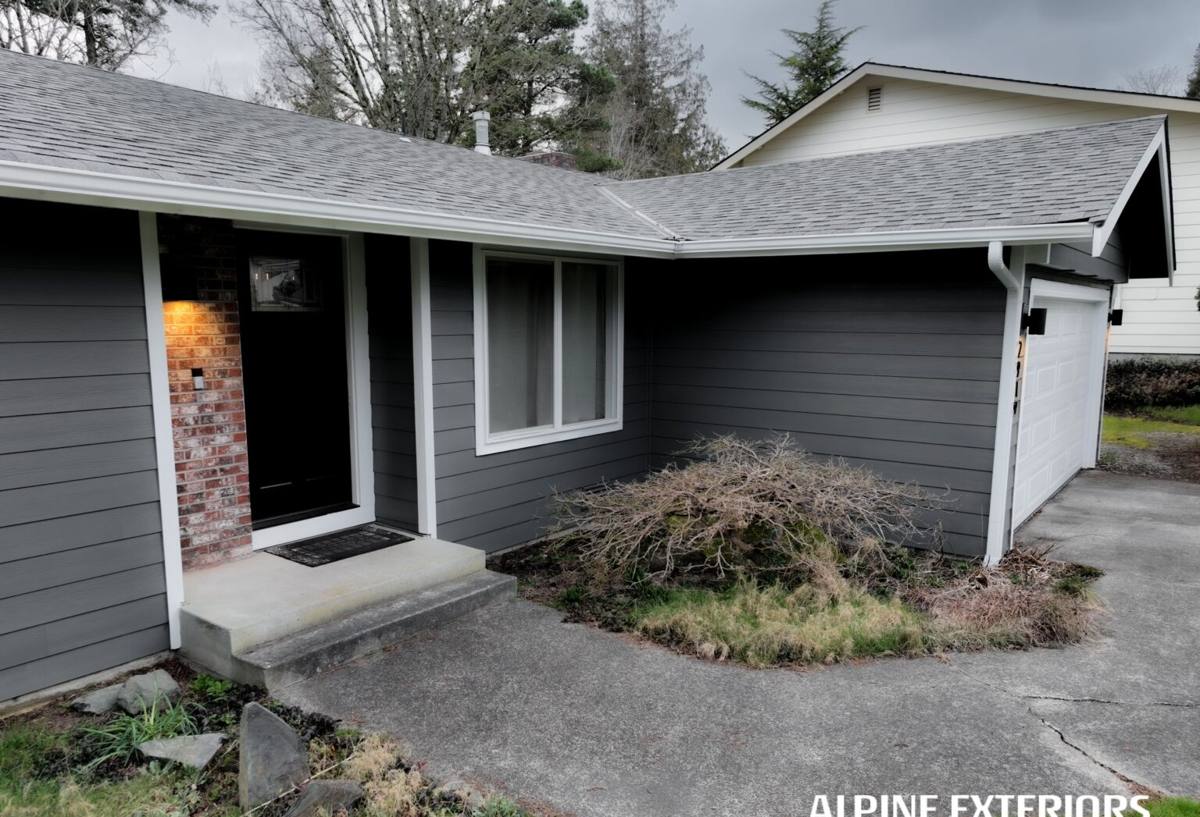
What a Correct Installation Has to Get Right in This Climate
Drainage Plane and Rain Screen Detailing
Fiber cement siding is not waterproof by itself — it's a rain-screen cladding, meaning the system behind it (weather-resistive barrier, flashing, and a drainage gap) is what actually keeps a wall dry. On a harbor-exposed home, that drainage plane has to be continuous and lapped correctly at every seam, window, and penetration, with a way for incidental water to get back out. Skipping or shortcutting this step is the single most common reason siding jobs fail early in wet coastal climates, and it's invisible once the siding is up — which is exactly why it matters who's doing the work.
Fastening and Flashing
James Hardie specifies fastener type, spacing, and placement for a reason: incorrect fastening is one of the leading causes of warranty denial on fiber cement jobs. In a salt-air environment, fastener material matters too — corrosion-resistant fasteners and flashing hold up; the wrong ones start streaking and weakening years before they should. Every window head, door, and horizontal trim transition needs proper flashing so water sheds outward instead of finding a way behind the board.
Caulking and Finish-Line Details
Caulk is a maintenance item, not a substitute for good flashing, but where it's used — at trim joints and penetrations — it needs to be a product rated for this climate and applied correctly the first time. Overuse of caulk to compensate for gaps or poor fit is a sign of a rushed installation, not a thorough one.
James Hardie Products That Make Sense Near the Water
James Hardie engineers its HardieZone products for different climate exposures, and the HZ5 line is built for regions with more moisture and freeze-thaw cycling — which fits Whatcom County's coastal conditions better than a generic, one-size-fits-all board. Just as important for a salt-air location is ColorPlus Technology, Hardie's factory-applied finish. Because the color and topcoat are baked on in a controlled setting rather than sprayed on-site, it holds up better against salt exposure and UV than field-applied paint, and it comes with its own finish warranty separate from the product warranty.
For a harbor-facing elevation that takes the brunt of wind-driven rain, we'll also talk through lap siding versus panel siding with you, and where trim and reveal choices affect how much water any given wall detail has to shed. There's no single "right" board for every elevation of a Blaine Harbor home — the water-facing side and the sheltered side often call for different decisions.
Why We Only Install James Hardie
We don't install vinyl, LP SmartSide, Cemplank, Allura, or unprimed cedar or spruce siding, and that's a deliberate standard, not an oversight. Vinyl expands and contracts with temperature swings and can crack or warp under sustained wind exposure common to open water sites. Engineered wood products like LP SmartSide use wood strand cores that are more sensitive to moisture intrusion if the installation or maintenance schedule slips — a real risk in a climate where a missed caulk touch-up gets exposed to rain within days, not weeks. Cedar and other wood sidings look great new but demand an ongoing maintenance commitment (staining, sealing, moss treatment) that most homeowners underestimate until year three or four.
James Hardie fiber cement is non-combustible, dimensionally stable across temperature and humidity swings, and backed by a transferable warranty that reflects genuine confidence in the product's long-term performance. It's not the cheapest board on the market, and we're upfront about that — but for a home absorbing salt air and driving rain for decades, it's the material that holds its line the longest with the least babysitting.
Our Process for a Blaine Harbor Job
- Site and exposure assessment — we walk the home and note which elevations face the water and prevailing wind, where moss or algae is already established, and where past moisture damage shows up in trim or sheathing.
- Tear-off and substrate check — removing the old siding lets us actually inspect the sheathing and framing underneath, which is the only way to know if there's hidden rot or water damage before we build over it.
- Weather-resistive barrier and drainage gap — a continuous, correctly lapped barrier goes on first, with a drainage gap behind the siding so any water that gets past the cladding has somewhere to go.
- Flashing at every penetration — windows, doors, hose bibs, vents, and horizontal trim all get flashed before siding goes over them, not caulked afterward as a workaround.
- Hardie installation to manufacturer spec — correct fastener type, spacing, and clearance from grade and roof lines, following James Hardie's published installation requirements so the warranty stays intact.
- Finish detailing and cleanup — trim caulking where specified, touch-up on any cut edges, and a full site cleanup, including magnet-sweeping for stray fasteners.
Cost Factors on a Blaine Harbor Siding Job
| Factor | Why It Moves the Price |
|---|---|
| Existing siding removal | Tear-off labor and disposal add cost, and multiple layers of old siding add more |
| Sheathing or framing repair | Water-damaged substrate found during tear-off has to be repaired before new siding goes on |
| Home size and wall complexity | More corners, dormers, and trim transitions mean more cutting, flashing, and labor time |
| Product line and finish | HZ5 boards, panel versus lap profiles, and ColorPlus color selection all affect material cost |
| Water-facing elevation detailing | Elevations exposed to wind-driven rain often warrant extra flashing and drainage attention |
| Site access | Waterfront lots, steep grades, or limited staging area can add setup and labor time |
Living With Fiber Cement Siding in a Moss-Season Climate
Hardie siding is low-maintenance compared to wood or engineered wood alternatives, but "low-maintenance" isn't "no-maintenance" — especially with the moss and algae pressure that shaded, damp sites around Blaine Harbor deal with for much of the year.
- Rinse siding annually with a garden hose to clear salt residue, pollen, and early moss growth before it establishes
- Keep gutters clear so overflow doesn't run down and saturate wall sections repeatedly
- Trim back vegetation and tree cover that keeps shaded wall sections damp longer than the rest of the house
- Inspect caulk lines at trim and penetrations once a year and touch up before gaps open further
- Address any moss or algae growth promptly with a soft wash approach rather than pressure washing, which can force water behind the siding
- Watch for chalking or color fade at ColorPlus finish seams and have them evaluated if it starts early
Why the Crew Matters as Much as the Product
Two homes can have identical James Hardie boards installed and get very different results depending on whether the crew understood the site. A crew that already works Semiahmoo and Blaine Harbor knows which elevations typically take the worst of the wind-driven rain, how Whatcom County permitting and inspection works, and what HOA or waterfront design guidelines commonly apply in this area. That familiarity shows up in decisions you won't see on the invoice — where extra flashing gets added on a water-facing gable, how a drainage gap gets detailed around a harbor-facing window, or which trim profile actually sheds water instead of just looking finished.
Fiber cement siding is a decades-long investment. In a climate that tests every seam and fastener with salt, rain, and moss, the installation quality is what determines whether that investment lasts twenty-five years or needs rework in five.
If you're planning a siding project on a Blaine Harbor or Semiahmoo home, we're happy to walk the property, look at your specific exposure, and put together a free, no-pressure estimate — just fill out the form below.