 Semiahmoo Exterior
 Storm Damage Roofing Built for Bellingham's Climate
Bellingham roofs don't fail the way roofs fail in drier parts of the country. Out here, a storm rarely announces itself with one dramatic event — it's usually a string of wind-driven rain systems moving through Whatcom County over a few days, each one pushing water sideways into places a roof was never designed to shed water from. Add in salt-laden air off the water, a moss season that can run eight or nine months of the year, and shingles that stay damp far longer than they would inland, and you get a roof that ages differently than the ones in the manufacturer's brochure photos.
We're based in Semiahmoo and work Bellingham roofs regularly, so we're not learning this area's weather patterns on your dime. We know what a genuine wind or rain event does to a roof here versus what's just normal moss-season wear, and we price and repair accordingly — not by defaulting to a full tear-off every time, and not by patching over something that needs real attention.
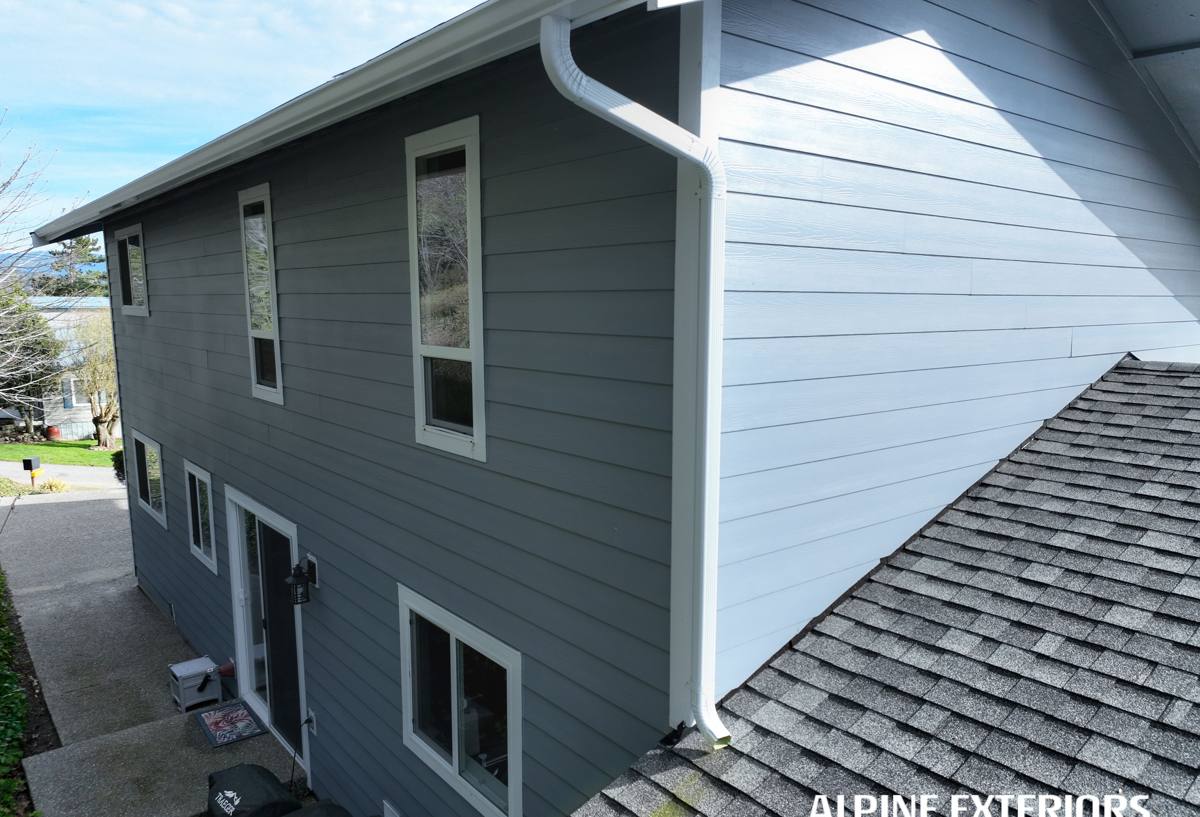
What Actually Counts as Storm Damage
Insurance adjusters, contractors, and homeowners don't always agree on this, so it's worth being clear. Storm damage is damage tied to a specific weather event — wind, hail, falling debris, or heavy rain that overwhelmed a roof's ability to shed water. It's different from gradual deterioration, which is what most Bellingham roofs are also dealing with thanks to constant moisture and moss.
Common storm-caused problems we see in Bellingham
- Shingles lifted, creased, or torn loose by wind gusts, especially along ridges and roof edges where uplift is strongest
- Flashing pulled away from chimneys, skylights, or wall intersections after repeated wind loading
- Wind-driven rain forced up and under shingle tabs, showing up later as a ceiling stain rather than an obvious hole
- Branch or debris impact that cracks shingles or dents metal flashing and gutters
- Granule loss and bruising from hail, which is less common here than wind-driven rain but does happen
Signs it's worth a look after a storm
- A new ceiling stain, especially near an exterior wall, chimney, or skylight
- Shingles or shingle pieces in the yard or gutters after a windy night
- Visible gaps, lifted tabs, or exposed nail heads when you look at the roofline from the ground
- Water in the attic or a musty smell that wasn't there before
- Gutters pulling away from the fascia or sagging after heavy rain
Why Bellingham's Climate Changes the Repair, Not Just the Damage
Salt Air and Fastener Corrosion
Proximity to the water means salt in the air, and salt speeds up corrosion on exposed metal — nail heads, flashing edges, gutter fasteners, and drip edge. A storm repair that goes back on with standard fasteners can look fine for a season and then start leaking again once corrosion sets in around the repair. We factor coastal exposure into what fasteners and flashing metals we use, not just what's cheapest at the yard.
Moss, Trapped Moisture, and Hidden Rot
Whatcom County's moss season is long, and moss doesn't just look bad — it holds moisture against the shingle surface and can work its way under tabs and along seams, which is exactly where wind-driven rain also wants to get in. When we're repairing storm damage, we're checking the surrounding shingles and decking for moss-related softness or rot, because storm damage and moss damage often overlap on the same section of roof. Repairing the storm damage without addressing what the moss already weakened just means a second repair later.
Wind Direction and Exposure
Homes with roof planes facing open water or exposed to prevailing wind take the brunt of wind-driven rain differently than sheltered sides of the same house. We look at exposure when deciding how far to extend a repair — sometimes the damaged shingles are the visible problem, but the whole windward slope needs a closer inspection because it's been absorbing the same weather for years.
What a Correct Storm Repair Actually Involves
A rushed storm repair nails a few shingles back down and calls it done. A correct one confirms there's no hidden water path first, then repairs in a way that matches how the rest of the roof is aging.
| Repair Approach | Best For | What's Involved |
|---|---|---|
| Spot repair | Isolated wind or impact damage on an otherwise sound, reasonably new roof | Replace damaged shingles and flashing, check surrounding decking, reseal |
| Section repair | Damage concentrated on one slope, especially a windward or moss-heavy one | Strip and replace a full roof plane, inspect decking underneath, address underlayment |
| Full replacement | Storm damage on a roof already near the end of its service life or with widespread moss damage | Full tear-off, decking repair as needed, new underlayment, shingles, and flashing |
We'll tell you honestly which category your roof falls into. If a spot repair genuinely solves the problem, that's what we recommend — there's no benefit to you or to us in overselling a full section when it isn't needed.
Our Process on a Bellingham Storm Repair
1. Inspection and documentation
We walk the roof (or use a ladder and camera when pitch or weather makes walking it unsafe), identify what's storm-caused versus pre-existing wear, and photograph the damage. That documentation matters if you're filing an insurance claim.
2. A clear scope before any work starts
You get a plain explanation of what's damaged, what we recommend, and why — not a vague estimate you have to decode. If we find moss damage or rot alongside the storm damage, we'll flag it separately so you know what's storm-related and what isn't.
3. The repair itself
Matching shingles as closely as possible, replacing flashing rather than just recaulking it when it's been compromised, and using fasteners and underlayment suited to a coastal climate rather than whatever's fastest.
4. A follow-up check
Especially after a significant wind event, we'll recommend checking the repair after the next hard rain to confirm it's holding before we consider the job closed.
Working with insurance claims
Storm damage is often covered where general wear isn't, which is why the distinction matters. We provide the photos and written scope adjusters typically ask for, but the insurance claim itself is between you and your carrier — we're not a public adjuster and won't promise a specific claim outcome.
Materials and Methods We Use, and Why
For coastal Whatcom County homes, we lean toward corrosion-resistant flashing and fasteners, a quality synthetic or self-adhered underlayment in vulnerable areas like valleys and eaves, and shingle products with wind-resistance ratings suited to actual local wind exposure rather than the minimum spec. None of this is about chasing the priciest option — it's about not having to repair the same section again in two years because the materials weren't matched to the climate they're sitting in.
We also pay close attention to ventilation during any repair that opens up part of the roof system. A roof that traps heat and moisture underneath the shingles ages faster and holds moss longer, which works against everything a storm repair is trying to fix.
What Affects the Cost of a Storm Damage Repair
| Factor | Why It Matters |
|---|---|
| Size of the damaged area | A few shingles is a different job than a full slope |
| Roof pitch and access | Steeper or harder-to-access roofs take longer and require more safety setup |
| Decking condition underneath | Rotted or moss-softened decking has to be replaced before new shingles go on, which adds cost |
| Shingle matching | Older or discontinued shingle colors can be harder to match, sometimes pushing toward a section repair for a cleaner look |
| Flashing condition | Corroded coastal flashing usually needs full replacement rather than resealing |
We give a written estimate before starting work so there are no surprises once we're on the roof. If we find something worse than expected once we open up the damaged area — hidden rot is the most common surprise — we'll stop and talk it through with you before doing anything beyond the original scope.
Why It Matters That We Already Work in Bellingham
A crew that only shows up after a storm, does one job, and leaves doesn't have much reason to get the details right for the long term. We're based nearby in Semiahmoo and work Bellingham roofs on an ongoing basis, which means we're the ones who'd be back out if a repair didn't hold. That's a real incentive to use the right fasteners the first time, check the surrounding shingles instead of just the obvious damage, and be straight with you about what's actually storm-related versus general Whatcom County wear.
It also means we're not guessing at how this area's weather behaves. We've seen how wind off the water hits certain roof orientations harder than others, how long moisture actually sits on a north-facing slope here, and which repairs from other crews tend to fail early because they weren't built for this climate.
Keeping the Roof Healthy After the Repair
A storm repair fixes what the weather damaged, but it doesn't stop the ongoing moss and moisture pressure that every Bellingham roof deals with. A few habits go a long way toward protecting both the repair and the rest of the roof:
- Keep gutters clear so water isn't backing up under the eaves during heavy rain
- Trim back branches that overhang the roof, both to reduce impact risk and to cut down shade that keeps moss growing
- Have moss addressed before it builds up thick enough to hold water against the shingles
- After any major wind event, do a quick visual check from the ground for lifted or missing shingles
- Get a roof checked periodically even without storm damage — catching early wear is cheaper than repairing what it turns into
If a recent storm has left you with a stain on the ceiling, missing shingles, or just a nagging feeling you should have it looked at, we're glad to come take a look. The estimate is free, there's no pressure attached to it, and you'll get a straight answer about what's actually storm damage and what it'll take to fix it right — just fill out the form below.