 Semiahmoo Exterior
 Why Sumas Roofs Wear Out Differently
Roofs in the Sumas area don't fail the way roofs do in drier parts of the country. Whatcom County sits close enough to the water that salt-laden air works its way inland, and it settles into every exposed seam, nail head, and flashing joint on a roof. Add in months of driving rain that comes sideways as often as it comes straight down, and you've got two forces working against a roof at the same time: corrosion and water intrusion. Neither shows up overnight. Both show up eventually, usually as a slow leak, a soft spot in the decking, or shingles that granulate faster than the manufacturer's warranty suggests they should.
Then there's moss. This part of Washington gets a long, mild, wet season that's close to ideal for moss growth — shaded north-facing slopes, valleys, and roofs under tree cover barely get a dry stretch long enough to slow it down. Moss isn't just cosmetic. It holds moisture against the roofing material, lifts shingle edges as it grows, and works its way under flashing over time. A roof that would otherwise last two more decades can lose years to unchecked moss.
None of this means Sumas homes need exotic solutions. It means the replacement has to be specified and installed with this climate in mind — the right underlayment, the right fastener material, the right ventilation, and flashing detail that doesn't cut corners at the valleys and penetrations. That's the difference between a roof that holds up here and one that's fighting the climate from day one.
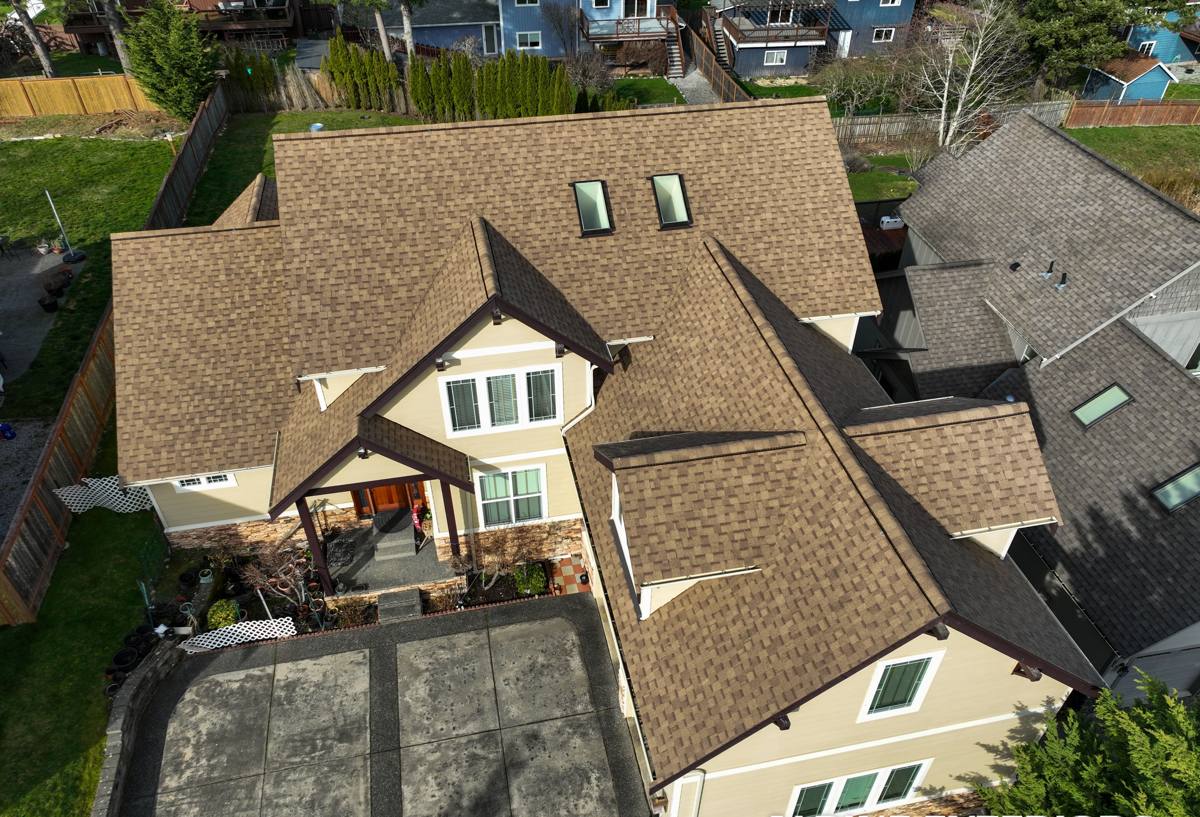
Signs a Repair Won't Cut It Anymore
Not every roof problem means full replacement. But there's a point where patching becomes a waste of money, and homeowners in this area tend to hit that point around the same set of warning signs:
- Shingles that are cupping, curling, or missing granules across large sections rather than one isolated spot
- Daylight visible through the roof deck from the attic, or damp insulation after a heavy rain
- Moss and algae staining that keeps returning within a season or two of cleaning
- Soft or spongy spots underfoot when walking the roof, which usually means the decking underneath has taken on water
- A roof that's already 20+ years old and has had two or more repair visits in recent years
- Flashing around chimneys, skylights, or valleys that's rusted, bent, or separating from the surface
If a roof is showing two or more of these at once, a repair is often just delaying a replacement while the underlying decking keeps absorbing moisture. We'll always tell a homeowner honestly when a repair is the smarter near-term move — replacement isn't the answer to every roof problem, but pretending an aging, moss-compromised roof just needs another patch isn't honest either.
What a Correct Roof Replacement Actually Involves
Full Tear-Off, Not a Layover
A proper replacement starts with stripping the old roofing material down to the deck — not layering new shingles over old ones. A layover hides problems instead of fixing them, and in a climate this wet, trapping old moisture-damaged material under a new layer is asking for trouble.
Deck Inspection and Repair
Once the deck is exposed, every section gets checked for soft spots, delamination, or rot, particularly around valleys, eaves, and any area near a past leak. Any compromised sheathing gets replaced before anything new goes down — installing new roofing over a weak deck just resets the clock on the same failure.
Underlayment Built for Wind-Driven Rain
Given how often rain here comes in sideways, underlayment choice matters more than it does in drier climates. A synthetic underlayment with strong water resistance, paired with self-adhering ice-and-water membrane at eaves, valleys, and penetrations, gives the roof a real second line of defense if wind ever drives water up under the shingle edge.
Flashing Done Right
Flashing failure is the single most common cause of "mystery leaks" we get called out for. Chimneys, skylights, sidewalls, and valleys all need properly formed, corrosion-resistant flashing — not caulk standing in for metal. In salt-influenced air, the flashing material itself matters, since some metals corrode faster than others in this environment.
Ventilation That Matches the Attic
Balanced intake and exhaust ventilation keeps the attic from becoming a trap for humid air, which reduces both condensation-driven rot and the moisture buildup that helps moss and algae take hold from underneath. A roof can be installed perfectly and still underperform if the attic beneath it isn't breathing correctly.
Material Options for Sumas Homes
There's no single "best" roofing material — the right choice depends on budget, roof pitch, tree cover, and how long the homeowner plans to stay in the house. Here's how the common options stack up for this specific climate:
| Material | How It Handles This Climate | Typical Lifespan Here | Maintenance Reality |
|---|---|---|---|
| Architectural asphalt shingle | Good performance with algae-resistant granules; needs proper ventilation to avoid premature aging | 20-30 years | Periodic moss removal, especially on shaded slopes |
| Standing seam metal | Sheds moss and rain very well due to smooth, steep-shedding surface; corrosion resistance depends on coating quality | 40-60 years | Low; occasional fastener and seam checks |
| Composite/synthetic shake | Resists moisture absorption better than wood; holds up well in wet, shaded conditions | 30-50 years | Low to moderate |
| Cedar shake | Attractive but moisture-sensitive; requires diligent maintenance in a moss-prone, high-rainfall area | 20-30 years with upkeep | High — regular treatment and moss control needed |
We'll walk through these trade-offs honestly during an estimate rather than pushing whatever carries the best margin. A steep, tree-shaded roof and a low-slope, open one can call for two different answers even on the same street.
How Our Process Works
The process is the same whether it's a straightforward reroof or one complicated by rot, structural issues, or insurance involvement:
- On-site inspection — we walk the roof and the attic, not just look from the ground, and document what we find
- Written estimate — a clear scope of work, material options, and pricing with no vague allowances hiding surprise costs later
- Scheduling around weather — tear-off is timed to minimize the roof deck's exposure to open sky, with dry-in protocols if rain moves in mid-job
- Tear-off and deck repair — old material removed, deck inspected and repaired as needed
- Installation — underlayment, flashing, ventilation, and final roofing material installed to manufacturer and code specifications
- Cleanup and walkthrough — magnetic sweep for debris, a final walkthrough, and warranty paperwork handed over
Weather scheduling matters more here than in drier regions. Rushing a tear-off ahead of a storm system, or leaving a deck exposed longer than necessary, is how good roofs turn into callback jobs. We plan around the forecast, not just the calendar.
The Long-Term Fight Against Moss
Even a well-installed new roof will face moss pressure again eventually if the site conditions that caused it in the first place — overhanging branches, heavy shade, poor airflow — don't change. Part of a correct replacement is talking through what can realistically be done to slow moss return: trimming back overhanging limbs where practical, making sure gutters aren't holding standing water against the roof edge, and in some cases installing zinc or copper strips near the ridge, which release trace metal ions that inhibit moss growth as rain washes over them. None of this makes a roof moss-proof. It buys years, which in this climate is worth planning for up front rather than reacting to later.
Permits and Local Code
Roof replacements in Whatcom County typically require a building permit, and the requirements can vary depending on the scope of work, structural changes, or whether decking replacement exceeds a certain threshold. Ventilation and ice-and-water shield placement also follow specific code minimums. We handle the permit process as part of the job rather than leaving it for the homeowner to sort out, and we build the installation to meet or exceed what the code requires, not just the minimum needed to pass inspection.
Questions Worth Asking Any Roofer Before You Sign
Whether or not that roofer ends up being us, these are the questions that separate a straightforward job from a headache later:
- Is this a full tear-off, or is new material going over the old roof?
- What underlayment and ice-and-water shield are being used, and where specifically will it be installed?
- Who inspects and repairs the deck if rot is found once tear-off starts, and how is that priced?
- What's the plan if rain moves in mid-tear-off?
- Is the crew doing the work direct employees, or subcontracted out?
- What does the workmanship warranty cover, separate from the manufacturer's material warranty?
- Is the estimate a fixed scope, or are there vague allowances that could change the final price?
Why a Crew That Already Works Sumas Matters
A roofing crew that works this specific area regularly already knows what a Sumas roof is up against — the moss patterns on shaded, tree-lined lots, the way wind-driven rain tends to find weak flashing on this side of the county, and which materials actually hold up once the salt air and long wet season get a few years into them. That's not something you get from a general contractor passing through the region once. It shows up in the small decisions — where extra ice-and-water shield goes, how ventilation gets balanced, which flashing detail gets reinforced — that don't show up on a proposal sheet but show up in how the roof performs ten years out.
If your roof in the Sumas area is showing its age or you just want an honest read on where it stands, we're glad to come take a look. The estimate is free, there's no pressure to sign anything on the spot, and you'll get a straight answer about whether you need a full replacement or something less.