 Semiahmoo Exterior
 Blaine's Coastal Climate Puts Real Demands on Siding
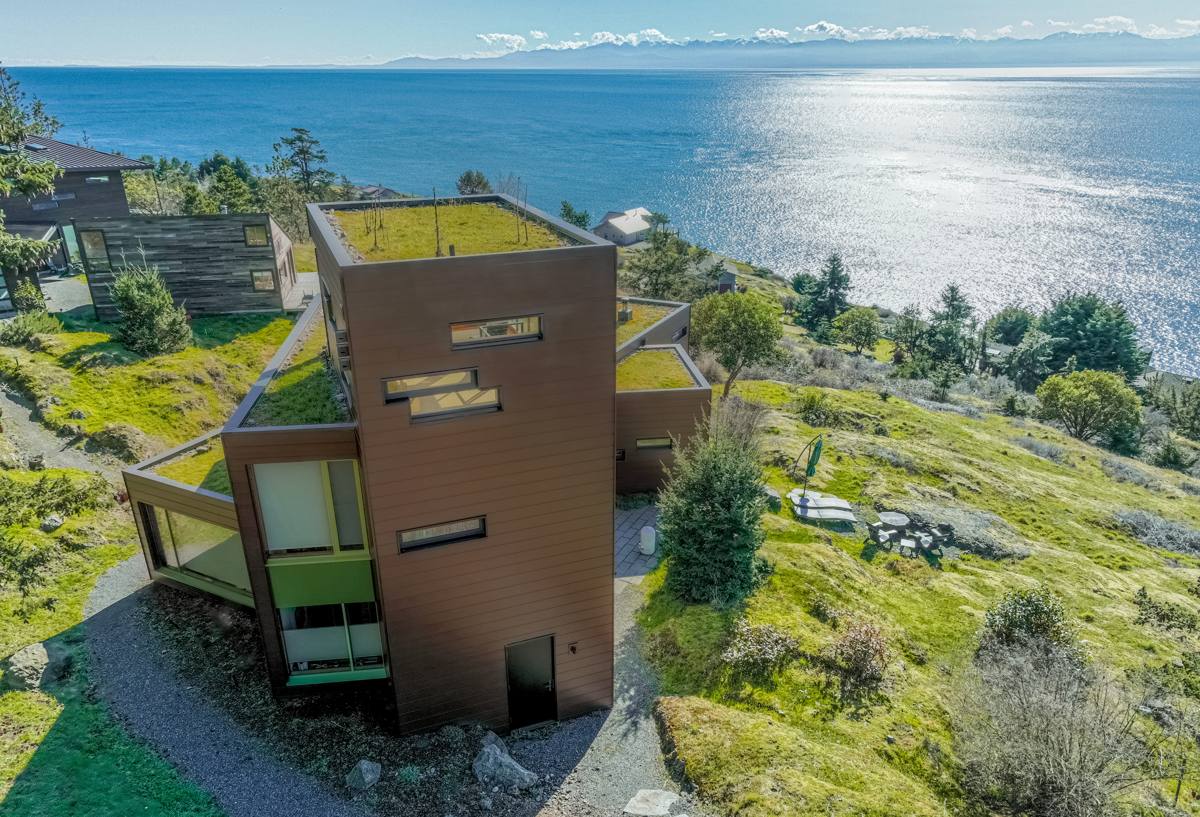
Homes in Blaine sit close to Semiahmoo Bay and the Strait of Georgia, which means the siding on your house is doing more work than siding on a home twenty miles inland. Salt-laden air moves through this corridor constantly, driving rain comes in sideways off the water during winter storms, and the combination of shade, moisture, and mild temperatures in Whatcom County creates a long moss and algae season that can run most of the year on north- and west-facing walls. Any siding product installed here has to handle that combination without trapping moisture behind it, without corroding its own fasteners, and without becoming a maintenance project every spring.
This is a local service page focused on one job: installing new siding correctly on Blaine homes. Not a general overview of siding products, not a sales pitch — an honest look at what your house actually needs given where it sits, and how a crew that already works this stretch of coastline handles the job differently than a crew installing siding on a dry inland lot.
What "Correct" Siding Installation Actually Involves
The siding boards themselves get most of the attention, but they're the last layer in a system. In a marine climate like Blaine's, the layers underneath the visible siding matter as much as the siding itself — if those layers are wrong, the wall will fail from the inside out regardless of how good the siding product is.
The Water Management System
- Weather-resistive barrier: a continuous, properly lapped house wrap or building paper installed shingle-style so water is always directed outward and downward, never trapped against the sheathing.
- Flashing at every penetration: windows, doors, hose bibs, light fixtures, and vents all need integrated flashing that ties into the weather barrier — these are the spots where driving rain finds its way in first.
- Rainscreen gap: a ventilated air space between the siding and the weather barrier lets any moisture that does get past the siding dry out instead of sitting against the wall. This matters more in Blaine's damp, low-evaporation climate than it does in drier parts of the state.
- Proper fastening: corrosion-resistant fasteners driven to the manufacturer's spec — in salt air, the wrong fastener can rust and stain the siding within a few years, or worse, lose its holding power.
The Siding Layer Itself
Once the water management system is right, the siding needs to be a material that tolerates constant moisture cycling, resists moss and algae growth, and holds its finish without repainting every few years. This is where product choice becomes the deciding factor in how the whole job performs over the next few decades — and it's why we've standardized on one product rather than offering a menu of options.
Why We Install Only James Hardie Fiber Cement in Blaine
We don't install vinyl, LP SmartSide, cedar, or primed spruce siding, and in a location like Blaine that's a deliberate call, not a limitation. Each of those products has a real weakness that shows up specifically in salt air, sustained moisture, and heavy moss exposure:
- Vinyl expands and contracts significantly with temperature swings and can warp or crack in cold snaps; it also traps moisture behind it if the water management layer underneath isn't perfect, and it's not repairable in the way fiber cement is — a damaged panel usually means a full replacement of that run.
- LP SmartSide is an engineered wood product. Wood-based siding, even engineered wood, is more sensitive to sustained moisture exposure than fiber cement, and Blaine's long wet season and moss pressure are exactly the conditions that stress that sensitivity over time.
- Cedar and primed spruce are natural wood products that need regular refinishing to hold up against constant damp and salt air, and both are food sources for the moss and mildew that Whatcom County's climate produces in abundance.
James Hardie fiber cement is non-combustible, dimensionally stable across temperature and moisture swings, and doesn't feed mold or moss growth the way wood-based products can. It comes pre-finished with Hardie's ColorPlus factory finish, which is baked on under controlled conditions and holds color longer than field-applied paint, backed by a transferable limited warranty. For a coastal Whatcom County home, that combination of moisture tolerance, finish durability, and non-combustibility is the reason we put it on every house we side — including our own standards for what we're willing to install.
Siding Products Compared for Blaine's Climate
| Factor | James Hardie Fiber Cement | Vinyl | Wood / Engineered Wood |
|---|---|---|---|
| Moisture tolerance | High — won't rot or swell | Moderate — can trap moisture behind panels | Lower — prone to swelling, rot over time |
| Salt air performance | Strong, non-corrosive material | Can become brittle, discolor | Needs frequent refinishing near salt air |
| Moss / algae resistance | Good — inorganic surface | Fair, but traps grime in seams | Poor — organic surface feeds growth |
| Fire rating | Non-combustible | Combustible | Combustible |
| Finish life before repaint | Long — factory ColorPlus finish | N/A (color molded in, can fade/chalk) | Shorter — needs periodic repainting/staining |
Our Installation Process for Blaine Homes
Every project follows the same sequence, adjusted for the specific exposure of your home's location on the peninsula or in town:
- On-site assessment: we look at your home's orientation, exposure to wind-driven rain, existing sheathing condition, and any signs of past moisture intrusion before quoting the job.
- Removal and sheathing inspection: old siding comes off and we check the sheathing underneath for rot or damage — this is often where problems from a prior installation surface, and it needs to be addressed before anything new goes up.
- Weather barrier and flashing: a continuous weather-resistive barrier is installed with proper laps, and flashing is integrated at every window, door, and penetration.
- Rainscreen installation: a ventilated furring or rainscreen system creates the drainage gap behind the siding, letting the wall assembly dry properly in our wet climate.
- Hardie panel or lap siding installation: installed to James Hardie's fastening and clearance specifications, including proper ground clearance and gapping at trim.
- Trim, caulking, and touch-up: factory-finished ColorPlus products need touch-up paint only at cut edges and fastener heads, matched to the factory color.
- Final walkthrough: we go over the finished exterior with you before calling the job complete.
Signs a Blaine Home Needs New Siding
Because moisture problems in this climate often develop behind the siding before they're visible on the surface, it helps to know what to watch for:
- Soft or spongy spots when pressing on siding, especially near the bottom courses or under windows
- Persistent moss or dark streaking that returns quickly after cleaning
- Visible warping, cupping, or gaps between boards
- Peeling or bubbling paint, particularly on wood or engineered wood siding
- Rising interior heating costs that suggest air and moisture infiltration through the wall assembly
- Visible rust staining around fasteners
None of these on their own mean the whole house needs re-siding, but they're worth a professional look — catching a failing water management layer early is a lot less expensive than repairing rotted sheathing after the fact.
Why Hiring a Crew That Already Works Blaine Matters
Siding installation isn't uniform across Whatcom County. A crew that mostly works drier, more sheltered lots inland doesn't necessarily build in the same margins for wind-driven rain and salt exposure that a home closer to Semiahmoo Bay needs. A crew that already installs siding regularly in Blaine knows:
- Which wall orientations on local homes take the worst weather and need extra attention to flashing and rainscreen detailing
- How to schedule installation around the wetter months so materials and substrate aren't compromised mid-project
- What moss and algae pressure looks like locally and how it should inform siding choice and detailing
- Local permitting expectations for exterior work in Whatcom County
That local pattern recognition doesn't show up on a quote sheet, but it's the difference between a siding job that looks right on installation day and one that actually performs for the next thirty years in this specific climate.
What to Check Before You Hire
- Washington contractor license and current liability insurance
- Manufacturer training or certification for the specific fiber cement product being installed
- A written scope that specifies weather barrier, flashing details, and rainscreen approach — not just "install siding"
- Local references or completed work you can see in person in the Blaine or greater Whatcom County area
- Clear warranty terms covering both material and labor, and how they're handled if a problem shows up later
Maintenance After Installation
James Hardie fiber cement is low-maintenance compared to wood or vinyl, but "low-maintenance" isn't "no-maintenance" in a climate like this. A periodic gentle rinse to keep salt residue and moss spores from building up, prompt attention to any caulking that separates at trim joints, and keeping gutters clear so water isn't sheeting down the wall face will keep the siding performing the way it's designed to for its full service life.
If you're planning a siding project in Blaine or elsewhere around Semiahmoo, we're happy to take a look at your home and walk you through what it actually needs — no pressure, no obligation. Use the form below to request a free estimate.