 Semiahmoo Exterior
 Why Windows Take a Beating at Semiahmoo Resort
Semiahmoo Resort sits on a narrow spit between Semiahmoo Bay and Drayton Harbor, about as exposed to the water as a home in Whatcom County can get. That location is part of what makes the area beautiful, but it also means every window in the neighborhood is fighting a slower, steadier fight than a window twenty miles inland. Salt-laden air moves through constantly, wind off the water drives rain sideways into siding and trim, and the wet, mild winters here grow moss and algae on anything that stays damp for more than a day or two. None of that damage happens overnight. It shows up as failed seals, soft trim, and drafts that seem to come from nowhere, usually years after the original windows were installed.
We work on homes in this area regularly, and the pattern is consistent: windows facing the water or prevailing wind wear out noticeably faster than windows on the sheltered side of the same house. A window replacement here isn't just a cosmetic upgrade — it's a chance to correct the flashing, sealant, and frame choices that let moisture in the first place.
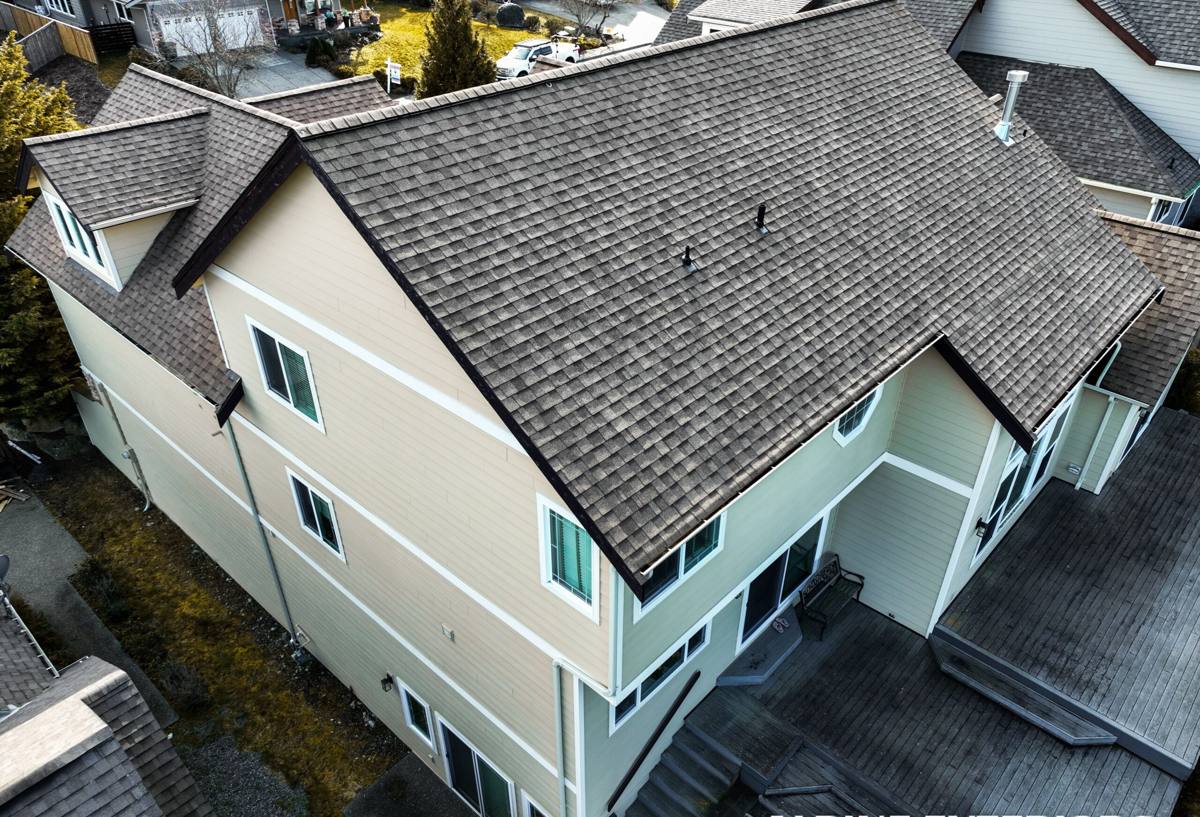
The Three Forces Working Against Your Windows
Salt Air
Airborne salt is corrosive to metal hardware, fasteners, and some window frame components. Over years, it can pit aluminum cladding, corrode uncoated screws and hinges, and accelerate the breakdown of exterior caulk and sealants. Windows that weren't specified for a marine environment tend to show hardware failure — stiff cranks, corroded locks, pitted sills — well before the glass itself is a problem.
Driving Rain
Wind off the bay doesn't just bring rain — it pushes it horizontally into wall assemblies, testing every seam around a window opening. A window that would stay bone dry in a calm rain can leak at Semiahmoo Resort if the flashing, house wrap integration, or sill pan wasn't installed correctly. This is one of the most common issues we find behind old trim: water intrusion that has nothing to do with the window unit itself and everything to do with how it was flashed into the wall.
Moss Season
Whatcom County's long wet season keeps north-facing and shaded surfaces damp for extended stretches, which is exactly what moss and algae need to take hold. On windows, that growth tends to collect in sill tracks, weep holes, and trim joints — the same low points that are supposed to drain water away. When moss clogs a weep hole, water that should exit the frame instead sits against wood trim or sheathing, and that's when rot starts.
Signs It's Time to Replace, Not Repair
Not every window problem at Semiahmoo Resort calls for full replacement. But certain signs point to a frame or installation failure that repair alone won't fix:
- Fogging or moisture between panes on a double- or triple-glazed unit — the seal has failed and can't be restored
- Soft or discolored trim and sill areas, especially on the water-facing side of the house
- Windows that are noticeably harder to open, close, or lock than they used to be
- A persistent draft even with the window fully closed and latched
- Visible corrosion on hardware, cranks, or metal cladding
- Moss or dark staining collecting in the sill track or at the corners of the frame
- Paint or finish that's peeling from the inside out, which usually means moisture is trapped in the wall, not just on the surface
If you're only seeing one or two of these on a single window, a repair might buy you time. If you're seeing several across multiple windows, especially on the exposed side of the house, that's usually a sign the whole opening needs to be redone properly rather than patched again.
What a Correct Installation Looks Like Here
The window unit itself is only part of the job. In an environment like Semiahmoo Resort, how the window is installed into the wall matters as much as the product. A correct installation includes:
- A sloped sill pan under the window that directs any water that gets past the exterior seal back outside instead of into the wall cavity
- Proper flashing integration with the house wrap or weather-resistive barrier, lapped in the right order so water sheds down and out, not into the seams
- Corrosion-resistant fasteners and hardware rated for coastal or marine exposure, not standard interior-grade hardware
- Sealant chosen for exterior, wet-climate use that stays flexible through temperature swings rather than cracking after a season or two
- Clear weep holes left unobstructed by trim or sealant so the window can drain as designed
Skipping any one of these steps is how a brand-new window ends up leaking within a few years. We treat the flashing and sill detail as seriously as the window unit itself, because in this location, that's usually where failures actually start.
Choosing the Right Frame Material for a Marine Environment
There's no single "best" window material for every home, but some materials handle salt air and constant moisture better than others. Here's how the common options generally compare in a Semiahmoo Resort setting:
| Frame Material | Salt Air Resistance | Maintenance | Notes |
|---|---|---|---|
| Vinyl | Good — won't corrode | Low | Budget-friendly; look for UV-stable, marine-rated hardware |
| Fiberglass | Very good | Low | Stable in temperature swings; holds paint well if a custom color is wanted |
| Wood (clad exterior) | Fair, dependent on cladding quality | Higher | Classic look; exterior cladding must be well-sealed where it meets the frame |
| Aluminum | Fair — can pit or corrode over time | Moderate | Thin sightlines, but hardware and fasteners need corrosion-resistant coatings |
Our standard is to steer clients away from uncoated aluminum hardware and bare wood exteriors on any elevation that faces the water directly. It's not that these materials are bad in general — it's that this specific location asks more of a window than most, and the maintenance burden of the wrong choice shows up faster here than it would twenty minutes inland.
Our Process From Estimate to Cleanup
- On-site assessment — we look at every window opening individually, not just the glass. Trim condition, existing flashing, and drainage all get checked before we recommend anything.
- Honest scope — we tell you which windows genuinely need replacement, which can wait, and which might just need a resealing or hardware fix.
- Removal and inspection — once a window comes out, we check the framing behind it for hidden rot or moisture damage before anything new goes in.
- Correct flashing and sill work — this is where most of our attention goes, since it's the part that determines whether the new window actually stays dry.
- Installation and sealing — new units are set, shimmed level and plumb, and sealed with exterior-grade materials suited to this climate.
- Cleanup and walkthrough — we clear debris and walk you through operation, locks, and any care specific to the material you chose.
What Affects the Cost
Window replacement pricing varies by home and by window, but a few factors consistently move the number up or down:
| Factor | Effect on Cost |
|---|---|
| Frame material (vinyl vs. fiberglass vs. wood-clad) | Vinyl is typically most affordable; fiberglass and wood-clad cost more upfront |
| Condition of existing framing | Hidden rot or water damage adds repair work before the new window can go in |
| Number of windows done at once | Bundling multiple windows in one visit generally lowers the per-window cost |
| Access and elevation | Upper-story or hard-to-reach windows take more time and equipment |
| Glass package | Upgraded Low-E coatings or gas fills add cost but improve comfort and efficiency |
We give straightforward, itemized estimates so you can see exactly what's driving the price, and we'll always flag if we find hidden damage before we assume you want it fixed as part of the same job.
Why Local Experience in Semiahmoo Resort Matters
A crew that only occasionally works this close to the water can miss things a crew that works here regularly won't. We know which elevations tend to take the worst of the wind-driven rain, how fast moss builds up in shaded sill tracks in this particular microclimate, and which hardware holds up against the salt air versus which corrodes within a few seasons. That familiarity shortens the assessment, sharpens the recommendation, and generally means fewer surprises once the old window comes off the wall.
It also matters for a resort community specifically — homes here often share sightlines, HOA aesthetic guidelines, or common architectural details, and a crew that's already worked in the neighborhood tends to have a better sense of what fits before the first window is even ordered.
Get a Straightforward Estimate
If your windows are showing wear, drafts, or moisture issues, it's worth getting an honest look before deciding between repair and replacement. We offer free, no-pressure estimates for Semiahmoo Resort homeowners — just fill out the form below and we'll take it from there.